

Resources Categories

INDUSTRY FACT FILE · TEXTILES, APPAREL & CONSUMER MANUFACTURING
Market Landscape and the Drivers of Cybersecurity Demand in Textiles and Apparel
The business, technology, regulatory, legal, statutory and buyer forces that create cybersecurity, audit and assurance work for mills, exporters, footwear and consumer goods manufacturers and brands.
|
In this document 1. Market landscape 2. Business drivers 3. Technology drivers 4. Regulatory drivers: CERT-In, SEBI, DPDP, tax, product and export rules 5. Legal and statutory drivers 6. How the drivers differ by company type 7. What this means for buyers and for Codec Networks |
1. Market landscape
India's textile, apparel and consumer manufacturing sector is vast, fragmented and export-oriented. A few listed integrated groups span fibre to retail; thousands of private exporters in clusters supply global brands on tight calendars; MSME mills, processors and job-workers form the supply base; the footwear industry is the second-largest in the world; and consumer products manufacturers increasingly make for brand owners or sell their own brands online. Government schemes—PLI for man-made fibre and technical textiles, PM MITRA parks and the US$350 billion industry ambition for 2030—are adding scale, while exporters contend with buyers' evolving compliance and data demands.
Cybersecurity demand follows the money and the risk. Buyers now ask suppliers about security before awarding programmes; exporters have seen payment diversion and ransomware in peak season; brands and D2C arms face credential stuffing, skimming and consumer data obligations under DPDP; listed groups must disclose incidents; and CERT-In expects independent audits. Spending is shifting from basic IT security to ERP and e-commerce testing, IP protection, BEC controls, supplier assurance and monitoring that covers plants, offices and cloud.
|
US$350 bn Textile industry size targeted by 2030 (Ministry of Textiles) |
7 parks PM MITRA mega textile parks with a ₹4,445 crore outlay |
₹5 crore Turnover above which GST e-invoicing applies since August 2023 |
May 2027 Most DPDP obligations take effect |
|
Market segment |
Landscape and buying behaviour |
Cybersecurity opportunity |
|
Listed integrated textile and apparel groups |
Fibre-to-retail estates, group ERP, SEBI disclosure, lender and buyer scrutiny |
Programme-level assessments, SOC, Board reporting, DPDP |
|
Garment, home textile and footwear exporters |
Cluster-based, buyer-driven, seasonal, lean security teams |
ERP and document security, BEC controls, questionnaire readiness, managed SOC |
|
Mills, processors and job-workers |
MSME base with outsourced IT and dependence on a few customers |
Baseline assessment, backups, email security, customer evidence |
|
Brand owners and D2C businesses |
Consumer-facing platforms, loyalty data, marketplace sales, rapid growth |
Web, API and app testing, bot controls, PCI DSS, DPDP, brand monitoring |
|
Consumer products and contract manufacturers |
Brand contracts, product rules, some connected products |
Assessment, product security, supplier assurance |
2. Business drivers
|
Business driver |
Buying trigger |
Relevant services |
|
Shipment continuity |
A ransomware incident or document outage misses a vessel in peak season |
Dependency mapping, backups, segmentation, playbooks |
|
Payment integrity |
BEC diverts export proceeds or supplier advances |
Mailbox controls, verification procedures, BEC simulation |
|
Protection of designs and costings |
Competitors and contractors target tech packs, lasts and pricing |
DLP, access reviews, contractor controls, forensics |
|
Winning and keeping buyers |
Brands require security evidence before and during programmes |
ISO 27001, questionnaire readiness, independent assessments |
|
Consumer trust in D2C |
Account takeover, skimming and breaches damage brands |
Web and app testing, bot controls, PCI DSS, DPDP |
|
Board accountability and disclosure |
Listed companies disclose incidents; Boards own risk |
Board advisory, incident records, audit programmes |
|
Supplier dependence |
Job-workers and tier-2 suppliers can stop deliveries |
Supplier assurance programmes |
3. Technology drivers
|
Technology driver |
Exposure created |
Codec Networks opportunity |
|
Cloud ERP, PLM and SaaS |
Business and designs concentrated in multi-tenant platforms |
ERP and PLM security, identity and posture reviews |
|
E-commerce, apps and marketplaces |
Internet-facing platforms with payments and consumer data |
Web, API and mobile testing, skimming and bot controls |
|
Buyer EDI, portals and data sharing |
Deep integration with brands' systems |
Integration testing, access controls, questionnaire evidence |
|
Plant automation and OEM remote access |
Cutting, knitting and sewing machines on flat networks |
Plant assessment, segmentation, remote access brokering |
|
E-invoicing, e-way bills and customs filings |
Compliance flows that must be available and correct |
Integrity and availability controls, backup validation |
|
Email-driven commerce |
Orders, approvals and payment instructions by email |
Mailbox hardening, MFA, BEC controls |
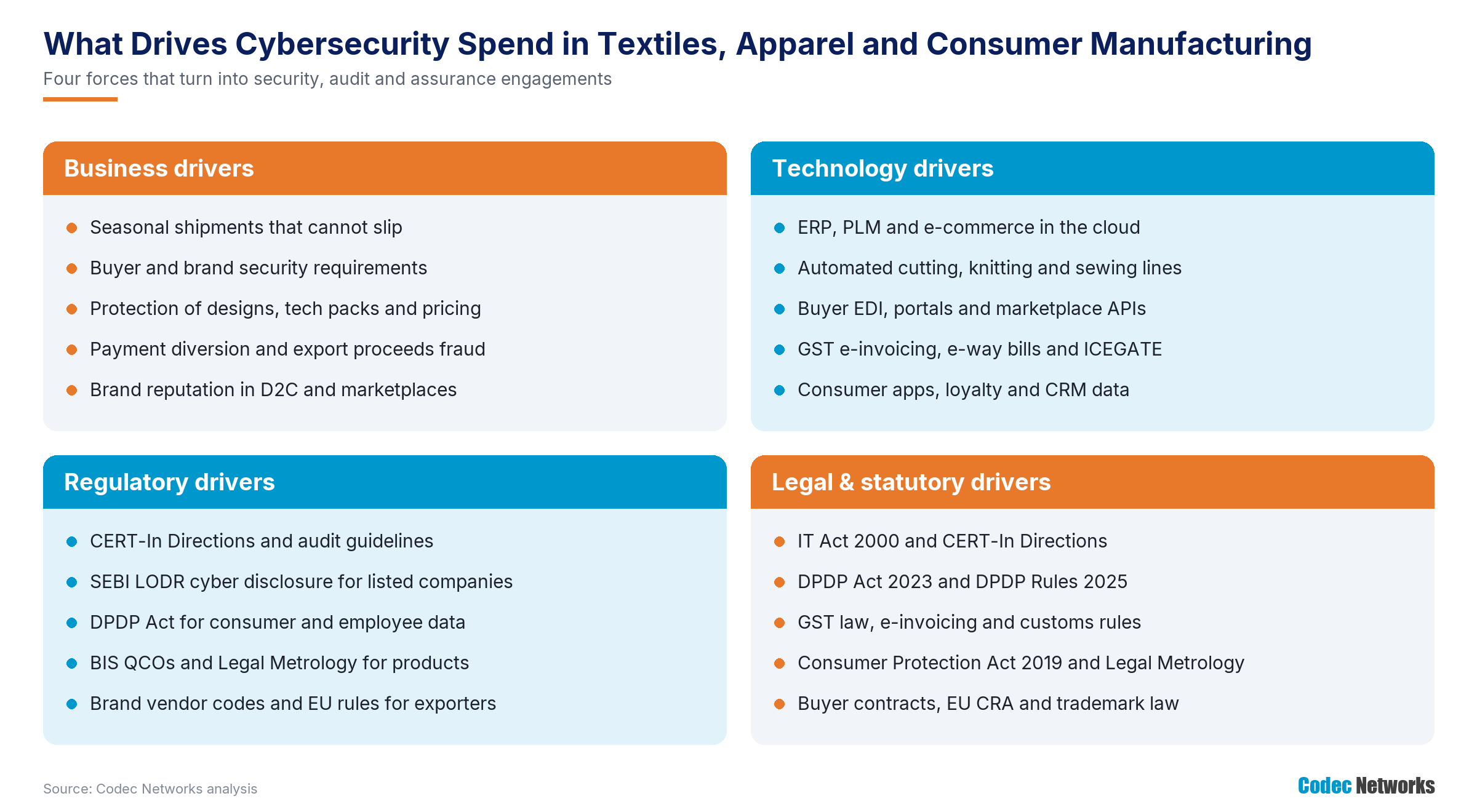
Figure 3: The four groups of drivers behind cybersecurity spending in textiles, apparel and consumer manufacturing.
4. Regulatory drivers: CERT-In, SEBI, DPDP, tax, product and export rules
|
Instrument |
Key requirements |
|
CERT-In Directions (2022) |
Six-hour incident reporting; 180-day ICT logs in India; applies to bodies corporate including manufacturers and brands |
|
CERT-In audit policy guidelines (July 2025) |
Risk-based, independent cyber audits covering IT, OT, cloud and applications, with closure of findings |
|
SEBI LODR Regulations (listed companies) |
Quarterly disclosure of cyber incidents in the corporate governance report; Board oversight of risk |
|
DPDP Act 2023 and Rules 2025 |
Consumer, loyalty, employee and worker data safeguards; most obligations from May 2027 |
|
GST e-invoicing and customs |
E-invoicing above ₹5 crore turnover since 1 August 2023; e-way bills; electronic export documentation |
|
BIS QCOs, Legal Metrology and consumer rules |
Footwear QCOs from 1 August 2024; Packaged Commodities Rules 2011 declarations; Consumer Protection Act 2019 and e-commerce rules |
|
Buyer and export requirements |
Brand security questionnaires and audits; PCI DSS v4.0.1 for D2C card payments; EU Cyber Resilience Act for connected consumer products (reporting from September 2026, full application December 2027) |
|
Confirm applicability Obligations depend on listing status, products, channels, buyers and export markets. Confirm against the official instruments and your contracts. |
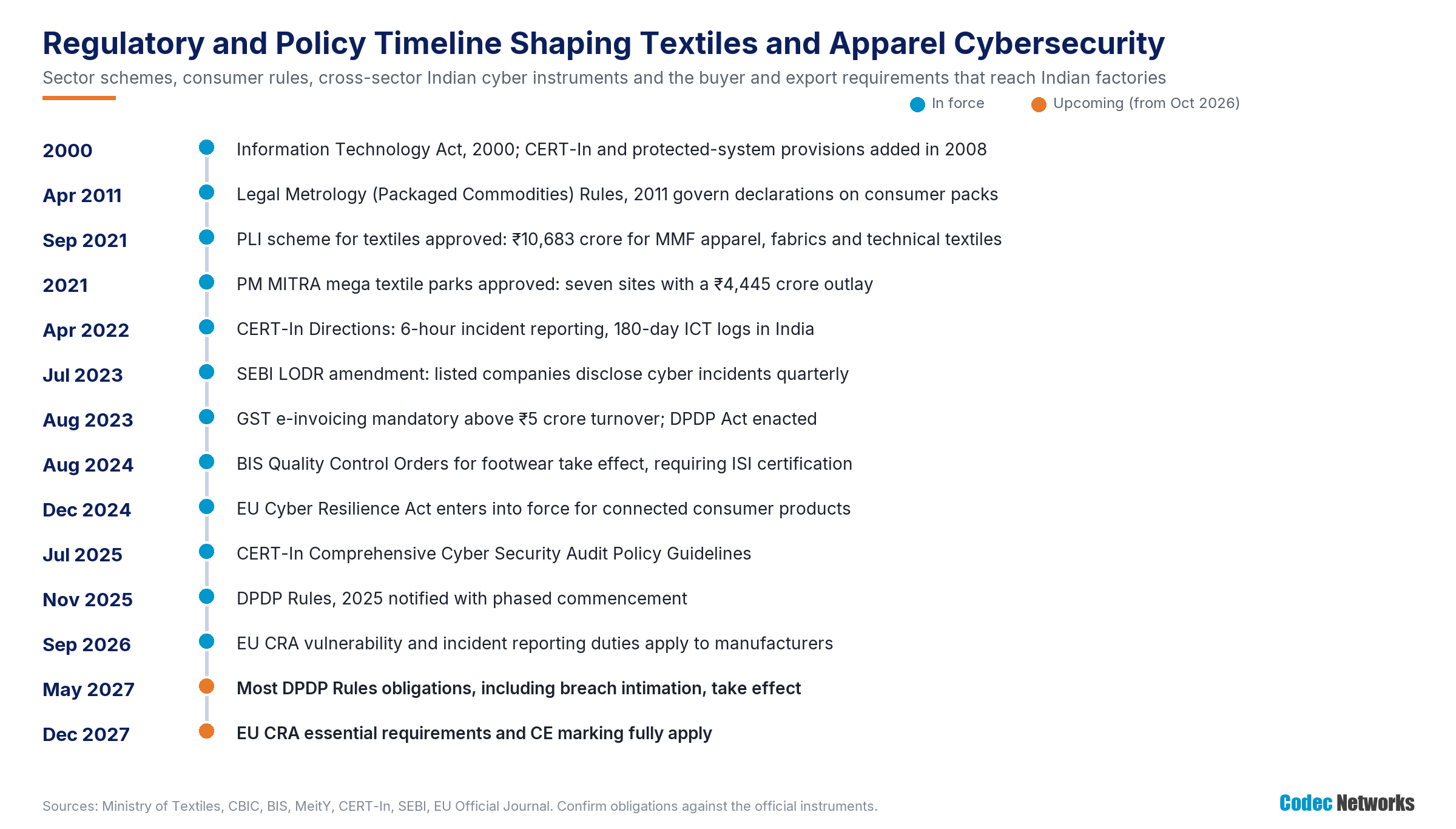
Figure 4: Regulatory and policy timeline shaping textiles, apparel and consumer manufacturing cybersecurity, as of October 2026.
5. Legal and statutory drivers
|
Law or obligation |
Relevance |
Demand created |
|
IT Act, 2000 and CERT-In Directions |
Incident reporting and logging |
SOC, logging, audits and incident response |
|
Companies Act, 2013 |
Board responsibility for risk management and internal controls |
Board risk reporting, audit programmes |
|
SEBI LODR Regulations |
Quarterly cyber incident disclosure for listed entities |
Incident records and disclosure support |
|
DPDP Act, 2023 and Rules, 2025 |
Personal data of consumers, employees and workers |
Privacy programmes and breach workflows |
|
GST law and customs rules |
E-invoicing, e-way bills and export filings |
Integrity and availability of compliance systems |
|
Consumer Protection Act, 2019 and Legal Metrology |
Consumer rights, e-commerce rules, pack declarations |
D2C platform controls and record integrity |
|
Buyer contracts, trademark law and EU rules |
Confidentiality, security clauses, brand protection, EU CRA |
Independent testing, IP protection, evidence packs |
6. How the drivers differ by company type
|
Company type |
Dominant business drivers |
Dominant technology drivers |
Principal regulatory drivers |
|
Listed integrated groups |
Continuity, disclosure, buyer and lender trust |
Group ERP, PLM, plants, D2C |
CERT-In, SEBI LODR, DPDP |
|
Exporters |
On-time shipment, payment integrity, buyer programmes |
ERP, documents, buyer portals, email |
CERT-In, buyer questionnaires, GST and customs |
|
Mills, processors and job-workers |
Keeping customers, cost control |
Small ERP, machine monitoring, outsourced IT |
CERT-In, GST, customer requirements |
|
Brand owners and D2C |
Consumer trust, brand reputation, growth |
E-commerce, apps, CRM, loyalty, payments |
CERT-In, DPDP, PCI DSS, consumer rules |
|
Consumer products makers |
Brand contracts, product compliance |
ERP, MES, packaging, product firmware |
CERT-In, BIS, Legal Metrology, EU CRA |
7. What this means for buyers and for Codec Networks
|
Customer buying need |
Recommended offering |
Natural recurring engagement |
|
“Would ransomware stop this season's shipments?” |
Ransomware resilience review: dependency mapping, segmentation, backups, playbooks |
Annual resilience testing and exercises |
|
“Our buyer sent a security questionnaire.” |
Questionnaire readiness and ISO 27001 gap assessment |
Annual recertification support |
|
“Could someone redirect our export proceeds?” |
BEC and payment diversion assessment, mailbox controls |
Simulations and periodic review |
|
“Who can still see our designs?” |
IP protection programme: classification, DLP, access reviews |
Quarterly access reviews |
|
“Our D2C site is getting hammered every sale.” |
Web, API and app testing, bot and skimming controls, PCI DSS |
Per-release testing and SOC |
|
“We need 24x7 monitoring across units and cloud.” |
Managed SOC |
Continuous monitoring |
|
“We need an independent cyber audit.” |
CERT-In-aligned audit |
Annual audits |
Talk to Codec Networks
|
Contact Codec Networks Pvt. Ltd. New Delhi: 507, 5th Floor, New Delhi House, Barakhamba Road, Connaught Place, New Delhi – 110001 Gurugram: 707, 7th Floor, Silverton Tower, Golf Course Extension Road, Sector 50, Gurugram – 122018, Haryana Landline: 011 430 496 96 | 011 437 522 99 Mobile: +91 99716 76124 | +91 88007 88220 | +91 88003 31124 Email: mktg@codecnetworks.com Web: www.codecnetworks.com |
Note: This document is general industry guidance based on public information available as of October 2026. It is not legal, tax or regulatory advice. Obligations differ by company size, listing status, products, buyers, channels and export markets; confirm them against the official CERT-In, MeitY, SEBI, CBIC, BIS, Consumer Affairs and EU instruments and your buyer contracts.