

Resources Categories

INDUSTRY FACT FILE · TELECOMMUNICATIONS & CONNECTIVITY
Market Landscape and the Drivers of Cybersecurity Demand in Telecom
The business, technology, regulatory, legal and statutory forces that create cybersecurity, audit and assurance work for telecom and connectivity providers.
|
In this document 1. Market landscape 2. Business drivers 3. Technology drivers 4. Regulatory drivers: DoT, NCCS, CERT-In and DPDP 5. Legal and statutory drivers 6. How the drivers differ by player type 7. What this means for buyers and for Codec Networks |
1. Market landscape
India's telecom market is led by a few large mobile operators and public-sector providers, alongside hundreds of ISPs, enterprise connectivity providers, tower and fibre companies and global equipment vendors. 5G standalone cores, fibre expansion and enterprise managed services are reshaping the attack surface, while the 2023 Act and 2024 rules formalise security duties.
|
21 Nov 2024 Telecom Cyber Security Rules notified |
6 hours Incident reporting under the rules |
Jun 2021 Trusted sources directive in force |
May 2027 Most DPDP obligations take effect |
|
Market segment |
Landscape and buying behaviour |
Cybersecurity opportunity |
|
Large mobile operators |
Nationwide 4G/5G, huge subscriber bases |
5G core, SOC, threat hunting, compliance programmes |
|
ISPs |
Hundreds of national and regional providers |
Network hardening, DDoS, Cyber Security Rules gap checks |
|
Enterprise connectivity |
Managed networks for business |
Managed service security, SOC, ISO 27001 |
|
Infrastructure and vendors |
Towers, fibre and equipment |
Physical and remote access, supply-chain assurance |
2. Business drivers
|
Business driver |
Buying trigger |
Relevant services |
|
Regulatory compliance |
Telecom Cyber Security Rules and licence conditions |
Gap assessments, policy and CTSO support |
|
Network availability |
Outages affect millions and SLAs |
Resilience and DDoS testing |
|
Fraud and revenue loss |
SIM-swap, subscription and interconnect fraud |
Fraud controls and analytics |
|
Enterprise and government contracts |
Customers demand security evidence |
Audits, SOC, certifications |
|
National security |
Espionage targeting telecom |
Threat hunting and network hardening |
3. Technology drivers
|
Technology driver |
Exposure created |
Codec Networks opportunity |
|
Cloud-native 5G core |
API and Kubernetes exposure |
Core security assessments |
|
Routers and edge devices |
Persistent nation-state access |
Hardening and hunting |
|
OSS/BSS |
Ransomware and data theft |
VAPT and resilience testing |
|
Vendor remote access |
Support-tunnel abuse |
Access brokering and monitoring |
|
Private 5G and IoT |
Industrial exposure |
Segmentation reviews |
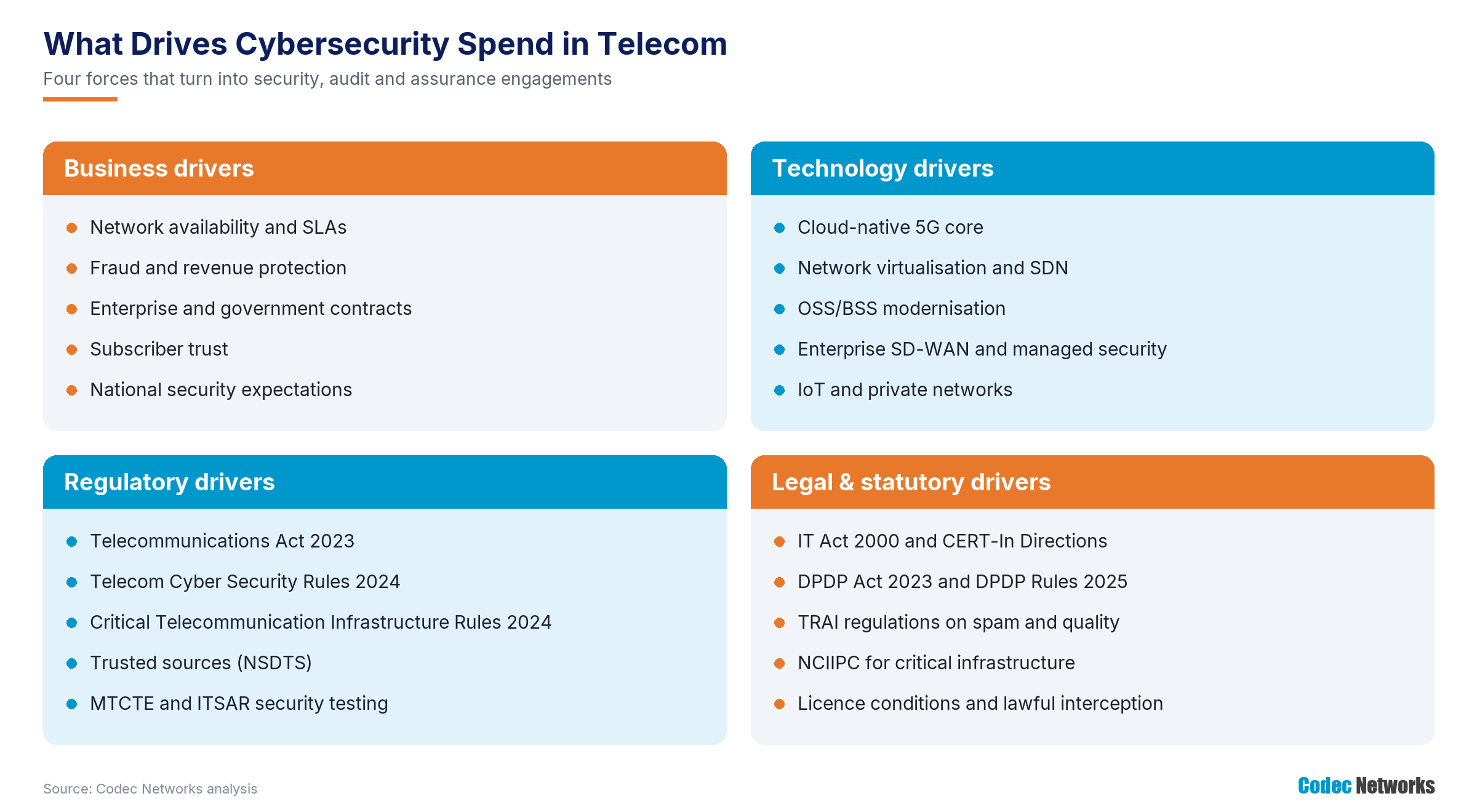
Figure 3: The four groups of drivers behind cybersecurity spending in telecom.
4. Regulatory drivers: DoT, NCCS, CERT-In and DPDP
|
Instrument |
Key requirements |
|
Telecommunications Act, 2023 |
Framework for authorisation and security of telecom networks and services |
|
Telecom Cyber Security Rules, 2024 |
Cyber security policy; Chief Telecommunication Security Officer; six-hour incident reporting with details within 24 hours |
|
Critical Telecommunication Infrastructure Rules, 2024 |
Obligations for notified critical telecommunication infrastructure |
|
NSDTS (2021) and MTCTE/ITSAR |
Trusted products from trusted sources; security testing and certification of equipment |
|
CERT-In Directions (2022) |
Six-hour reporting to CERT-In; 180-day ICT logs in India |
|
Confirm against the notifications Rule details are summarised from notifications and public sources. Confirm against the official DoT gazette notifications and your licence. |
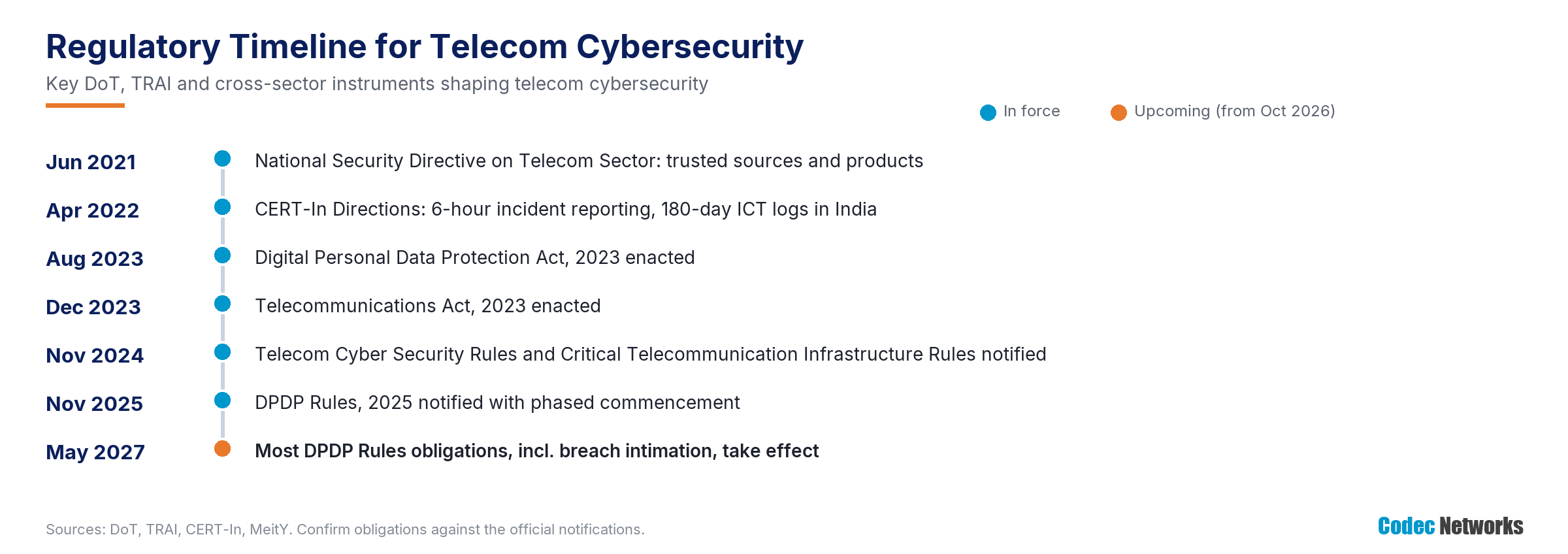
Figure 4: Regulatory timeline for telecom cybersecurity, as of October 2026.
5. Legal and statutory drivers
|
Law or obligation |
Relevance |
Demand created |
|
Telecommunications Act, 2023 |
Authorisation and security of networks |
Compliance programmes and audits |
|
IT Act, 2000 and CERT-In Directions |
Incident reporting and logging |
SOC and logging |
|
DPDP Act, 2023 and Rules, 2025 |
Subscriber personal data |
Privacy programmes and safeguards |
|
TRAI regulations |
Quality of service and commercial communications |
Spam and fraud controls |
|
Contracts |
Enterprise, interconnect and vendor agreements |
Assurance evidence |
6. How the drivers differ by player type
|
Player type |
Dominant business drivers |
Dominant technology drivers |
Principal regulatory drivers |
|
Mobile operators |
Fraud, availability, compliance |
5G core, signalling, OSS/BSS |
Telecom rules, CERT-In, DPDP, TRAI |
|
ISPs |
Availability, cost |
Routers, DNS, CPE |
Telecom rules, CERT-In |
|
Enterprise connectivity |
Customer trust, SLAs |
SD-WAN, managed security |
Telecom rules, contracts |
|
Vendors and infrastructure |
Supply-chain trust |
Equipment, support access |
NSDTS, MTCTE, contracts |
7. What this means for buyers and for Codec Networks
|
Customer buying need |
Recommended offering |
Natural recurring engagement |
|
“Are we aligned to the Telecom Cyber Security Rules?” |
Gap assessment and policy support |
Annual reassessment |
|
“Is our 5G core secure?” |
Cloud-native core assessment |
Release-linked reviews |
|
“Could someone be hiding in our routers?” |
Threat hunting and device hardening |
Continuous hunting |
|
“We need a telecom-aware SOC.” |
Managed SOC with network telemetry |
24x7 monitoring |
|
“Our vendors have remote access.” |
Vendor access and supply-chain review |
Annual vendor assessments |
Talk to Codec Networks
|
Contact Codec Networks Pvt. Ltd. New Delhi: 507, 5th Floor, New Delhi House, Barakhamba Road, Connaught Place, New Delhi – 110001 Gurugram: 707, 7th Floor, Silverton Tower, Golf Course Extension Road, Sector 50, Gurugram – 122018, Haryana Landline: 011 430 496 96 | 011 437 522 99 Mobile: +91 99716 76124 | +91 88007 88220 | +91 88003 31124 Email: mktg@codecnetworks.com Web: www.codecnetworks.com |
Note: This document is general industry guidance based on public information available as of October 2026. Telecom rule details are summarised from notifications and public sources. Confirm obligations against the official DoT gazette notifications, licence conditions and CERT-In and MeitY instruments.