

Resources Categories

INDUSTRY FACT FILE · SAAS & ENTERPRISE SOFTWARE
Market Landscape and the Drivers of Cybersecurity Demand in SaaS
The business, technology, regulatory, legal and statutory forces that create cybersecurity, audit and assurance work for SaaS and enterprise software vendors.
|
In this document 1. Market landscape 2. Business drivers 3. Technology drivers 4. Regulatory and assurance drivers 5. Legal and statutory drivers 6. How the drivers differ by vendor stage 7. What this means for buyers and for Codec Networks |
1. Market landscape
Indian SaaS companies range from early-stage start-ups to global scale-ups and established enterprise software firms. Selling to large enterprises and regulated customers—in India and abroad—means passing security reviews, producing SOC 2 or ISO 27001 evidence and committing to incident notification.
|
6 hours Incident reporting to CERT-In |
Oct 2024 CERT-In SBOM guidelines |
Sep 2026 EU CRA reporting obligations apply |
May 2027 Most DPDP obligations take effect |
|
Market segment |
Landscape and buying behaviour |
Cybersecurity opportunity |
|
Early-stage SaaS |
First enterprise deals, small teams |
Product VAPT, SOC 2 gap assessment, cloud review |
|
Growth-stage SaaS |
Rapid expansion, many integrations |
Tenant isolation, DevSecOps, SOC 2, managed SOC |
|
Enterprise software vendors |
Large customers, regulated sectors |
Red teaming, supply-chain assurance, multi-framework audits |
|
Cybersecurity product firms |
Privileged access in customer estates |
Update integrity, product and supply-chain testing |
2. Business drivers
|
Business driver |
Buying trigger |
Relevant services |
|
Enterprise security reviews |
Questionnaires and evidence before contracts |
SOC 2, ISO 27001, test reports |
|
Regulated customers |
RBI, SEBI, IRDAI vendor rules |
Flow-down assessments |
|
Investor and acquirer diligence |
Funding rounds and M&A |
Security maturity assessments |
|
Customer trust and churn |
Incidents drive cancellations |
Testing and incident readiness |
|
Global expansion |
EU and US customers |
GDPR and EU CRA readiness |
3. Technology drivers
|
Technology driver |
Exposure created |
Codec Networks opportunity |
|
Multi-tenancy |
Cross-tenant data exposure |
Tenant isolation testing |
|
APIs and OAuth |
Token theft and broken authorisation |
API and integration reviews |
|
Open source |
Vulnerable dependencies |
SCA and SBOM |
|
Cloud-native platforms |
Misconfiguration and IAM gaps |
Cloud, IaC and Kubernetes reviews |
|
AI features |
Prompt injection and data leakage |
AI security testing |
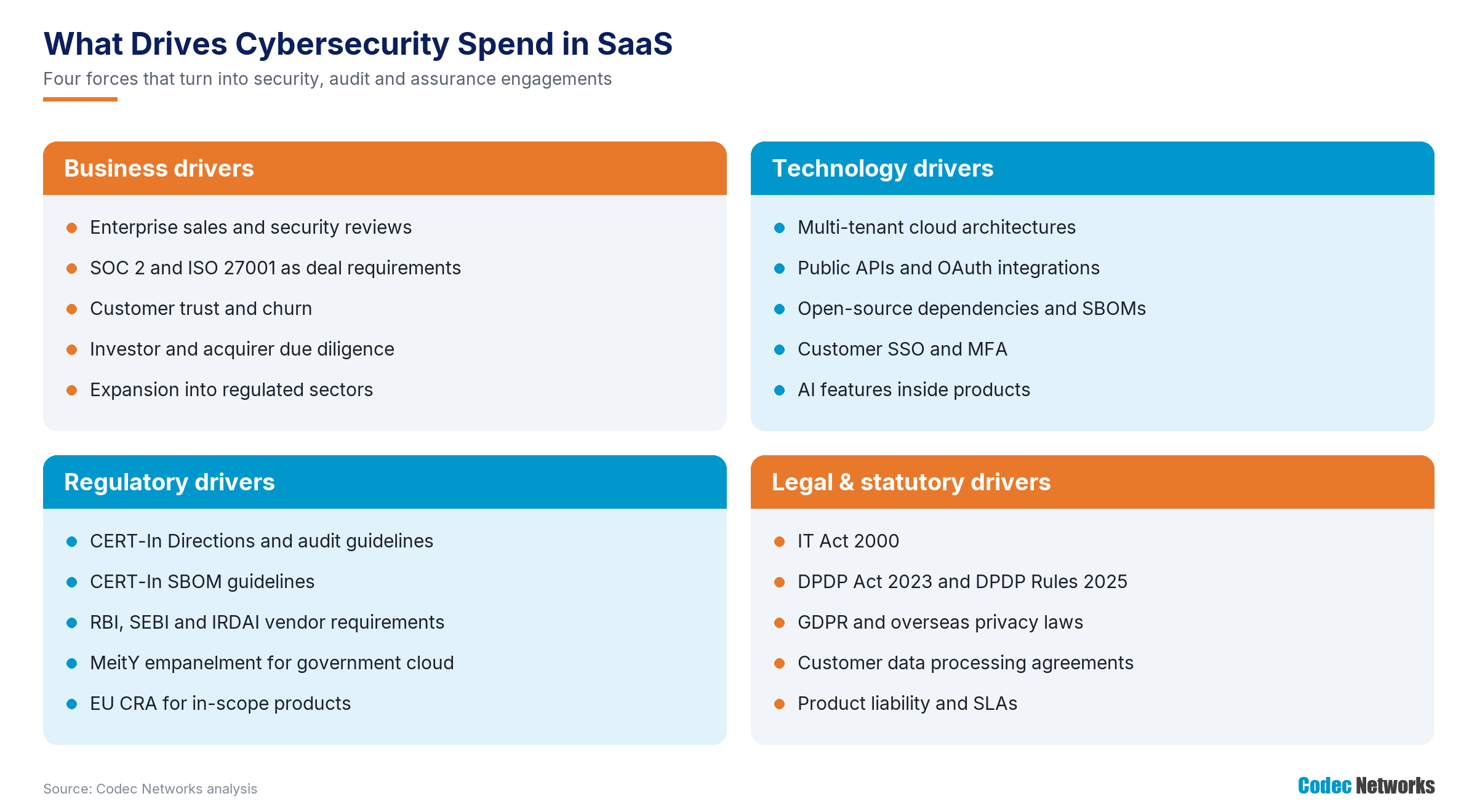
Figure 3: The four groups of drivers behind cybersecurity spending in SaaS.
4. Regulatory and assurance drivers
|
Instrument |
Key requirements |
|
CERT-In Directions (2022) |
Six-hour incident reporting; 180-day ICT logs in India |
|
CERT-In SBOM guidelines (2024) and audit guidelines (2025) |
SBOM practices; risk-based independent audits |
|
DPDP Act 2023 and Rules 2025 |
Processor and controller obligations; most from May 2027 |
|
Customer regulator flow-down and MeitY empanelment |
Vendor controls for BFSI customers; empanelment for government cloud services |
|
SOC 2, ISO/IEC 27001, GDPR and EU CRA |
Enterprise assurance and international obligations |
|
Contracts and scope matter Many requirements apply through customer contracts or product scope. Confirm the clauses in your agreements and the official instruments. |
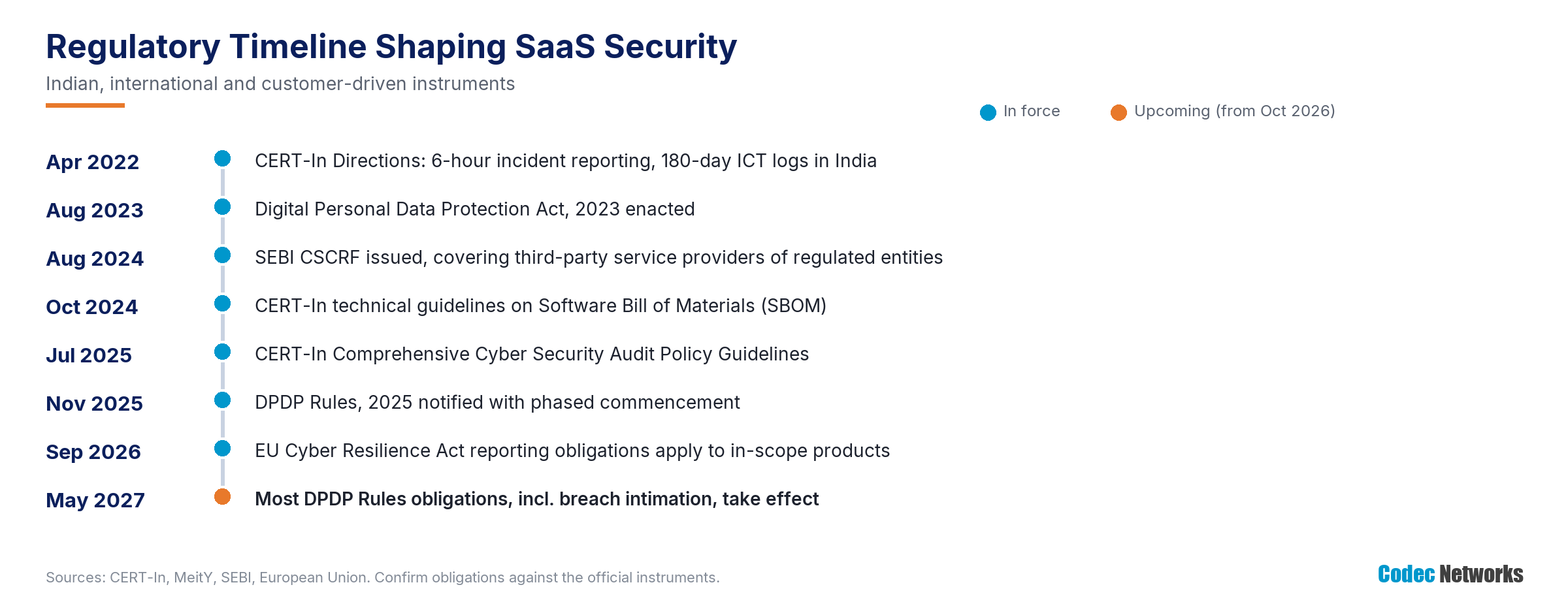
Figure 4: Regulatory timeline shaping SaaS security, as of October 2026.
5. Legal and statutory drivers
|
Law or obligation |
Relevance |
Demand created |
|
IT Act, 2000 and CERT-In Directions |
Incident reporting and logging |
SOC and IR readiness |
|
DPDP Act, 2023 and Rules, 2025 |
Customer and user personal data |
Privacy programmes |
|
EU GDPR |
EU personal data |
DPAs and controls |
|
Contracts and SLAs |
Security, availability and liability terms |
Assurance evidence |
|
Intellectual property |
Protection of source code |
Repository and DLP controls |
6. How the drivers differ by vendor stage
|
Vendor stage |
Dominant business drivers |
Dominant technology drivers |
Principal regulatory drivers |
|
Early-stage |
First enterprise deals |
Cloud and APIs |
Customer contracts, DPDP |
|
Growth-stage |
Scaling sales, integrations |
Multi-tenancy, OAuth, pipelines |
SOC 2, DPDP, flow-down |
|
Enterprise vendors |
Retention, regulated sectors |
Complex estates, AI features |
Multi-framework, EU rules |
|
Security vendors |
Trust in privileged products |
Agents and updates |
Customer contracts, EU CRA |
7. What this means for buyers and for Codec Networks
|
Customer buying need |
Recommended offering |
Natural recurring engagement |
|
“We need a pen test report for a deal.” |
Product VAPT with retest |
Annual and release-linked testing |
|
“Could tenants see each other's data?” |
Tenant isolation testing |
CI-integrated isolation tests |
|
“Customers want SOC 2.” |
SOC 2 readiness |
Annual audit support |
|
“Customers ask for an SBOM.” |
SCA and SBOM programme |
Per-release SBOMs |
|
“We need 24x7 monitoring.” |
Managed SOC |
Continuous monitoring |
Talk to Codec Networks
|
Contact Codec Networks Pvt. Ltd. New Delhi: 507, 5th Floor, New Delhi House, Barakhamba Road, Connaught Place, New Delhi – 110001 Gurugram: 707, 7th Floor, Silverton Tower, Golf Course Extension Road, Sector 50, Gurugram – 122018, Haryana Landline: 011 430 496 96 | 011 437 522 99 Mobile: +91 99716 76124 | +91 88007 88220 | +91 88003 31124 Email: mktg@codecnetworks.com Web: www.codecnetworks.com |
Note: This document is general industry guidance based on public information available as of October 2026. Customer, certification and international requirements apply through contracts and product scope. Confirm obligations against the official CERT-In, MeitY, customer-regulator and EU instruments.