

Resources Categories
INDUSTRY FACT FILE · POWER & ELECTRICITY
Market Landscape and the Drivers of Cybersecurity Demand in Power
The business, technology, regulatory, legal and statutory forces that create cybersecurity, audit and assurance work for power utilities and grid organisations.
|
In this document 1. Market landscape 2. Business drivers 3. Technology drivers 4. Regulatory drivers: CEA Regulations 2026, CERT-In and NCIIPC 5. Legal and statutory drivers 6. How the drivers differ by organisation type 7. What this means for buyers and for Codec Networks |
1. Market landscape
India's power sector combines large central and state public-sector utilities with private generators, distribution licensees, traders and exchanges. Rapid renewable integration, smart metering and digital substations are expanding connected assets, while the CEA's 2026 cyber regulations make security a binding obligation from April 2027.
|
31 Jul 2026 CEA Regulations notified |
1 Apr 2027 In force |
6 hours Incident reporting (as reported) |
50 MW Generator and storage threshold (as reported) |
|
Market segment |
Landscape and buying behaviour |
Cybersecurity opportunity |
|
Central PSUs |
Large generation and transmission fleets |
Programme-level OT security, SOC, audits |
|
State utilities and DISCOMs |
Mixed maturity, large consumer bases |
Gap assessments, metering security, SOC |
|
Private generators and licensees |
Efficiency-driven, growing portfolios |
Segmentation, remote access, compliance |
|
Grid operators |
National and state dispatch |
SCADA/EMS assurance, hunting |
2. Business drivers
|
Business driver |
Buying trigger |
Relevant services |
|
Regulatory compliance |
CEA Regulations in force from April 2027 |
Gap assessments, policies, audits |
|
Grid reliability |
Outages carry public and economic costs |
OT resilience and monitoring |
|
Revenue protection |
DISCOM losses and billing integrity |
Metering and billing security |
|
Safety |
Control-system manipulation can endanger people |
OT assessments |
|
Lender and investor expectations |
Due diligence on private projects |
Assurance evidence |
3. Technology drivers
|
Technology driver |
Exposure created |
Codec Networks opportunity |
|
SCADA/EMS and DCS |
State-actor intrusion |
OT assessments and hunting |
|
Substation automation |
Relay manipulation |
Substation and remote access reviews |
|
Smart meters |
Mass disconnection |
Head-end testing |
|
Vendor remote access |
Persistent unsupervised access |
Access brokering reviews |
|
Corporate IT |
Ransomware spreading to OT |
Segmentation, EDR, SOC |
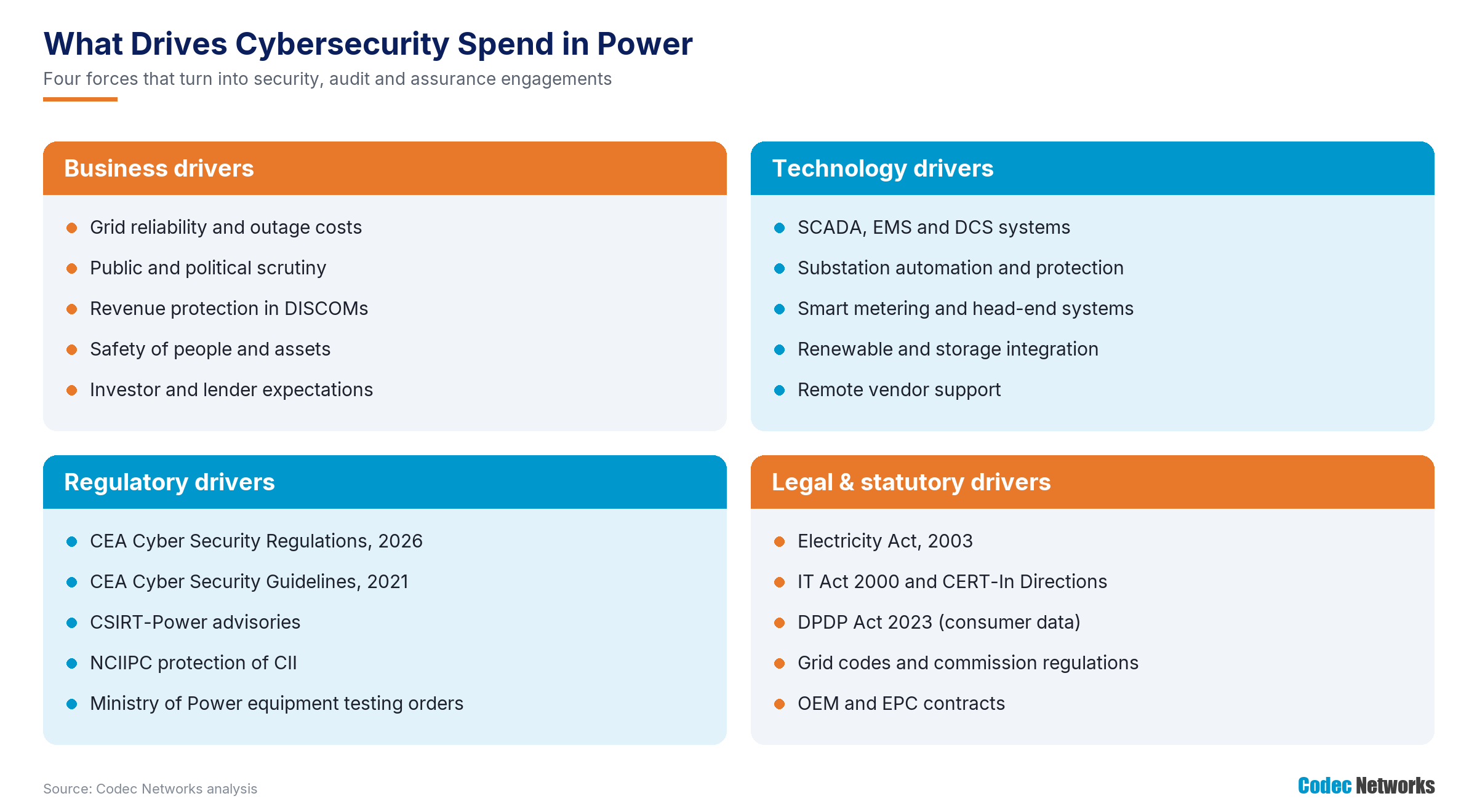
Figure 3: The four groups of drivers behind cybersecurity spending in power.
4. Regulatory drivers: CEA Regulations 2026, CERT-In and NCIIPC
|
Instrument |
Key requirements |
|
CEA (Cyber Security in Power Sector) Regulations, 2026 |
Notified 31 July 2026; in force 1 April 2027; senior CISO, 24-hour ISD, policy, crisis plan, annual audits, OT separation (as reported) |
|
Incident reporting |
CSIRT-Power and CERT-In within six hours (as reported) |
|
CEA Cyber Security Guidelines, 2021 |
Sector guidance preceding the regulations |
|
NCIIPC (IT Act Section 70) |
Protection of notified critical information infrastructure and protected systems |
|
CERT-In Directions (2022) |
Six-hour incident reporting; 180-day ICT logs in India |
|
Confirm against the gazette Regulation details are summarised from public reporting; confirm against the official gazette notification. |
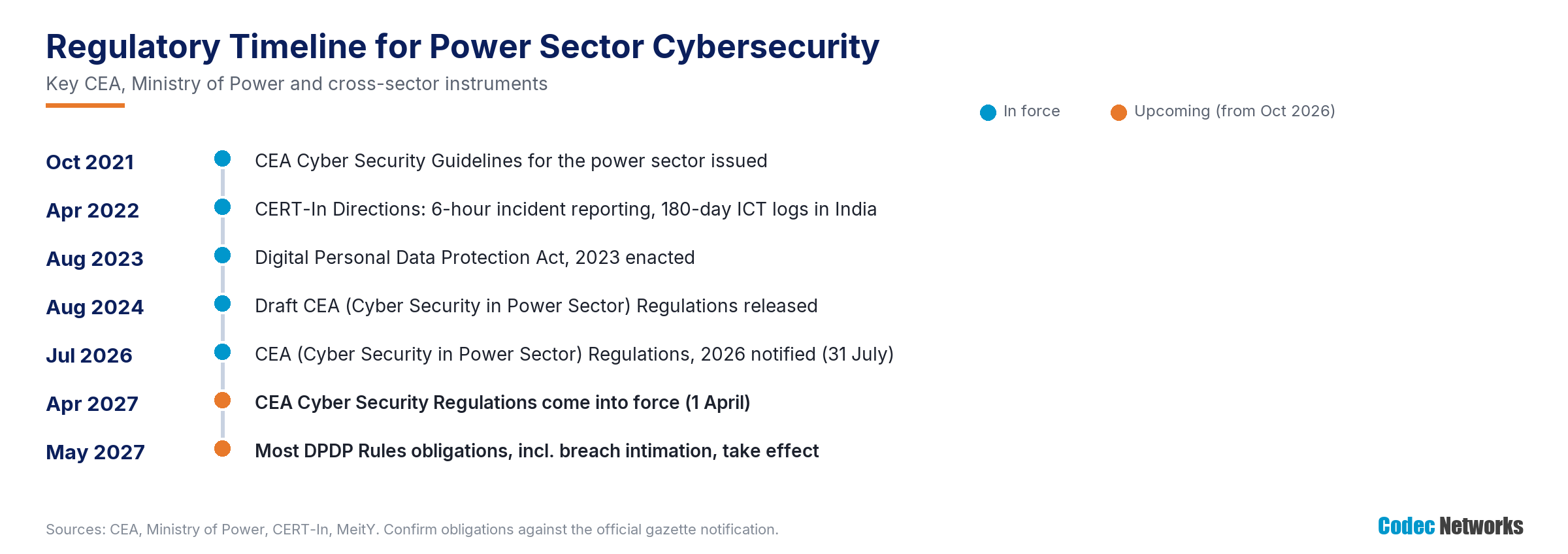
Figure 4: Regulatory timeline for power sector cybersecurity, as of October 2026.
5. Legal and statutory drivers
|
Law or obligation |
Relevance |
Demand created |
|
Electricity Act, 2003 |
Licensing and regulation of the sector |
Compliance with CEA regulations |
|
IT Act, 2000 and CERT-In Directions |
Incident reporting, CII protection |
SOC and logging |
|
DPDP Act, 2023 and Rules, 2025 |
Consumer personal data |
Privacy programmes for DISCOMs |
|
Grid codes and commission regulations |
Operational obligations |
Resilience and coordination |
|
Contracts |
OEM, EPC and service agreements |
Vendor security obligations |
6. How the drivers differ by organisation type
|
Organisation type |
Dominant business drivers |
Dominant technology drivers |
Principal regulatory drivers |
|
Generators |
Availability, safety |
DCS, plant networks |
CEA Regulations, NCIIPC |
|
Transmission |
Network reliability |
Substations, relays |
CEA Regulations, grid codes |
|
Grid operators |
System security |
SCADA/EMS |
CEA Regulations, NCIIPC |
|
DISCOMs |
Revenue, consumer service |
Smart meters, billing |
CEA Regulations, DPDP, state rules |
7. What this means for buyers and for Codec Networks
|
Customer buying need |
Recommended offering |
Natural recurring engagement |
|
“Are we ready for April 2027?” |
CEA Regulations gap assessment |
Annual audits and closure |
|
“We need a crisis management plan.” |
CCMP design and mock drills |
Annual drills |
|
“Who can reach our substations?” |
Remote access review |
Quarterly recertification |
|
“We need 24x7 OT monitoring.” |
IT/OT SOC |
Continuous monitoring |
|
“Are our smart meters safe?” |
Head-end and metering testing |
Release-linked testing |
Talk to Codec Networks
|
Contact Codec Networks Pvt. Ltd. New Delhi: 507, 5th Floor, New Delhi House, Barakhamba Road, Connaught Place, New Delhi – 110001 Gurugram: 707, 7th Floor, Silverton Tower, Golf Course Extension Road, Sector 50, Gurugram – 122018, Haryana Landline: 011 430 496 96 | 011 437 522 99 Mobile: +91 99716 76124 | +91 88007 88220 | +91 88003 31124 Email: mktg@codecnetworks.com Web: www.codecnetworks.com |
Note: This document is general industry guidance based on public information available as of October 2026. CEA (Cyber Security in Power Sector) Regulations, 2026 details are summarised from public reporting; confirm obligations against the official gazette notification and CEA, CERT-In and NCIIPC instruments.