

Resources Categories
INDUSTRY FACT FILE · OIL, GAS & PETROCHEMICALS
Five New Case Studies in Oil and Gas Security
Original 2026 case studies, each written as a blog post, showing how current threats play out in oil, gas and petrochemicals and how Codec Networks services break the attack chain.
|
In this document 1. About these case studies 2. Case Study 1: The Pipeline That Stopped for an IT Attack 3. Case Study 2: The Safety System Somebody Reprogrammed 4. Case Study 3: The Contractor Laptop on the Refinery Network 5. Case Study 4: The Fuel Station Network Payment Fraud 6. Case Study 5: The Wiper on the Exploration Company's Network |
About these case studies
These five case studies were written for this document set and have not been published elsewhere. Each is a composite scenario combining attack techniques and control failures widely observed in oil, gas and petrochemicals with the obligations that apply in India as of October 2026—in particular CERT-In's Directions and audit guidelines, NCIIPC expectations and PNGRB and OISD safety and integrity standards.
|
Important disclosure The organisations described are fictional and the scenarios are illustrative. They are not accounts of real incidents, and they are not Codec Networks client engagements or claims of achieved outcomes. Their value lies in showing how connected weaknesses form an attack chain, which controls break it, and which services test those controls. |
|
Case study |
Organisation type |
Core threat |
Regulatory lens |
Primary bundles |
|
1. The Pipeline That Stopped for an IT Attack |
Product pipeline operator |
IT ransomware forcing a precautionary shutdown |
CERT-In; PNGRB; NCIIPC |
B3, B7, B10 |
|
2. The Safety System Somebody Reprogrammed |
Petrochemical complex |
Targeting of a safety instrumented system |
OISD; CERT-In; NCIIPC |
B1, B7, B8 |
|
3. The Contractor Laptop on the Refinery Network |
Refinery |
Malware introduced during a turnaround |
OISD; CERT-In; contracts |
B9, B3, B7 |
|
4. The Fuel Station Network Payment Fraud |
Fuel retailer |
Compromised central station management |
PCI DSS; DPDP; CERT-In |
B2, B3, B7 |
|
5. The Wiper on the Exploration Company's Network |
Exploration and production company |
Destructive wiper malware |
CERT-In; NCIIPC |
B3, B7, B10 |
Case Study 1: The Pipeline That Stopped for an IT Attack
The control system was fine. The company shut down anyway.
|
At a glance |
|
|
Organisation |
A product pipeline operator (“Pipeco A”) supplying fuel to several states |
|
Threat |
Ransomware encrypting billing and scheduling systems on corporate IT |
|
Why it is new |
Hidden OT dependencies on IT can stop operations |
|
Codec Networks services |
Dependency mapping and segmentation, SOC, crisis exercises (Bundles B3, B7, B10) |
The scenario
Ransomware encrypted Pipeco A's billing, scheduling and corporate systems.
Pipeline SCADA was not encrypted, but Pipeco A could not bill, schedule or confirm custody transfer, and was unsure whether OT was safe.
Pipeco A shut down the pipeline as a precaution, disrupting fuel supply until systems were restored.
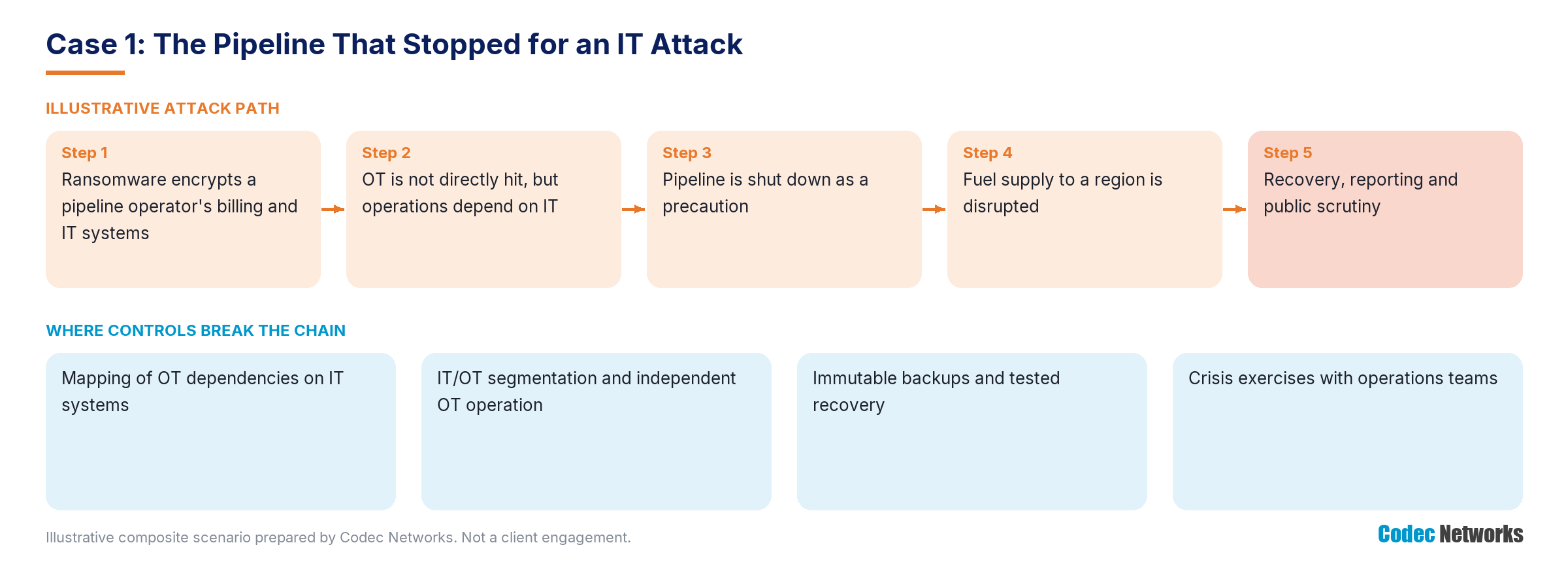
Figure 8: Illustrative attack path for Case Study 1 and the controls that break it.
What went wrong
- OT's dependencies on IT were unmapped.
- IT/OT boundaries were not clearly enforced.
- No plan to operate OT without IT.
- Crisis decisions had never been rehearsed.
The impact
Pipeco A faced supply disruption, public scrutiny, reporting obligations and recovery costs.
The regulatory lens
- CERT-In Directions: incidents reported within six hours.
- PNGRB: supply and integrity obligations for pipelines.
- NCIIPC: coordination where systems are notified as critical information infrastructure.
How Codec Networks would help
|
Need |
Codec Networks response |
Bundle |
|
Map and separate |
OT dependency mapping and segmentation |
B3 |
|
Detect early |
24x7 IT/OT SOC |
B7 |
|
Rehearse decisions |
Crisis exercises with operations |
B10 |
|
Key lessons Map OT's dependencies on IT. Enforce IT/OT boundaries. Plan to run OT without IT. Rehearse shutdown decisions. |
Case Study 2: The Safety System Somebody Reprogrammed
The plant tripped safely. Investigators found it wasn't an accident.
|
At a glance |
|
|
Organisation |
A petrochemical complex (“Chemco B”) |
|
Threat |
Attackers reaching an SIS engineering workstation and uploading malicious logic |
|
Why it is new |
Safety systems are the last line of defence |
|
Codec Networks services |
SIS security review, OT monitoring, OT forensics (Bundles B1, B7, B8) |
The scenario
Attackers gained a foothold in Chemco B's IT network and moved into the engineering network.
They reached a workstation used to program safety controllers, which had been left in a mode that allowed changes.
Malicious logic caused a fault that tripped a unit to a safe state. Investigation revealed deliberate targeting of safety systems.
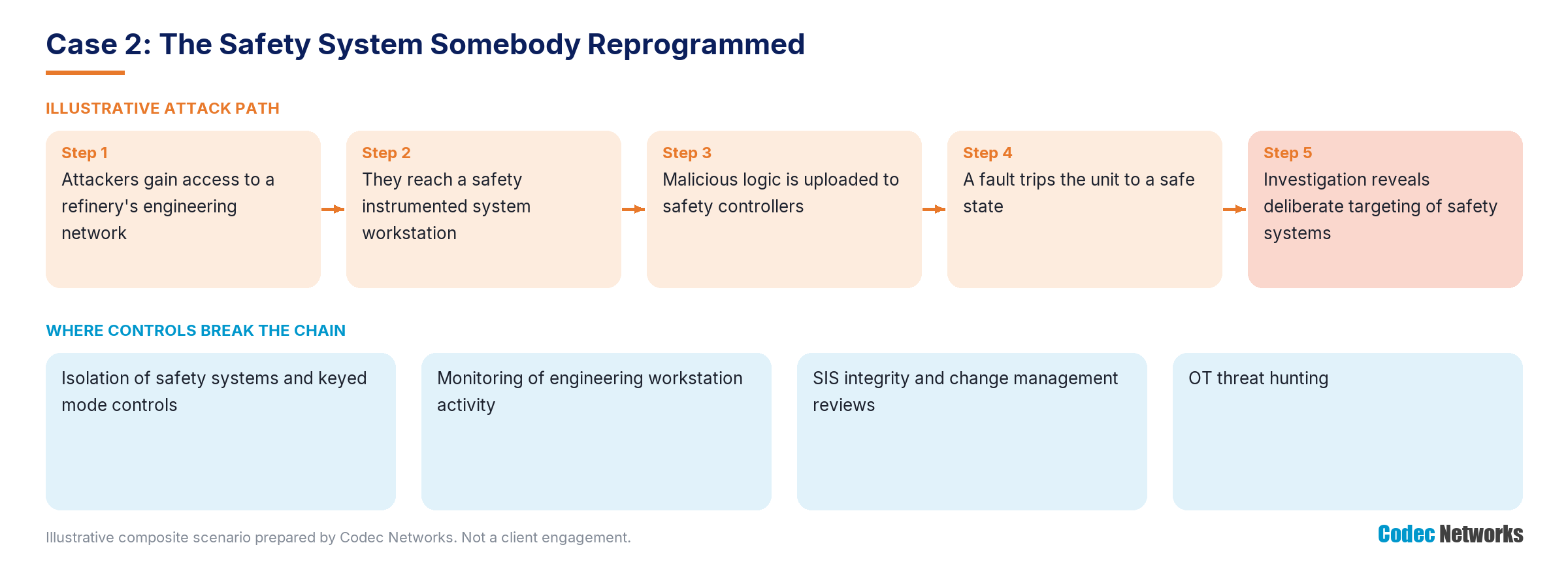
Figure 9: Illustrative attack path for Case Study 2 and the controls that break it.
What went wrong
- SIS engineering workstations were reachable from other networks.
- Controllers were left in program mode.
- Engineering activity was not monitored.
- No OT threat hunting.
The impact
Chemco B lost production, launched a safety investigation and rebuilt its safety system security model.
The regulatory lens
- OISD standards: safety of installations and process safety management.
- CERT-In Directions: incidents reported within six hours.
- NCIIPC: coordination for critical infrastructure.
How Codec Networks would help
|
Need |
Codec Networks response |
Bundle |
|
Protect the SIS |
SIS isolation and key-switch review |
B1 |
|
Watch engineering |
Engineering workstation monitoring |
B7 |
|
Investigate |
OT-aware forensics |
B8 |
|
Key lessons Isolate safety systems. Keep controllers in run mode. Monitor engineering workstations. Hunt for OT intruders. |
Case Study 3: The Contractor Laptop on the Refinery Network
Five hundred contractors arrived. So did one infected laptop.
|
At a glance |
|
|
Organisation |
A refinery (“Refinery C”) during a planned turnaround |
|
Threat |
Self-spreading malware on a contractor laptop reaching operator stations |
|
Why it is new |
Turnarounds bring many uncontrolled devices into plants |
|
Codec Networks services |
Third-party access programme, segmentation, OT monitoring (Bundles B9, B3, B7) |
The scenario
During a turnaround, contractor engineers connected laptops to plant networks for configuration work.
One laptop carried self-spreading malware that reached operator stations and historians.
Units were slowed while systems were cleaned, extending the turnaround and increasing costs.
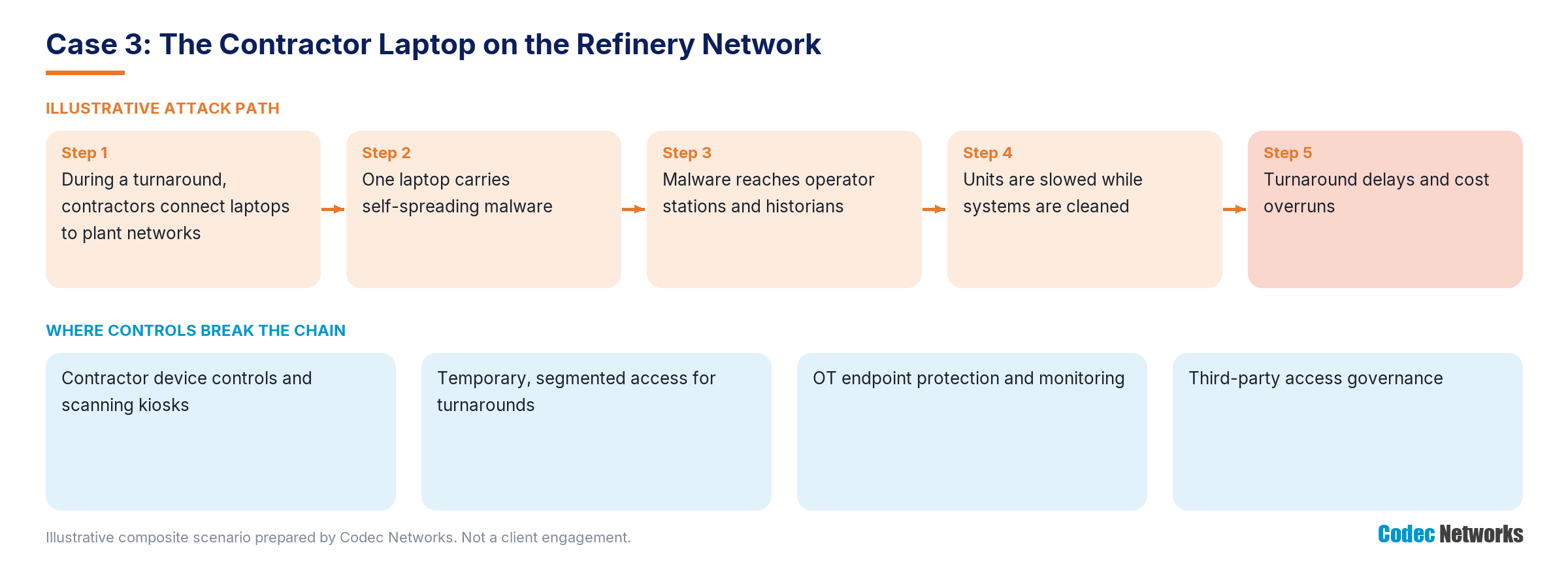
Figure 10: Illustrative attack path for Case Study 3 and the controls that break it.
What went wrong
- Contractor devices were not scanned.
- No segmented temporary access for contractors.
- OT endpoints lacked protection.
- Contractor accounts were not tracked.
The impact
Refinery C faced delays, cost overruns and a review of contractor security requirements.
The regulatory lens
- OISD standards: safe operation of installations during maintenance.
- CERT-In Directions: incidents reported within six hours.
- Contracts: contractor security obligations.
How Codec Networks would help
|
Need |
Codec Networks response |
Bundle |
|
Control contractors |
Third-party access programme and device scanning |
B9 |
|
Segment access |
Temporary, segmented turnaround networks |
B3 |
|
Watch OT |
OT endpoint and network monitoring |
B7 |
|
Key lessons Scan every contractor device. Give contractors segmented access. Protect OT endpoints. Track and remove contractor accounts. |
Case Study 4: The Fuel Station Network Payment Fraud
Prices changed at hundreds of outlets. Nobody at head office had changed them.
|
At a glance |
|
|
Organisation |
A fuel retailer (“Fuelco D”) managing outlets centrally |
|
Threat |
Stolen remote-management credentials used to alter station settings |
|
Why it is new |
Central management concentrates control of many outlets |
|
Codec Networks services |
Retail system testing, remote access hardening, monitoring (Bundles B2, B3, B7) |
The scenario
Fuelco D managed station automation and payment settings from a central platform.
An attacker stole a support engineer's credentials—without MFA—and changed pricing and payment configurations at many outlets.
Fraudulent transactions and pricing errors followed before the changes were spotted.
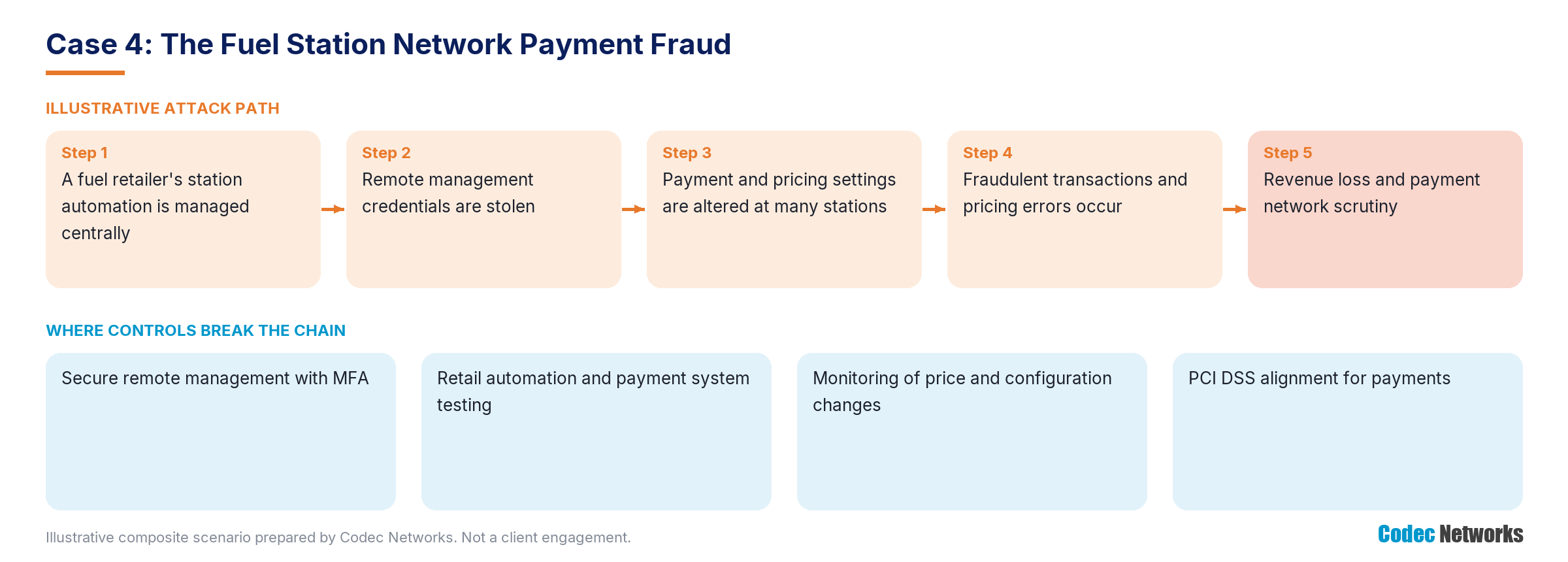
Figure 11: Illustrative attack path for Case Study 4 and the controls that break it.
What went wrong
- No MFA on central management.
- Configuration changes were not monitored.
- Retail systems were not tested.
- Payment security was not aligned to PCI DSS.
The impact
Fuelco D lost revenue, faced payment network scrutiny and customer complaints.
The regulatory lens
- PCI DSS: security of card payment environments.
- DPDP Act and Rules: customer data safeguards once provisions commence.
- CERT-In Directions: incidents reported within six hours.
How Codec Networks would help
|
Need |
Codec Networks response |
Bundle |
|
Test retail systems |
Station automation and payment testing |
B2 |
|
Harden access |
Remote management and MFA review |
B3 |
|
Watch changes |
Monitoring of price and configuration changes |
B7 |
|
Key lessons Enforce MFA on central management. Monitor price and configuration changes. Test station automation. Align payments with PCI DSS. |
Case Study 5: The Wiper on the Exploration Company's Network
Thousands of screens went dark on the same morning.
|
At a glance |
|
|
Organisation |
An E&P company (“Upco E”) with large seismic and engineering datasets |
|
Threat |
Spear-phishing leading to domain admin compromise and mass wiping |
|
Why it is new |
Destructive attacks aim for maximum damage, not ransom |
|
Codec Networks services |
PAM and backups, SOC, recovery exercises (Bundles B3, B7, B10) |
The scenario
A spear-phishing email compromised an Upco E employee, and attackers escalated to domain administrator.
They deployed wiper malware that destroyed data on thousands of workstations and servers.
Seismic and engineering data were unavailable, and Upco E spent months rebuilding.
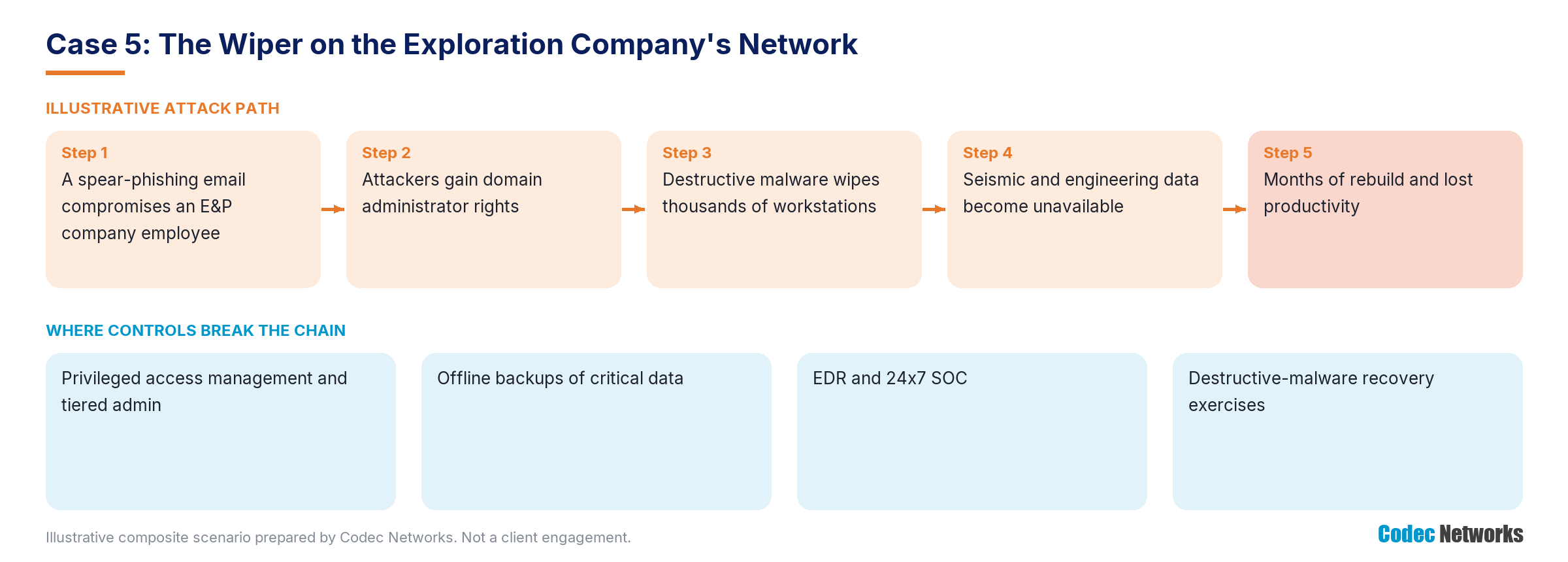
Figure 12: Illustrative attack path for Case Study 5 and the controls that break it.
What went wrong
- Privileged access was not tiered.
- Critical datasets lacked offline backups.
- EDR alerts were not monitored 24x7.
- Rebuild had never been rehearsed.
The impact
Upco E lost productivity and data, reported the incident and rebuilt its identity and backup architecture.
The regulatory lens
- CERT-In Directions: incidents reported within six hours.
- NCIIPC: coordination where systems are notified as critical.
- Partners: obligations to joint-venture partners for shared data.
How Codec Networks would help
|
Need |
Codec Networks response |
Bundle |
|
Protect privilege |
PAM and tiered admin review, offline backups |
B3 |
|
Detect early |
24x7 SOC with EDR and hunting |
B7 |
|
Rehearse rebuild |
Destructive-malware recovery exercises |
B10 |
|
Key lessons Tier privileged access. Keep offline backups of critical data. Monitor endpoints 24x7. Rehearse rebuilding. |
Talk to Codec Networks
|
Contact Codec Networks Pvt. Ltd. New Delhi: 507, 5th Floor, New Delhi House, Barakhamba Road, Connaught Place, New Delhi – 110001 Gurugram: 707, 7th Floor, Silverton Tower, Golf Course Extension Road, Sector 50, Gurugram – 122018, Haryana Landline: 011 430 496 96 | 011 437 522 99 Mobile: +91 99716 76124 | +91 88007 88220 | +91 88003 31124 Email: mktg@codecnetworks.com Web: www.codecnetworks.com |