

Resources Categories
INDUSTRY FACT FILE · MEDICAL DEVICES & MEDTECH
Industry Overview: Medical Devices and Medtech in India
Who builds connected medical devices and platforms, how they are regulated in India and export markets, who buys product security and why each needs a distinct approach.
|
In this document 1. Why medical device security matters now 2. The ecosystem at a glance 3. Categories of medical device and medtech companies 4. The regulatory framework at a glance 5. Government, regulator and private participants 6. Who buys product security inside a medtech company 7. Why each product type needs a different approach 8. How Codec Networks works with medtech companies |
|
Sector scope Sector: medical devices and medtech — connected device manufacturers, diagnostic equipment vendors and remote monitoring platforms. Primary service proposition: embedded/firmware testing, device and API security, secure updates and product threat modelling. Hospitals and pharmaceutical firms are covered in separate fact files. |
1. Why medical device security matters now
India's medical device industry is growing quickly, from bedside monitors and diagnostic equipment to wearables, home-care devices, software as a medical device and cloud platforms that monitor patients remotely. These products combine embedded firmware, wireless connectivity, mobile apps and cloud APIs—and they stay in service for years.
|
Mar 2023 US FDA cyber-device requirements (section 524B) in effect |
Oct 2023 Licensing phased in for all device classes in India |
2017 FDA-announced firmware update for ~465,000 pacemakers |
May 2027 Most DPDP obligations take effect |
Device vulnerabilities have real consequences. In 2017 the US FDA announced a firmware update for about 465,000 implanted pacemakers to address cybersecurity vulnerabilities, and in January 2025 US authorities warned that a widely sold patient monitor contained a hidden function sending data to a hard-coded address.
Regulators now expect security by design. Since March 2023, US FDA section 524B requires cybersecurity plans, SBOMs and design controls for 'cyber devices' in premarket submissions; the EU MDR includes IT security in its safety requirements; and in India the Medical Devices Rules, 2017 regulate all device classes, with CDSCO guidance on medical device software addressing cybersecurity.
|
Key takeaway For a medtech company, cybersecurity is part of product safety and market access. It must be designed in, tested before release and maintained for every unit in the field. |
2. The ecosystem at a glance
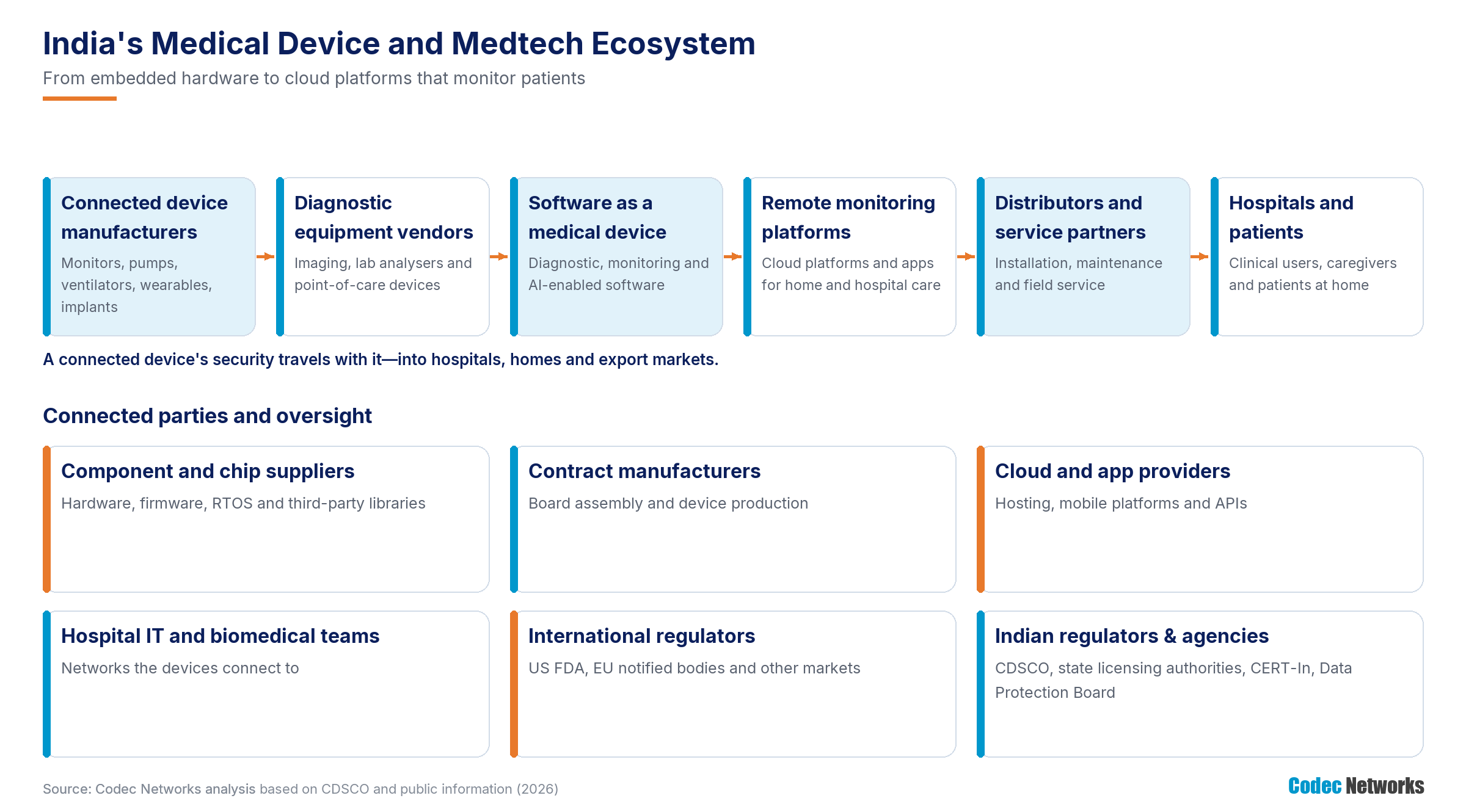
Figure 1: India's medical device and medtech ecosystem.
3. Categories of medical device and medtech companies
|
Category |
Who they are |
Typical ownership |
Key regulatory basis |
|
Connected bedside device makers |
Monitors, infusion pumps, ventilators and anaesthesia systems |
Indian and global manufacturers |
Medical Devices Rules 2017; export rules (FDA, EU MDR) |
|
Diagnostic and imaging equipment vendors |
CT, MRI, X-ray, ultrasound, lab analysers |
Global OEMs and Indian manufacturers |
Medical Devices Rules; export rules |
|
Wearable and home-care device makers |
Glucose meters, BP monitors, wearables |
Start-ups and consumer-health firms |
Medical Devices Rules; DPDP for app data |
|
Implantable device makers |
Pacemakers, neurostimulators and implants |
Specialist manufacturers |
Highest risk classes; export rules |
|
Software-as-a-medical-device developers |
Diagnostic, monitoring and AI software |
Healthtech and AI companies |
Medical Devices Rules; CDSCO software guidance |
|
Remote monitoring platforms |
IoMT clouds and companion apps |
Device makers and platform companies |
DPDP; CERT-In; device regulations where applicable |
|
Contract manufacturers and component suppliers |
Board assembly, modules and firmware |
EMS providers and suppliers |
OEM quality agreements |
4. The regulatory framework at a glance
|
Instrument |
Key requirements |
|
Medical Devices Rules, 2017 (CDSCO) |
Risk-based classification (Class A to D) and licensing of manufacture, import and sale; licensing phased in for all classes by October 2023 |
|
CDSCO guidance on medical device software |
Guidance for software as and in medical devices, finalised in 2026 after an October 2025 draft, addressing cybersecurity and component transparency (as reported) |
|
US FDA section 524B (FD&C Act) |
Premarket submissions for cyber devices must include a cybersecurity plan, SBOM, vulnerability management and design controls (from March 2023) |
|
EU MDR 2017/745 and MDCG guidance |
General safety and performance requirements include IT security and protection against unauthorised access |
|
International standards |
IEC 81001-5-1 (secure product lifecycle), IEC 62304 (software lifecycle), ISO 14971 (risk management) |
|
CERT-In Directions and DPDP |
Six-hour incident reporting for platforms and companies; patient data safeguards with most DPDP obligations from May 2027 |
|
Verify requirements CDSCO guidance details are summarised from public sources. Confirm requirements against the official CDSCO, FDA and EU texts for each product and market. |
5. Government, regulator and private participants
- CDSCO and state licensing authorities regulate medical devices under the Medical Devices Rules, 2017.
- Export-market regulators—the US FDA and EU notified bodies—review cybersecurity evidence in submissions.
- Hospitals and biomedical teams increasingly include security requirements in procurement.
- CERT-In handles incident reporting for organisations and platforms.
- Government initiatives support domestic device manufacturing and medical device parks.
6. Who buys product security inside a medtech company
|
Stakeholder |
What they care about |
What they buy |
|
CEO and Board |
Market access, safety, liability |
Product security programmes |
|
Head of R&D / engineering |
Secure design and release |
Threat modelling, firmware and app testing |
|
Regulatory affairs |
Submission evidence |
FDA 524B, EU MDR and CDSCO documentation |
|
Quality and risk management |
ISO 14971 risk files |
Security risk assessments |
|
Product security / PSIRT |
Vulnerability handling |
SBOM, disclosure and post-market programmes |
|
Cloud and platform teams |
Remote monitoring security |
Cloud and API testing, SOC |
|
Supply chain and procurement |
Component and supplier risk |
Supplier assessments |
7. Why each product type needs a different approach
|
Product type |
Highest-consequence risk |
Starting point for assurance |
|
Connected bedside device |
Firmware flaws and hospital network exposure |
Firmware and network testing, hardening |
|
Imaging and lab equipment |
Legacy operating systems and service access |
Platform hardening, service-tool review |
|
Wearable or home device |
Insecure BLE pairing and app flaws |
Wireless and mobile app testing |
|
Implantable device |
Safety-critical wireless and update paths |
Threat modelling, protocol and update review |
|
SaMD and AI software |
Data and model integrity |
Application, API and AI testing |
|
Remote monitoring platform |
Patient data at scale |
Cloud, API and identity testing |
8. How Codec Networks works with medtech companies
Codec Networks is a CERT-In empanelled information security auditing organisation certified to ISO 9001:2015, ISO/IEC 27001:2022 and ISO/IEC 20000-1:2018. For medtech companies we deliver embedded and firmware testing, device, wireless and API security testing, secure update reviews, product threat modelling, SBOM and vulnerability management support and regulatory evidence packs.
Talk to Codec Networks
|
Contact Codec Networks Pvt. Ltd. New Delhi: 507, 5th Floor, New Delhi House, Barakhamba Road, Connaught Place, New Delhi – 110001 Gurugram: 707, 7th Floor, Silverton Tower, Golf Course Extension Road, Sector 50, Gurugram – 122018, Haryana Landline: 011 430 496 96 | 011 437 522 99 Mobile: +91 99716 76124 | +91 88007 88220 | +91 88003 31124 Email: mktg@codecnetworks.com Web: www.codecnetworks.com |
Note: This document is general industry guidance based on public information available as of October 2026. It is not regulatory advice. CDSCO guidance details are summarised from public sources; confirm requirements against the official CDSCO, US FDA, EU and CERT-In texts.