

Resources Categories

INDUSTRY FACT FILE · MEDIA, ENTERTAINMENT & DIGITAL PLATFORMS
Market Landscape and the Drivers of Cybersecurity Demand in Media
The business, technology, regulatory, legal and statutory forces that create cybersecurity, privacy, audit and assurance work for broadcasters, streaming services, publishers, ad-tech firms, studios, gaming companies and platforms.
|
In this document 1. Market landscape 2. Business drivers 3. Technology drivers 4. Regulatory drivers: CERT-In, IT Rules, TRAI, gaming law, DPDP and SEBI 5. Legal and statutory drivers 6. How the drivers differ by business type 7. What this means for buyers and for Codec Networks |
1. Market landscape
India's media and entertainment market reached about ₹2.78 trillion in 2025, according to FICCI-EY, growing about 9 per cent in the year. Digital media became the largest segment and the first to cross ₹1 trillion; digital advertising grew about 26 per cent and now accounts for nearly two-thirds of advertising revenue; live events grew about 44 per cent; and television, print, film and music remain large businesses in their own right. Streaming has reached national scale—JioHotstar reported 6.12 crore peak concurrent viewers for the Champions Trophy final in March 2025—and gaming has been reshaped by the Online Gaming Act, which banned online money games and shifted the market towards e-sports and social games from May 2026.
Cybersecurity demand follows four pressures. Revenue: piracy cost an estimated ₹22,400 crore in 2023, account takeover erodes subscription income, and an outage on a big night loses advertisers and viewers. Trust: audiences, advertisers and talent abandon platforms that leak data or let deepfakes run. Compliance: CERT-In audits, TRAI audits of conditional access and subscriber systems, the 2026 IT Rules amendment, the gaming law and DPDP now require evidence. Partnerships: studios, sports bodies, global platforms, advertisers and investors audit security before licensing content or signing deals. Spending is moving from perimeter tools to application and API testing, bot defence, content-security programmes, privacy, brand monitoring and managed monitoring.
|
₹2.78 trillion India's media and entertainment sector in 2025 (FICCI-EY) |
~26% Growth in digital advertising in 2025 (FICCI-EY) |
6.12 crore Peak concurrent viewers, Champions Trophy final 2025 |
May 2027 Most DPDP obligations, incl. children's consent, take effect |
|
Market segment |
Landscape and buying behaviour |
Cybersecurity opportunity |
|
Broadcasters and TV networks |
Large listed groups, regional networks, news channels; flat broadcast networks; ad-led revenue |
Broadcast network assessment, segmentation, SOC, ransomware readiness |
|
Distribution platform operators |
Consolidating DTH and cable market; TRAI-audited CAS and SMS; subscriber data |
CAS and SMS audit readiness, customer app testing, DPDP |
|
OTT streaming services |
Telecom-bundled and standalone platforms; live sport at record scale; aggressive release slates |
Login and API testing, bot defence, DRM review, surge SOC |
|
News publishers and digital media |
Social-led audiences, small security teams, high public profile, deepfake target |
Account hardening, brand monitoring, web resilience, awareness |
|
Ad-tech and audience-data firms |
Programmatic growth, third-party tags and SDKs, consent pressure |
DPDP programme, SDK and tag governance, API testing, SOC 2 |
|
Studios, labels, gaming and creator platforms |
Valuable IP, global partners, vendor-heavy production, young audiences |
Content-security programme, game and API testing, DPDP for minors |
2. Business drivers
|
Business driver |
Buying trigger |
Relevant services |
|
Protecting release windows and rights |
A leak before release destroys box-office and licensing value |
Content-security programme, vendor reviews, watermarking |
|
Uptime for live events |
An outage during a final or election night loses viewers and advertisers |
Resilience testing, DDoS readiness, surge SOC |
|
Subscriber and player trust |
Account takeover and data leaks drive churn and complaints |
Bot defence, MFA, API testing, privacy |
|
Advertiser confidence and brand safety |
Malvertising, ad fraud and deepfakes damage advertiser relationships |
Tag governance, brand monitoring, ad-tech reviews |
|
Talent and anchor reputation |
Deepfakes and hijacked accounts trade on faces and voices |
Brand and deepfake monitoring, account hardening |
|
Partner and licensor requirements |
Studios, sports bodies and global platforms audit content security |
Vendor assessments, ISO 27001, content-security audits |
|
Investor and listing scrutiny |
Funding, listing and M&A depend on security evidence |
SOC 2 and ISO 27001 readiness, VAPT reports, Board reporting |
3. Technology drivers
|
Technology driver |
Exposure created |
Codec Networks opportunity |
|
OTT, news and gaming apps |
Logins, APIs and payments exposed to automated attacks |
App and API testing, bot defence, fraud controls |
|
Cloud playout and remote production |
Identity and configuration decide exposure of broadcast systems |
Cloud posture, segmentation, vendor access reviews |
|
DRM, CAS and watermarking |
Key management and licence servers protect the revenue stream |
DRM and CAS review, key management, leak tracing |
|
Ad tags, SDKs and audience data |
Third-party code and personal data in every session |
Tag and SDK governance, consent design |
|
Game servers and anti-cheat |
DDoS, cheating and back-end abuse during tournaments |
Game-server testing, DDoS readiness, monitoring |
|
Generative AI |
Synthetic content and deepfakes; AI in production and moderation |
AI risk review, labelling controls, impersonation monitoring |
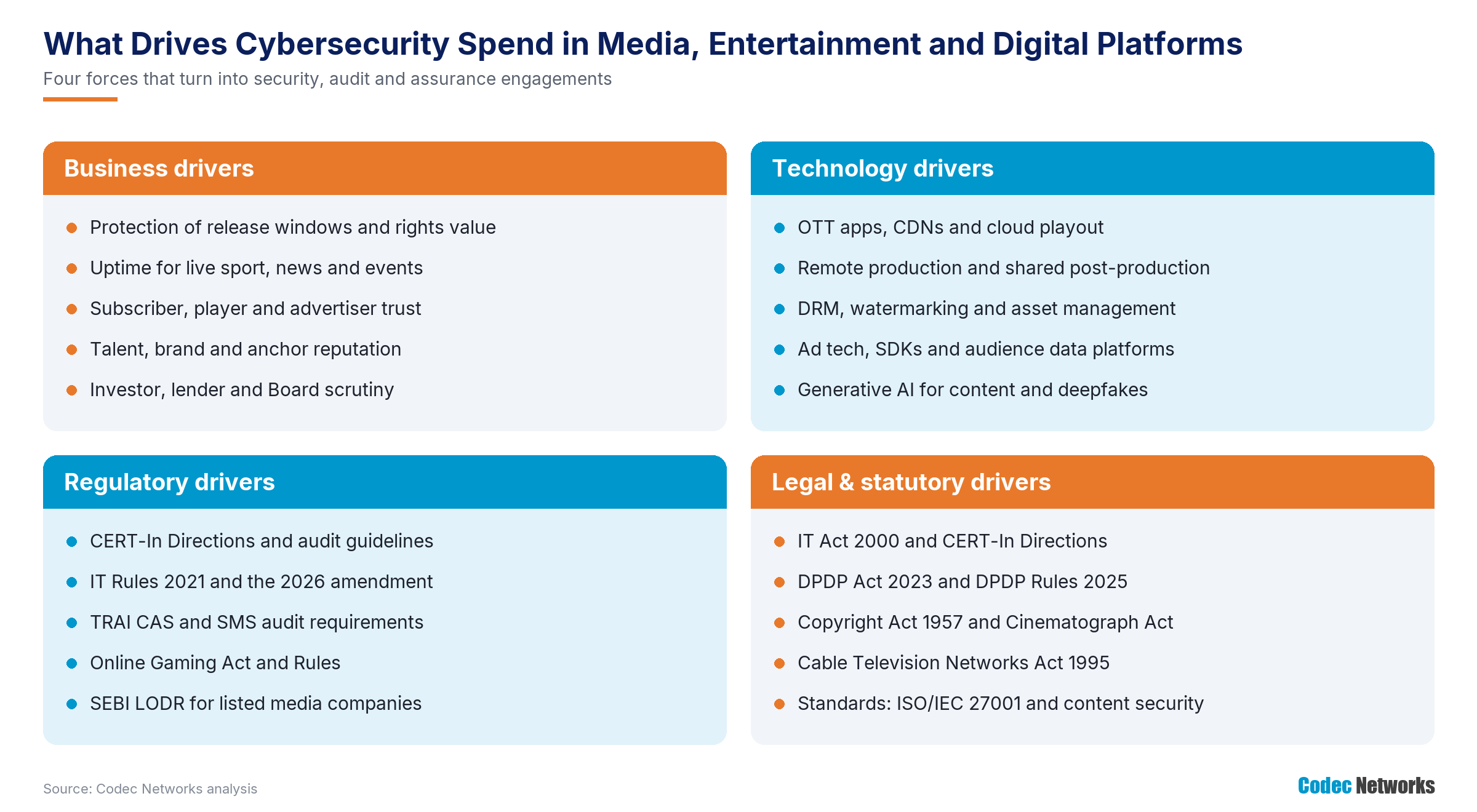
Figure 3: The four groups of drivers behind cybersecurity spending in media, entertainment and digital platforms.
4. Regulatory drivers: CERT-In, IT Rules, TRAI, gaming law, DPDP and SEBI
|
Instrument |
Key requirements |
|
CERT-In Directions (2022) and audit guidelines (2025) |
Six-hour incident reporting; 180-day ICT logs; risk-based independent audits covering infrastructure, cloud and applications |
|
IT Rules 2021 and February 2026 amendment |
Intermediary due diligence and grievance duties; Code of Ethics for digital news and OTT; labelling of synthetically generated content; action on lawful takedown orders within three hours; a two-hour window for non-consensual intimate imagery |
|
TRAI interconnection and audit regulations |
Security requirements for conditional access, subscriber management, fingerprinting and set-top boxes; annual audits by BECIL or TRAI-empanelled auditors; audit manual updated in March 2026 |
|
Promotion and Regulation of Online Gaming Act 2025 and Rules 2026 |
Ban on online money games, their advertising and related payments; promotion of e-sports and social games; Online Gaming Authority of India; in force from 1 May 2026 |
|
DPDP Act 2023 and Rules 2025 |
Viewer, subscriber, player and creator data safeguards; verifiable parental consent and no tracking or targeted advertising directed at children; most obligations from May 2027 |
|
SEBI LODR Regulations (listed companies) |
Quarterly disclosure of cyber incidents in the corporate governance report; Board oversight of risk |
|
Confirm applicability Obligations depend on licence, registration, intermediary status, audience, listing status and contracts. Broadcast regulation is also under review; MIB consulted on draft television and radio rules under the Telecommunications Act in 2026. Confirm against the official instruments. |
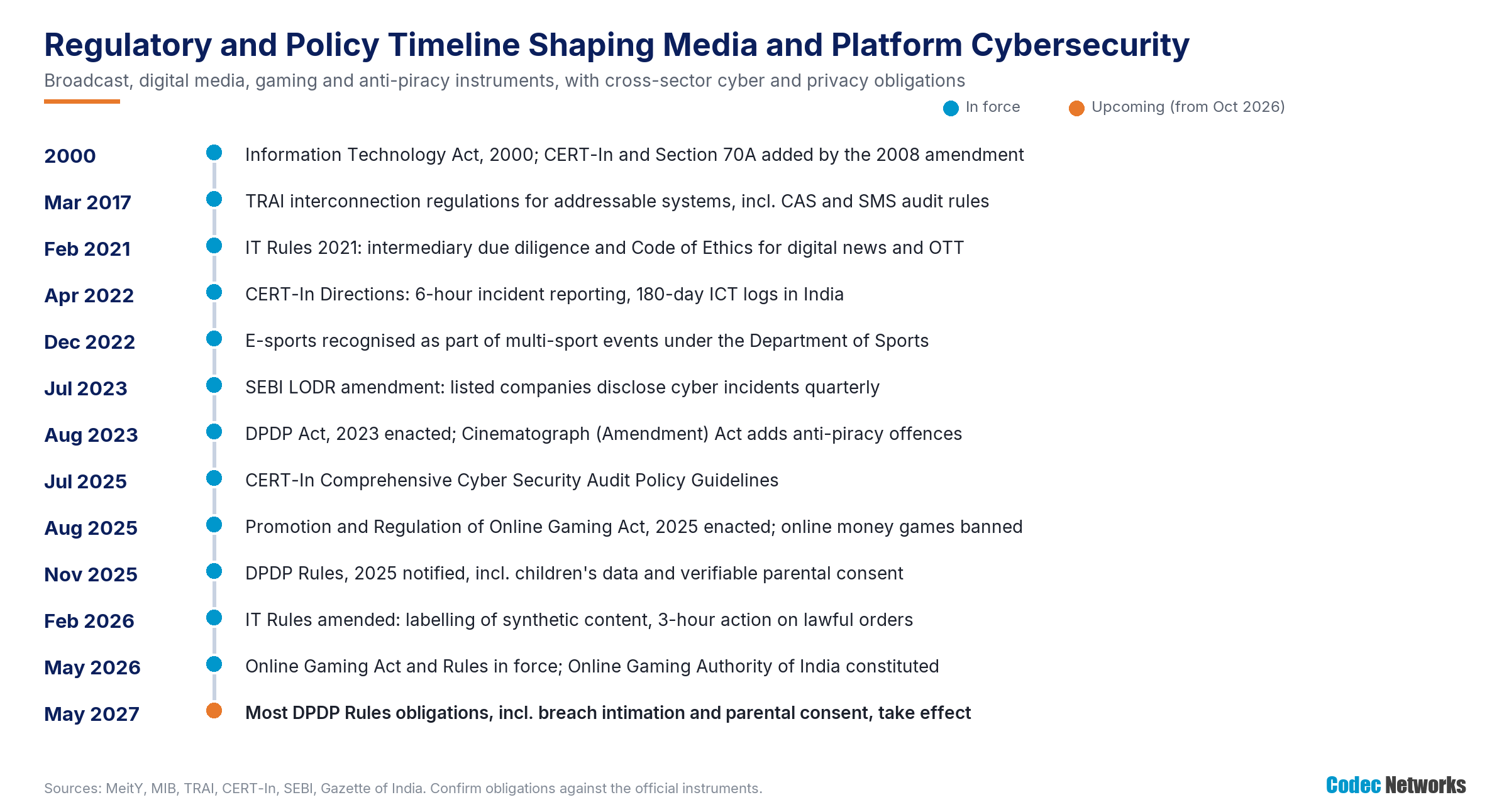
Figure 4: Regulatory and policy timeline shaping media and platform cybersecurity, as of October 2026.
5. Legal and statutory drivers
|
Law or obligation |
Relevance |
Demand created |
|
IT Act, 2000 and CERT-In Directions |
Incident reporting, logging, intermediary safe harbour and offences against computer systems |
SOC, logging, audits and incident response |
|
DPDP Act, 2023 and Rules, 2025 |
Personal data of viewers, subscribers, players, creators and children |
Privacy programmes, consent design, ad-tech and SDK reviews |
|
Copyright Act, 1957 |
Rights in content and protection of technological measures |
DRM review, leak tracing, evidence for enforcement |
|
Cinematograph Act, 1952 as amended in 2023 |
Offences for unauthorised recording and exhibition; nodal officers for takedown |
Pre-release protection, watermarking, takedown evidence |
|
Cable Television Networks (Regulation) Act, 1995 |
Programme and advertising codes, operator registration |
Broadcast IT and signal-integrity controls |
|
Promotion and Regulation of Online Gaming Act, 2025 |
Lawful game categories, payments, advertising and enforcement |
Platform, payment and data reviews for gaming firms |
|
Companies Act, 2013 and SEBI LODR |
Board risk responsibility; disclosure for listed entities |
Board reporting, incident records |
6. How the drivers differ by business type
|
Business type |
Dominant business drivers |
Dominant technology drivers |
Principal regulatory drivers |
|
Broadcasters and DPOs |
Uptime, advertiser confidence |
Playout, CAS and SMS, cloud |
CERT-In, TRAI audits, Cable TV Act |
|
OTT streaming services |
Subscriber growth, rights value |
Apps, CDN, DRM, payments |
IT Rules Code of Ethics, DPDP, CERT-In |
|
News publishers |
Credibility, reach, talent safety |
CMS, social accounts, video |
IT Rules, synthetic-content rules, DPDP |
|
Ad-tech firms |
Advertiser trust, data value |
Tags, SDKs, bidders, data |
DPDP, contracts, CERT-In |
|
Studios and labels |
Release windows, licensor demands |
Asset stores, vendors, screeners |
Copyright, Cinematograph Act, contracts |
|
Gaming and creator platforms |
Player trust, sponsor confidence |
Game servers, APIs, payouts |
Online Gaming Act, IT Rules, DPDP children's rules |
7. What this means for buyers and for Codec Networks
|
Customer buying need |
Recommended offering |
Natural recurring engagement |
|
“Could our login hold up on the night of a final?” |
Credential-stuffing and bot-defence assessment with API testing |
Pre-event testing before every major event |
|
“Our next release leaked from a vendor last year.” |
Content-security programme with vendor assessments and watermarking |
Annual vendor reassessment and leak monitoring |
|
“TRAI's auditor is due and our CAS evidence is thin.” |
CAS and SMS audit readiness and remediation |
Annual audit support |
|
“A deepfake of our anchor is circulating.” |
Brand and deepfake monitoring with takedown evidence |
Continuous monitoring and talent awareness |
|
“Are we ready for DPDP and children's data?” |
DPDP gap assessment with SDK and ad-tech review |
DPO-as-a-Service and annual privacy review |
|
“Our playout network is flat and connected to IT.” |
Broadcast network assessment and segmentation design |
Quarterly testing and SOC coverage |
|
“A global partner wants ISO 27001 before signing.” |
ISO 27001 and SOC 2 readiness, VAPT |
Continuous assurance and retesting |
Talk to Codec Networks
|
Contact Codec Networks Pvt. Ltd. New Delhi: 507, 5th Floor, New Delhi House, Barakhamba Road, Connaught Place, New Delhi – 110001 Gurugram: 707, 7th Floor, Silverton Tower, Golf Course Extension Road, Sector 50, Gurugram – 122018, Haryana Landline: 011 430 496 96 | 011 437 522 99 Mobile: +91 99716 76124 | +91 88007 88220 | +91 88003 31124 Email: mktg@codecnetworks.com Web: www.codecnetworks.com |
Note: This document is general industry guidance based on public information available as of October 2026. It is not legal or regulatory advice. Obligations differ by licence, registration, intermediary status, listing status, audience and contracts; confirm them against the official CERT-In, MeitY, MIB, TRAI, SEBI and Online Gaming Authority instruments and your own agreements.