

Resources Categories
INDUSTRY FACT FILE · LOGISTICS, WAREHOUSING & SUPPLY CHAINS
Five New Case Studies in Logistics and Supply Chain Security
Original 2026 case studies, each written as a blog post, showing how current threats play out in forwarders, 3PLs, couriers, warehouses and fleets and how Codec Networks services break the attack chain.
|
In this document 1. About these case studies 2. Case Study 1: The Forwarder That Went Dark 3. Case Study 2: The Bank Account That Changed 4. Case Study 3: The API Key in the Tracking Widget 5. Case Study 4: The Warehouse That Stopped Picking 6. Case Study 5: The Fleet That Could Be Seen by Everyone |
About these case studies
These five case studies were written for this document set and have not been published elsewhere. Each is a composite scenario combining attack techniques and control failures widely observed in logistics and supply chains with the obligations that apply in India as of October 2026—in particular CERT-In's Directions and audit guidelines, SEBI disclosure for listed companies, DPDP, MoRTH and customs rules and the shipper requirements that reach Indian operators.
|
Important disclosure The organisations described are fictional and the scenarios are illustrative. They are not accounts of real incidents, and they are not Codec Networks client engagements or claims of achieved outcomes. Their value lies in showing how connected weaknesses form an attack chain, which controls break it, and which services test those controls. |
|
Case study |
Organisation type |
Core threat |
Regulatory lens |
Primary bundles |
|
1. The Forwarder That Went Dark |
Freight forwarder and customs broker |
Ransomware encrypting freight, customs and billing systems |
CERT-In; Customs; shipper contracts |
B3, B7, B8 |
|
2. The Bank Account That Changed |
Contract logistics (3PL) provider |
Business email compromise and freight payment diversion |
CERT-In; contracts; banking |
B10, B7, B3 |
|
3. The API Key in the Tracking Widget |
Express and courier company |
Partner API key leak and consignee data scraping |
DPDP; CERT-In; marketplace contracts |
B2, B7, B6 |
|
4. The Warehouse That Stopped Picking |
Automated fulfilment centre operator |
Vendor access and flat network halting automation and WMS |
CERT-In; IEC 62443; shipper contracts |
B1, B3, B9 |
|
5. The Fleet That Could Be Seen by Everyone |
Trucking and fleet operator |
Telematics platform compromise enabling cargo theft |
MoRTH AIS 140; insurance; CERT-In |
B11, B1, B7 |
Case Study 1: The Forwarder That Went Dark
The ships kept arriving. Nothing could be cleared, released or billed for eleven days.
|
At a glance |
|
|
Organisation |
A mid-sized freight forwarder and customs broker (“Fwdco A”) handling ocean and air imports for manufacturing and retail clients |
|
Threat |
Phishing leading to domain compromise and ransomware across the freight management, customs filing and billing systems |
|
Why it is new |
Forwarders cannot pause: cargo accrues demurrage every day the systems are down |
|
Codec Networks services |
Segmentation and backups, SOC, forensics (Bundles B3, B7, B8) |
The scenario
A documentation clerk at Fwdco A opened a phishing attachment disguised as a shipping instruction. Over ten days the attackers escalated to domain administrator; EDR raised alerts that nobody watched at night.
On a Sunday night ransomware encrypted the freight management system, the customs filing workstations, the billing server and the backup server, which was domain-joined and online.
Containers for forty clients sat at the port while filings and delivery orders could not be processed. Fwdco A rebuilt systems from partial backups over eleven days, paying demurrage and detention on behalf of clients and losing two key accounts.
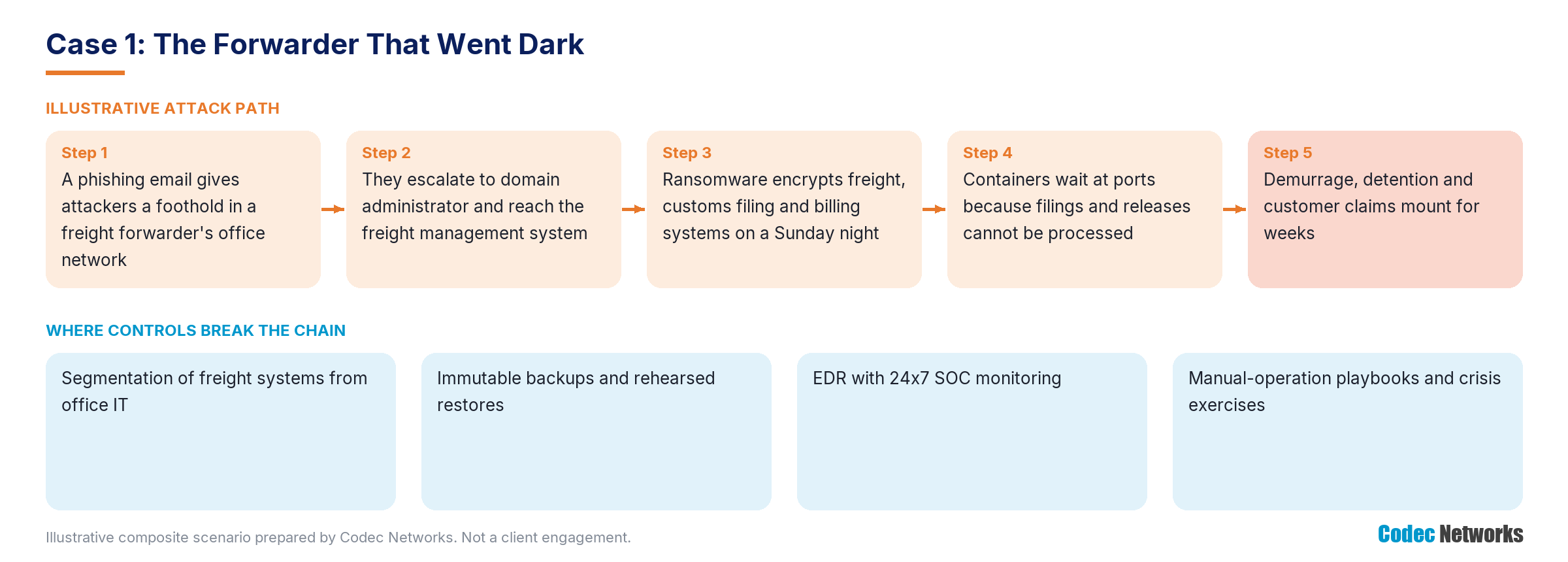
Figure 8: Illustrative attack path for Case Study 1 and the controls that break it.
What went wrong
- Backups were online and domain-joined, so they were encrypted too.
- Freight and customs systems shared the office network and credentials.
- EDR alerts were not monitored 24x7.
- No manual filing or release procedure had been rehearsed.
The impact
Fwdco A absorbed demurrage, detention and claims, paid recovery costs, reported the incident to CERT-In and faced customs scrutiny of delayed filings. Two shippers moved their business after invoking contract remedies.
The regulatory lens
- CERT-In Directions: incident reported within six hours; logs needed for investigation.
- Customs: delayed filings and releases triggered queries and penalties on behalf of importers.
- Shipper contracts: service-level and notification clauses invoked; one contract renegotiated with security requirements.
How Codec Networks would help
|
Need |
Codec Networks response |
Bundle |
|
Separate and recover |
Segmentation of freight and customs systems, immutable backups, tested restores and manual-operation playbooks |
B3 |
|
Detect early |
24x7 SOC with EDR monitoring and threat hunting |
B7 |
|
Investigate and report |
Forensics, root cause, CERT-In, customs and shipper reporting support |
B8 |
|
Key lessons Keep backups immutable and off the domain. Segment the systems cargo depends on. Monitor EDR around the clock. Rehearse filing and releasing cargo without IT. |
Case Study 2: The Bank Account That Changed
No malware, no ransom—just an email that looked exactly like the last fifty.
|
At a glance |
|
|
Organisation |
A 3PL (“Cargoco B”) running warehousing and transport for consumer-goods shippers, invoicing monthly by email |
|
Threat |
A compromised finance mailbox used to send bank-detail change notices from a look-alike domain |
|
Why it is new |
Freight is paid by invoice between parties who rarely meet, which makes payment diversion easy |
|
Codec Networks services |
BEC simulation and controls, SOC, email hardening (Bundles B10, B7, B3) |
The scenario
A Cargoco B accounts receivable executive reused a password that had leaked elsewhere, and the mailbox had no MFA. Attackers logged in, created a forwarding rule and read invoice conversations with shippers for six weeks.
They registered a domain one letter different from Cargoco B's and emailed four shippers that the company had changed banks, attaching invoices identical to the genuine ones with new account details.
Three shippers paid. Cargoco B discovered the fraud only when it chased overdue invoices and the shippers produced the payment confirmations. The money had already moved through mule accounts.
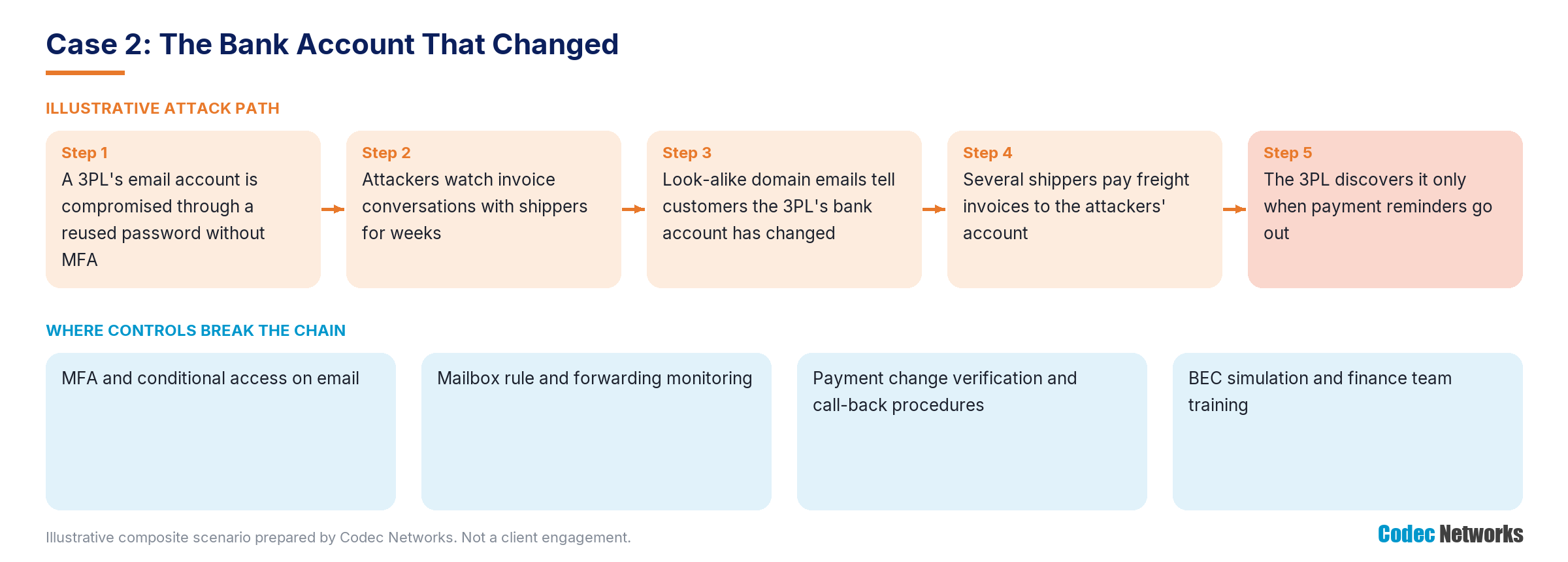
Figure 9: Illustrative attack path for Case Study 2 and the controls that break it.
What went wrong
- No MFA on email accounts.
- Mailbox forwarding rules and foreign logins were not monitored.
- No procedure for verifying bank-detail changes by call-back on either side.
- Finance staff had never been trained against BEC patterns.
The impact
Cargoco B and its shippers disputed liability for the diverted payments, relationships were strained, banks recovered only a fraction, and Cargoco B reported the incident to CERT-In and the police.
The regulatory lens
- CERT-In Directions: unauthorised access to email reported within six hours of recognition.
- Contracts: shipper agreements were silent on payment verification and liability for diverted funds.
- Banking and police: recovery depended on rapid reporting through bank fraud channels.
How Codec Networks would help
|
Need |
Codec Networks response |
Bundle |
|
Train and test |
BEC simulation, finance team training, payment verification procedure design |
B10 |
|
See it in time |
Mailbox rule, login and payment anomaly monitoring in the SOC |
B7 |
|
Harden identity and email |
MFA, conditional access and domain protections such as DMARC |
B3 |
|
Key lessons Enforce MFA on every mailbox. Monitor forwarding rules and unusual logins. Verify every bank-detail change by call-back. Put payment verification into shipper contracts. |
Case Study 3: The API Key in the Tracking Widget
The attackers never touched the courier's network. A merchant's website gave them the key.
|
At a glance |
|
|
Organisation |
A national express courier (“Shipco C”) delivering for marketplaces and D2C brands through merchant APIs |
|
Threat |
A merchant's embedded API key used to enumerate sequential shipment numbers and scrape consignee data |
|
Why it is new |
Couriers issue thousands of keys and shipment data is the raw material of delivery scams |
|
Codec Networks services |
Partner API testing, API monitoring, DPDP programme (Bundles B2, B7, B6) |
The scenario
Shipco C issued each merchant an API key for booking and tracking. One D2C brand embedded its key in the JavaScript of its public order-tracking page.
Attackers extracted the key and found that shipment numbers were sequential and that the key could query any shipment. Over three weeks they pulled names, phones and addresses for millions of consignees.
A wave of messages followed, quoting real parcel numbers and asking consignees to pay a small customs or re-delivery fee or share an OTP. Shipco C's brand appeared in thousands of complaints before it understood the source.
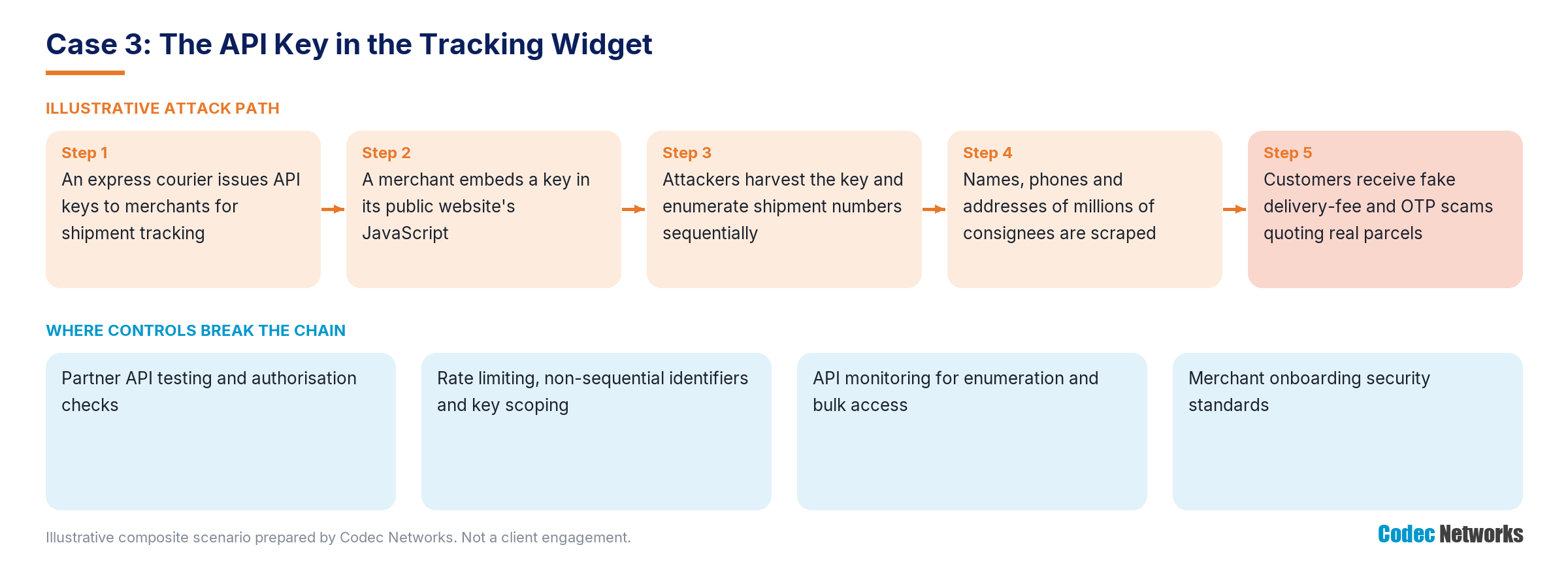
Figure 10: Illustrative attack path for Case Study 3 and the controls that break it.
What went wrong
- Keys were not scoped to the issuing merchant's shipments.
- Sequential identifiers made enumeration trivial.
- No rate limiting or bulk-access detection on the tracking API.
- No merchant onboarding standard forbade embedding keys in public code.
The impact
Shipco C notified consignees and marketplaces, rotated every key, rebuilt its API authorisation model, reported the incident to CERT-In and faced marketplace penalties and customer churn.
The regulatory lens
- CERT-In Directions: data breach reported within six hours of discovery.
- DPDP: consignee personal data exposed; once in force, breach intimation and processor obligations to marketplace clients would apply.
- Marketplace contracts: security and notification clauses invoked.
How Codec Networks would help
|
Need |
Codec Networks response |
Bundle |
|
Test the APIs |
Partner API testing: authorisation, enumeration, rate limits, key scoping and rotation |
B2 |
|
Watch for abuse |
API monitoring for enumeration and bulk retrieval in the SOC |
B7 |
|
Govern the data |
DPDP programme: data mapping, minimisation, retention and breach workflow |
B6 |
|
Key lessons Scope every partner key to its own data. Use non-guessable identifiers. Rate-limit and monitor tracking APIs. Set security standards for merchants who hold your keys. |
Case Study 4: The Warehouse That Stopped Picking
The sorter stopped first. By midnight the WMS was gone too.
|
At a glance |
|
|
Organisation |
A fulfilment operator (“Wareco D”) running an automated multi-client centre with sorters and AS/RS for retail shippers |
|
Threat |
Malware from an automation vendor's laptop spreading across a flat site network to PLCs and the WMS |
|
Why it is new |
Warehouse automation has made 3PL sites OT environments without OT security |
|
Codec Networks services |
Warehouse OT assessment, segmentation, vendor risk (Bundles B1, B3, B9) |
The scenario
Wareco D's automation vendor maintained a standing VPN into the site and connected engineers' laptops directly to the control network during visits. The WMS, sorter PLCs, scanners and office PCs shared one flat network.
During a peak-season visit an infected vendor laptop spread malware across the site. Sorter PLCs lost communication and the AS/RS halted; hours later ransomware encrypted the WMS server.
Picking stopped for two days at the height of the season. Shippers missed marketplace cut-offs and invoked penalties, and one moved volume to a competitor's site.
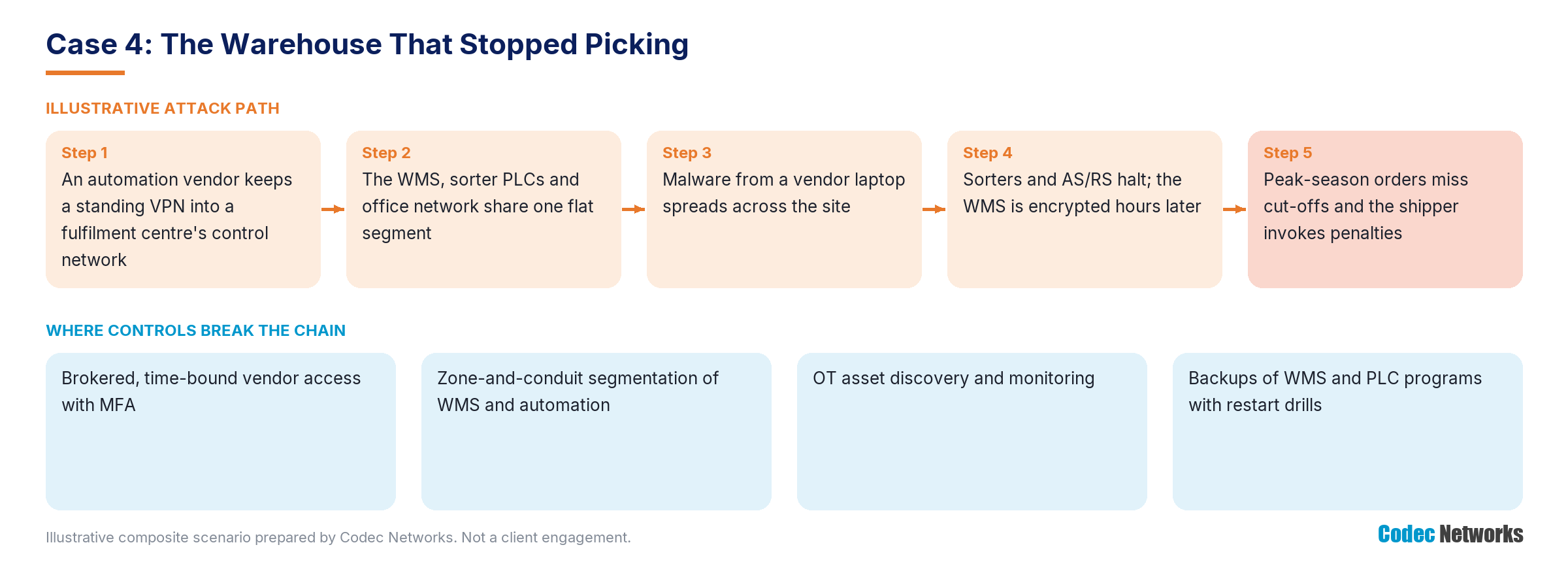
Figure 11: Illustrative attack path for Case Study 4 and the controls that break it.
What went wrong
- Standing vendor VPN and direct laptop connections to the control network.
- Flat network across WMS, PLCs, scanners and office IT.
- No OT asset inventory or monitoring to see the spread.
- WMS and PLC backups untested; no restart sequence documented.
The impact
Wareco D lost two days of peak output, paid shipper penalties, funded an independent assessment demanded by its largest client, reported the incident to CERT-In and re-architected its site network and vendor access.
The regulatory lens
- CERT-In Directions: incident reported within six hours; audit guidelines expect OT in scope.
- IEC 62443: zone-and-conduit and remote access requirements the site did not meet.
- Shipper contracts: penalties and an independent assessment requirement.
How Codec Networks would help
|
Need |
Codec Networks response |
Bundle |
|
Assess the site |
Warehouse OT assessment of WMS, PLCs, sorters and AS/RS with asset discovery and monitoring |
B1 |
|
Segment and recover |
Zone-and-conduit segmentation, brokered vendor access, backups and restart drills |
B3 |
|
Govern the vendor |
Automation vendor assessment, device standards and contract clauses |
B9 |
|
Key lessons Treat the warehouse as an OT environment. Segment automation from WMS and office IT. Broker and record every vendor session. Back up WMS and PLC programs and rehearse restarts. |
Case Study 5: The Fleet That Could Be Seen by Everyone
The thieves did not follow the truck. They watched it on the same dashboard the dispatcher used.
|
At a glance |
|
|
Organisation |
A trucking operator (“Fleetco E”) moving consumer electronics and pharmaceuticals under contract, with telematics on every vehicle |
|
Threat |
Default administrator credentials on the telematics platform used to track high-value loads and plan an interception |
|
Why it is new |
Telematics turns every truck into a connected endpoint whose data is as valuable as the cargo |
|
Codec Networks services |
Fleet and IoT assessment, platform testing, SOC (Bundles B11, B1, B7) |
The scenario
Fleetco E rolled out AIS 140-compliant telematics across 600 trucks. The platform's administrator account kept the vendor's default password and was reachable from the internet; dispatchers shared one operator login.
A criminal group found the login, watched live locations and stop patterns of electronics loads for weeks and intercepted a truck at a predictable night halt. Investigators later found the attackers had also tested the platform's remote immobiliser command.
The cargo insurer disputed the claim pending evidence of controls, the shipper paused the contract, and Fleetco E discovered that months of platform logins had never been reviewed.
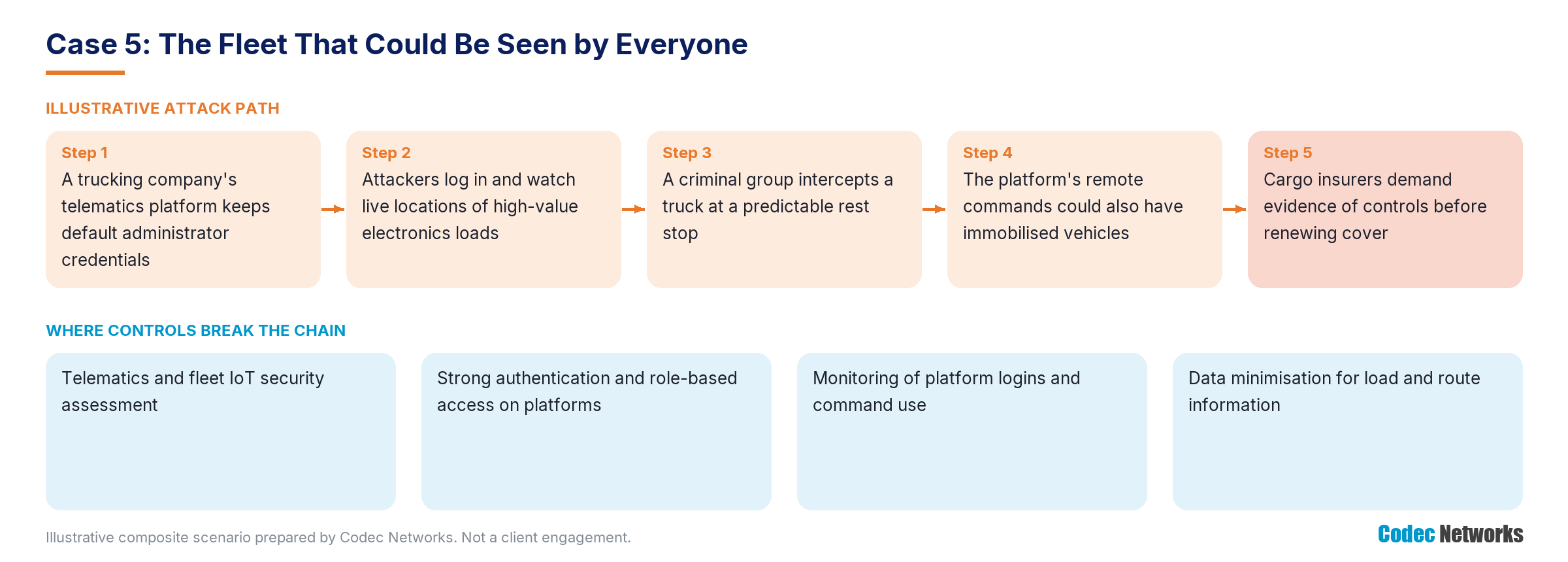
Figure 12: Illustrative attack path for Case Study 5 and the controls that break it.
What went wrong
- Default credentials and internet exposure on the telematics platform.
- Shared operator logins with no MFA or role separation.
- No monitoring of platform access or command use.
- Load and route data visible to every platform user.
The impact
Fleetco E lost a high-value consignment, faced an insurance dispute and a suspended contract, reported the incident to CERT-In and the police and rebuilt its telematics access model.
The regulatory lens
- MoRTH AIS 140 notifications: tracking devices and platforms are regulated equipment whose data must be protected.
- Insurance: cargo and cyber policies conditioned on access controls and monitoring.
- CERT-In Directions: unauthorised access reported within six hours of recognition.
How Codec Networks would help
|
Need |
Codec Networks response |
Bundle |
|
Assess the fleet |
Fleet and IoT security assessment of telematics platform, devices and remote commands |
B11 |
|
Test the platform |
Authentication, authorisation and exposure testing of telematics and driver apps |
B1 |
|
Watch access |
SOC monitoring of platform logins, command use and unusual data access |
B7 |
|
Key lessons Change default credentials and remove internet exposure. Give every user a named account with MFA and a role. Monitor who looks at loads and who sends commands. Minimise who can see route and stop data. |
Talk to Codec Networks
|
Contact Codec Networks Pvt. Ltd. New Delhi: 507, 5th Floor, New Delhi House, Barakhamba Road, Connaught Place, New Delhi – 110001 Gurugram: 707, 7th Floor, Silverton Tower, Golf Course Extension Road, Sector 50, Gurugram – 122018, Haryana Landline: 011 430 496 96 | 011 437 522 99 Mobile: +91 99716 76124 | +91 88007 88220 | +91 88003 31124 Email: mktg@codecnetworks.com Web: www.codecnetworks.com |