

Resources Categories
INDUSTRY FACT FILE · IT SERVICES & SYSTEMS INTEGRATION
Industry Overview: IT Services and Systems Integration in India
Who builds, integrates and runs technology for clients, the obligations that reach them, who buys cybersecurity inside them and why each needs a distinct approach.
|
In this document 1. Why IT services security matters now 2. The ecosystem at a glance 3. Categories of IT service providers 4. The obligations that reach IT service providers 5. Government, client and private participants 6. Who buys cybersecurity inside an IT service firm 7. Why each provider type needs a different approach 8. How Codec Networks works with IT service firms |
|
Sector scope Sector: IT services and systems integration — software developers, IT consultancies, system integrators and managed service providers (MSPs). Primary service proposition: secure code review, DevSecOps, infrastructure testing, ISO readiness, SOC and supply chain security. ITeS, BPO and GCCs, SaaS vendors and cloud providers are covered in separate fact files. |
1. Why IT services security matters now
IT service providers write their clients' software, integrate their platforms and run their infrastructure. To do that they hold source code, credentials, remote-management tools and privileged access to many client environments at once. Attackers know that compromising one provider can open the door to dozens of clients.
|
6 hours To report cyber incidents to CERT-In |
Annual Third-party cyber audits under CERT-In's 2025 guidelines (as reported) |
Sep 2026 EU Cyber Resilience Act reporting obligations apply |
May 2027 Most DPDP obligations take effect |
High-profile supply-chain incidents—such as the SolarWinds build compromise (2020), the Kaseya VSA ransomware attack on managed service providers (2021) and the MOVEit file-transfer breaches (2023)—showed how one provider's weakness becomes many clients' breach.
In India, CERT-In's Directions require six-hour incident reporting, and CERT-In's July 2025 audit policy guidelines call for risk-based cyber audits. Regulated clients pass on their regulators' third-party rules—RBI's IT outsourcing Directions, SEBI's CSCRF and IRDAI's vendor controls—while European clients bring GDPR, NIS2, DORA and the Cyber Resilience Act.
|
Key takeaway For an IT service firm, security is part of the product. Clients buy access to your people and tools—and inherit your weaknesses. Evidence of secure delivery now wins and keeps contracts. |
2. The ecosystem at a glance
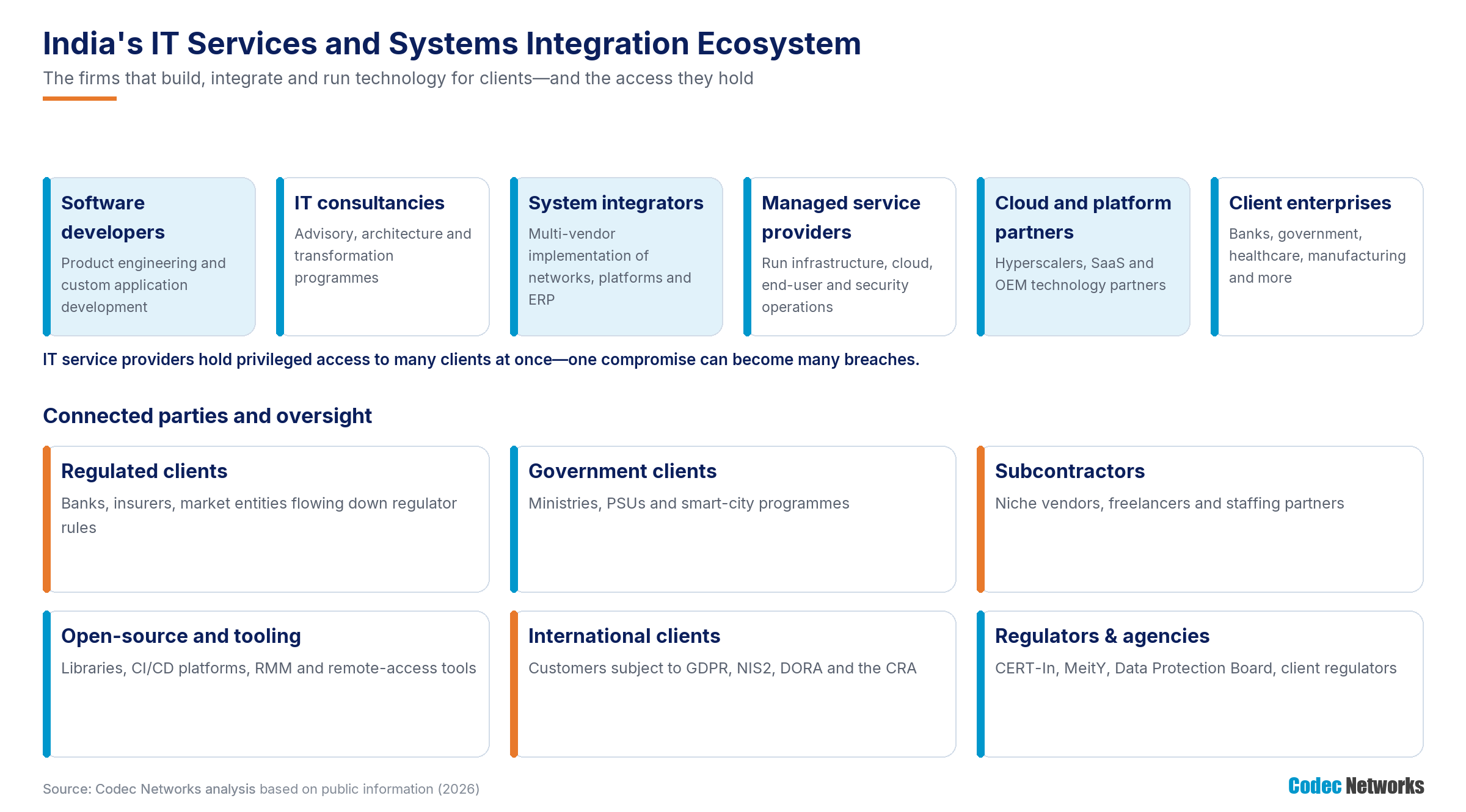
Figure 1: India's IT services and systems integration ecosystem.
3. Categories of IT service providers
|
Category |
Who they are |
Typical ownership |
Key regulatory basis |
|
Software developers |
Custom application and product engineering for clients |
Indian and global IT companies, start-ups |
IT Act; CERT-In; DPDP; client contracts |
|
IT consultancies |
Strategy, architecture, transformation and programme management |
Consulting firms and IT majors |
Client contracts; DPDP |
|
System integrators |
Implement networks, data centres, ERP and multi-vendor platforms |
IT majors, OEM partners, specialist SIs |
Client contracts; government audit requirements |
|
Managed service providers |
Operate infrastructure, cloud, end-user and security services |
IT majors and specialist MSPs |
CERT-In; client regulator flow-down |
|
Product engineering firms |
Build software products on behalf of software companies |
Engineering services firms |
Client contracts; EU CRA for EU products |
|
Staffing and subcontractors |
Engineers placed on client projects |
Staffing firms and freelancers |
Client and prime contractor terms |
|
Global delivery centres of IT firms |
Offshore delivery for international clients |
Indian and multinational IT firms |
GDPR, NIS2, DORA and client contracts |
4. The obligations that reach IT service providers
|
Instrument |
What it means for IT service providers |
|
CERT-In Directions (28 April 2022) |
Cyber incidents reported within six hours of noticing them; ICT logs kept for a rolling 180 days in India Applies to service providers, intermediaries, data centres and body corporates |
|
CERT-In Cyber Security Audit Policy Guidelines (25 July 2025) |
Risk-based cyber audits by independent auditors, reported as at least annual, with event-triggered audits after major changes |
|
RBI Master Direction on Outsourcing of IT Services (2023) |
Bank and NBFC clients must assess and oversee IT service providers, with audit rights, security and incident clauses in contracts |
|
SEBI CSCRF (2024) and IRDAI 2026 guidelines |
Market and insurance clients must manage third-party service providers, including audits and contract controls |
|
DPDP Act 2023 and DPDP Rules 2025 |
Clients as data fiduciaries must ensure processors apply reasonable security safeguards; most obligations from May 2027 |
|
EU GDPR, NIS2, DORA and Cyber Resilience Act |
Processor duties, supply-chain security, ICT third-party risk for financial clients, and security of products with digital elements (reporting from September 2026) |
|
How these apply Many of these obligations reach IT service providers through client contracts rather than directly. Confirm the specific clauses in your agreements and the official instruments. |
5. Government, client and private participants
- CERT-In sets incident reporting, logging and audit expectations under the IT Act.
- MeitY oversees IT policy, the DPDP framework and government technology programmes.
- Regulated clients—banks, insurers, market entities—flow down their regulators' third-party requirements.
- Government clients often require security audits before go-live of systems built by integrators.
- Global clients expect ISO/IEC 27001, SOC 2 and compliance with their local laws.
6. Who buys cybersecurity inside an IT service firm
|
Stakeholder |
What they care about |
What they buy |
|
CEO and delivery leadership |
Client trust, contract wins, liability |
Board advisory, assurance programmes |
|
CISO |
Own and managed estates, incidents |
VAPT, SOC, red teaming, IR retainer |
|
CTO and engineering heads |
Secure code and pipelines |
Code review, DevSecOps, SBOM |
|
Managed services heads |
RMM and privileged tool security |
PAM reviews, infrastructure testing, SOC |
|
Compliance and quality |
ISO, SOC 2 and client audits |
Readiness, evidence packs, audits |
|
Legal and contracts |
Indemnities, flow-down clauses, DPDP |
Privacy programme, contract reviews |
|
Vendor and resource management |
Subcontractor and staffing risk |
Third-party assessments, access reviews |
7. Why each provider type needs a different approach
|
Provider type |
Highest-consequence risk |
Starting point for assurance |
|
Software developer |
Vulnerable or tampered software delivered to clients |
Secure code review, SCA, pipeline security |
|
IT consultancy |
Client data and credential exposure, BEC |
Email and access security, ISO 27001 |
|
System integrator |
Privileged access to many client systems |
Infrastructure testing, access reviews, SOC |
|
Managed service provider |
RMM tool abuse leading to mass client compromise |
RMM and PAM testing, 24x7 SOC, segmentation |
|
Product engineering firm |
Supply-chain compromise and IP leakage |
Build integrity, SBOM, DLP |
|
Staffing and subcontractor |
Orphaned and unmanaged access |
Joiner-mover-leaver reviews, third-party assurance |
8. How Codec Networks works with IT service firms
Codec Networks is a CERT-In empanelled information security auditing organisation certified to ISO 9001:2015, ISO/IEC 27001:2022 and ISO/IEC 20000-1:2018. For IT service firms we deliver secure code review, DevSecOps and pipeline reviews, infrastructure and RMM testing, ISO/IEC 27001 and SOC 2 readiness, managed SOC and supply chain security assessments.
Talk to Codec Networks
|
Contact Codec Networks Pvt. Ltd. New Delhi: 507, 5th Floor, New Delhi House, Barakhamba Road, Connaught Place, New Delhi – 110001 Gurugram: 707, 7th Floor, Silverton Tower, Golf Course Extension Road, Sector 50, Gurugram – 122018, Haryana Landline: 011 430 496 96 | 011 437 522 99 Mobile: +91 99716 76124 | +91 88007 88220 | +91 88003 31124 Email: mktg@codecnetworks.com Web: www.codecnetworks.com |
Note: This document is general industry guidance based on public information available as of October 2026. Client regulator requirements apply through contracts. Confirm obligations against the official CERT-In, MeitY, RBI, SEBI, IRDAI and EU instruments and your agreements before making compliance decisions.