

Resources Categories

INDUSTRY FACT FILE · FINTECH
Industry Overview: Fintech and Digital Financial Services in India
The types of fintech players, how they are owned and regulated, who buys cybersecurity inside them, and why each model needs a distinct approach.
|
In this document 1. Why fintech cybersecurity matters now 2. The fintech ecosystem at a glance 3. Categories of fintech players 4. Licensed, partner-led and unregulated models 5. Government, public-sector and private participants 6. Who buys cybersecurity inside a fintech 7. Why each fintech model needs a different approach 8. How Codec Networks works with fintechs |
|
Sector scope Sector: Fintech and digital financial services — lending technology firms, Account Aggregator ecosystems, embedded finance platforms and financial API providers. Primary service proposition: API security, cloud assessment, DevSecOps, TPRM, fraud simulations and regulatory readiness. Payment aggregators, gateways, wallets and processors are covered in the separate Payments & Transaction Processing fact file. |
1. Why fintech cybersecurity matters now
India's fintech companies build on digital public infrastructure—Aadhaar-based e-KYC, UPI, DigiLocker, e-sign and the Account Aggregator framework—to deliver credit, financial data and embedded financial services at national scale. They are typically API-first, cloud-native and deeply integrated with banks, NBFCs and other regulated entities.
|
500 mn+ Account Aggregator consents fulfilled (Sahamati, Sept 2026) |
1,100+ Regulated entities live on the AA ecosystem |
310 mn+ Accounts linked by customers on the AA network |
May 2027 Most DPDP Rules obligations take effect |
That scale makes fintechs a target. A single broken API check, leaked cloud key or malicious SDK can expose millions of customers' financial data. And because most fintechs operate through regulated partners, their security is examined by banks, NBFCs, investors and enterprise customers—and, for licensed entities such as Account Aggregators and P2P lending platforms, directly by RBI.
|
Key takeaway For fintechs, cybersecurity is a condition of partnership and growth: it determines whether a bank will integrate, an investor will fund and a regulator will be satisfied. |
2. The fintech ecosystem at a glance
Fintech players sit between customers and regulated financial institutions, connected through shared digital public infrastructure and a large technology supply chain.
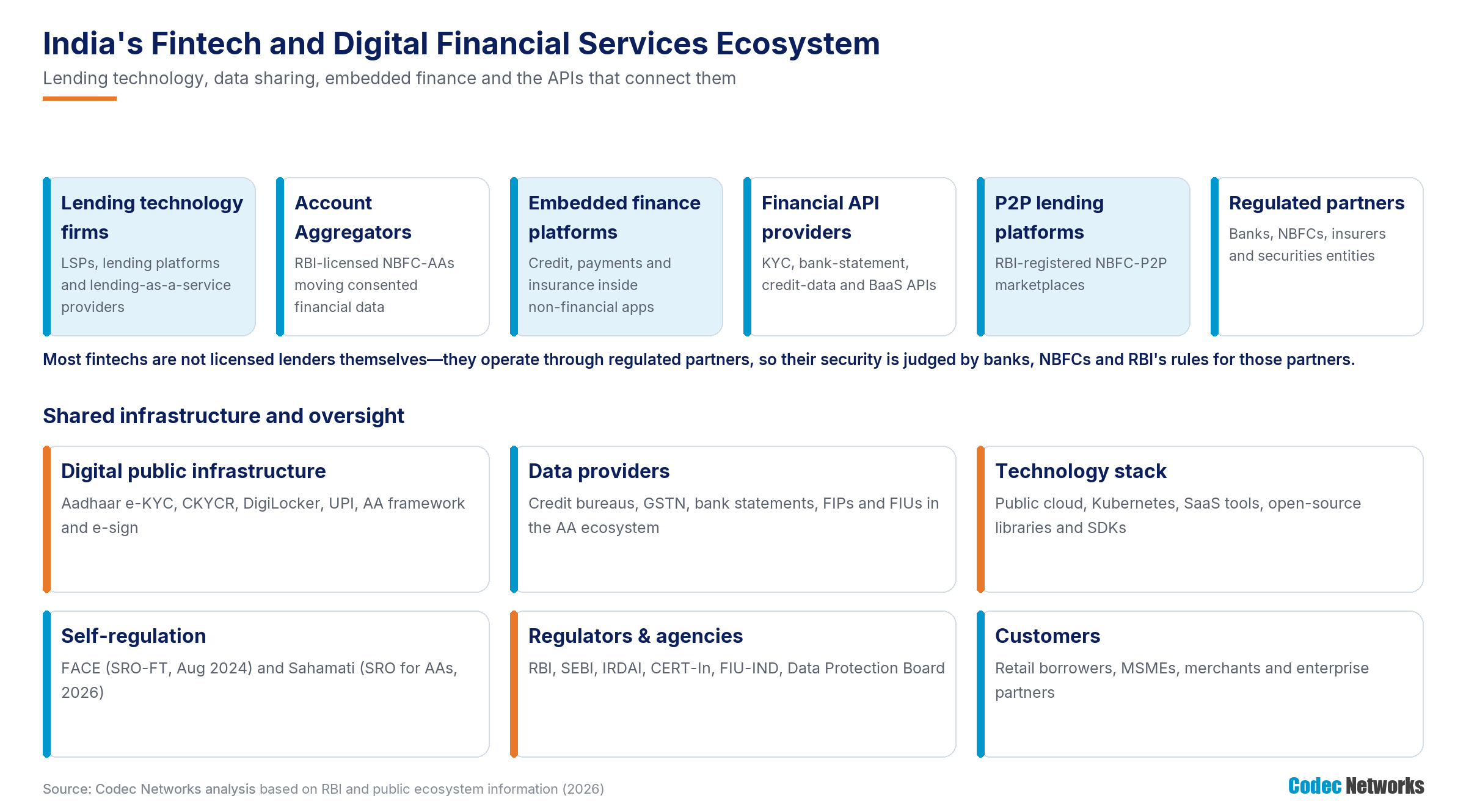
Figure 1: The fintech and digital financial services ecosystem.
3. Categories of fintech players
|
Category |
Who they are |
Typical ownership |
Regulatory basis |
|
Lending technology firms and LSPs |
Platforms that source, underwrite, service or collect loans on behalf of banks and NBFCs; multi-lender marketplaces |
Venture-funded startups, scale-ups and group companies |
RBI (Digital Lending) Directions, 2025—through the regulated lender, which remains accountable |
|
Account Aggregators (NBFC-AA) |
RBI-licensed entities that move consented financial data between Financial Information Providers and Users |
Private companies; several bank- or group-backed |
RBI Master Direction for NBFC-AAs; RBI 2026 NBFC cybersecurity Directions; Sahamati recognised as SRO in 2026 |
|
Embedded finance platforms |
Consumer, commerce and B2B platforms offering credit, payments or insurance inside their products |
E-commerce, travel, SaaS and big-tech companies |
Through regulated partners (banks, NBFCs, insurers) and their outsourcing and digital lending rules |
|
Financial API and BaaS providers |
Providers of KYC, bank-statement analysis, credit data, account and card APIs and banking-as-a-service platforms |
Private technology companies |
Contracts with regulated clients; clients' outsourcing and third-party requirements |
|
P2P lending platforms (NBFC-P2P) |
RBI-registered marketplaces connecting individual lenders and borrowers |
Private companies |
RBI Master Directions for NBFC-P2P; RBI 2026 NBFC cybersecurity Directions |
|
KYC and identity providers |
e-KYC, video-KYC, document verification and fraud-check services |
Private technology companies |
Clients' KYC directions and contracts; UIDAI requirements where applicable |
|
Wealthtech and insurtech apps |
Investment, advisory and insurance distribution apps |
Startups and group companies |
SEBI or IRDAI registration of the entity or its partners (covered in the capital markets, asset management and insurance fact files) |
|
Fintech SaaS vendors |
Loan origination, collections, analytics and risk platforms sold to banks and NBFCs |
Private Indian and international companies |
Clients' outsourcing and third-party requirements; certifications such as ISO 27001 and SOC 2 |
4. Licensed, partner-led and unregulated models
A fintech's cybersecurity obligations depend on its operating model:
|
Model |
Examples |
How cybersecurity obligations arise |
|
Directly licensed |
NBFC-AAs, NBFC-P2Ps, fintechs holding NBFC or other licences |
Direct RBI requirements, including the 2026 NBFC cybersecurity Directions by layer and 6-hour incident reporting to RBI |
|
Partner-led |
LSPs, lending platforms, embedded finance and BaaS working with banks and NBFCs |
Requirements flow down from the regulated partner's obligations—digital lending, outsourcing and cybersecurity Directions—through contracts, audits and due diligence |
|
Technology vendor |
Financial API providers, KYC vendors, fintech SaaS |
Client contracts, security questionnaires, certifications and audit rights; CERT-In and DPDP obligations apply directly |
|
Applies to everyone Regardless of model, CERT-In's Directions (6-hour reporting of specified incidents, 180-day ICT log retention in India) and the DPDP Act and Rules (as their provisions commence) apply to fintech companies that are covered entities and data fiduciaries. |
Under RBI's scale-based regulation, NBFC-P2Ps and NBFC-AAs are placed in the Base Layer; under the 2026 NBFC cybersecurity Directions, their requirements therefore depend mainly on whether their asset size is below or above ₹500 crore.
5. Government, public-sector and private participants
- Digital public infrastructure such as Aadhaar, UPI, DigiLocker and the Account Aggregator framework underpins most fintech products.
- ReBIT, set up by RBI, publishes technical specifications for the Account Aggregator ecosystem.
- Public sector banks and government-owned financial institutions are major partners as lenders, FIPs and FIUs.
- Self-regulatory organisations: RBI recognised the Fintech Association for Consumer Empowerment (FACE) as the first SRO for fintech in August 2024, and Sahamati as the SRO for the Account Aggregator ecosystem in June 2026.
- Private fintechs range from venture-funded startups to listed companies and subsidiaries of large groups.
6. Who buys cybersecurity inside a fintech
|
Stakeholder |
What they care about |
What they buy |
|
Founders and CEO |
Partner approvals, fund-raising, growth without incidents |
Partner-ready assurance, Board and investor reporting |
|
CTO / VP Engineering |
Release velocity, platform stability, secure architecture |
API and app testing, DevSecOps, cloud reviews |
|
CISO / Head of Security |
Control effectiveness, monitoring, incident readiness |
VAPT, managed SOC, threat hunting, IR retainer |
|
Risk and fraud head |
Synthetic identities, ATO, mule rings |
Fraud simulations, analytics, investigations |
|
Compliance and partnerships |
Partner questionnaires, RBI partner rules, SRO codes |
Regulatory readiness, evidence packs, audits |
|
Data protection lead |
Consent, minimisation, DPDP readiness |
Privacy programme, DPIA, breach workflow |
7. Why each fintech model needs a different approach
|
Fintech model |
Highest-consequence risk |
Starting point for assurance |
|
Lending technology / LSP |
API data exposure, synthetic identities, forged callbacks |
API and business-logic testing, fraud simulations, lender-ready evidence |
|
Account Aggregator |
Consent integrity, encryption and key management, partner API abuse |
Consent-flow and API testing, cryptography review, applicability assessment |
|
Embedded finance platform |
Account takeover and data sharing across platform and partner |
App and API testing, data-sharing review, partner assurance |
|
Financial API / BaaS provider |
Multi-tenant breach affecting many regulated clients |
Tenant-isolation testing, SOC 2 / ISO 27001 readiness, cloud assurance |
|
P2P lending platform |
Investor and borrower data, fund-flow integrity |
Platform VAPT, escrow-flow review, applicability assessment |
|
Fintech SaaS vendor |
Supply-chain compromise of bank and NBFC clients |
Secure SDLC, SBOM, penetration testing, client assurance pack |
8. How Codec Networks works with fintechs
Codec Networks is a CERT-In empanelled information security auditing organisation certified to ISO 9001:2015, ISO/IEC 27001:2022 and ISO/IEC 20000-1:2018. For fintechs we combine API and application security, cloud assessment, DevSecOps, third-party risk management, fraud simulations and regulatory readiness—delivered at the speed of fintech release cycles and documented in partner-ready evidence packs.
Talk to Codec Networks
|
Contact Codec Networks Pvt. Ltd. New Delhi: 507, 5th Floor, New Delhi House, Barakhamba Road, Connaught Place, New Delhi – 110001 Gurugram: 707, 7th Floor, Silverton Tower, Golf Course Extension Road, Sector 50, Gurugram – 122018, Haryana Landline: 011 430 496 96 | 011 437 522 99 Mobile: +91 99716 76124 | +91 88007 88220 | +91 88003 31124 Email: mktg@codecnetworks.com Web: www.codecnetworks.com |
Note: This document is general industry guidance based on public information available as of October 2026, including RBI, CERT-In, MeitY and Sahamati publications. Obligations depend on each company's licence, partner arrangements and activities; confirm requirements against current official instruments.