

Resources Categories
INDUSTRY FACT FILE · EDUCATION, EDTECH & RESEARCH
Main Products and Services in Education, Edtech and Research
What India's institutions, platforms, examination bodies and research organisations deliver, the systems behind each activity, and where those systems create cybersecurity and compliance exposure.
|
In this document 1. How institutions and platforms earn their money 2. Products and services by organisation type 3. The campus layer: ERP, LMS, Wi-Fi, labs and examinations 4. The platform layer: apps, cloud, credentials and research systems 5. The systems behind the products and services 6. Trends that change the attack surface 7. Mapping operations to Codec Networks engagements |
1. How institutions and platforms earn their money
|
Revenue stream |
How it works |
Security relevance |
|
Tuition and fees |
Admission, tuition, hostel and transport fees collected through ERP and payment gateways |
Fee portals, payment integrations, parent and student data, fraud |
|
Government grants and schemes |
Central and state funding, scholarships, Samagra Shiksha, ANRF and DST grants |
Grant portals, beneficiary data, integrity of claims and reporting |
|
Examination and testing fees |
Application and examination fees from lakhs of candidates |
Candidate portals, payment flows, exam-day systems |
|
Subscriptions and course sales |
Edtech app subscriptions, courses, test series, tutoring |
Apps, APIs, subscription billing, children's accounts |
|
Research contracts and sponsorship |
Industry-sponsored research, consultancy, licensing of IP |
Sponsor confidentiality, data sets, collaboration platforms |
|
Platform and services to institutions |
LMS, ERP, proctoring, assessment and content sold to schools and universities |
Multi-tenant SaaS, customer data, SOC 2 and contract obligations |
2. Products and services by organisation type
|
Organisation type |
Main products and services |
Key systems |
|
Universities and colleges |
Degree programmes, research, consultancy, hostels, placements |
ERP and SIS, LMS, examination systems, library, Wi-Fi, HPC, alumni and placement portals |
|
School chains and boards |
K-12 schooling, board examinations, affiliation |
School ERP, attendance and transport apps, parent portals, board exam systems |
|
Coaching and test-prep |
Classroom and online coaching, test series, doubt-solving |
Apps, CRM and lead systems, test engines, payment gateways |
|
Edtech platforms |
Courses, live classes, adaptive learning, upskilling, tutoring |
Mobile and web apps, cloud back-ends, video, analytics, SDKs |
|
Examination bodies |
Entrance, board and recruitment examinations, results |
Candidate portals, question banks, CBT platforms, proctoring, evaluation and result systems |
|
Research organisations |
Funded research, labs, publications, IP licensing |
Grant and lab systems, data repositories, HPC, journals, collaboration tools |
3. The campus layer: ERP, LMS, Wi-Fi, labs and examinations
A campus runs on an enterprise resource planning or student information system that handles admissions, fees, attendance, hostels and transport; a learning management system that hosts courses, assignments and quizzes; a library and journal-access system; and an examination system that stores question banks, schedules papers, runs computer-based tests and publishes results. Campus Wi-Fi connects tens of thousands of personal devices; laboratories add instruments, workstations and, increasingly, IoT. School chains run the same functions at smaller scale across many sites, with parent-facing apps for fees, homework and transport tracking.
Much of this estate is run by small IT teams, hosted by vendors or self-hosted on ageing servers, and used by people who were never security-trained. Learning management systems are often months behind on patches; examination systems are exposed to the internet for registration and results; role management in ERP and LMS drifts as staff change; and the academic calendar concentrates risk into admissions weeks, examination windows and results days when any outage or leak becomes public within hours.
4. The platform layer: apps, cloud, credentials and research systems
Above the campus sits a platform layer. Edtech companies run mobile and web apps on cloud back-ends with video, analytics, chat and third-party SDKs; coaching companies run apps, CRM systems and test engines for lakhs of aspirants; examination bodies and their service providers run candidate portals, computer-based testing centres and proctoring tools. Credentials now flow through public infrastructure—DigiLocker, the APAAR identifier and the Academic Bank of Credits—so an institution's records are linked to national systems that students will rely on for life.
Research adds a third layer: grant and laboratory systems, shared data repositories, high-performance computing, journal platforms and collaboration tools shared with industry sponsors and foreign partners. Research data is valuable to competitors and states, is often held on personal devices and cloud drives, and is protected by agreements that institutions rarely audit.
|
Highest-risk moments Admissions and fee-collection weeks, examination windows and results days, LMS and ERP upgrades done without testing, vendor remote access to examination and ERP systems, app releases with new SDKs, bulk exports of research data to collaborators and the departure of faculty or contractors with live access are where education incidents typically begin or escalate. |
5. The systems behind the products and services
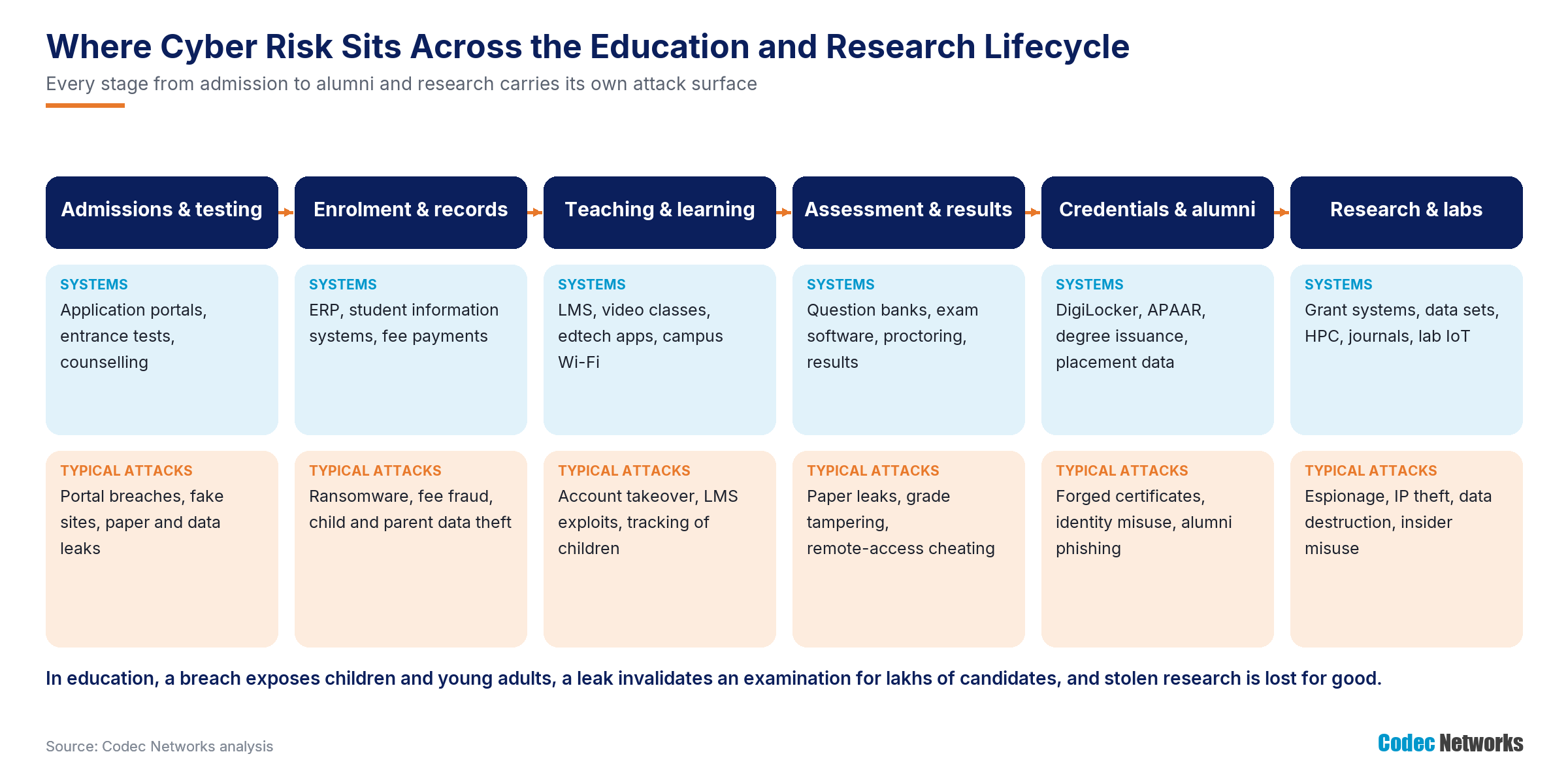
Figure 2: Where cyber risk sits across the education and research lifecycle.
|
Product / service |
Systems that deliver it |
Key cyber and compliance touchpoints |
|
Admissions and testing |
Application portals, entrance-test platforms, counselling systems |
Portal and API testing, candidate data protection, fake-site monitoring |
|
Enrolment and records |
ERP and SIS, fee gateways, scholarship portals |
Access reviews, payment controls, DPDP for students and parents, backups |
|
Teaching and learning |
LMS, video classes, apps, campus Wi-Fi |
LMS patching, identity and MFA, Wi-Fi segmentation, children's privacy |
|
Assessment and results |
Question banks, CBT platforms, proctoring, evaluation, result portals |
Integrity controls, role audits, surge monitoring, leak playbooks |
|
Credentials and alumni |
DigiLocker and APAAR integrations, degree issuance, placement portals |
Integration security, certificate integrity, alumni data protection |
|
Research and labs |
Grant systems, data repositories, HPC, lab instruments, collaboration tools |
Data classification, segmentation, threat hunting, collaborator agreements |
6. Trends that change the attack surface
|
Trend |
What is changing |
Security implication |
|
Digital public infrastructure |
APAAR, ABC, DigiLocker and SWAYAM link institutional records to national systems |
Integration security and record integrity become shared responsibilities |
|
Computer-based and secure testing |
Post-2024 reforms push encrypted paper delivery, biometric verification and CBT |
Examination systems become high-value, high-exposure targets |
|
Cloud-first platforms and apps |
LMS, ERP and edtech products move to SaaS and mobile |
Identity, configuration, APIs and SDKs decide security |
|
Children's data regulation |
DPDP consent, tracking and advertising rules for children |
Privacy-by-design for schools, coaching and K-12 apps |
|
Research funding and collaboration |
ANRF, industry sponsorship and foreign partnerships grow |
Sponsor confidentiality and espionage risk rise together |
|
AI in teaching and assessment |
AI tutors, proctoring analytics and automated evaluation |
Model, data and fairness risks added to the attack surface |
7. Mapping operations to Codec Networks engagements
|
If the organisation operates… |
Recommended starting engagement |
|
ERP, SIS and fee portals holding student and parent data |
DPDP programme, ERP and payment security, backup and recovery validation |
|
An LMS, apps or online classes |
LMS and app testing, identity and MFA, children's privacy review |
|
Examinations, question banks or results portals |
Examination-system assessment, integrity controls, surge monitoring, leak drills |
|
Research labs, data sets or sponsored projects |
Research data classification, segmentation, threat hunting, collaborator agreements |
|
A SaaS or app product sold to institutions |
Web, mobile and API VAPT, cloud posture, SOC 2 and ISO 27001 readiness |
|
Thin IT teams across many campuses or schools |
Managed SOC, awareness programme and IR retainer |
Talk to Codec Networks
|
Contact Codec Networks Pvt. Ltd. New Delhi: 507, 5th Floor, New Delhi House, Barakhamba Road, Connaught Place, New Delhi – 110001 Gurugram: 707, 7th Floor, Silverton Tower, Golf Course Extension Road, Sector 50, Gurugram – 122018, Haryana Landline: 011 430 496 96 | 011 437 522 99 Mobile: +91 99716 76124 | +91 88007 88220 | +91 88003 31124 Email: mktg@codecnetworks.com Web: www.codecnetworks.com |
Note: Descriptions are general and based on public information available as of October 2026. Systems and exposures differ by institution and platform.