

Resources Categories

INDUSTRY FACT FILE · EDUCATION, EDTECH & RESEARCH
Market Landscape and the Drivers of Cybersecurity Demand in Education and Research
The business, technology, regulatory, legal and statutory forces that create cybersecurity, privacy, audit and assurance work for institutions, edtech platforms, examination bodies and research organisations.
|
In this document 1. Market landscape 2. Business drivers 3. Technology drivers 4. Regulatory drivers: CERT-In, DPDP, examination law, UGC, AICTE and SEBI 5. Legal and statutory drivers 6. How the drivers differ by organisation type 7. What this means for buyers and for Codec Networks |
1. Market landscape
India's education and research sector is vast and increasingly digital. About 24.8 crore school students, 4.5 crore higher-education students, more than 1,100 universities and 45,000 colleges, a large coaching economy centred on cities such as Kota, edtech platforms that scaled rapidly after 2020 and then consolidated, examination bodies that register more than 85 lakh candidates a year through the NTA alone, and research institutions now funded through ANRF make up the market. Public money is significant—about ₹1.28 lakh crore in the Union Budget 2025-26—and private capital, both venture and public-market, backs coaching and edtech companies.
Cybersecurity demand follows four pressures. Trust: parents, students and candidates abandon institutions and apps that leak their data. Integrity: the 2024 examination crisis produced a criminal statute, a reform committee and a national push to secure testing. Compliance: DPDP's children's-data rules, CERT-In audits and board or regulator expectations now require evidence. Funding and partnerships: sponsors, foreign collaborators, school customers and investors audit security before they commit. Spending is moving from antivirus and firewalls to privacy programmes, application and examination-system testing, managed monitoring and awareness.
|
4.5 crore Higher-education enrolment (AISHE 2023-24) |
85.78 lakh Candidates registered for NTA examinations in 2024 |
₹1.28 lakh crore Union Budget 2025-26 allocation to the Ministry of Education |
May 2027 Most DPDP obligations, incl. children's consent, take effect |
|
Market segment |
Landscape and buying behaviour |
Cybersecurity opportunity |
|
Large universities and deemed universities |
Multi-campus estates, research, hospitals and hostels; formal governance; NAAC and ranking pressure |
Programme-level assessment, LMS and ERP testing, research protection, SOC |
|
School chains and international schools |
Many sites, children's data, parent apps, fee cycles, board affiliation |
DPDP programme, ERP and payment security, awareness, managed SOC |
|
Coaching and test-prep companies |
Large candidate bases, apps and centres, aggressive growth, some listed |
App and API testing, identity, SOC, SEBI-ready incident records |
|
Edtech platforms and vendors |
Cloud-native products, SDK-heavy apps, investor and customer diligence |
Cloud posture, privacy-by-design, SOC 2 and ISO 27001, DevSecOps |
|
Examination bodies and testing providers |
Reforms after 2024, encrypted paper delivery, CBT and biometric verification |
Examination-system assessment, integrity controls, surge monitoring, drills |
|
Research organisations and labs |
ANRF and sponsor funding, foreign collaboration, valuable data sets |
Data classification, segmentation, threat hunting, collaborator assurance |
2. Business drivers
|
Business driver |
Buying trigger |
Relevant services |
|
Trust of students, parents and candidates |
A breach or leak drives admissions and subscribers elsewhere |
Privacy programmes, testing, breach readiness |
|
Examination integrity |
A leak invalidates an examination and triggers criminal liability |
Examination-system testing, integrity controls, drills |
|
Reputation, accreditation and rankings |
Incidents surface in accreditation, rankings and the press |
Audits, evidence packs, Board reporting |
|
Research funding and partnerships |
Sponsors and collaborators require confidentiality and security |
Research protection, collaborator agreements, ISO 27001 |
|
Investor and customer diligence |
Edtech funding, listing and school contracts depend on security evidence |
SOC 2 and ISO 27001 readiness, VAPT reports |
|
Continuity in term time |
Ransomware in admissions or examination weeks stops the institution |
Resilience, backups, managed SOC |
|
Fraud against students and parents |
Fee, scholarship and admission scams exploit institutional channels |
Payment controls, awareness, brand monitoring |
3. Technology drivers
|
Technology driver |
Exposure created |
Codec Networks opportunity |
|
Cloud LMS, ERP and SIS |
Identity, configuration and vendor access decide exposure |
Cloud posture, identity reviews, vendor assessments |
|
Mobile apps and SDKs |
Children's data collected and shared through third-party code |
App testing, SDK privacy review |
|
Examination and proctoring platforms |
Question banks, CBT and proctoring exposed to candidates and vendors |
Examination-system testing, integrity monitoring |
|
Public digital infrastructure |
APAAR, ABC and DigiLocker integrations carry lifelong records |
Integration security, record integrity |
|
Campus Wi-Fi, BYOD and labs |
Tens of thousands of unmanaged devices on one network |
Segmentation, NAC, OT and lab assessment |
|
AI and analytics |
AI tutors, proctoring analytics and student profiling |
AI risk review, data governance |
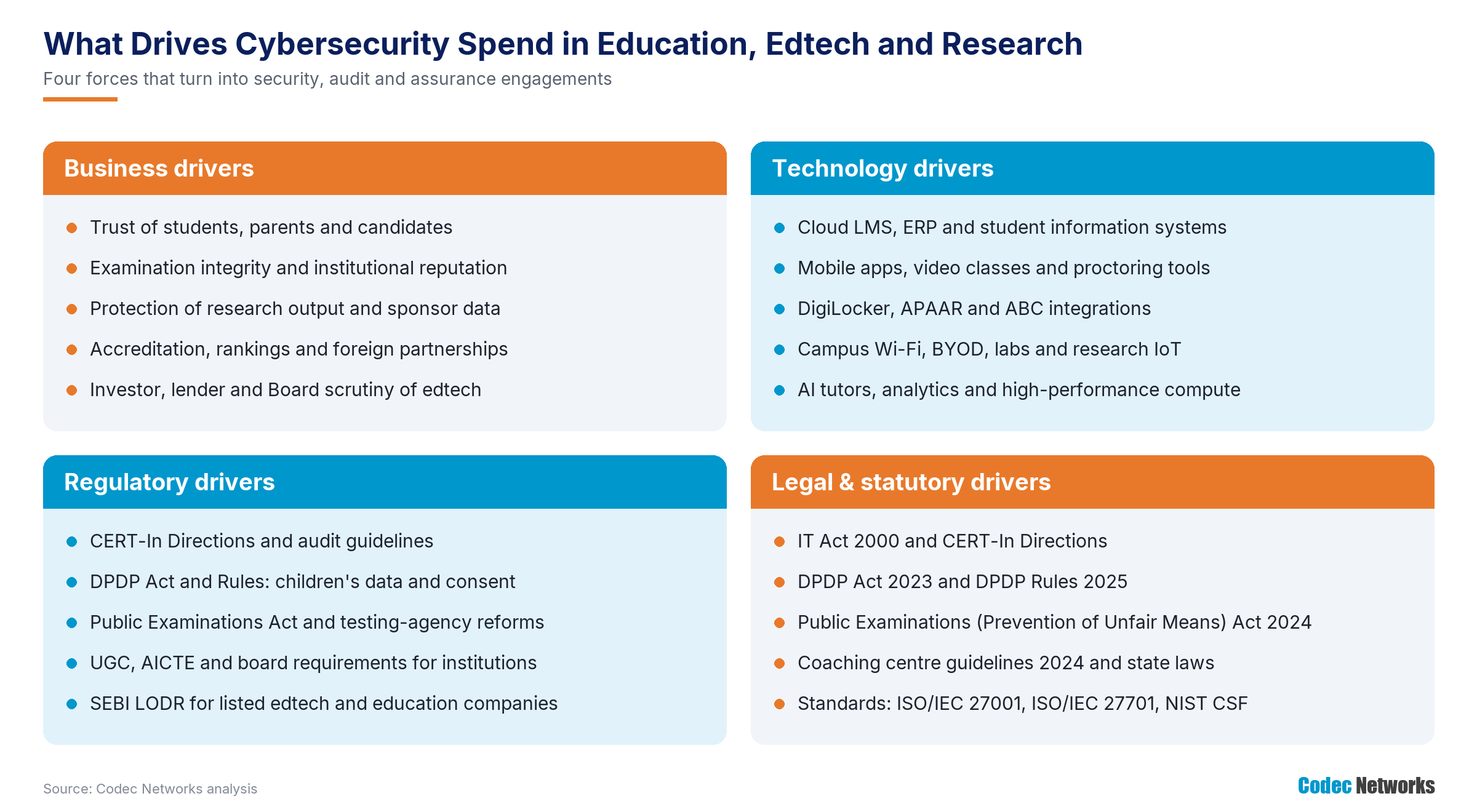
Figure 3: The four groups of drivers behind cybersecurity spending in education and research.
4. Regulatory drivers: CERT-In, DPDP, examination law, UGC, AICTE and SEBI
|
Instrument |
Key requirements |
|
CERT-In Directions (2022) and audit guidelines (2025) |
Six-hour incident reporting; 180-day ICT logs; risk-based independent audits covering infrastructure, cloud and applications |
|
DPDP Act 2023 and Rules 2025 |
Student, parent, alumni and staff data safeguards; verifiable parental consent and no tracking or targeted advertising for children; purpose-limited exemptions for educational institutions; most obligations from May 2027 |
|
Public Examinations (Prevention of Unfair Means) Act 2024 |
Criminal liability for leaks and unfair means, including service providers; amendment with higher penalties passed by Parliament in July 2026 |
|
UGC, AICTE, NMC, CBSE and state boards |
Approval, affiliation, accreditation and examination-conduct conditions; online and ODL regulations; single-regulator bill pending |
|
Coaching centre guidelines (2024) and state laws |
Registration, age limits and conduct conditions for coaching centres |
|
SEBI LODR Regulations (listed companies) |
Quarterly disclosure of cyber incidents in the corporate governance report; Board oversight of risk |
|
Confirm applicability Obligations depend on institution type, regulator, board, listing status, data handled and contracts. Confirm against the official instruments and your agreements. |
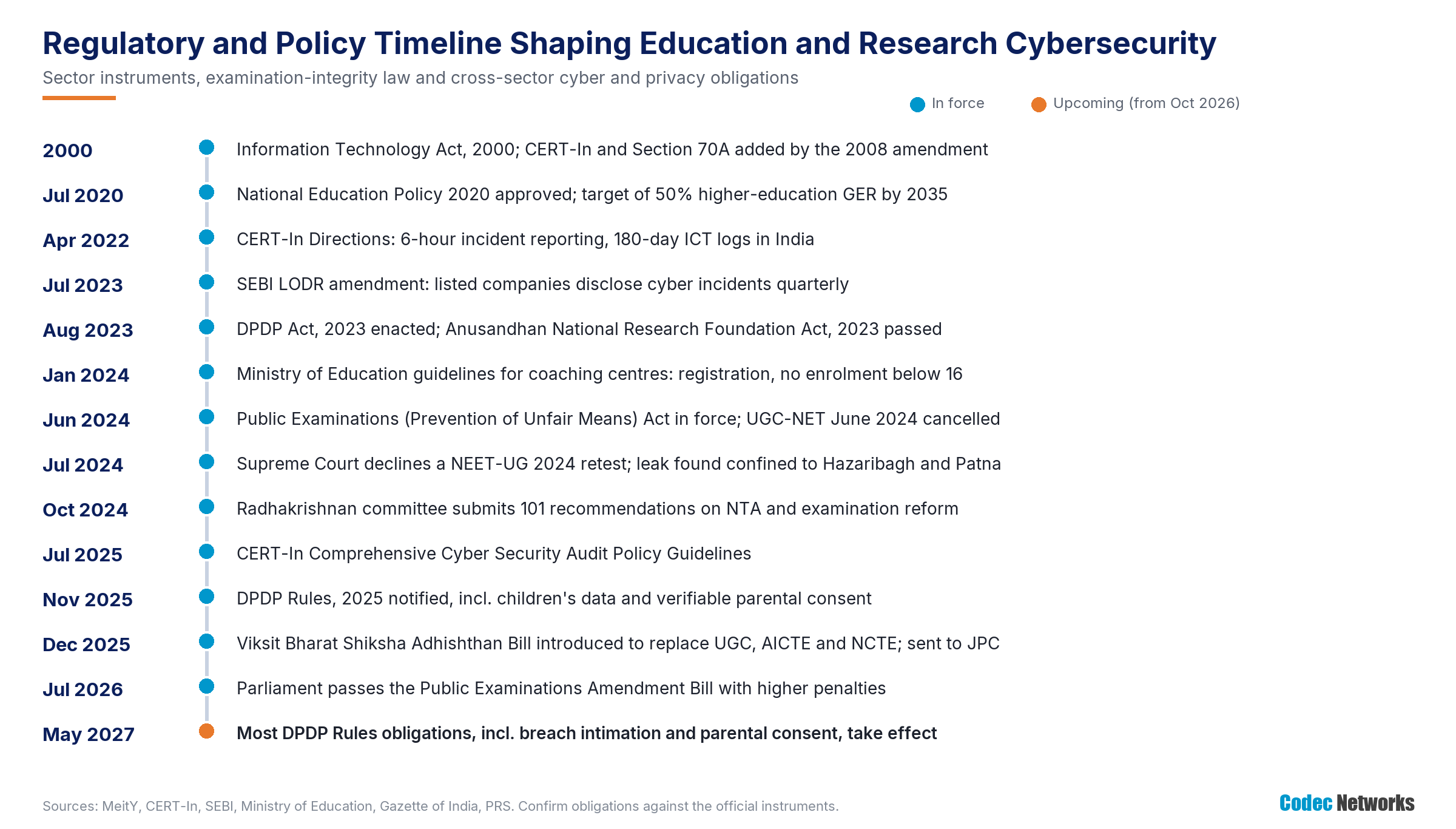
Figure 4: Regulatory and policy timeline shaping education and research cybersecurity, as of October 2026.
5. Legal and statutory drivers
|
Law or obligation |
Relevance |
Demand created |
|
IT Act, 2000 and CERT-In Directions |
Incident reporting, logging and offences against computer systems |
SOC, logging, audits and incident response |
|
DPDP Act, 2023 and Rules, 2025 |
Personal data of students, parents, staff and especially children |
Privacy programmes, consent design, breach workflows |
|
Public Examinations (Prevention of Unfair Means) Act, 2024 |
Leaks, unfair means and service-provider liability |
Examination-system security, integrity evidence, investigations |
|
UGC Act, AICTE Act and board regulations |
Institutional conditions, examination conduct, online education |
Policies, audits, evidence packs |
|
Companies Act, 2013 and SEBI LODR |
Board risk responsibility; disclosure for listed entities |
Board reporting, incident records |
|
Juvenile Justice Act and POCSO (child safety) |
Safeguarding duties that online abuse and data exposure engage |
Child-safe platform reviews, awareness |
|
Grant, sponsor and collaboration agreements |
Confidentiality, data handling, export-control clauses |
Research protection, evidence for sponsors |
6. How the drivers differ by organisation type
|
Organisation type |
Dominant business drivers |
Dominant technology drivers |
Principal regulatory drivers |
|
Universities |
Reputation, research funding, continuity |
ERP, LMS, Wi-Fi, HPC |
CERT-In, UGC, DPDP, sponsor terms |
|
School chains |
Parent trust, fee cycles, safeguarding |
School ERP, parent apps |
DPDP children's rules, boards, CERT-In |
|
Coaching and test-prep |
Candidate trust, growth, listing |
Apps, CRM, test engines |
Coaching guidelines, DPDP, SEBI if listed |
|
Edtech platforms |
Investor and customer diligence |
Cloud, apps, SDKs, APIs |
DPDP, IT Rules, SOC 2 expectations |
|
Examination bodies |
Examination integrity, public confidence |
CBT, proctoring, result portals |
Public Examinations Act, agency rules, CERT-In |
|
Research organisations |
Sponsor confidence, IP value |
Data repositories, HPC, labs |
Funder conditions, export control, CERT-In |
7. What this means for buyers and for Codec Networks
|
Customer buying need |
Recommended offering |
Natural recurring engagement |
|
“Are we ready for DPDP's children's-data rules?” |
DPDP gap assessment with consent and parental-verification design |
DPO-as-a-Service and annual privacy review |
|
“Could our question bank or results be tampered with?” |
Examination-system assessment and integrity controls |
Pre-examination testing every cycle |
|
“Our LMS has not been patched in a year.” |
LMS and portal assessment with role and privilege review |
Quarterly testing and patch validation |
|
“A sponsor is asking how we protect their data.” |
Research-protection review and ISO 27001 gap assessment |
Annual recertification support |
|
“Investors want a SOC 2 report before the next round.” |
SOC 2 and ISO 27001 readiness, VAPT |
Continuous assurance and retesting |
|
“Parents are receiving fake fee links in our name.” |
Payment controls, brand monitoring, parent awareness |
Managed SOC and takedown support |
|
“We have three IT staff for twelve schools.” |
Managed SOC with IR retainer |
Continuous monitoring |
Talk to Codec Networks
|
Contact Codec Networks Pvt. Ltd. New Delhi: 507, 5th Floor, New Delhi House, Barakhamba Road, Connaught Place, New Delhi – 110001 Gurugram: 707, 7th Floor, Silverton Tower, Golf Course Extension Road, Sector 50, Gurugram – 122018, Haryana Landline: 011 430 496 96 | 011 437 522 99 Mobile: +91 99716 76124 | +91 88007 88220 | +91 88003 31124 Email: mktg@codecnetworks.com Web: www.codecnetworks.com |
Note: This document is general industry guidance based on public information available as of October 2026. It is not legal or regulatory advice. Obligations differ by institution type, regulator, board, listing status, funding source and contracts; confirm them against the official CERT-In, MeitY, Ministry of Education, UGC, AICTE, SEBI and examination-authority instruments and your own agreements.