

Resources Categories
INDUSTRY FACT FILE · DIGITAL IDENTITY, TRUST & ESIGN
Threat Landscape: Top Cyber Threats Facing Digital Identity and eSign Providers
The 18 most relevant cyber threats, attacks and industry challenges for Aadhaar ecosystem entities, certifying authorities, eSign providers, KYC platforms and DigiLocker partners, and the impact each has.
|
In this document 1. The threat picture in numbers 2. Top 18 threats, attacks and challenges 3. Threat relevance by identity and trust segment 4. Five priority threats in depth 5. Impact on identity providers, trust services and relying parties 6. How regulation turns incidents into business events 7. Questions every leadership team should ask |
1. The threat picture in numbers
|
231 crore Aadhaar authentications in November 2025 (UIDAI) |
531 Rogue certificates found after the DigiNotar breach (2011) |
HK$200m Lost by Arup after a deepfake video call (2024) |
6 hours To report incidents to CERT-In |
Identity and trust services attract attackers because they are the gate to money, accounts and legal commitments. Fraud groups clone fingerprints, buy or steal identity documents and build synthetic identities to open mule accounts; others use deepfake faces, virtual cameras and emulators to defeat video-KYC and face matching. Insiders and operators with privileged access can misuse enrolment, authentication or registration systems. Developers and vendors leave Aadhaar numbers in logs and reports, expose APIs with weak authorisation or build apps that can be tampered with. Certifying authorities and eSign providers face attacks on their keys and registration processes, because one rogue certificate can be used to sign in someone else's name. Behind all of this sit the ordinary threats of ransomware, cloud misconfiguration and phishing, aimed at organisations whose outages stop onboarding and payments across their clients.
Public reporting shows how these threats play out. The government has told Parliament that UIDAI introduced AI and machine-learning fingerprint liveness checks to detect cloned fingerprints, after media reports of fraud using silicone copies of prints taken from public land records. In 2017 UIDAI filed a complaint alleging replay of stored biometrics by three entities, which they disputed, and suspended Airtel's and Airtel Payments Bank's e-KYC access over accounts reportedly opened without informed consent. Internationally, DigiNotar's 2011 compromise led to at least 531 rogue certificates and the company's bankruptcy, Okta disclosed in 2023 that session tokens in support files gave an attacker access to 134 customers, and Arup confirmed in 2024 that deepfakes of colleagues on a video call led to transfers of HK$200 million. The IT Rules amendment of February 2026 now requires labelling of synthetic content and fast takedown on official orders.
2. Top 18 threats, attacks and challenges
The list below is a practical assessment framework, not a statistical ranking. Priority varies by business model, technology exposure and existing controls.
|
# |
Threat / attack / challenge |
Typical scenario |
Most exposed |
Potential impact |
|
1 |
Cloned and spoofed biometrics |
Silicone fingerprints, printed irises or photos presented to capture devices |
AUAs, sub-AUAs, agent networks |
Fraudulent withdrawals, false authentications |
|
2 |
Replay of stored biometrics or authentication data |
Captured biometric or request data stored and resubmitted |
AUAs, sub-AUAs, device integrators |
Unauthorised authentications, UIDAI action |
|
3 |
Deepfake and injected video in video-KYC |
Synthetic faces fed through virtual cameras or emulators |
Video-KYC and IDV platforms, lenders |
Mule accounts, regulatory scrutiny |
|
4 |
Forged documents and synthetic identities |
Altered or fabricated documents combined with real data |
Enrolment agencies, KYC platforms, lenders |
False identities, fraud losses |
|
5 |
Enrolment and update operator misuse |
Shared or stolen operator credentials, unauthorised updates |
Registrars, enrolment agencies |
Fraudulent records, process breaches |
|
6 |
Aadhaar numbers stored outside the vault |
Full numbers in logs, reports, backups or analytics |
AUAs, KUAs, sub-AUAs, ASPs |
Exposure, penalties, audit findings |
|
7 |
Authentication and e-KYC API abuse |
Broken authorisation, enumeration, scraping and replay |
AUAs, KYC vendors, ASPs |
Data leaks, fraudulent transactions |
|
8 |
Mobile app and SDK tampering |
Modified apps, hooked SDKs, rooted devices and emulators |
Agent apps, KYC and lending apps |
Bypassed checks, stolen data |
|
9 |
Signing without informed consent |
Documents swapped or hidden behind summaries before signing |
ASPs, ESPs, lenders |
Disputed signatures, unenforceable contracts |
|
10 |
Signing key, HSM and CA compromise |
Intrusion into CA systems or misuse of signing keys |
CAs, ESPs |
Loss of trust, revocation, licence action |
|
11 |
Registration authority and certificate issuance fraud |
Phished or colluding RA staff approving false requests |
CAs, RA partners |
Certificates in other people's names |
|
12 |
OTP and consent social engineering |
Callers trick residents into sharing OTPs or approving consent |
AUAs, ASPs, agent networks |
Account takeover, signatures obtained by deceit |
|
13 |
Account takeover and SIM-swap linked fraud |
Hijacked mobile numbers intercept OTPs |
Telecom, lenders, ASPs |
Fraudulent authentications and signatures |
|
14 |
Sub-AUA, vendor and partner compromise |
Weak partners using a parent entity's access |
AUAs, KUAs, ESPs |
Misuse attributed to the parent, suspension risk |
|
15 |
Insider misuse of identity data |
Staff querying, exporting or selling identity data |
AUAs, KYC vendors, enrolment agencies |
Leaks, penalties, loss of trust |
|
16 |
DigiLocker and document-sharing API misuse |
Weak consent handling or over-broad document requests |
DigiLocker requesters and issuers |
Over-collection, exposure of documents |
|
17 |
Ransomware and outages on identity services |
Encryption or denial of service on authentication or signing systems |
ASAs, CAs, ESPs, KYC platforms |
Onboarding and payments stop for clients |
|
18 |
Weak logs, audit trails and 6-hour reporting |
No tamper-evident logs or 24x7 monitoring |
Sub-AUAs, ASPs, KYC start-ups |
Unprovable disputes; missed CERT-In reporting |
3. Threat relevance by identity and trust segment
The matrix is a qualitative guide for prioritising the first round of security reviews.
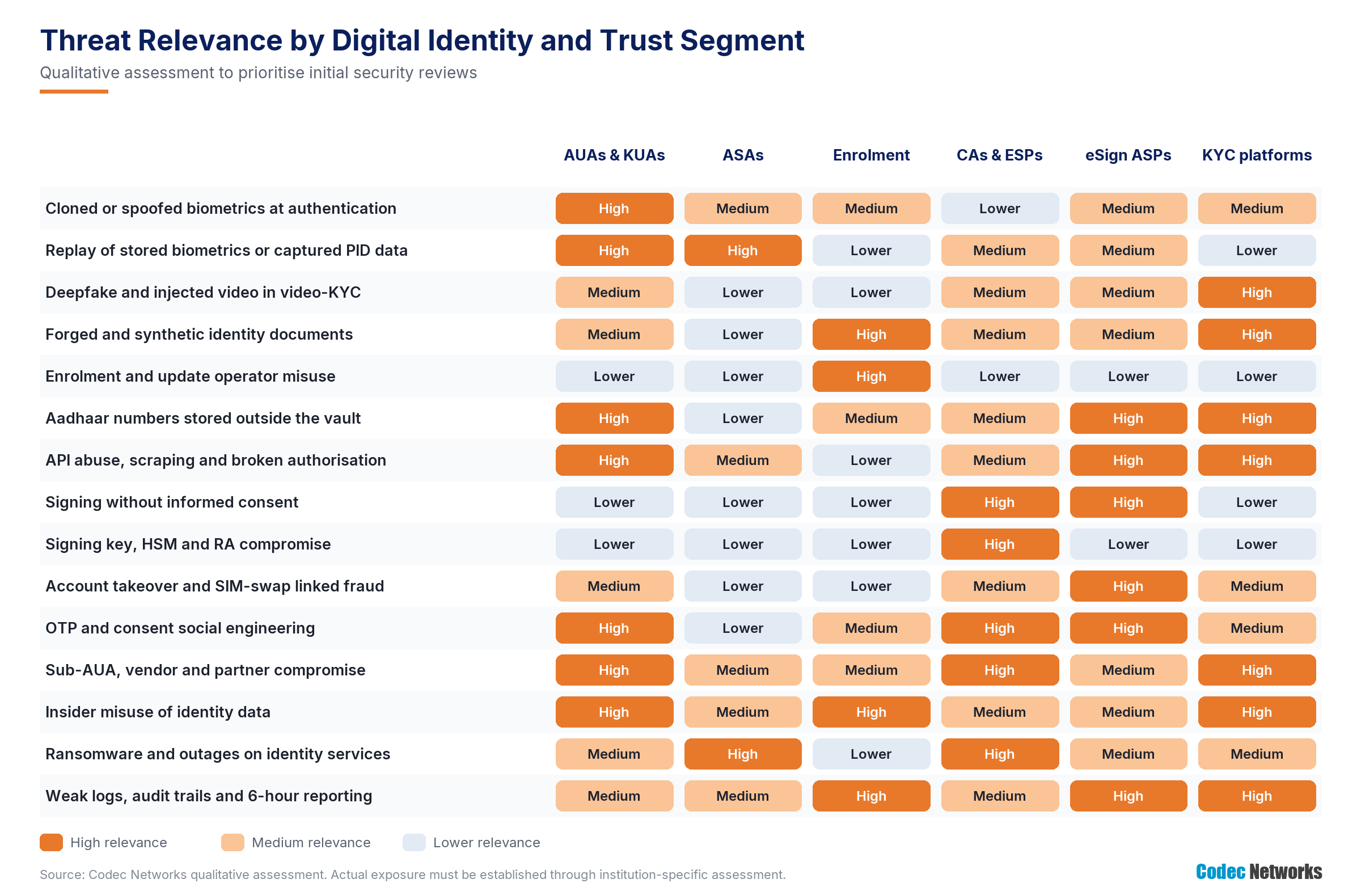
Figure 5: Qualitative threat relevance by identity and trust segment (Codec Networks assessment).
4. Five priority threats in depth
4.1 Biometric spoofing and replay
Fingerprint authentication still carries large volumes of assisted transactions, often at agent outlets with older devices. Cloned fingerprints and replayed captures both exploit gaps between the device, the agent application and the AUA. UIDAI's registered device framework encrypts biometrics at capture, and the government has said UIDAI's AI and machine-learning liveness check detects cloned fingerprints, but fraud shifts to wherever devices, software or agent controls lag behind.
- Questions to test: Are all devices certified registered devices on current software with liveness? Are transactions monitored by agent, device and location for unusual patterns? Is face authentication used for high-risk transactions? Can agents be suspended quickly?
- Relevant services: registered device and agent app testing, authentication anomaly monitoring, sub-AUA and agent assessments, and fraud forensics.
4.2 Deepfakes and injected video in video-KYC
Video-KYC replaced the branch visit for many regulated entities, and fraudsters now attack the camera itself. Rather than holding up a photograph, they inject synthetic or replayed video through virtual cameras, emulators or tampered apps, so that liveness and face-match models see a convincing face. RBI's KYC Directions expect liveness and spoof detection and face matching, and the Arup case shows how persuasive real-time deepfakes have become.
- Questions to test: Does the platform detect virtual cameras, emulators and injected streams, not only presentation attacks? Are device integrity and app attestation checked? Are agents trained and calls concurrently audited? Are new accounts monitored for mule patterns?
- Relevant services: deepfake and injection testing, mobile app and SDK security testing, AI model risk review, KYC process audit and post-onboarding fraud monitoring.
4.3 Aadhaar data outside the vault
The Aadhaar Data Vault exists so that full Aadhaar numbers and e-KYC data sit in one encrypted, controlled place. In practice, numbers leak into application logs, error traces, reports, data lakes, backups, support tickets and test environments, and a single open cloud bucket can expose them. Circular 14 of 2025 restates that other systems should hold reference keys or tokens, and annual UIDAI audits increasingly look beyond the vault itself.
- Questions to test: Have we scanned every application, log, report, backup and cloud store for full Aadhaar numbers? Do all systems outside the vault use tokens or reference keys? Are vault keys in an HSM with separated duties? Is cloud storage private and monitored?
- Relevant services: data discovery, Aadhaar Data Vault and HSM review, cloud configuration review, masking and tokenisation design, and privacy programmes.
4.4 Signing without informed consent
An eSign is only as trustworthy as the application that asks for it. If an ASP displays a summary page but submits a different document hash, keeps a session open for reuse or lets a call-centre agent drive the flow, a cryptographically valid signature can attach to terms the signer never saw. Disputes then turn on evidence: what the signer was shown, what was signed and whether the logs can be trusted.
- Questions to test: Is the document hash shown to the signer the one sent to the ESP? Can a document be changed after consent? Are consent screens, OTP events and signing responses logged tamper-evidently? Has the ASP been assessed before go-live and after changes?
- Relevant services: ASP application security assessment, document-binding and consent tests, ESP API testing, log integrity review and dispute forensics.
4.5 Keys, registration authorities and certificate issuance
Certifying authorities hold the keys that make signatures trustworthy and run the registration processes that decide who receives a certificate. Attackers who cannot reach an HSM can still phish a registration officer, abuse remote access or exploit an RA portal to approve requests in other people's names. DigiNotar's collapse showed that a single intrusion can end a CA's business, and shorter certificate lifetimes increase the volume of issuance to protect.
- Questions to test: Are RA and CA operator accounts protected by MFA and privileged access management? Is certificate approval under dual control? Would the SOC see unusual issuance volumes or approvals out of hours? Are revocation and key compromise procedures rehearsed?
- Relevant services: CA and RA control review, HSM and key management review, red teaming of issuance processes, managed SOC and CCA audit readiness.
5. Impact on identity providers, trust services and relying parties
|
Player type |
Threats to prioritise |
Main impact |
|
AUAs and KUAs |
Spoofing, data outside the vault, sub-AUA misuse |
Fraud losses, UIDAI action, penalties, customer harm |
|
Sub-AUAs, ASPs and agent networks |
API abuse, app tampering, consent fraud |
Suspension by the parent entity, lost partners |
|
CAs and eSign service providers |
Key and RA compromise, consent gaps at ASPs |
Loss of trust, revocations, CCA scrutiny |
|
Video-KYC and IDV platforms |
Deepfakes, injected video, synthetic identities |
Mule accounts, lost clients, regulator attention |
|
Registrars and enrolment agencies |
Operator misuse, forged documents |
Process breaches, contract action |
|
Residents and customers |
Fraud in their name, exposed identity data |
Financial loss, disputes and distress |
6. How regulation turns incidents into business events
- CERT-In: incidents reported within six hours of noticing them; logs available for investigation; CERT-In may issue directions and advisories.
- UIDAI: contraventions by requesting entities, ASAs or enrolment agencies can lead to suspension of access and adjudicated civil penalties under the Aadhaar Act, as amended in 2019.
- CCA: security failures at CAs and ESPs can affect licence and empanelment standing and trigger audits and revocations.
- Sector regulators: RBI, SEBI and IRDAI expect regulated entities to answer for KYC and outsourcing failures, including those at technology vendors.
- IT Rules amendment (2026): synthetic content, including deepfakes, must be labelled and unlawful content removed within three hours of an official order.
- SEBI LODR (listed firms): cyber incidents disclosed in the quarterly corporate governance report; DPDP breach intimation for personal data once provisions commence.
|
Insight The most damaging identity incidents rarely break the cryptography. They begin with an old fingerprint device, a full Aadhaar number in a log file, an injected video stream, an app that swaps a document after consent or a phished registration officer, and end as fraud committed in someone else's name. Testing the whole flow, not just the core system, is the best defence. |
7. Questions every leadership team should ask
- Where, outside the Aadhaar Data Vault, could full Aadhaar numbers or e-KYC data be sitting today?
- Would our video-KYC and face match detect an injected deepfake, not just a printed photograph?
- Can we prove that every signer saw the exact document they signed?
- How do we oversee the sub-AUAs, agents, ASPs and vendors who use our access?
- Are RA, CA and vault administrators protected by MFA, PAM and dual control?
- Could we detect, contain and report an incident within six hours, including at night?
Talk to Codec Networks
|
Contact Codec Networks Pvt. Ltd. New Delhi: 507, 5th Floor, New Delhi House, Barakhamba Road, Connaught Place, New Delhi – 110001 Gurugram: 707, 7th Floor, Silverton Tower, Golf Course Extension Road, Sector 50, Gurugram – 122018, Haryana Landline: 011 430 496 96 | 011 437 522 99 Mobile: +91 99716 76124 | +91 88007 88220 | +91 88003 31124 Email: mktg@codecnetworks.com Web: www.codecnetworks.com |
Note: Threat descriptions and relevance ratings are general guidance, not findings about any specific organisation. Public incident references are summarised from official statements and widely reported events; where parties disputed allegations, that is noted.