

Resources Categories

INDUSTRY FACT FILE · DEFENCE & STRATEGIC INDUSTRIES
Industry Overview: Defence and Strategic Industries in India
Who makes India's defence and strategic equipment, the security and cyber obligations that apply, who buys cybersecurity in the sector and why each type of organisation needs its own approach.
|
In this document 1. Why defence industry cybersecurity matters now 2. The ecosystem at a glance 3. Categories of defence and strategic industry organisations 4. The security, cyber and acquisition framework at a glance 5. Policy, acquisition, licensing and industry participants 6. Who buys cybersecurity inside a defence manufacturer or strategic organisation 7. Why each type of defence organisation needs a different approach 8. How Codec Networks works with defence and strategic industries |
|
Sector scope Sector: defence PSUs, private manufacturers and MSME suppliers, DRDO-linked research and strategic organisations, defence start-ups, space and strategic electronics. Primary service proposition: supply chain assurance, secure development, restricted environment assessments and forensics. Government and aviation have separate fact files. |
1. Why defence industry cybersecurity matters now
India's defence industrial base has changed more in the last six years than in the previous three decades. The Ministry of Defence reported record defence production of ₹1.78 lakh crore in 2025-26, up 15.6% from ₹1.54 lakh crore the year before, with defence PSUs and other public-sector units accounting for about 76% and the private sector for about 24%. Defence exports reached a record ₹38,424 crore in 2025-26, up from ₹23,622 crore in 2024-25, with equipment going to more than 80 countries and private firms contributing about 45% of export value. The Ministry of Defence received ₹7.85 lakh crore in the Union Budget for 2026-27, including about ₹1.85 lakh crore for capital acquisition. Behind those numbers sit the defence PSUs, the seven companies formed when the Ordnance Factory Board was dissolved on 1 October 2021, a growing group of private primes, thousands of MSME suppliers, DRDO laboratories and partners, iDEX start-ups and a fast-growing space and strategic electronics industry.
|
₹1.78 lakh crore Record defence production in FY 2025-26 (MoD) |
₹38,424 crore Record defence exports in FY 2025-26 (MoD) |
₹250 crore Turnover above which SMLDI 2025 expects a dedicated CISO |
6 hours To report cyber incidents to CERT-In |
That growth widens the attack surface exactly where adversaries are most interested. Designs, drawings, source code, test results and programme schedules now move between DPSUs, private integrators, tier-2 and tier-3 suppliers, foreign partners and start-ups, often by email, file shares and collaboration portals that were never built for controlled information. State-linked groups pursue this information persistently. Security vendors including Seqrite, Sekoia and CYFIRMA have reported repeated campaigns by the Pakistan-linked groups known as Transparent Tribe (APT36) and SideCopy against Indian defence and government targets, using decoy documents themed on armed forces directives, postings and current events. During the India–Pakistan hostilities of May 2025, the Maharashtra Cyber police reported more than 1.5 million cyberattacks against Indian systems, and the website of at least one defence PSU was reported defaced. Ransomware groups, meanwhile, treat defence manufacturers like any other high-value industrial target.
International incidents show how these threats reach defence suppliers. In 2023 the LockBit ransomware group published data it claimed to have taken from Boeing, which confirmed a cyber incident affecting elements of its parts and distribution business and said flight safety was not affected. Rheinmetall said a Black Basta ransomware attack in April 2023 affected its civilian business but not its military business, because the group's IT infrastructure was strictly separated. Thales said that data published by LockBit in November 2022 came in part from a partner's account on a collaboration portal. In India, the Nuclear Power Corporation of India confirmed in October 2019 that malware had been found on an internet-connected administrative computer at Kudankulam after CERT-In alerted the Department of Atomic Energy; researchers identified the malware as DTrack, which they associate with the Lazarus group. Each case carries a lesson for defence industry: separate networks, control partner access and assume someone else may detect you first.
The obligations are becoming explicit. The Department of Defence Production issued a revised Security Manual for Licensed Defence Industries (SMLDI 2025) in July 2025, and DPIIT's Press Note 3 of 2025 requires holders of industrial licences for defence items to comply with it before commencing production. As summarised by legal commentators, SMLDI 2025 expects a dedicated CISO for companies with turnover above ₹250 crore, vetted security officers, official work on air-gapped networks, controls such as firewalls, intrusion detection, SIEM and privileged account management, policies for SCADA and industrial systems, a data classification policy, cyber awareness in induction and, for companies handling government orders, designs or products, integration of logs with the Ministry of Defence's cyber security operations centre. CERT-In's Directions of April 2022 require six-hour incident reporting and 180-day log retention, its 2025 audit policy guidelines expect risk-based independent audits including OT, the Official Secrets Act 1923 protects classified information, and suppliers to United States primes face DFARS and CMMC requirements built on NIST SP 800-171.
|
Key takeaway In defence and strategic industries, a cyber incident is a security event before it is a business event. Protecting designs across the supply chain, keeping isolated networks isolated, assuring the integrity of software and components and detecting espionage early are now licence, contract and partner expectations, not optional extras. |
2. The ecosystem at a glance
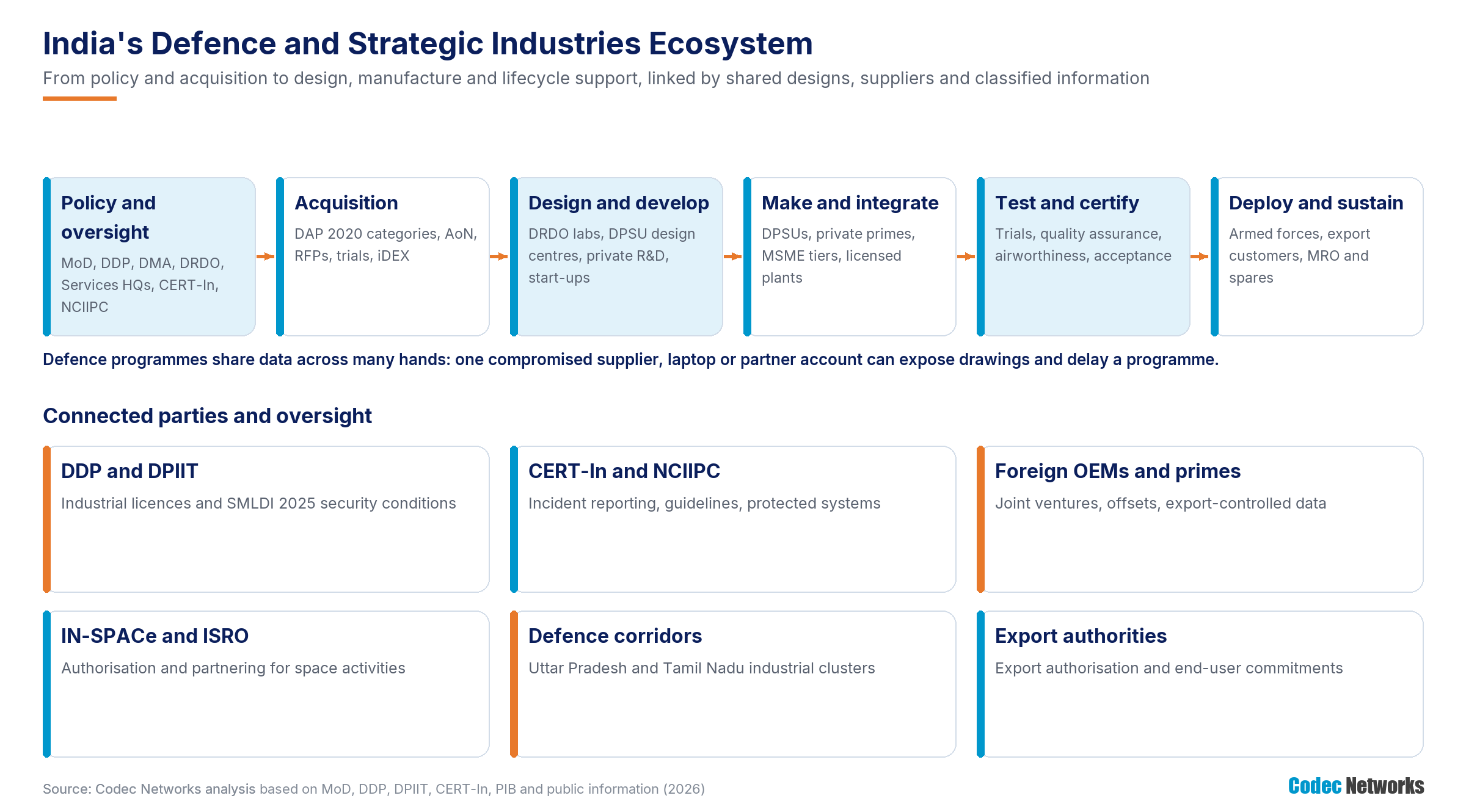
Figure 1: India's defence and strategic industries ecosystem.
3. Categories of defence and strategic industry organisations
|
Category |
Who they are |
Typical ownership |
Key regulatory basis |
|
Defence PSUs |
Public-sector undertakings building aircraft, ships, electronics, missiles, vehicles and munitions |
Government of India, several listed |
SMLDI 2025; CERT-In; NCIIPC where notified; SEBI LODR if listed; Official Secrets Act |
|
Ordnance successor companies |
The seven defence PSUs formed from the Ordnance Factory Board in October 2021 |
Government of India |
SMLDI 2025; CERT-In; DAP 2020 contracts; Official Secrets Act |
|
Private defence primes |
Large private groups designing, manufacturing and integrating platforms and systems |
Private, often listed, some with foreign joint ventures |
Industrial licence under IDR Act; SMLDI 2025; CERT-In; FDI conditions; partner contracts |
|
MSME suppliers |
Machining, castings, forgings, cables, electronics and sub-assembly suppliers to DPSUs and primes |
Private, owner-managed |
Licence where required; contract security clauses; CERT-In; DPDP |
|
DRDO-linked research and strategic organisations |
Laboratories, test ranges, design centres and their development and production partners |
Government and partner industry |
Official Secrets Act; ministry security instructions; CERT-In; NCIIPC where notified |
|
Defence start-ups |
iDEX and ADITI innovators in drones, AI, sensors, communications and cyber |
Venture- and founder-owned |
iDEX agreements; licence where required; CERT-In; DPDP |
|
Space and satellite firms |
Satellite, ground segment, launch and component makers serving strategic users |
Private and public, IN-SPACe authorised |
IN-SPACe authorisation; FDI tiers; CERT-In; contract terms |
|
Strategic electronics suppliers |
Radar, communications, electronic warfare, secure devices and semiconductor firms |
Private and public |
SMLDI where licensed; CERT-In; export controls; partner requirements |
4. The security, cyber and acquisition framework at a glance
|
Instrument or expectation |
What it means for defence and strategic organisations |
|
Security Manual for Licensed Defence Industries (SMLDI 2025) |
Issued by DDP in July 2025, replacing the 2014 manual; applies to licensed private manufacturers and to DPSUs; two product categories (A and B); CISO, vetted security officers, physical, personnel, document and cyber security; official work on air-gapped networks; log integration with the MoD cyber security operations centre for specified companies; compliance required before production under DPIIT Press Note 3 of 2025 |
|
Industrial licensing (IDR Act 1951, Arms Act 1959) |
Industrial licences for items on the defence products list are issued by DPIIT; arms and ammunition licences under the Arms Act; licence conditions link to MoD security requirements |
|
Defence Acquisition Procedure 2020 |
Capital acquisition procedure in force from October 2020, with Buy (Indian-IDDM) as the highest-priority category; a draft DAP 2026 was released for comment in February 2026 |
|
Positive indigenisation lists |
Five lists of 509 items notified by the Department of Military Affairs and successive lists for DPSUs, the sixth of which, with 405 items, was notified in 2026; procurement from Indian industry, including MSMEs and start-ups |
|
CERT-In Directions (28 April 2022) and audit guidelines (25 July 2025) |
Cyber incidents reported within six hours; ICT logs kept for 180 days in India; risk-based independent audits covering IT and OT |
|
IT Act Sections 70 and 70A; NCIIPC |
Notified protected systems receive NCIIPC guidance and controls; strategic and public enterprises are among the critical sectors |
|
Official Secrets Act 1923 |
Protection of classified official information, with offences for wrongful communication and retention |
|
US DFARS and CMMC (for suppliers to US primes) |
DFARS 252.204-7012 and NIST SP 800-171 for covered defence information; CMMC clauses in contracts from November 2025 (Phase 1 self-assessments); Phase 2 certification requirements suspended in July 2026 pending review |
|
DPDP Act 2023 and Rules 2025 |
Employee, vetting, visitor and partner personal data; reasonable security safeguards and breach intimation; most obligations from May 2027 |
|
How these apply SMLDI 2025 applies through industrial licences and to DPSUs; CERT-In's Directions apply to body corporates and government organisations; NCIIPC duties apply to notified systems; DFARS and CMMC apply through contracts with US defence primes. Confirm against the official instruments, your licence and your contracts. |
5. Policy, acquisition, licensing and industry participants
- The Ministry of Defence sets policy through the Department of Defence Production (DDP), the Department of Military Affairs and the Department of Defence Research and Development; DDP issues the Security Manual for Licensed Defence Industries and oversees DPSUs and indigenisation.
- DPIIT issues industrial licences for defence items under the IDR Act and, through Press Note 3 of 2025, links them to SMLDI compliance; the Ministry of Home Affairs licenses arms and ammunition under the Arms Act.
- DRDO laboratories design systems and transfer technology to development and production partners; the armed forces define requirements, run trials and operate and sustain equipment.
- CERT-In and NCIIPC handle incident reporting, advisories and protected systems; IN-SPACe authorises non-government space activities; iDEX funds start-ups and MSMEs through challenges and the ADITI scheme.
- Defence PSUs and private primes integrate platforms and manage multi-tier supply chains; MSME suppliers in clusters and the Uttar Pradesh and Tamil Nadu defence corridors make parts and sub-assemblies.
- Foreign OEMs and primes partner through joint ventures, licensed production and offsets, bringing export-control and contractual security requirements such as DFARS and CMMC.
6. Who buys cybersecurity inside a defence manufacturer or strategic organisation
|
Stakeholder |
What they care about |
What they buy |
|
CMD, MD and Board |
National security trust, programme delivery, licence compliance, reputation |
Board briefings, maturity assessments, crisis exercises |
|
Chief security officer and CISO |
SMLDI compliance, classified information, incidents, CERT-In reporting |
SMLDI gap reviews, audits, SOC, incident response retainers |
|
Programme and design heads |
Protection of designs, source code and test data |
Secure development, PLM and design network reviews |
|
Plant and operations heads |
Continuity of production lines, test benches and OT |
OT assessments, segmentation, recovery testing |
|
Supply chain and procurement |
Supplier security, counterfeit risk, contract clauses |
Supplier assessment programmes, TPRM retainers |
|
Export and partnership teams |
Partner requirements, export-controlled data, CMMC |
NIST SP 800-171 readiness, data segregation reviews |
|
HR and vigilance |
Personnel vetting, insider risk, leak investigations |
Insider risk reviews, forensics, awareness programmes |
7. Why each type of defence organisation needs a different approach
|
Organisation type |
Highest-consequence risk |
Starting point for assurance |
|
Defence PSUs |
Espionage against programmes; insider and removable-media leaks |
Restricted environment assessments, threat hunting, SMLDI audits |
|
Private defence primes |
Espionage, ransomware on production, partner portal abuse |
SMLDI and CERT-In audits, IT–OT segmentation, SOC |
|
MSME suppliers |
Drawing leaks through unprotected email and file servers |
Supplier gap review, MFA and EDR, secure exchange |
|
R&D and strategic organisations |
Long-term espionage; air-gap crossings |
Isolated-network reviews, media controls, compromise assessment |
|
Defence start-ups |
Source code and firmware theft or tampering; cloud exposure |
Secure SDLC, code signing, cloud reviews |
|
Space and strategic electronics |
Firmware integrity, counterfeit components, ground segment intrusion |
Firmware and supply chain assurance, ground segment VAPT |
8. How Codec Networks works with defence and strategic industries
Codec Networks is a CERT-In empanelled information security auditing organisation, empanelled with NICSI for application audit and compliance services (start-up category), and certified to ISO 9001:2015, ISO/IEC 27001:2022 and ISO/IEC 20000-1:2018. Its clients include ministry-level defence bodies and defence public-sector undertakings. For defence and strategic industries we deliver SMLDI 2025 cyber gap assessments, CERT-In risk-based audits covering IT and OT, tiered supplier security assessments and secure data-exchange reviews, secure development and firmware assurance for software, embedded systems and build pipelines, assessments of air-gapped and restricted environments, NIST SP 800-171 readiness for suppliers to US primes, ISO 27001 and data classification programmes, 24x7 managed SOC with threat hunting and log readiness for MoD integration, and forensics for espionage, leak, insider and ransomware incidents. Work in classified or restricted environments is carried out only by appropriately vetted staff, under the customer's security clearance procedures and on the customer's premises and systems where required.
Talk to Codec Networks
|
Contact Codec Networks Pvt. Ltd. New Delhi: 507, 5th Floor, New Delhi House, Barakhamba Road, Connaught Place, New Delhi – 110001 Gurugram: 707, 7th Floor, Silverton Tower, Golf Course Extension Road, Sector 50, Gurugram – 122018, Haryana Landline: 011 430 496 96 | 011 437 522 99 Mobile: +91 99716 76124 | +91 88007 88220 | +91 88003 31124 Email: mktg@codecnetworks.com Web: www.codecnetworks.com |
Note: This document is general industry guidance based on public information available as of October 2026. It is not legal, regulatory or security-clearance advice. Obligations differ by type of entity, industrial licence conditions, product category, any NCIIPC notification, programme and contract terms and the information each organisation handles; confirm them against the official Ministry of Defence, DDP, DPIIT, CERT-In, NCIIPC and Data Protection Board instruments, your licence and your contracts. Assessments of classified or restricted environments are conducted only under the customer's security clearance procedures.