

Resources Categories

INDUSTRY FACT FILE · CREDIT INFORMATION & FINANCIAL DATA
Main Products and Services in Credit Information and Financial Data
What credit bureaus, analytics firms, KYC utilities and data processors offer, the systems behind each product and where those systems create cybersecurity and compliance exposure.
|
In this document 1. How credit data firms earn their money 2. Products by player type 3. Data submission and ingestion 4. Report delivery, analytics and disputes 5. The systems behind the products and services 6. Trends that change the attack surface 7. Mapping products to Codec Networks engagements |
1. How credit data firms earn their money
|
Revenue stream |
How it works |
Security relevance |
|
Credit reports and scores |
Fees per report or score pulled by members |
Report APIs must enforce access, consent and purpose |
|
Analytics and decisioning |
Models, portfolio reviews and risk analytics |
Large datasets in analytics environments |
|
Consumer services |
Credit reports and monitoring for individuals |
Consumer accounts are targets for takeover |
|
KYC and verification services |
Fees for KYC record access and identity checks |
Identity data is valuable to fraudsters |
|
Data processing services |
Processing, matching and reporting for clients |
Client data held under contract |
2. Products by player type
|
Player type |
Main products |
Main services |
|
Credit bureaus (CICs) |
Consumer and commercial credit reports, scores, alerts |
Member onboarding, data quality, disputes and consumer access |
|
Credit analytics firms |
Scorecards, risk models, portfolio analytics |
Model development, validation and monitoring |
|
KYC utilities and KRAs |
KYC records, download and update services |
KYC record management and access for regulated entities |
|
Financial data processors |
Bureau integration, verification and data pipelines |
Processing, matching, reporting and hosting |
|
Identity and e-KYC providers |
Authentication, PAN and document verification |
Onboarding and video KYC services |
3. Data submission and ingestion
Lenders submit credit information to CICs every fortnight through upload portals, secure file transfer and APIs. Files are validated, matched to identities and merged into credit histories. Errors or tampering at this stage change what every subsequent lender sees.
4. Report delivery, analytics and disputes
Members pull reports and scores through APIs and portals, analytics teams build models on large datasets, and consumers access their reports and raise disputes online. Each channel needs strong authentication, authorisation tied to a valid purpose, and monitoring for unusual volumes.
|
Highest-risk moments Member credential use, bulk exports, submission uploads and dispute corrections are where cyber attacks and fraud converge. Testing these flows end to end prevents the most damaging incidents. |
5. The systems behind the products and services
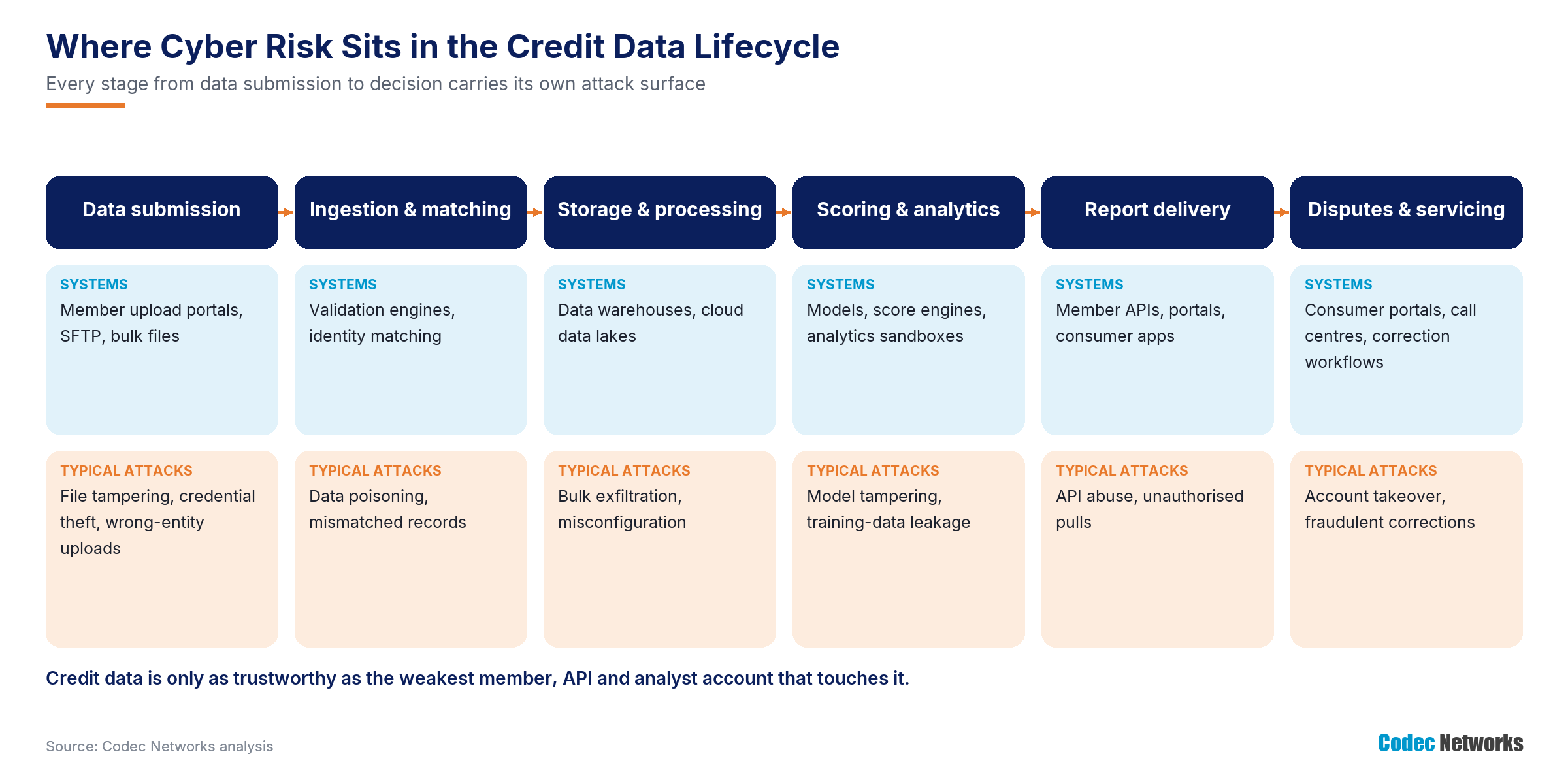
Figure 2: Where cyber risk sits in the credit data lifecycle.
|
Product / service |
Systems that deliver it |
Key cyber and compliance touchpoints |
|
Data submission |
Member upload portals, SFTP, APIs |
Integrity checks, authentication, file validation |
|
Matching and storage |
Matching engines, data warehouses, data lakes |
Access control, encryption, segmentation |
|
Report and score delivery |
Member APIs, portals, score engines |
API security, consent and purpose checks, rate limits |
|
Analytics |
Sandboxes, notebooks, model platforms |
Least-privilege access, DLP, masking |
|
Consumer access and disputes |
Consumer portals, apps, call centres |
Account security, correction controls |
|
KYC record services |
KYC repositories, download and update APIs |
Access control, logging, CSCRF controls for KRAs |
6. Trends that change the attack surface
|
Trend |
What is changing |
Security implication |
|
API-first delivery |
Reports delivered in real time to lenders and fintechs |
API abuse and credential leakage risks grow |
|
Fortnightly reporting |
Data refreshed twice a month |
More frequent bulk transfers to secure |
|
Cloud data platforms |
Warehouses and data lakes move to cloud |
Misconfiguration and shared-responsibility gaps |
|
AI-based scoring |
Machine-learning models use alternative data |
Model governance and training-data controls |
|
Consent-led data sharing |
DPDP and account aggregator models emphasise consent |
Consent records must be accurate and auditable |
7. Mapping products to Codec Networks engagements
|
If the firm offers… |
Recommended starting engagement |
|
Credit reports via APIs |
API security testing, member access review, SOC monitoring |
|
Analytics and modelling |
Data access and leakage assessment, sandbox controls |
|
KYC record services |
VAPT, access review, CSCRF assessment for KRAs |
|
Data processing for clients |
Cloud review, vendor assurance, ISO 27001 readiness |
|
Consumer credit services |
Portal and app testing, account security review |
Talk to Codec Networks
|
Contact Codec Networks Pvt. Ltd. New Delhi: 507, 5th Floor, New Delhi House, Barakhamba Road, Connaught Place, New Delhi – 110001 Gurugram: 707, 7th Floor, Silverton Tower, Golf Course Extension Road, Sector 50, Gurugram – 122018, Haryana Landline: 011 430 496 96 | 011 437 522 99 Mobile: +91 99716 76124 | +91 88007 88220 | +91 88003 31124 Email: mktg@codecnetworks.com Web: www.codecnetworks.com |
Note: Descriptions are general and based on public information available as of October 2026. Credit information activities are governed by CICRA 2005 and RBI Directions; KRAs by SEBI regulations.