

Resources Categories
INDUSTRY FACT FILE · CHEMICALS, FERTILIZERS & PROCESS INDUSTRIES
Five New Case Studies in Chemical and Fertilizer Plant Security
Original 2026 case studies, each written as a blog post, showing how current threats play out in chemical, fertilizer, agrochemical and process companies and how Codec Networks services break the attack chain.
|
In this document 1. About these case studies 2. Case Study 1: The Set-point Nobody Changed 3. Case Study 2: The Fertilizer Plant That Couldn't Claim Its Subsidy 4. Case Study 3: The Formulation That Left With the Contractor 5. Case Study 4: The Dealer Portal Payment Diversion 6. Case Study 5: The Turnaround USB on the DCS Network |
About these case studies
These five case studies were written for this document set and have not been published elsewhere. Each is a composite scenario combining attack techniques and control failures widely observed in process industries with the obligations that apply in India as of October 2026—in particular CERT-In's Directions and audit guidelines, safety-regulator expectations, the Fertiliser (Control) Order and DBT scheme, SEBI disclosure for listed companies and DPDP.
|
Important disclosure The organisations described are fictional and the scenarios are illustrative. They are not accounts of real incidents, and they are not Codec Networks client engagements or claims of achieved outcomes. Their value lies in showing how connected weaknesses form an attack chain, which controls break it, and which services test those controls. |
|
Case study |
Organisation type |
Core threat |
Regulatory lens |
Primary bundles |
|
1. The Set-point Nobody Changed |
Specialty chemical plant |
Vendor remote access reaching the DCS |
Factories Act; CERT-In; IEC 61511 |
B9, B1, B7 |
|
2. The Fertilizer Plant That Couldn't Claim Its Subsidy |
Fertilizer producer |
Ransomware on ERP and integration servers |
DBT and FCO; CERT-In; SEBI LODR |
B3, B7, B2 |
|
3. The Formulation That Left With the Contractor |
Agrochemical company |
Contractor theft of formulations |
Contracts; Insecticides Act; DPDP |
B3, B6, B8 |
|
4. The Dealer Portal Payment Diversion |
Paints and coatings company |
Business email compromise through the dealer network |
DPDP; CERT-In; banking |
B2, B10, B7 |
|
5. The Turnaround USB on the DCS Network |
Bulk chemical plant |
Malware introduced by contractor media |
Factories Act; CERT-In; contracts |
B9, B3, B7 |
Case Study 1: The Set-point Nobody Changed
The reactor was heading out of limits. Nobody in the control room had touched it.
|
At a glance |
|
|
Organisation |
A specialty chemical company (“Specco A”) running exothermic batch reactors |
|
Threat |
A phished DCS vendor account used through a standing VPN to alter reactor set-points from an engineering workstation |
|
Why it is new |
Vendor access is the most common unmonitored path to control and safety systems |
|
Codec Networks services |
Vendor access programme, OT and SIS assessment, OT monitoring (Bundles B9, B1, B7) |
The scenario
Specco A's DCS vendor maintained a permanent VPN for support, using an account shared by several engineers. One of them was phished.
The attackers reached an engineering workstation that could change both control and safety configurations, and raised reactor temperature and pressure set-points in small steps over two shifts.
The safety instrumented system tripped the unit before a release. Investigation found months of unrecorded vendor sessions and a safety system that had been reachable from the same workstation.
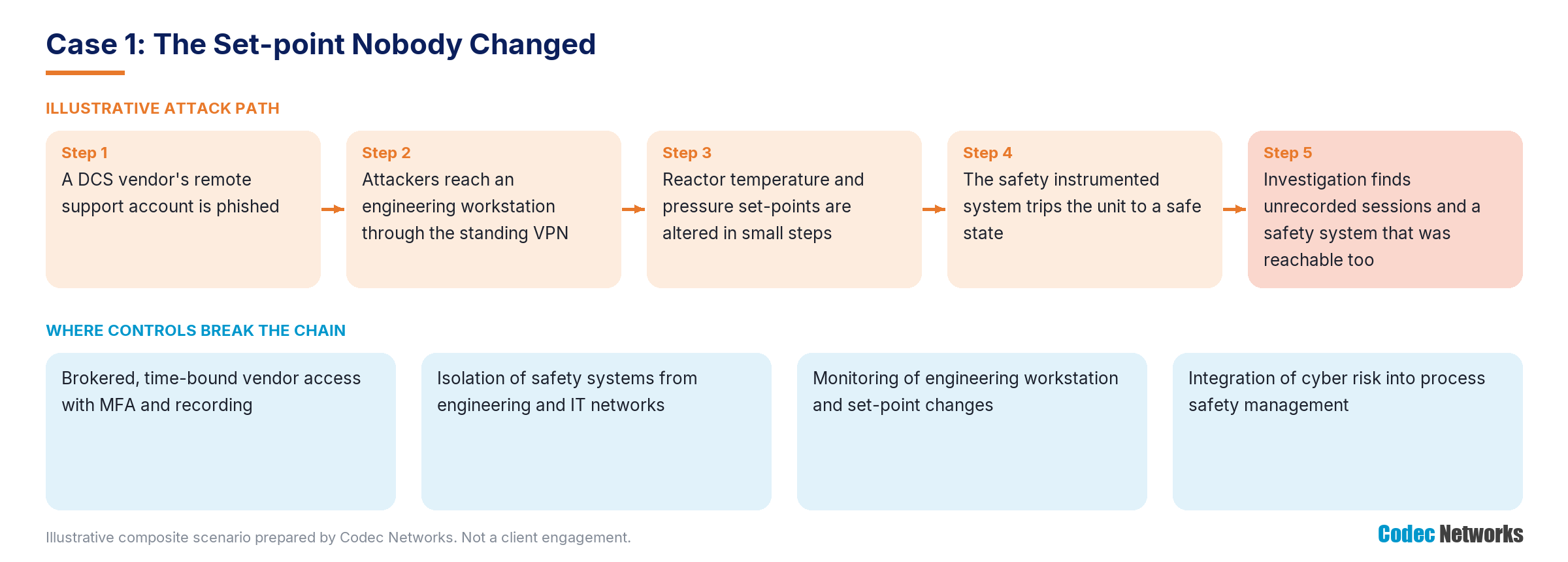
Figure 8: Illustrative attack path for Case Study 1 and the controls that break it.
What went wrong
- Standing VPN with a shared vendor account and no MFA.
- Engineering workstation able to reach both DCS and SIS.
- Set-point and logic changes were not monitored.
- No record of remote sessions.
The impact
Specco A lost a week of production, conducted a safety investigation, reported the incident and re-tendered vendor support with security requirements.
The regulatory lens
- Factories Act and MSIHC Rules: process upset investigated as a safety event.
- CERT-In Directions: incident reported within six hours.
- IEC 61511 and IEC 62443: SIS isolation and access requirements the plant did not meet.
How Codec Networks would help
|
Need |
Codec Networks response |
Bundle |
|
Control vendors |
Brokered, time-bound access with MFA and recording; vendor assessment |
B9 |
|
Protect the SIS |
OT and SIS assessment, engineering workstation separation |
B1 |
|
Watch the plant |
OT monitoring of remote sessions and set-point changes |
B7 |
|
Key lessons Replace standing VPNs with brokered access. Separate safety engineering from control engineering. Monitor set-point and logic changes. Record every vendor session. |
Case Study 2: The Fertilizer Plant That Couldn't Claim Its Subsidy
The plant made urea all week. The company couldn't prove it had sold a bag.
|
At a glance |
|
|
Organisation |
A listed fertilizer producer (“Fertco B”) with two plants and 20,000 retail points |
|
Threat |
Ransomware encrypting ERP, the DBT integration layer and file servers at the start of the kharif season |
|
Why it is new |
Fertilizer revenue depends on reconciling PoS sales with ERP for subsidy claims |
|
Codec Networks services |
Segmentation and recovery, SOC, integration security (Bundles B3, B7, B2) |
The scenario
Attackers entered through a phished finance user and, over three weeks, took domain control unnoticed. On a Sunday they encrypted ERP, the integration servers that reconcile PoS sales with the Department of Fertilizers' systems, and the backup server on the same network.
The plants kept producing, but dispatch slowed to manual paperwork, PoS sales could not be reconciled and subsidy claims stalled at the peak of the season.
Dealers ran short of stock and credit; Fertco B's working capital drained; and it took five weeks of rebuilding and manual reconciliation before claims flowed again.
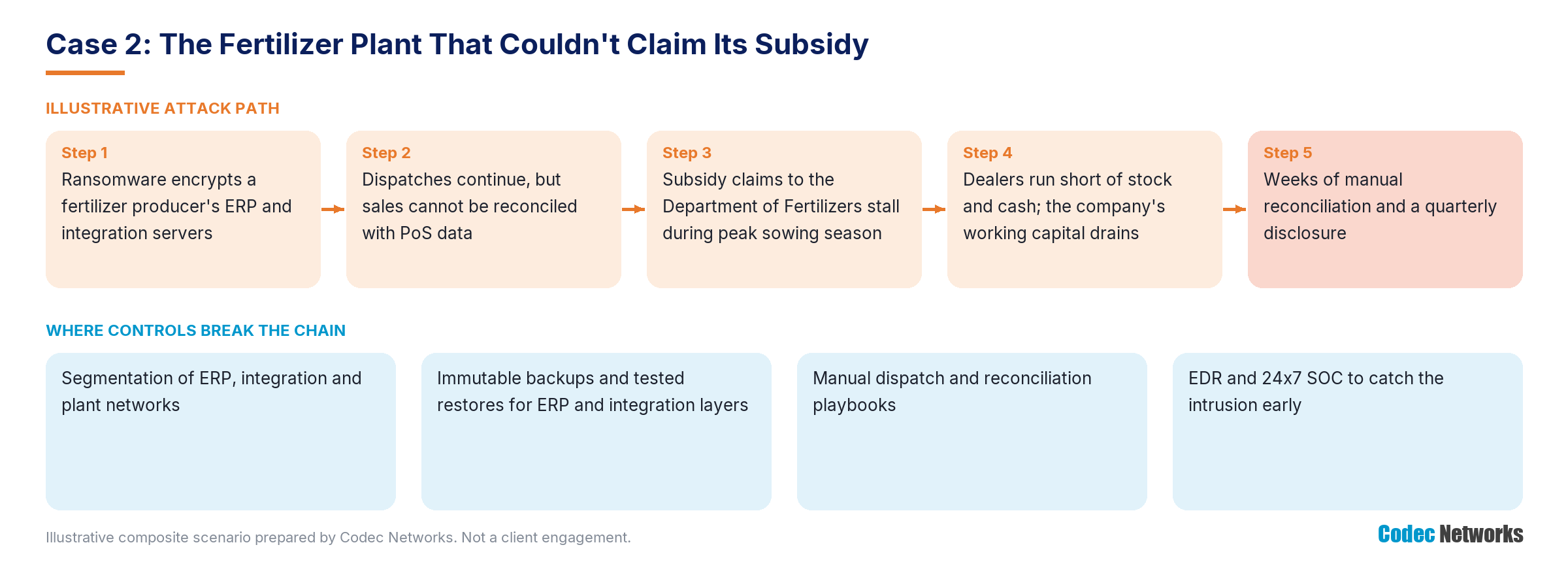
Figure 9: Illustrative attack path for Case Study 2 and the controls that break it.
What went wrong
- ERP, integration and backup servers shared one network and one set of credentials.
- No manual dispatch and reconciliation playbook.
- EDR alerts were not monitored 24x7.
- No tested restore of the integration layer.
The impact
Fertco B faced a seasonal supply shortfall, a working-capital squeeze, dealer disputes, a quarterly disclosure and engagement with the Department of Fertilizers.
The regulatory lens
- Fertiliser (Control) Order and DBT: distribution, pricing and subsidy obligations tied to ERP and PoS data.
- CERT-In Directions: incident reported within six hours.
- SEBI LODR: cyber incident disclosed in the quarterly corporate governance report.
How Codec Networks would help
|
Need |
Codec Networks response |
Bundle |
|
Separate and recover |
Segmentation of ERP, integration and plant networks; immutable backups; tested restores |
B3 |
|
Detect early |
24x7 SOC with EDR monitoring and threat hunting |
B7 |
|
Harden the integrations |
Integration and portal security testing, continuity planning |
B2 |
|
Key lessons Treat subsidy integrations as revenue-critical systems. Keep backups off the domain and test restores. Plan manual dispatch and reconciliation. Monitor endpoints around the clock. |
Case Study 3: The Formulation That Left With the Contractor
The rival product matched to the decimal point.
|
At a glance |
|
|
Organisation |
An agrochemical formulator (“Agroco C”) with proprietary formulations and regulatory dossiers |
|
Threat |
A contract chemist exporting recipes, process parameters and dossier data to personal cloud storage over several months |
|
Why it is new |
Formulations are the company's value and are rarely monitored |
|
Codec Networks services |
Data classification and DLP, offboarding controls, forensics (Bundles B3, B6, B8) |
The scenario
Agroco C engaged a contract chemist with full access to its formulation system and shared drives. Over months, the contractor exported recipes, process parameters and regulatory dossiers to a personal cloud account.
Access remained active for weeks after the contract ended. A competitor then launched an equivalent product at a lower price.
Agroco C lost key distributors and pursued legal action with little evidence of what had been taken or when.
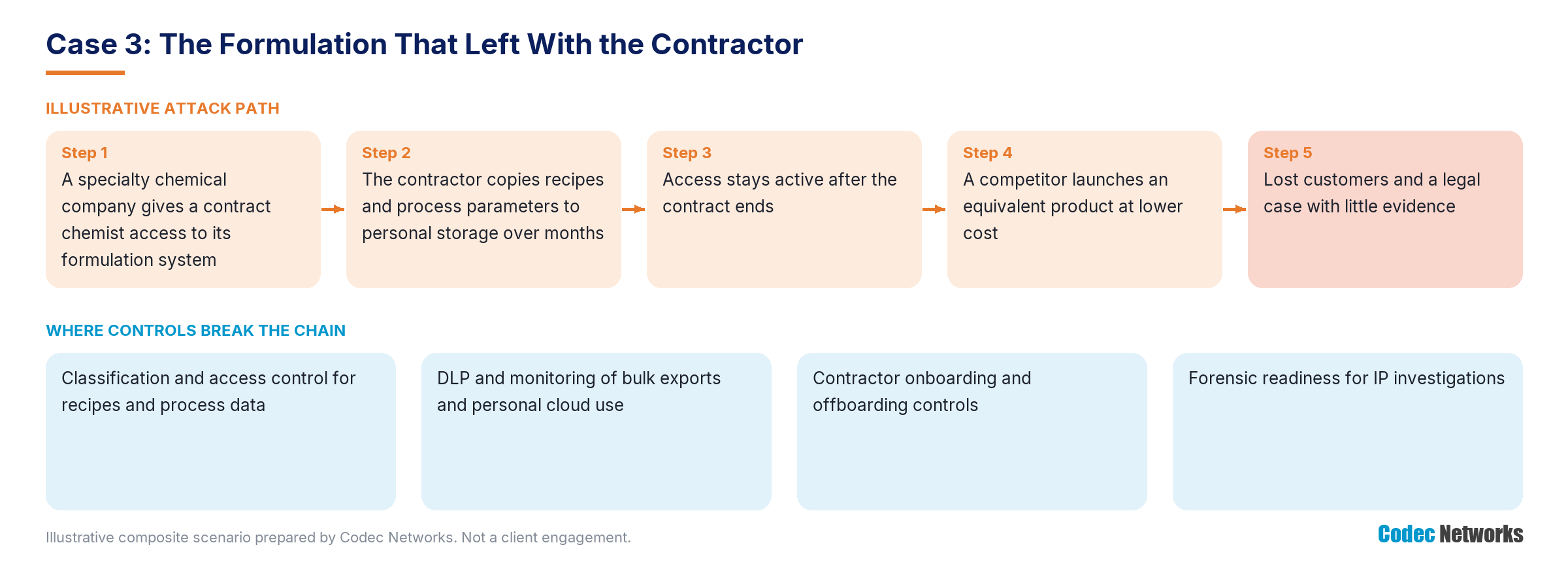
Figure 10: Illustrative attack path for Case Study 3 and the controls that break it.
What went wrong
- Formulation data was not classified or access-limited by need.
- Bulk exports and personal cloud uploads were not blocked or monitored.
- Contractor offboarding did not remove access.
- No forensic readiness to prove the theft.
The impact
Agroco C lost revenue and distributors, faced a weak legal position and rebuilt its data governance and contractor controls.
The regulatory lens
- Contracts and IP law: confidentiality obligations and the need for evidence.
- Insecticides Act and CIB&RC: integrity of registration dossiers.
- DPDP: employee and dealer data within the exported files.
How Codec Networks would help
|
Need |
Codec Networks response |
Bundle |
|
Protect the crown jewels |
Data classification, DLP, formulation system and LIMS access reviews |
B3 |
|
Govern the data |
DPDP programme and data-handling controls for contractors |
B6 |
|
Prove it |
Forensic readiness and investigation support |
B8 |
|
Key lessons Classify and restrict formulation data. Block and monitor personal cloud uploads. Remove contractor access on the last day. Be ready to investigate and prove. |
Case Study 4: The Dealer Portal Payment Diversion
Dealers paid on time. The money went somewhere else.
|
At a glance |
|
|
Organisation |
A paints company (“Paintco D”) with 5,000 dealers paying through a portal and invoices |
|
Threat |
A phished sales manager's mailbox used to send revised bank details to dealers during the peak season |
|
Why it is new |
Dealer networks move large seasonal payments on trust |
|
Codec Networks services |
Portal and payment testing, BEC simulation, monitoring (Bundles B2, B10, B7) |
The scenario
Attackers phished a regional sales manager and watched the mailbox for weeks. At the start of the festive season they sent dealers 'updated' bank details on genuine-looking invoices.
Dozens of dealers paid into the attackers' account before reconciliation revealed the gap. The portal itself had no alert for bank-detail changes and no MFA.
Paintco D recovered little, faced dealer disputes and filed police complaints.
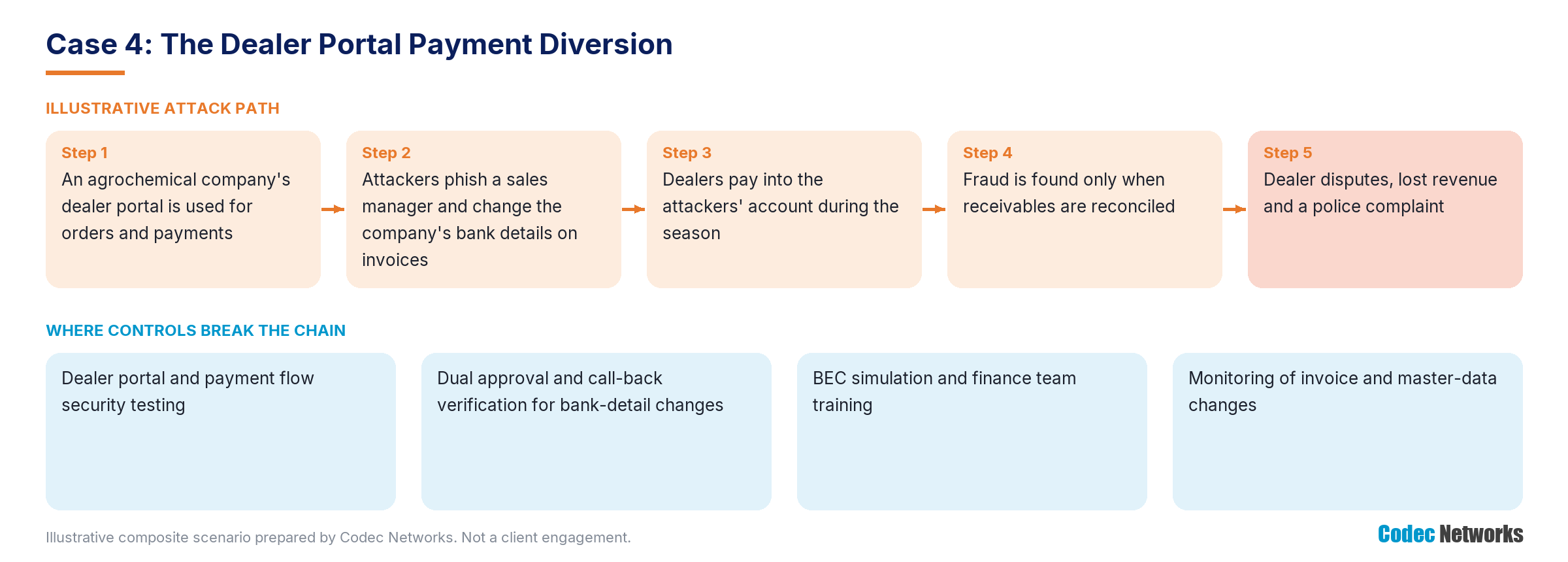
Figure 11: Illustrative attack path for Case Study 4 and the controls that break it.
What went wrong
- No MFA on email or the dealer portal.
- No verification of bank-detail changes.
- No monitoring of mailbox rules or invoice changes.
- Finance and dealer teams were untrained on BEC.
The impact
Paintco D lost seasonal revenue, strained dealer relationships and rebuilt its payment verification and portal security.
The regulatory lens
- DPDP: dealer data exposed from the mailbox.
- CERT-In Directions: incident reported within six hours.
- Banking and police processes: recovery attempts and complaints.
How Codec Networks would help
|
Need |
Codec Networks response |
Bundle |
|
Test the portal |
Dealer portal and payment flow security testing, MFA |
B2 |
|
Train and rehearse |
BEC simulation and finance and dealer team training |
B10 |
|
Watch for abuse |
Monitoring of mailbox rules, invoice and master-data changes |
B7 |
|
Key lessons Enforce MFA on email and portals. Verify every bank-detail change by call-back. Monitor mailbox rules and invoice changes. Train finance and dealer teams. |
Case Study 5: The Turnaround USB on the DCS Network
Three hundred contractors came for the turnaround. One brought malware.
|
At a glance |
|
|
Organisation |
A chlor-alkali producer (“Bulkco E”) during a planned turnaround |
|
Threat |
Self-spreading malware on a contractor's USB drive reaching the historian and operator stations |
|
Why it is new |
Turnarounds bring uncontrolled devices and media into plant networks |
|
Codec Networks services |
Third-party access programme, segmentation, OT monitoring (Bundles B9, B3, B7) |
The scenario
During a turnaround, a contractor used a USB drive to move configuration files between a personal laptop and a DCS engineering station.
The drive carried self-spreading malware that reached the historian and several operator stations. Screens froze and the unit was run manually at reduced rates.
Cleaning the plant network extended the turnaround by a week and raised questions from the safety regulator about control-room availability.
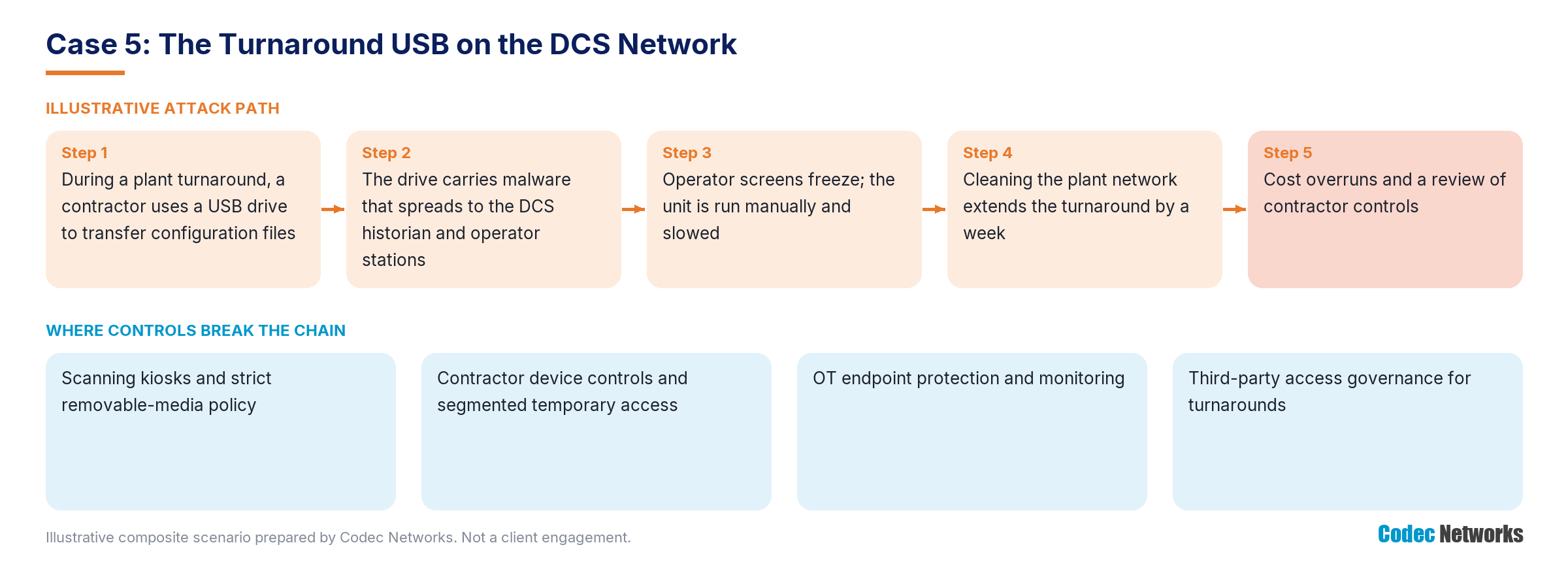
Figure 12: Illustrative attack path for Case Study 5 and the controls that break it.
What went wrong
- No scanning kiosk or removable-media policy enforced.
- Contractor laptops connected directly to plant networks.
- OT endpoints lacked protection and monitoring.
- No segmented temporary access for turnaround work.
The impact
Bulkco E faced turnaround delays, cost overruns, a regulator query and a review of contractor security requirements.
The regulatory lens
- Factories Act: safe operation during maintenance.
- CERT-In Directions: incident reported within six hours.
- Contracts: contractor security obligations.
How Codec Networks would help
|
Need |
Codec Networks response |
Bundle |
|
Control contractors |
Third-party access programme, device scanning, media kiosks |
B9 |
|
Segment access |
Temporary, segmented turnaround networks |
B3 |
|
Watch OT |
OT endpoint and network monitoring |
B7 |
|
Key lessons Control every USB drive and contractor device. Give contractors segmented access. Protect and monitor OT endpoints. Put security into turnaround contracts. |
Talk to Codec Networks
|
Contact Codec Networks Pvt. Ltd. New Delhi: 507, 5th Floor, New Delhi House, Barakhamba Road, Connaught Place, New Delhi – 110001 Gurugram: 707, 7th Floor, Silverton Tower, Golf Course Extension Road, Sector 50, Gurugram – 122018, Haryana Landline: 011 430 496 96 | 011 437 522 99 Mobile: +91 99716 76124 | +91 88007 88220 | +91 88003 31124 Email: mktg@codecnetworks.com Web: www.codecnetworks.com |