

Resources Categories
INDUSTRY FACT FILE · CHEMICALS, FERTILIZERS & PROCESS INDUSTRIES
Industry Overview: Chemicals, Fertilizers and Process Industries in India
Who makes India's chemicals, fertilizers, agrochemicals and process materials, the safety, sector and cyber obligations that apply, who buys cybersecurity and why each type of company needs a distinct approach.
|
In this document 1. Why chemical and fertilizer cybersecurity matters now 2. The ecosystem at a glance 3. Categories of chemical, fertilizer and process companies 4. The safety, sector and cyber framework at a glance 5. Government, public-sector and private participants 6. Who buys cybersecurity inside a chemical or fertilizer company 7. Why each type of company needs a different approach 8. How Codec Networks works with chemical and fertilizer companies |
|
Sector scope Sector: fertilizer producers, bulk and commodity chemicals, specialty chemicals and CDMOs, agrochemicals, paints, coatings, industrial gases and materials, and industrial process operators. Primary service proposition: OT risk assessments, industrial network security, SOC, recovery and vendor access reviews. Oil, gas and petrochemicals, pharmaceuticals and metals have separate fact files. |
1. Why chemical and fertilizer cybersecurity matters now
India is the world's sixth-largest producer of chemicals and the third-largest in Asia, the second-largest producer and consumer of fertilizers, and the fourth-largest producer of agrochemicals. The sector spans public-sector and cooperative fertilizer majors, listed bulk and specialty chemical groups, global subsidiaries, contract development and manufacturing organisations, agrochemical formulators, paint and coatings companies, industrial gas suppliers and thousands of mid-sized process operators. Fertilizer alone draws a government subsidy of well over ₹1.5 lakh crore a year, paid to producers on the basis of Aadhaar-authenticated point-of-sale data from retailers across the country.
|
6th India's rank among global chemical producers |
2017 TRITON malware targeted a petrochemical plant's safety system |
1,000 Devices encrypted when ransomware halted Symrise (2020) |
6 hours To report cyber incidents to CERT-In |
These are hazardous, continuous processes. Reactors, columns, furnaces and tank farms are run by distributed control systems, PLCs and safety instrumented systems, maintained by automation vendors and contractors who often hold remote access. Above the plant sit ERP, LIMS, formulation systems and—for fertilizer producers—the subsidy and dealer integrations without which product cannot be sold or claims paid. The 2017 TRITON attack, which targeted a petrochemical plant's safety instrumented system, showed that attackers will reach for the last layer of protection; the Bhopal disaster and the 2020 Visakhapatnam styrene release remind every operator what a loss of process control means.
Ransomware has already stopped chemical companies. In December 2020 Clop ransomware encrypted about 1,000 devices at flavour and fragrance maker Symrise, which halted production to contain it. In 2021 chemical distributor Brenntag paid a US$4.4 million ransom after attackers stole 150 GB of data. In 2019 LockerGoga hit US chemical makers Hexion and Momentive alongside Norsk Hydro. Dragos reports that manufacturing, including chemicals, made up more than half of industrial ransomware victims in 2024, and IBM X-Force ranks the broader industrial sector the most attacked for five years running.
In India the obligations are layered. CERT-In's Directions require six-hour incident reporting and 180-day logs; its 2025 audit guidelines expect independent audits that include OT/ICS. The Factories Act, the Manufacture, Storage and Import of Hazardous Chemical Rules and PESO impose continuous safety duties that compromised control and safety systems can undermine. Fertilizer producers depend on the Fertiliser (Control) Order and the DBT scheme's point-of-sale data for pricing and subsidy; listed companies disclose cyber incidents quarterly under SEBI's LODR; and the DPDP Act and Rules will govern farmer, dealer and employee data from May 2027. Customers in pharma, FMCG and automotive, and export regimes such as EU REACH, add their own audits.
|
Key takeaway In chemicals and fertilizers, cybersecurity is process safety, supply continuity and licence to operate in one. Control and safety systems, the vendors who reach them and the business systems that sell and claim must be protected together. |
2. The ecosystem at a glance
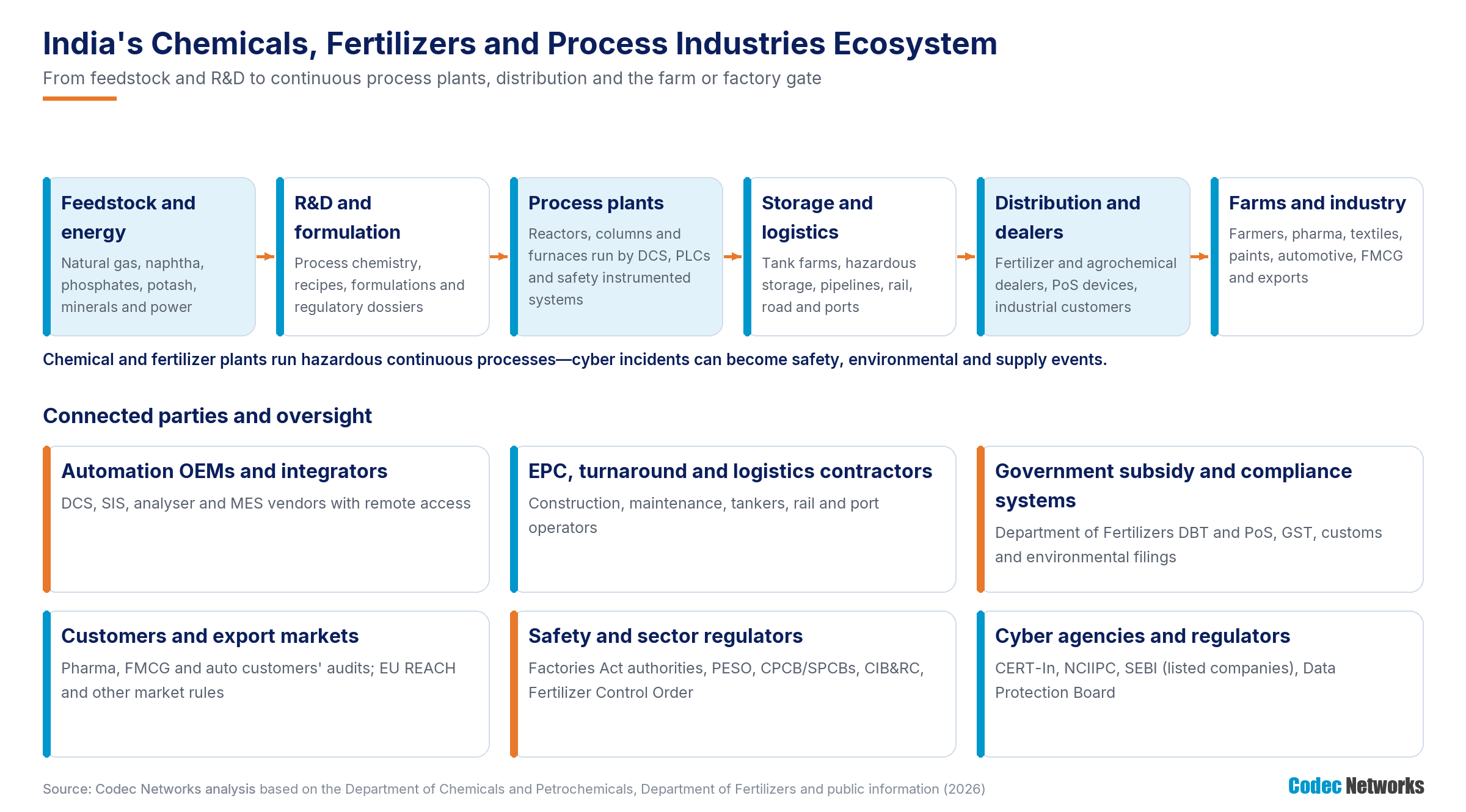
Figure 1: India's chemicals, fertilizers and process industries ecosystem.
3. Categories of chemical, fertilizer and process companies
|
Category |
Who they are |
Typical ownership |
Key regulatory basis |
|
Fertilizer producers |
Urea, DAP, NPK and complex fertilizers; large continuous plants |
Public-sector undertakings, cooperatives, listed private companies |
Fertiliser (Control) Order; DBT scheme; Factories Act; PESO; CERT-In; NCIIPC where notified |
|
Bulk and commodity chemicals |
Chlor-alkali, soda ash, acids, polymers, intermediates |
Listed private groups, PSUs, global subsidiaries |
MSIHC Rules; Factories Act; CERT-In; SEBI LODR (listed) |
|
Specialty chemicals and CDMOs |
Performance chemicals, intermediates, contract development and manufacturing |
Listed and private companies, global customers |
Factories Act; customer audits; CERT-In; EU REACH for exports |
|
Agrochemicals |
Crop protection technicals and formulations |
Listed and private companies |
Insecticides Act and CIB&RC; Factories Act; CERT-In; DPDP for dealer and farmer data |
|
Paints, coatings and adhesives |
Decorative and industrial coatings, adhesives |
Listed private companies, global subsidiaries |
Factories Act; MSIHC Rules; CERT-In; DPDP for dealer data |
|
Industrial gases and materials |
Oxygen, nitrogen, hydrogen, specialty gases, advanced materials |
Global and Indian suppliers |
PESO and Explosives Act; Factories Act; CERT-In |
|
Process operators and toll manufacturers |
Contract and toll processing for brand owners |
Private mid-sized companies |
Factories Act; customer contracts; CERT-In |
|
Chemical distributors and dealers |
Distribution, blending, dealer networks |
Private distributors, cooperative and private dealer networks |
Fertiliser (Control) Order for fertilizer dealers; DPDP; CERT-In |
4. The safety, sector and cyber framework at a glance
|
Instrument or expectation |
What it means for chemical and fertilizer companies |
|
CERT-In Directions (28 April 2022) |
Cyber incidents reported within six hours of noticing them; ICT logs kept for a rolling 180 days in India |
|
CERT-In audit policy guidelines (25 July 2025) |
Risk-based, independent cyber audits covering IT, OT/ICS, cloud and applications |
|
Factories Act 1948; MSIHC Rules 1989; Chemical Accidents Rules 1996; PESO |
Continuous safety duties for hazardous process plants and storage—safety reports, on-site emergency plans, licensing—which depend on the integrity of control and safety systems |
|
Fertiliser (Control) Order 1985 and DBT in fertilizers |
Quality, pricing and distribution control; subsidy paid on Aadhaar-authenticated PoS sales data, so ERP and integration integrity is a revenue matter |
|
NCIIPC (IT Act Section 70A) |
Protection of systems notified as protected systems or critical information infrastructure—relevant to strategic and public enterprises such as fertilizer PSUs; most private plants are not notified |
|
SEBI LODR Regulations (listed companies) |
Cyber incidents and data loss disclosed in the quarterly corporate governance report |
|
DPDP Act 2023 and DPDP Rules 2025 |
Safeguards and breach intimation for farmer, dealer, distributor and employee data; most obligations from May 2027 |
|
Customer, export and voluntary frameworks |
Pharma, FMCG and automotive customer audits; EU REACH and other market rules; Responsible Care; IEC 62443 and IEC 61511 as the security and safety standards of reference |
|
How these apply Safety and sector obligations depend on products, quantities and licences; cyber obligations are cross-sector and depend on listing status and notifications. Confirm against the official instruments and your contracts. |
5. Government, public-sector and private participants
- The Department of Chemicals and Petrochemicals and the Department of Fertilizers set sector policy, the Fertiliser (Control) Order and the DBT scheme; the Ministry of Agriculture and CIB&RC regulate agrochemicals.
- Factories Act authorities, PESO, CPCB and State Pollution Control Boards enforce safety and environmental duties; NACWC administers the Chemical Weapons Convention Act.
- CERT-In and NCIIPC handle incident response and critical infrastructure; SEBI governs listed-company disclosure; MeitY administers DPDP.
- Fertilizer PSUs and cooperatives anchor fertilizer supply; listed private groups and global subsidiaries lead bulk, specialty and agrochemicals.
- CDMOs, formulators, toll manufacturers and distributors serve brand owners and global customers.
- Automation OEMs, EPC firms, turnaround contractors and logistics operators build, maintain and move the sector's plants and products.
6. Who buys cybersecurity inside a chemical or fertilizer company
|
Stakeholder |
What they care about |
What they buy |
|
Board, CMD, MD and CFO |
Safety, supply continuity, subsidy and revenue, disclosure |
Board advisory, resilience programmes, crisis exercises |
|
CISO and CIO |
IT and OT security, audits, customer questionnaires |
Audits, assessments, SOC, GRC programmes |
|
Plant heads and operations |
Unit uptime, safe operation, vendor access |
OT assessments, segmentation, playbooks |
|
Process safety and HSE |
Safety system integrity, emergency plans |
SIS security reviews, cyber in PSM |
|
Instrumentation and control |
DCS, PLCs, SIS, analysers |
Engineering workstation controls, change management |
|
R&D and quality |
Formulations, LIMS data integrity |
Data classification, DLP, LIMS security |
|
Marketing, dealer network and subsidy teams |
Dealer portals, PoS data, claims |
ERP and portal security, continuity planning |
|
Procurement and contracts |
Vendor, contractor and logistics risk |
Third-party access programmes |
7. Why each type of company needs a different approach
|
Company type |
Highest-consequence risk |
Starting point for assurance |
|
Fertilizer producer |
Plant ransomware and subsidy or dispatch disruption in season |
Segmentation, ERP and integration resilience, OT SOC |
|
Bulk chemical maker |
Safety system tampering and legacy DCS exposure |
SIS security, OT assessment, vendor access controls |
|
Specialty chemical or CDMO |
Formulation and process IP theft; customer audit failure |
Data classification, DLP, customer assurance |
|
Agrochemical company |
Dealer portal fraud and farmer data exposure |
Portal and payment security, DPDP programme |
|
Paints, gases and materials |
Multi-site plant and distribution outages |
Baseline OT review, backups, SOC |
|
Process operator or toll manufacturer |
Being the weak link for brand-owner customers |
Baseline assessment, questionnaire readiness |
8. How Codec Networks works with chemical and fertilizer companies
Codec Networks is a CERT-In empanelled information security auditing organisation certified to ISO 9001:2015, ISO/IEC 27001:2022 and ISO/IEC 20000-1:2018. For chemical and fertilizer companies we deliver OT risk assessments of DCS, PLC, safety and tank-farm systems using safety-aware methods, industrial network segmentation and vendor access design, recovery planning for ERP, subsidy and dispatch systems, safety system security reviews, third-party and contractor programmes, 24x7 IT/OT SOC and crisis exercises with operations and safety teams—connected from finding to closure.
Talk to Codec Networks
|
Contact Codec Networks Pvt. Ltd. New Delhi: 507, 5th Floor, New Delhi House, Barakhamba Road, Connaught Place, New Delhi – 110001 Gurugram: 707, 7th Floor, Silverton Tower, Golf Course Extension Road, Sector 50, Gurugram – 122018, Haryana Landline: 011 430 496 96 | 011 437 522 99 Mobile: +91 99716 76124 | +91 88007 88220 | +91 88003 31124 Email: mktg@codecnetworks.com Web: www.codecnetworks.com |
Note: This document is general industry guidance based on public information available as of October 2026. It is not legal, safety or regulatory advice. Obligations differ by product, licence, listing status and customers; confirm them against the official CERT-In, MeitY, SEBI, NCIIPC, MoEFCC, Department of Fertilizers and safety-regulator instruments and your contracts.