

Resources Categories
INDUSTRY FACT FILE · AUTOMOTIVE & MOBILITY
Five New Case Studies in Automotive and Mobility Security
Original 2026 case studies, each written as a blog post, showing how current threats play out across OEMs, suppliers, dealers, charging networks and fleets and how Codec Networks services break the attack chain.
|
In this document 1. About these case studies 2. Case Study 1: The Five-Week Shutdown 3. Case Study 2: The Dealer Platform That Went Dark 4. Case Study 3: The App That Unlocked Any Car 5. Case Study 4: The Charging Network Held to Ransom 6. Case Study 5: The Fleet That Drove Blind |
About these case studies
These five case studies were written for this document set and have not been published elsewhere. Each is a composite scenario combining attack techniques and control failures widely observed in automotive and mobility with the obligations that apply in India as of October 2026—in particular CERT-In's Directions, SEBI disclosure for listed companies, DPDP, AIS 189/190 and the OEM and export requirements that reach Indian companies.
|
Important disclosure The organisations described are fictional and the scenarios are illustrative. They are not accounts of real incidents, and they are not Codec Networks client engagements or claims of achieved outcomes. Their value lies in showing how connected weaknesses form an attack chain, which controls break it, and which services test those controls. |
|
Case study |
Organisation type |
Core threat |
Regulatory lens |
Primary bundles |
|
1. The Five-Week Shutdown |
Vehicle OEM |
Ecosystem-wide ransomware |
CERT-In; SEBI LODR; lenders |
B3, B7, B10 |
|
2. The Dealer Platform That Went Dark |
Dealer group and DMS provider |
Ransomware at a shared SaaS provider |
CERT-In; DPDP; OEM standards |
B9, B2, B10 |
|
3. The App That Unlocked Any Car |
EV manufacturer |
API authorisation flaw reaching vehicles |
AIS 189; DPDP; CERT-In |
B2, B11, B7 |
|
4. The Charging Network Held to Ransom |
Charge point operator |
Backend takeover via weak admin access |
PCI DSS; Ministry of Power guidelines; CERT-In |
B1, B3, B7 |
|
5. The Fleet That Drove Blind |
Fleet telematics provider |
Cloud breach via leaked API key |
DPDP; contracts; CERT-In |
B2, B6, B7 |
Case Study 1: The Five-Week Shutdown
No plant was attacked directly. Every plant stopped anyway.
|
At a glance |
|
|
Organisation |
A listed vehicle OEM (“Autoco A”) with three plants, 400 dealers and 1,200 suppliers |
|
Threat |
Ransomware entering through a supplier's VPN credentials and spreading across ERP, MES and dealer systems |
|
Why it is new |
The modern OEM is an ecosystem; one intrusion can stop all of it |
|
Codec Networks services |
Segmentation and recovery, SOC, ecosystem crisis exercises (Bundles B3, B7, B10) |
The scenario
Attackers bought VPN credentials belonging to a tier-2 supplier's engineer and used them to enter Autoco A's network, where supplier access was not segmented from corporate systems.
Over three weeks they took domain control unnoticed and then encrypted ERP, MES, parts-ordering and dealer-registration systems in one night. The plants were untouched, but could not be sequenced; dealers could not register or deliver cars; suppliers received no call-offs.
Production stopped for five weeks. Autoco A disclosed the incident, sought lender support for suppliers and faced a Board inquiry into why a supplier's credential could reach everything.
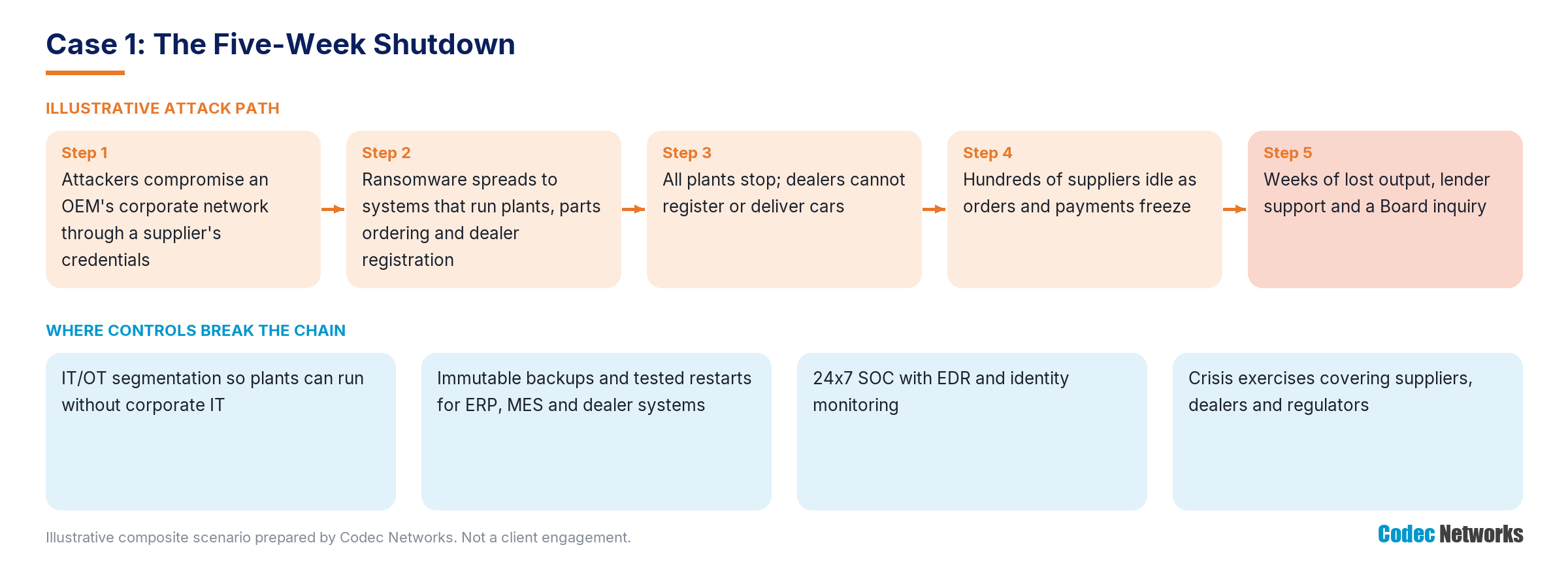
Figure 8: Illustrative attack path for Case Study 1 and the controls that break it.
What went wrong
- Supplier access was not segmented from corporate and plant systems.
- Plants depended on corporate IT with no independent operation.
- Backups were reachable and restores untested.
- Identity and EDR alerts were not monitored 24x7.
The impact
Autoco A lost five weeks of output, disclosed the incident under SEBI LODR, supported idle suppliers financially and rebuilt its identity, segmentation and recovery architecture.
The regulatory lens
- CERT-In Directions: incident reported within six hours; logs needed for investigation.
- SEBI LODR: cyber incident disclosed in the quarterly corporate governance report.
- Lenders and insurers: evidence of controls and recovery demanded.
How Codec Networks would help
|
Need |
Codec Networks response |
Bundle |
|
Separate and recover |
Supplier access segmentation, plant independence, immutable backups and tested restarts |
B3 |
|
Detect early |
24x7 SOC with identity and EDR monitoring and threat hunting |
B7 |
|
Rehearse the ecosystem |
Crisis exercises with plants, suppliers, dealers and regulators |
B10 |
|
Key lessons Segment supplier and vendor access. Make plants able to run without corporate IT. Keep backups immutable and test restarts. Monitor identities and endpoints around the clock. |
Case Study 2: The Dealer Platform That Went Dark
Four hundred showrooms, one provider, no deals for two weeks.
|
At a glance |
|
|
Organisation |
A dealer group (“Dealco B”) using a dealer management system shared by 400 dealerships |
|
Threat |
Ransomware at the DMS provider encrypting sales, finance, service and parts systems and leaking customer and loan data |
|
Why it is new |
Shared platforms turn one incident into an industry outage |
|
Codec Networks services |
SaaS assurance, portal testing, playbooks (Bundles B9, B2, B10) |
The scenario
The DMS provider was hit by ransomware. Within hours, Dealco B's showrooms could not quote, finance, register or service vehicles, and the parts system was down.
Sales moved to paper and spreadsheets; financing and registration slowed to a crawl; service bays emptied. The attackers published customer identity and loan documents taken from the provider.
Dealco B had never assessed the provider, held no offline customer list and had no manual-operation playbook. Normal operations resumed after two weeks; customer complaints and a DPDP exposure lasted much longer.
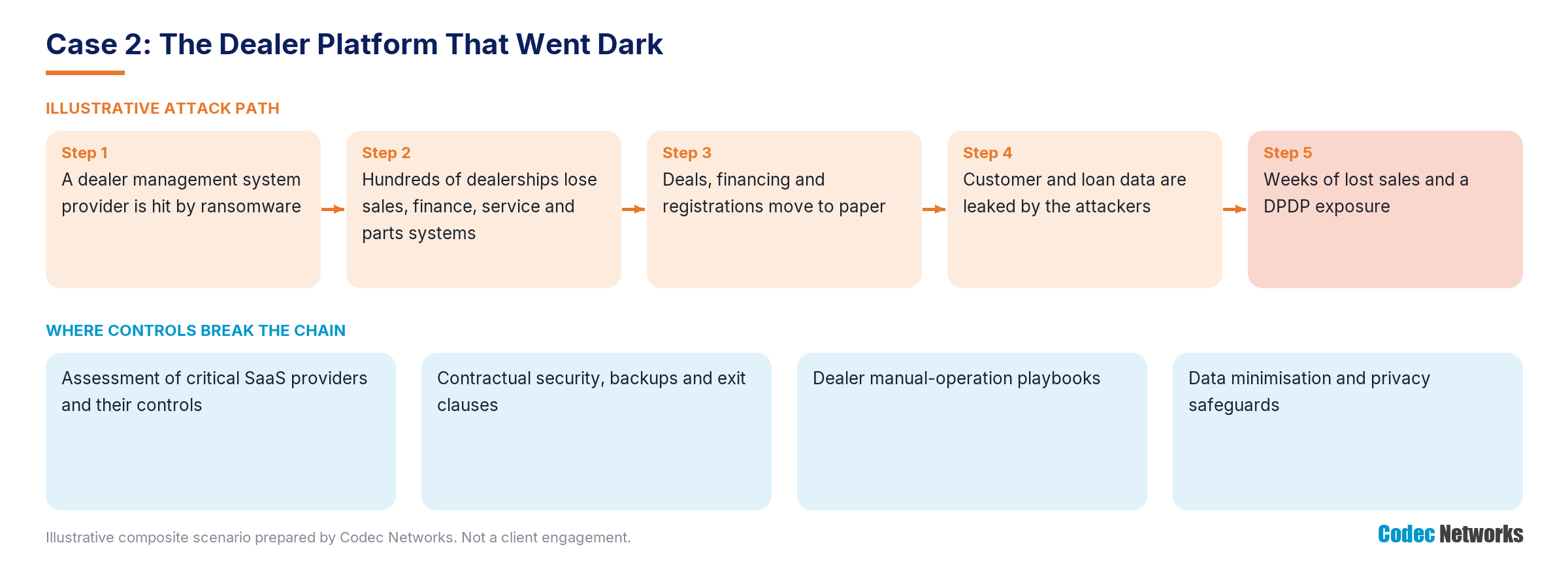
Figure 9: Illustrative attack path for Case Study 2 and the controls that break it.
What went wrong
- The DMS provider had never been assessed and its backups were unknown.
- No contractual security, notification or recovery commitments.
- No manual-operation playbook for dealers.
- Customer data was over-collected and stored unencrypted at the provider.
The impact
Dealco B lost two weeks of sales and service revenue, faced customer complaints and an OEM review, and renegotiated its DMS contract with security and exit clauses.
The regulatory lens
- CERT-In Directions: incident reported within six hours by the provider and the dealer group.
- DPDP: customer and loan data exposure; breach intimation once provisions commence.
- OEM dealer standards: continuity and data-handling expectations.
How Codec Networks would help
|
Need |
Codec Networks response |
Bundle |
|
Assure the platform |
DMS and SaaS provider assessments, contract clauses, exit plans |
B9 |
|
Test the portals |
Dealer portal and integration security testing |
B2 |
|
Keep selling |
Dealer manual-operation playbooks and exercises |
B10 |
|
Key lessons Assess the platforms your business runs on. Put security, notification and recovery in contracts. Keep dealers able to work on paper. Minimise and protect customer data. |
Case Study 3: The App That Unlocked Any Car
Any VIN, any car, anywhere—one API call was all it took.
|
At a glance |
|
|
Organisation |
An EV manufacturer (“Evco C”) with a companion app and dealer portal |
|
Threat |
A shared back-end API allowing any authenticated user to bind a vehicle by VIN and issue locate, unlock and start commands |
|
Why it is new |
App and dealer APIs are the shortest path from the internet to the vehicle |
|
Codec Networks services |
API and app testing, connected-vehicle threat modelling, command monitoring (Bundles B2, B11, B7) |
The scenario
Evco C's app and dealer portal used one back-end. A dealer function that transferred vehicle ownership did not check whether the caller was a dealer or owned the vehicle.
Researchers showed they could bind any vehicle to their own account using its VIN, then locate, unlock and start it. A criminal group had been using the same flaw to steal cars.
Evco C issued an emergency fix, notified customers and regulators and faced questions about its cyber security management system ahead of AIS 189.
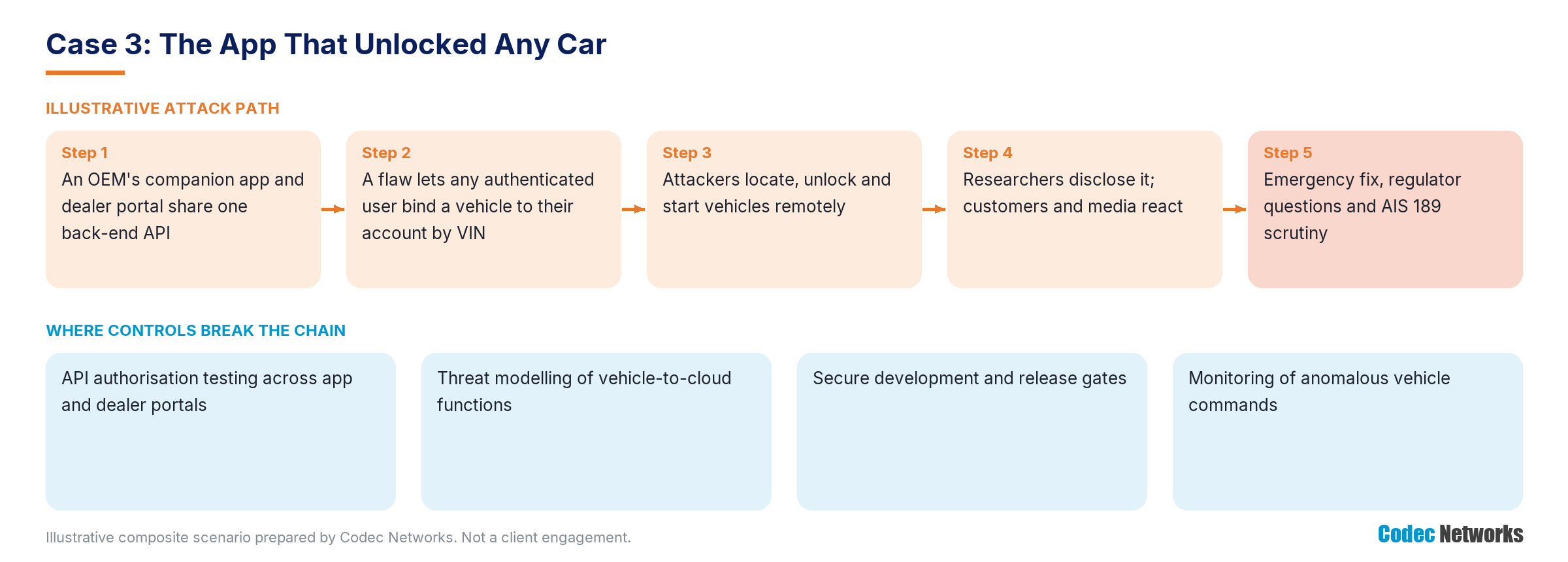
Figure 10: Illustrative attack path for Case Study 3 and the controls that break it.
What went wrong
- Authorisation was not tested across app and dealer API functions.
- No threat model for vehicle binding and ownership transfer.
- Vehicle commands were not monitored for anomalies.
- No vulnerability disclosure channel or vehicle-incident playbook.
The impact
Evco C suffered vehicle thefts, customer and media backlash, regulator scrutiny and an accelerated AIS 189 programme.
The regulatory lens
- AIS 189 (CSMS): vehicle-reaching vulnerabilities, field monitoring and incident response as type-approval matters once notified.
- DPDP: vehicle location and owner data exposed.
- CERT-In Directions: incident reported within six hours.
How Codec Networks would help
|
Need |
Codec Networks response |
Bundle |
|
Test the APIs |
Authorisation testing across app, dealer and back-end APIs |
B2 |
|
Model the vehicle |
Connected-vehicle threat modelling and TARA |
B11 |
|
Watch the commands |
SOC monitoring of anomalous vehicle commands and bindings |
B7 |
|
Key lessons Test authorisation on every vehicle-reaching API. Threat-model binding and ownership flows. Monitor vehicle commands. Run a disclosure programme and a vehicle-incident playbook. |
Case Study 4: The Charging Network Held to Ransom
Three thousand chargers went offline. The tariffs changed before anyone noticed.
|
At a glance |
|
|
Organisation |
A charge point operator (“Chargeco D”) running 3,000 public chargers |
|
Threat |
Attackers compromising the OCPP backend's admin interface, taking chargers offline, altering tariffs and accessing payment data |
|
Why it is new |
CPO back-ends concentrate control over thousands of chargers and payments |
|
Codec Networks services |
Backend and OCPP assessment, access hardening, monitoring (Bundles B1, B3, B7) |
The scenario
Chargeco D's backend admin interface was exposed to the internet with password-only login shared by operations staff.
Attackers logged in, disabled chargers across several cities, changed tariffs and accessed payment records before demanding a ransom.
Drivers were stranded, DISCOM and payment partners escalated, and Chargeco D rebuilt its backend under regulatory and PCI scrutiny.
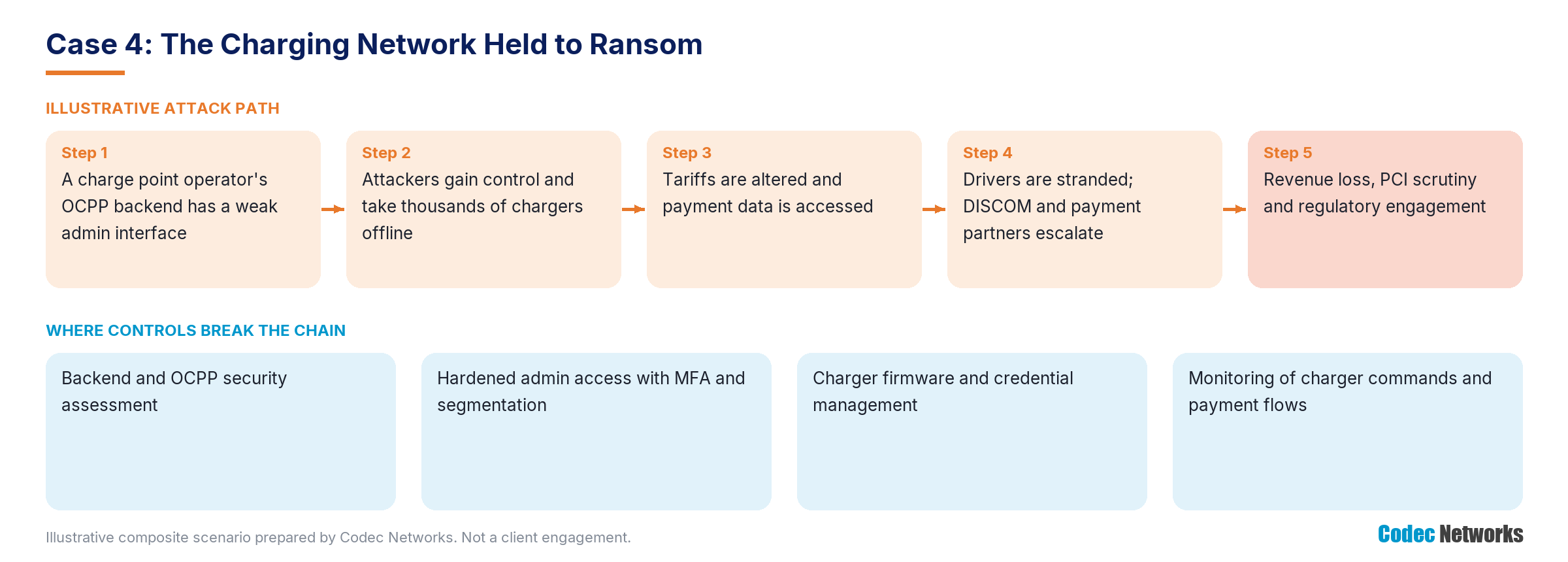
Figure 11: Illustrative attack path for Case Study 4 and the controls that break it.
What went wrong
- Admin interface exposed with shared passwords and no MFA.
- Charger credentials were identical across the fleet.
- Payment data stored beyond PCI DSS requirements.
- No monitoring of charger commands or tariff changes.
The impact
Chargeco D lost revenue and customers, faced PCI DSS and regulatory questions and re-architected its backend and charger fleet.
The regulatory lens
- PCI DSS: card payment environment security.
- Ministry of Power charging guidelines and BIS standards: operational and technical expectations for public charging.
- CERT-In Directions: incident reported within six hours.
How Codec Networks would help
|
Need |
Codec Networks response |
Bundle |
|
Test the backend |
OCPP backend, charger firmware and payment flow assessment |
B1 |
|
Harden access |
MFA, segmentation and unique charger credentials |
B3 |
|
Watch the fleet |
Monitoring of charger commands, tariffs and payments |
B7 |
|
Key lessons Never expose backend admin without MFA. Give every charger unique credentials. Keep payment data to PCI DSS scope. Monitor commands and tariff changes. |
Case Study 5: The Fleet That Drove Blind
The attackers knew where every truck was. Then they switched them off.
|
At a glance |
|
|
Organisation |
A fleet telematics provider (“Fleetco E”) serving logistics and ride-hailing customers |
|
Threat |
A leaked API key giving access to location, driver and trip data and to immobiliser commands |
|
Why it is new |
Fleet platforms hold sensitive data and can act on vehicles on the road |
|
Codec Networks services |
Cloud and API security, DPDP programme, monitoring (Bundles B2, B6, B7) |
The scenario
A developer committed an API key to a public code repository. Attackers used it to pull location, driver and trip data for thousands of vehicles.
They then used the same key to send immobiliser commands to vehicles mid-shift, stopping deliveries and stranding drivers.
Fleetco E revoked keys, restored service and faced customer contract claims, driver complaints and a DPDP exposure.
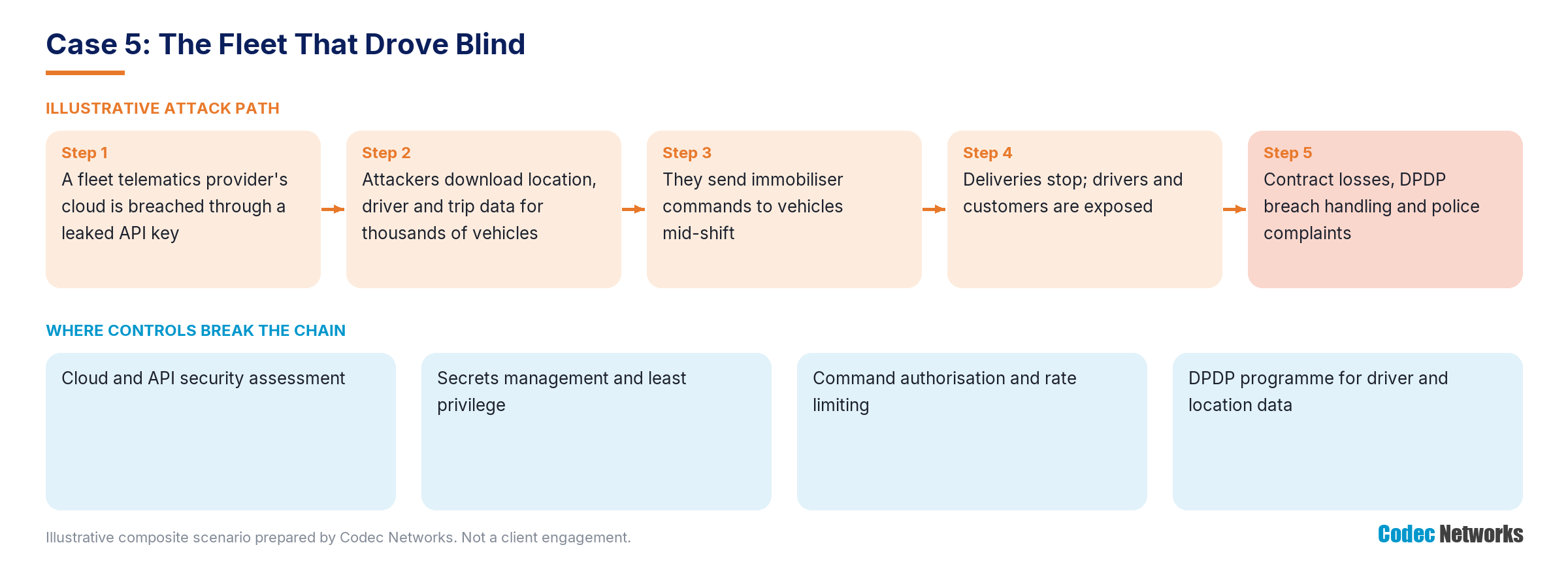
Figure 12: Illustrative attack path for Case Study 5 and the controls that break it.
What went wrong
- Secrets were not managed; a key with broad rights was committed to code.
- Commands were not authorised per customer or rate-limited.
- Driver and location data were over-retained.
- No anomaly detection on data pulls or commands.
The impact
Fleetco E lost enterprise customers, handled a large personal data exposure and rebuilt its API, secrets and command architecture.
The regulatory lens
- DPDP: driver and location data; breach intimation once provisions commence.
- Customer contracts: security and notification obligations to fleet operators.
- CERT-In Directions: incident reported within six hours.
How Codec Networks would help
|
Need |
Codec Networks response |
Bundle |
|
Secure the platform |
Cloud and API security assessment, secrets management, command authorisation |
B2 |
|
Protect the data |
DPDP programme for driver and location data |
B6 |
|
Watch for abuse |
Monitoring of data access and vehicle commands |
B7 |
|
Key lessons Manage secrets and least privilege. Authorise and rate-limit vehicle commands. Minimise and protect driver and location data. Detect anomalous data access. |
Talk to Codec Networks
|
Contact Codec Networks Pvt. Ltd. New Delhi: 507, 5th Floor, New Delhi House, Barakhamba Road, Connaught Place, New Delhi – 110001 Gurugram: 707, 7th Floor, Silverton Tower, Golf Course Extension Road, Sector 50, Gurugram – 122018, Haryana Landline: 011 430 496 96 | 011 437 522 99 Mobile: +91 99716 76124 | +91 88007 88220 | +91 88003 31124 Email: mktg@codecnetworks.com Web: www.codecnetworks.com |