

Resources Categories
INDUSTRY FACT FILE · AGRICULTURE & AGRITECH
Industry Overview: Agriculture and Agritech in India
Who produces, supplies, finances, stores and trades India's farm output, the digital platforms they run, the rules that apply and why each segment needs its own security approach.
|
In this document 1. Why agriculture and agritech security matters now 2. The ecosystem at a glance 3. Categories of agriculture and agritech organisations 4. The agricultural, lending, cyber and data framework at a glance 5. Authorities, public platforms and ecosystem participants 6. Who buys cybersecurity inside an agriculture or agritech business 7. Why each segment needs a different approach 8. How Codec Networks works with agriculture and agritech businesses |
|
Sector scope Sector: agribusiness, seed and agri-input firms, precision farming and farm IoT, agritech marketplaces, warehousing, agri-credit platforms, FPOs and cooperatives. Primary service proposition: IoT/platform security, privacy, payment integration testing, cloud assessments. Food processing has a separate fact file. |
1. Why agriculture and agritech security matters now
Indian agriculture is being rebuilt on digital public infrastructure. On 2 September 2024 the Union Cabinet approved the Digital Agriculture Mission with an outlay of ₹2,817 crore, including a central share of ₹1,940 crore, as an umbrella scheme for AgriStack, the Krishi Decision Support System and soil profile mapping. AgriStack is built from three registries created and maintained by states and union territories: a Farmers' Registry with authenticated demographic, landholding and crop details, geo-referenced village maps, and a Crop Sown Registry fed by the Digital Crop Survey. Progress has been rapid. In a written reply to the Rajya Sabha in August 2026 the government reported more than 10.31 crore Farmer IDs created as of 3 August 2026, against a target of 11 crore by March 2027, and the Digital Crop Survey covered more than 31 crore plots in 648 districts in Rabi 2025-26. These registries are designed to be used by banks, insurers, input firms and agritech platforms, with the farmer's consent, to deliver credit, insurance, advisory and market services faster.
|
10.31 crore Farmer IDs created under AgriStack (Aug 2026) |
1,656 Mandis integrated with e-NAM (Mar 2026) |
₹2,817 crore Digital Agriculture Mission outlay (2024) |
6 hours To report cyber incidents to CERT-In |
Money and markets have moved online alongside the registries. PM-KISAN, launched in February 2019, pays eligible farmers ₹6,000 a year in three instalments by direct benefit transfer; the 23rd instalment, released on 20 June 2026, reached more than 9.44 crore farmers, and the government reports more than ₹4.46 lakh crore disbursed since launch. The electronic National Agriculture Market (e-NAM), launched in April 2016, had integrated 1,656 mandis and registered about 1.80 crore farmers and 2.72 lakh traders by March 2026, with cumulative trade worth about ₹4.84 lakh crore. Kisan Credit Cards remain the backbone of farm credit, with more than 7.7 crore operative accounts reported for December 2024, and the Union Budget 2025-26 raised the limit for loans under the Modified Interest Subvention Scheme from ₹3 lakh to ₹5 lakh. The Warehousing Development and Regulatory Authority (WDRA) supports electronic negotiable warehouse receipts (e-NWRs) from accredited warehouses, and a ₹1,000 crore Credit Guarantee Scheme for e-NWR based pledge financing was launched on 16 December 2024. The government reported in February 2025 that the target of forming 10,000 farmer producer organisations had been met.
Private agritech has grown around this infrastructure. Precision farming firms sell soil, weather and irrigation sensors with cloud dashboards; machinery makers and custom hiring centres use telematics; drone service providers spray crops, supported by schemes such as Namo Drone Didi, a ₹1,261 crore programme to provide drones to women's self-help groups; marketplaces connect farmers and FPOs with buyers, input suppliers and lenders; and agri-credit platforms use land records, crop data and warehouse receipts to underwrite loans. Every one of these models runs on connected devices, mobile apps, APIs, payment gateways and cloud platforms, and many of them hold the personal, land and financial data of farmers who have little ability to protect themselves if it leaks.
Public incidents show how this exposure turns into harm. In August 2020 the Tamil Nadu government reported that login credentials of officials had been misused to register about 5.5 lakh ineligible beneficiaries on the PM-KISAN portal in 13 districts, with more than ₹110 crore transferred before district officials noticed the surge; arrests followed, login IDs were deactivated and recoveries began. In the United States, ransomware hit grain cooperatives NEW Cooperative and Crystal Valley in September 2021, at the height of harvest, after meat processor JBS paid US$11 million to end a ransomware attack in June 2021; in April 2022 the FBI warned that ransomware actors may time attacks on agricultural cooperatives to planting and harvest seasons. Researchers presenting at DEF CON in 2021 reported vulnerabilities in web systems of major farm equipment makers, which were fixed after disclosure. In India, CERT-In's Directions require incidents to be reported within six hours and ICT logs to be kept for 180 days, CERT-In's July 2025 audit guidelines cover risk-based audits including OT, RBI's digital lending rules apply to lenders and their platform partners, and the DPDP Act will govern farmer data, with most DPDP Rules obligations applying from May 2027.
|
Key takeaway In agriculture and agritech, the farmer's identity, land record, crop data and payout now travel through apps, APIs, sensors and cloud platforms. Securing farm devices and drones, testing every marketplace, lender and registry integration, verifying every payment flow, protecting farmer data, preparing for ransomware in harvest season and reporting incidents within six hours are now lender, buyer, investor and regulatory expectations, not optional extras. |
2. The ecosystem at a glance
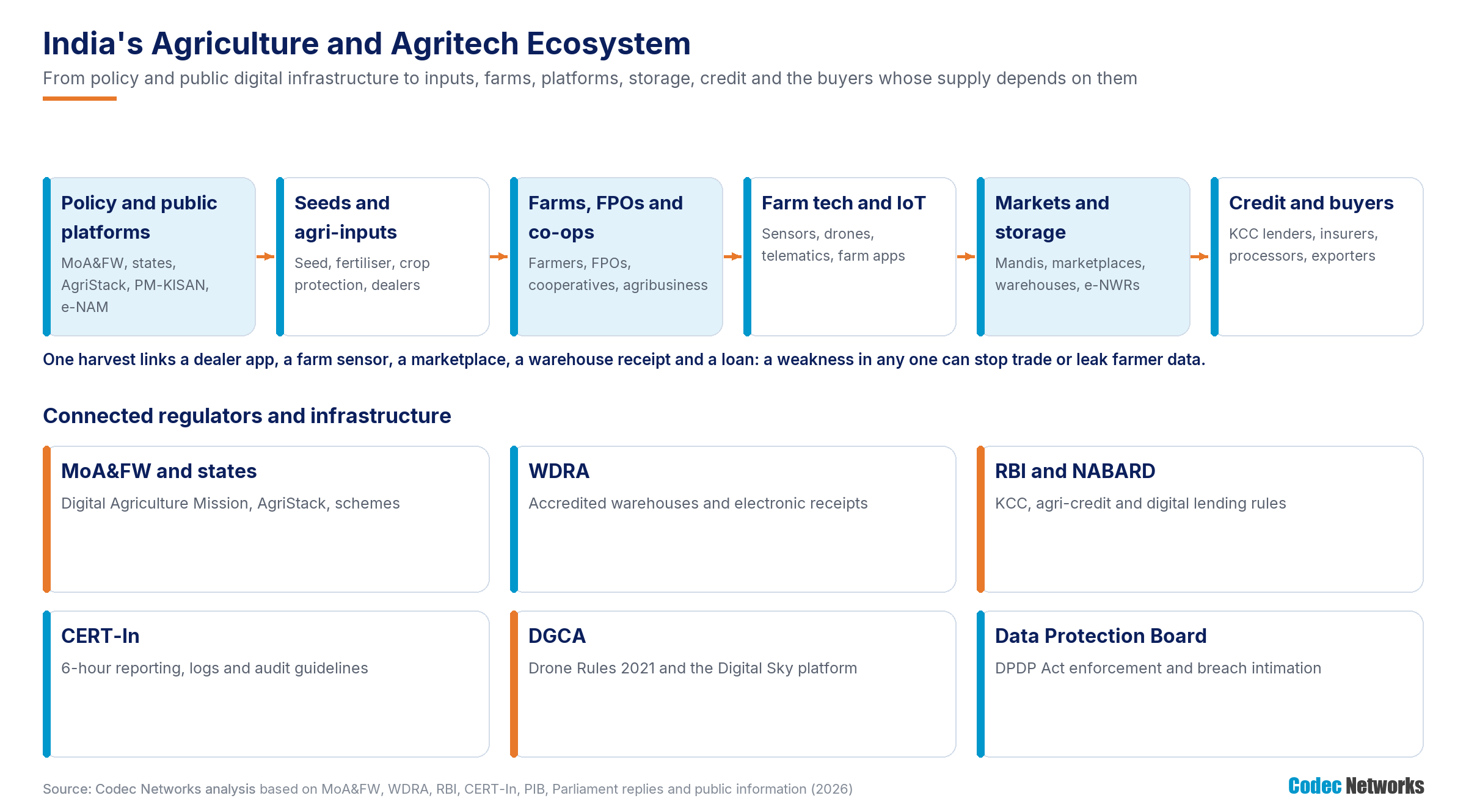
Figure 1: India's agriculture and agritech ecosystem.
3. Categories of agriculture and agritech organisations
|
Category |
Who they are |
Typical ownership |
Key regulatory basis |
|
Agribusiness and agricultural enterprises |
Plantations, integrated farming groups, contract farming sponsors, commodity processors and exporters |
Private, listed groups and cooperatives |
State APMC laws; FSSAI where processing; buyer contracts; CERT-In |
|
Seed companies |
Breeders, producers and marketers of seed, including hybrids and traits |
Private, MNC subsidiaries and PSUs |
Seeds Act 1966; Seeds (Control) Order 1983; PPV&FR Act; CERT-In |
|
Agri-input companies |
Fertiliser, crop protection, bio-inputs and their dealer networks |
Private, cooperative and PSU |
Insecticides Act 1968; Fertiliser Control Order; fertiliser DBT; CERT-In |
|
Precision farming and farm IoT providers |
Soil, weather and irrigation sensors, controllers, telematics, drones and farm analytics |
Private, often venture-funded |
Drone Rules 2021 for drones; IT Act; DPDP; client contracts |
|
Agritech marketplaces and commodity platforms |
Crop trade, input commerce, B2B sourcing and exchange-linked platforms |
Private start-ups and listed firms |
State marketing laws; e-NAM integration terms; payment rules; DPDP |
|
Warehousing and post-harvest operators |
Accredited warehouses, cold stores, collateral managers and logistics |
Private, PSU and cooperative |
WDRA Act 2007 and accreditation; e-NWR repositories; CERT-In |
|
Agri-credit platforms and lenders |
Banks, NBFCs and fintech partners offering KCC, crop, equipment and warehouse loans |
Regulated entities and their partners |
RBI KCC and digital lending rules; KYC; DPDP |
|
FPOs and cooperatives |
Farmer producer organisations, primary agricultural credit societies and federations |
Member-owned |
Companies Act or cooperative laws; scheme terms; DPDP |
4. The agricultural, lending, cyber and data framework at a glance
|
Instrument or expectation |
What it means for agriculture and agritech businesses |
|
Digital Agriculture Mission and AgriStack (2024) |
₹2,817 crore umbrella scheme; Farmers' Registry, geo-referenced village maps and Crop Sown Registry maintained by states; data shared with approved service providers on the basis of farmer consent and integration terms |
|
PM-KISAN and other DBT schemes |
Payments to verified farmer bank accounts; state and district officials verify beneficiaries; integrators and service centres handle sensitive records and logins |
|
RBI KCC directions and digital lending rules |
Kisan Credit Card terms and interest subvention; digital lending guidelines of 2022, later consolidated, set duties for lenders, lending service providers and loan apps, including data collection limits |
|
Warehousing (Development and Regulation) Act 2007 |
WDRA registration and accreditation of warehouses; negotiable warehouse receipts, including electronic receipts issued through repositories; the ₹1,000 crore CGS-NPF from December 2024 |
|
Seeds Act 1966 and Insecticides Act 1968 |
Labelling, registration, licensing and record duties for seed and crop protection firms; a draft Seeds Bill 2025, released for comment in November 2025, proposes digital traceability |
|
Drone Rules 2021 |
Registration, type certification and permissions for drones through the Digital Sky platform; remote pilot certificates; relevant to spraying and survey services |
|
CERT-In Directions (28 April 2022) and audit guidelines (25 July 2025) |
Incidents reported within six hours; ICT logs kept for 180 days in India; clocks synchronised; risk-based independent audits, including OT and ICS environments |
|
IT Act 2000 |
Offences such as unauthorised access and identity theft; reasonable security practices for sensitive data; intermediary duties for platforms |
|
DPDP Act 2023 and Rules 2025 |
Personal data of farmers, borrowers, dealers and app users; notice and consent, reasonable security safeguards and breach intimation; most obligations from May 2027 |
|
SEBI LODR (listed agribusiness and input firms) |
Regulation 27(2)(ba): cyber incidents disclosed in the quarterly corporate governance report |
|
How these apply Scheme and AgriStack duties follow the integration and the state's terms; lending duties follow the regulated entity and its partners; WDRA duties follow accreditation; input laws follow the product; CERT-In's Directions apply to service providers, intermediaries, data centres and body corporates; DPDP applies to personal data. Confirm against the official instruments and your agreements. |
5. Authorities, public platforms and ecosystem participants
- The Ministry of Agriculture and Farmers Welfare runs the Digital Agriculture Mission, PM-KISAN, e-NAM and other schemes, while state agriculture and revenue departments build and maintain the AgriStack registries, land records and crop surveys.
- The Small Farmers' Agribusiness Consortium (SFAC) implements e-NAM, WDRA regulates warehouses and warehouse receipts, and the Department of Food and Public Distribution administers the e-NWR credit guarantee scheme.
- RBI regulates banks, NBFCs and digital lending, NABARD refinances and supports rural credit, cooperatives and FPOs, and insurers deliver crop insurance under PMFBY.
- CERT-In receives incident reports and issues advisories and audit guidelines; NCIIPC protects notified critical information infrastructure; DGCA administers the Drone Rules; MeitY frames IT and data policy, and the Data Protection Board enforces the DPDP Act.
- Agribusinesses, seed and agri-input companies, farm IoT and drone providers, marketplaces, warehouses, agri-credit platforms, FPOs and cooperatives run the services; farmers, dealers, traders, processors and exporters depend on them.
- Cloud providers, payment gateways, telecom operators, device makers, software integrators and common service centres sit inside almost every service, and their weaknesses become the platform's incidents.
6. Who buys cybersecurity inside an agriculture or agritech business
|
Stakeholder |
What they care about |
What they buy |
|
Board, founders and CEO |
Growth, lender and buyer confidence, investor due diligence, reputation with farmers |
Board briefings, maturity assessments, crisis exercises |
|
CTO and head of product or engineering |
Secure apps, APIs, devices and integrations that scale in season |
VAPT, secure SDLC reviews, IoT and API testing |
|
CISO or head of information security |
Cloud and platform exposure, CERT-In and partner audits, monitoring |
CERT-In empanelled audits, SOC, incident response retainers |
|
Head of payments, finance and treasury |
Settlement integrity, payouts, DBT flows, payment diversion |
Payment integration testing, reconciliation and fraud reviews |
|
Head of lending or credit risk (agri-credit) |
Loan fraud, field agent access, lender and RBI requirements |
Loan app and API testing, access reviews, fraud analytics support |
|
Operations, warehouse and plant heads |
Uptime at procurement, storage and processing sites in season |
OT and network assessments, ransomware readiness |
|
Data protection officer, legal and compliance |
Farmer, land and borrower data, consent, scheme terms |
Privacy programmes, data mapping, DPDP gap assessments |
7. Why each segment needs a different approach
|
Organisation type |
Highest-consequence risk |
Starting point for assurance |
|
Agribusinesses and cooperatives |
Ransomware stopping procurement, weighing, storage and payment at harvest |
Network segmentation, backup and recovery testing, managed SOC |
|
Seed and agri-input companies |
Counterfeit codes, dealer portal fraud and theft of breeding data |
Dealer portal and QR code testing, IP protection review, supplier assurance |
|
Precision farming and farm IoT |
Gateways and devices taken over, false readings and commands |
IoT and firmware testing, broker and cloud review, device identity |
|
Marketplaces and commodity platforms |
Payment callback and settlement fraud, account takeover |
Payment integration testing, API VAPT, fraud monitoring |
|
Warehousing and agri-credit platforms |
Forged receipts or loan files and phished field agent accounts |
Access and MFA review, data source checks, loan app testing |
|
FPOs and member platforms |
Exposed member data and diverted payments through weak vendors |
Vendor assessment, DPDP programme, basic cloud and access controls |
8. How Codec Networks works with agriculture and agritech businesses
Codec Networks is a CERT-In empanelled information security auditing organisation, empanelled with NICSI for application audit and compliance services (start-up category), and certified to ISO 9001:2015, ISO/IEC 27001:2022 and ISO/IEC 20000-1:2018. For agriculture and agritech businesses we deliver farm IoT security assessments covering sensors, field gateways, irrigation controllers, message brokers and device firmware and update processes; reviews of machinery telematics and agri-drone fleet and data platforms; VAPT of agritech marketplaces, farmer and dealer apps and the APIs that connect them to lenders, insurers, buyers and AgriStack or other public platforms; payment integration testing of gateways, UPI collections, payment callbacks, settlement and payout logic and DBT-linked flows; cloud configuration and storage exposure assessments; identity and field agent access reviews; OT and network assessments of warehouses, cold stores and processing sites; dealer portal and seed traceability code reviews; supplier and integrator assurance; CERT-In empanelled audits; ISO 27001 readiness and support for lender and buyer security requirements; DPDP programmes for farmer, land and borrower data; 24x7 managed SOC with harvest-season threat monitoring; and incident response and forensics for ransomware, payment fraud and data exposure. Device, drone and payment testing is carried out only with authorisation, in agreed windows that protect sowing, harvest and payout operations. Each proposal confirms auditor eligibility and independence against CERT-In's and the client's requirements. Codec Networks does not provide agronomic, scheme eligibility or lending advice.
Talk to Codec Networks
|
Contact Codec Networks Pvt. Ltd. New Delhi: 507, 5th Floor, New Delhi House, Barakhamba Road, Connaught Place, New Delhi – 110001 Gurugram: 707, 7th Floor, Silverton Tower, Golf Course Extension Road, Sector 50, Gurugram – 122018, Haryana Landline: 011 430 496 96 | 011 437 522 99 Mobile: +91 99716 76124 | +91 88007 88220 | +91 88003 31124 Email: mktg@codecnetworks.com Web: www.codecnetworks.com |
Note: This document is general industry guidance based on public information available as of October 2026. It is not legal, regulatory, lending, agronomic or scheme eligibility advice. Obligations differ by activity (agribusiness, seed and agri-input manufacture and sale, precision farming and farm IoT, agritech marketplaces and commodity platforms, warehousing, agri-credit or FPO and cooperative services), by the licences, accreditations, scheme integrations and lending partnerships held, by listing status, contracts and the data each organisation handles; confirm them against the official Ministry of Agriculture and Farmers Welfare, state government, WDRA, RBI, NABARD, DGCA, CERT-In, NCIIPC, MeitY and Data Protection Board instruments and your agreements. Testing of farm devices, drones and payment systems is described only as authorised testing in agreed windows and controlled conditions. Incident references are summarised from official statements and widely reported events.