
☰
  • Our Services
  • Corporate Training
  • Resources
  • Blogs
  • Testimonial
  • Careers
  • Contact Us
logo
  •  Services
  •  Corporate Training
  • Services
  • Training
  • About Us
  • Resources
  • Blogs
  • Testimonial
  • Careers
  • Contact Us
Back
  • OVERVIEW
  • SERVICE FEATURES
  • SERVICE MODEL
  • CN VALUE PROPOSITION
  • TESTIMONIALS
  • LANDSCAPE
  • BLOGS
  • FAQ'S
  • RELATED SERVICES
Back
  • Home Codec Networks Logo
  • Services
  • Network Security Testing
  • Cloud Infrastructure Testing (AWS, Azure, GCP Misconfigs)
  • overview
  • Service Features
  • Service Model
  • CN Value Proposition
  • Testimonials
  • Landscape
  • Blogs
  • FAQ's
  • Related Services

Cloud Infrastructure Testing (AWS, Azure, GCP Misconfigurations)

Cloud Infrastructure Testing by Codec Networks is a comprehensive security assessment designed to uncover misconfigurations, vulnerabilities, and compliance gaps within enterprise cloud environments across AWS, Microsoft Azure, and Google Cloud Platform (GCP). The service ensures that your organization’s cloud infrastructure is securely architected, continuously monitored, and resilient against evolving threats, aligning with global best practices such as CIS Benchmarks, ISO/IEC 27017/27018, NIST CSF, and CSA CCM.

Our experts conduct an in-depth evaluation of Identity & Access Management (IAM) roles, storage permissions, network segmentation, key management, and monitoring configurations to identify weak links that could lead to unauthorized access, data leakage, or service disruptions. By simulating real-world attack vectors and reviewing security policies, Codec Networks validates the effectiveness of cloud controls across compute, storage, networking, and serverless components.

This service empowers organizations to strengthen cloud governance, achieve compliance, and reduce attack surfaces through actionable remediation plans. Whether your workloads are hosted entirely in the cloud or deployed in hybrid environments, Codec Networks’ Cloud Infrastructure Testing ensures security-by-design, visibility-by-default, and compliance-by-continuity across your entire digital infrastructure.

Industry Significance
Cloud Infrastructure Testing enables organizations to secure their cloud environments by proactively identifying misconfigurations, validating identity and access controls, and strengthening governance across AWS, Azure, and GCP. In an increasingly cloud-dependent world, this testing ensures resilience, compliance, and secure scalability for modern digital enterprises  
Read More

Service Relevance
Cloud Infrastructure Testing by Codec Networks helps organizations secure their multi-cloud and hybrid-cloud environments by identifying misconfigurations, validating identity controls, and strengthening cloud governance. By enabling continuous visibility and enforcing secure configuration practices, the service enhances technical resilience, reduces cloud-native risks, and ensures scalable and compliant cloud operations  
Read More

Benefits to Customers
Codec Networks’ Cloud Infrastructure Testing enables customers to strengthen their cloud security posture, reduce configuration risks, and build a resilient multi-cloud ecosystem. By proactively identifying misconfigurations and enforcing secure cloud governance, the service enhances security, optimizes cost, supports compliance, and builds trust across digital operations  
Read More

Cloud Infrastructure Testing (AWS, Azure, GCP Misconfigurations)

Cloud Infrastructure Testing by Codec Networks is a comprehensive security assessment designed to uncover misconfigurations, vulnerabilities, and compliance gaps within enterprise cloud environments across AWS, Microsoft Azure, and Google Cloud Platform (GCP). The service ensures that your organization’s cloud infrastructure is securely architected, continuously monitored, and resilient against evolving threats, aligning with global best practices such as CIS Benchmarks, ISO/IEC 27017/27018, NIST CSF, and CSA CCM.

Our experts conduct an in-depth evaluation of Identity & Access Management (IAM) roles, storage permissions, network segmentation, key management, and monitoring configurations to identify weak links that could lead to unauthorized access, data leakage, or service disruptions. By simulating real-world attack vectors and reviewing security policies, Codec Networks validates the effectiveness of cloud controls across compute, storage, networking, and serverless components.

This service empowers organizations to strengthen cloud governance, achieve compliance, and reduce attack surfaces through actionable remediation plans. Whether your workloads are hosted entirely in the cloud or deployed in hybrid environments, Codec Networks’ Cloud Infrastructure Testing ensures security-by-design, visibility-by-default, and compliance-by-continuity across your entire digital infrastructure.

Industry Significance
Cloud Infrastructure Testing enables organizations to secure their cloud environments by proactively identifying misconfigurations, validating identity and access controls, and strengthening governance across AWS, Azure, and GCP. In an increasingly cloud-dependent world, this testing ensures resilience, compliance, and secure scalability for modern digital enterprises


Read More
1

Service Relevance
Cloud Infrastructure Testing by Codec Networks helps organizations secure their multi-cloud and hybrid-cloud environments by identifying misconfigurations, validating identity controls, and strengthening cloud governance. By enabling continuous visibility and enforcing secure configuration practices, the service enhances technical resilience, reduces cloud-native risks, and ensures scalable and compliant cloud operations


Read More
2

Benefits to Customers
Codec Networks’ Cloud Infrastructure Testing enables customers to strengthen their cloud security posture, reduce configuration risks, and build a resilient multi-cloud ecosystem. By proactively identifying misconfigurations and enforcing secure cloud governance, the service enhances security, optimizes cost, supports compliance, and builds trust across digital operations


Read More
3

SERVICE FEATURES AND DELIVERY FRAMEWORK

Codec Networks delivers comprehensive cloud infrastructure testing with precision methodologies, measurable risk metrics,

and globally aligned security standards across AWS, Azure, and GCP.

  • Service Features
  • Service Delivery Methodology
  • Service Standards

Cloud Infrastructure Testing by Codec Networks helps organizations secure their multi-cloud and hybrid-cloud environments by identifying misconfigurations, validating identity controls, and strengthening cloud governance. By enabling continuous visibility and enforcing secure configuration practices, the service enhances technical resilience, reduces cloud-native risks, and ensures scalable and compliant cloud operations

Codec Networks offers its Cloud Infrastructure Testing services across the following segments:

1. Cloud Configuration Security Review

  • Comprehensive Configuration Baseline Review: Evaluates compute, storage, network, IAM, and security resources against CIS, NIST, CSA, and ISO benchmarks.
  • Misconfiguration Detection & Hardening: Identifies open ports, public buckets, weak permissions, insecure security groups, and non-compliant controls.
  • Cloud-Native Tool Integration: Utilizes AWS Config, Azure Policy, GCP Security Command Center, and CSPM tools for continuous validation.
  • Benchmark & Framework Mapping: Aligns findings with ISO 27017/27018, NIST CSF, CIS Benchmarks, and In-country regulatory norms and guidelines.
  • Automated + Manual Validation: Eliminates false positives through blended machine-driven and human-contextual testing.
  • Detailed Posture Reporting: Provides compliance dashboards, severity-based risk scoring, and remediation roadmaps.

2. Identity & Access Management (IAM) Security Assessment

  • Role & Policy Analysis: Reviews IAM roles, permissions, group assignments, and policies to enforce least-privilege principles.
  • Credential Control Validation: Confirms MFA enforcement, root-account hygiene, and secure credential lifecycle management.
  • Cross-Account Trust Review: Detects risky federation, cross-tenant trust relationships, and unauthorized access pathways.
  • Orphaned Keys & Token Detection: Identifies unused, stale, or exposed access keys and tokens.
  • Privilege Escalation Simulation: Tests lateral movement and real-world privilege misuse scenarios.
  • Compliance Mapping: Aligns IAM controls with ISO 27002 access-control requirements and other applicable governance standards.

3. Network Architecture & Segmentation Review

  • VPC/VNet Architecture Assessment: Reviews subnets, routing tables, peering, NATs, and segmentation boundaries.
  • Firewall & ACL Verification: Validates inbound/outbound rules for least-access enforcement.
  • Public Exposure Detection: Flags publicly reachable storage, databases, APIs, or management endpoints.
  • Zero Trust & Micro-Segmentation Review: Ensures isolation across production, staging, dev, and test environments.
  • DNS & Load Balancer Assessment: Detects misrouted DNS records, insecure ALB/ELB/WAF configurations, or exposed endpoints.
  • Resilience & Failover Validation: Ensures high availability without compromising network security controls.

4. Data Protection & Encryption Validation

  • Encryption Coverage Review: Confirms encryption at rest, in transit, and in use across cloud databases, disks, and storage.
  • KMS & Secret Governance: Assesses AWS KMS, Azure Key Vault, and GCP KMS configurations, rotation policies, and access permissions.
  • Data Classification & Residency Checks: Validates data locality, cross-border storage, and regulatory alignment for sensitive datasets.
  • Backup & Snapshot Validation: Ensures encrypted, versioned, immutable backup practices.
  • Tokenization & Masking Controls: Evaluates anonymization controls required for regulated data.
  • Regulatory Alignment: Demonstrates adherence to ISO 27018, HIPAA, GDPR, and other applicable data protection requirements.

5. Logging, Monitoring & Incident Readiness Review

  • Audit Logging Validation: Confirms full activation of CloudTrail, Azure Monitor, GCP Cloud Audit Logs with tamper-resistant storage.
  • Centralized Log Retention: Validates log aggregation, encryption, retention, and immutable storage configurations.
  • Alerting & SIEM Integration: Ensures integration with SIEM/SOAR platforms for proactive detection.
  • Incident Response Readiness: Evaluates alerting workflows, escalation procedures, evidence preservation, and forensic readiness.
  • Compliance Mapping: Aligns monitoring controls with ISO 27035 and broader forensic requirements.
  • Operational Dashboards: Delivers metrics and KPIs for detection coverage and response SLAs.

6. Compliance & Regulatory Alignment Assessment

  • Framework-to-Control Mapping: Correlates misconfigurations with ISO, NIST, CIS, and applicable privacy/security frameworks.
  • Evidence Generation: Produces auditor-ready documentation, screenshots, artifacts, and validation matrices.
  • Gap & Maturity Scoring: Quantifies compliance posture and identifies improvement priorities.
  • Policy & Governance Evaluation: Reviews cloud policies, SLAs, and governance documentation for alignment.
  • Continuous Audit Readiness: Enables ongoing compliance dashboards and maturity monitoring.

7. Remediation & Continuous Cloud Posture Management

  • Structured Remediation Roadmaps: Provides actionable, prioritized fix recommendations for each issue.
  • Validation & Retesting: Conducts follow-up verification to confirm issue closure.
  • CSPM Automation Integration: Implements tools to detect and correct configuration drift automatically.
  • CI/CD Integration: Aligns remediation with DevOps release cycles and change-management workflows.
  • Training & Knowledge Transfer: Provides workshops and technical guidance for secure cloud adoption.
  • Metrics & Continuous Improvement: Tracks posture improvement through KPIs, SLAs, and compliance scoring.

8. Third-Party & API Integration Risk Assessment

  • API Exposure Assessment: Evaluates authentication, authorization, rate limiting, and API gateway security.
  • Vendor Access Review: Identifies risks from external accounts, OAuth scopes, and partner access permissions.
  • Supply-Chain Dependency Mapping: Detects hidden risks introduced by third-party integrations and SaaS connectors.
  • Security Testing of Integrations: Simulates API misuse, broken object level access, and token manipulation attacks.
  • Governance & Policy Alignment: Ensures vendor access aligns with contractual and data-processing agreements.
  • Continuous Monitoring: Alerts on new connectors, privilege changes, or risky integration additions.

9. Cloud Cost, Risk, and Performance Optimization (Optional Add-On)

  • Resource Utilization Correlation: Highlights over-provisioned or underutilized services driving cost or risk.
  • Cost-Aware Risk Scoring: Quantifies business impact for each misconfiguration in financial terms.
  •  Performance vs Security Analysis: Balances infrastructure performance with required controls and compliance.
  • Executive Dashboards: Provides CXO-level visibility of risk, cost, and compliance indicators.

10. Cloud Governance & Policy Engineering (Strategic Advisory)

  • Policy & SOP Development: Designs cloud policies aligned with ISO 27001 and applicable data regulations.
  • RACI & Ownership Models: Defines operational accountability across IT, DevOps, and Compliance teams.
  • Secure-by-Design Architecture Reviews: Advises during migration and deployment to prevent future misconfigurations.
  • Documentation & Audit Support: Provides governance evidence, architecture artifacts, and audit-readiness materials.
  • Governance Maturity Benchmarking: Measures current posture and provides a roadmap for governance uplift.

Codec Networks adopts a structured, multi-phase delivery methodology for Cloud Infrastructure Testing (AWS, Azure, GCP Misconfigurations), ensuring end-to-end clarity, technical precision, and measurable value delivery. The methodology balances deep technical validation, regulatory alignment, and business relevance—transforming cloud risk management into a scalable, repeatable, and continuously improving function.

Codec Networks' methodology embeds continuous posture evaluation, configuration integrity checks, and automation-driven governance, helping clients move beyond traditional cloud reviews toward sustained multi-cloud security maturity.

1. Project Initiation & Scoping

  • Conduct formal kick-off meetings with cloud, IT, and security stakeholders to define assessment goals, engagement scope, and expected deliverables.
  • Establish project governance structure, communication cadence, and escalation procedures.
  • Identify cloud environments in scope—AWS accounts, Azure subscriptions, and GCP projects.
  • Define technical domains to be assessed: IAM, Network, Storage, Compute, Monitoring, Data Protection, and Compliance.
  • Finalize timelines, milestones, access protocols, and roles/responsibilities.

Deliverables: Approved SoW, Project Charter, NDA, Access Control Matrix.

2. Pre-Engagement Preparation & Information Collection

  • Conduct stakeholder interviews to understand cloud architecture, current governance, and security practices.
  • Collect architectural diagrams, configuration baselines, access credentials (read-only), and policy documents.
  • Inventory cloud assets through native tools (AWS Config, Azure Resource Graph, GCP Asset Inventory).
  • Review existing cloud security policies, compliance documentation, and integration with hybrid/on-prem environments.
  • Validate readiness for technical testing activities.

Deliverables: Cloud Asset Inventory, Configuration Baseline Document, Data Flow & Architecture Maps.

3. Current State Assessment & Misconfiguration Detection

  • Perform automated configuration checks using CIS Benchmarks, NIST controls, and Codec Networks proprietary scripts.
  • Review IAM roles, policies, trust relationships, and privilege models for abuse or escalation paths.
  • Analyze VPC/VNet configurations, firewall rules, routing tables, and segmentation boundaries.
  • Evaluate encryption configurations, key management setups, and sensitive data storage practices.
  • Assess logging controls, monitoring pipelines, SIEM integrations, and alert configurations.

Deliverables: Findings Matrix (Critical → Low), Evidence Snapshots, Vulnerability & Exposure Summary.

4. Manual Validation & Risk Correlation

  • Perform manual verification of each identified finding to eliminate false positives and ensure contextual accuracy.
  • Correlate technical misconfigurations with regulatory and compliance requirements (ISO, NIST, GDPR, HIPAA, In-country regulatory norms and guidelines etc.).
  • Prioritize risks based on exploitability, business impact, data sensitivity, and configuration criticality.
  • Map each gap to industry frameworks such as CIS, NIST SP 800-53, and CSA CCM.

Deliverables: Verified Risk Register, Compliance Mapping Matrix, Risk Severity & Impact Analysis.

5. Reporting & Executive Presentation

  • Prepare two structured reports:
    • Technical Assessment Report for cloud, DevOps, and security teams.
    • Executive Summary Report for leadership and decision-makers.
  • Document findings, affected resources, root causes, and recommended remediation steps.
  • Include risk scoring, compliance deviations, and architecture-level improvement insights.
  • Conduct a walkthrough presentation highlighting systemic issues and cloud governance gaps.

Deliverables: Cloud Infrastructure Security Assessment Report, Executive Management Deck and Corrective Action Plan (CAP) Template.

6. Remediation Planning & Advisory Support

  • Provide step-by-step remediation guidance aligned with AWS, Azure, and GCP best practices.
  • Support reconfiguration of IAM policies, network rules, encryption settings, and monitoring pipelines.
  • Revalidate applied fixes and update the organization's cloud posture accordingly.
  • Offer advisory on integrating CSPM tools and adopting secure-by-design deployment practices.

Deliverables: Remediation Validation Report, Updated Risk Tracker, Best Practice Implementation Guide.

7. Compliance & Continuous Monitoring Enablement

  • Configure cloud-native compliance and monitoring tools (AWS Security Hub, Azure Defender, GCP SCC).
  • Establish real-time alerts for configuration drift, misconfigurations, and non-compliant resources.
  • Define operational review cycles (monthly/quarterly) for continuous posture assurance.
  • Build a Cloud Security Governance Dashboard with KPIs for management oversight.

Deliverables: Continuous Compliance Checklist, Monitoring Configuration Pack, Governance Dashboard.

8. Closure & Knowledge Transfer

  • Conduct formal closure meeting and secure sign-off on all deliverables.
  • Transfer risk registers, evidence logs, compliance matrices, and architectural insights to client teams.
  • Deliver comprehensive Knowledge Transfer (KT) sessions for cloud, DevOps, and security teams.
  • Provide a forward-looking roadmap for maturity improvement: CSPM automation, threat modelling, Zero Trust alignment, and incident readiness.

Deliverables: Final Closure Report, KT Documentation, Future Roadmap Recommendations.

Standard / Framework

Standard Title / Description

Relevance to Service Delivery

Implementation in Codec Networks' Testing Methodology

ISO/IEC 27001:2022

Information Security Management System (ISMS)

Provides a structured framework for managing information security risks across all organizational processes and assets.

Ensures secure handling of client data, controlled access, confidentiality, and integrity throughout testing and reporting.

ISO/IEC 27017:2015

Code of Practice for Information Security Controls for Cloud Services

Establishes cloud-specific security controls for both cloud service providers and customers.

Used to benchmark cloud control configuration, access management, and operational security of AWS, Azure, and GCP environments.

ISO/IEC 27018:2019

Code of Practice for Protection of Personally Identifiable Information (PII) in Public Clouds

Focuses on privacy controls related to processing of PII in cloud environments.

Applied during configuration reviews to verify privacy safeguards, data encryption, and compliance with global privacy principles.

NIST Cybersecurity Framework (CSF)

Framework for Improving Critical Infrastructure Cybersecurity

Provides a risk-based approach to identify, protect, detect, respond, and recover from cyber incidents.

Adopted to structure the assessment lifecycle and prioritize remediation based on risk criticality and business impact.

NIST SP 800-53 Rev. 5

Security and Privacy Controls for Federal Information Systems and Organizations

Defines detailed control families for access, audit, system protection, and continuous monitoring.

Used to map and validate configuration and policy compliance for IAM, encryption, and incident monitoring controls.

CIS Benchmarks

Center for Internet Security Benchmarks for AWS, Azure, and GCP

Provides secure configuration guidelines for specific cloud platforms.

Forms the foundation of technical assessment scripts and configuration validation against platform-specific best practices.

CSA Cloud Controls Matrix (CCM v4.0)

Cloud Security Alliance's Framework for Cloud Control Objectives

Offers a detailed matrix of control requirements mapped to major standards (ISO, NIST, PCI, GDPR).

Enables structured mapping of Codec Networks' findings to industry-recognized cloud security domains for audit readiness.

ISO/IEC 31000:2018

Risk Management – Guidelines

Establishes risk assessment and mitigation methodologies applicable across domains.

Guides the prioritization of identified misconfigurations based on risk likelihood, impact, and exposure.

OWASP Cloud Security Guidelines

Open Web Application Security Project – Cloud Security Best Practices

Focuses on common misconfigurations and vulnerabilities in cloud deployments and APIs.

Supports testing for misconfigured APIs, insecure endpoints, and weak identity and access mechanisms in multi-cloud architectures.

ISO/IEC 22301:2019

Business Continuity Management Systems (BCMS)

Ensures resilience and continuity of critical operations in case of cyber incidents or service disruptions.

Integrated into service delivery to assess resilience controls such as backup, replication, and failover configurations in cloud environments.


Please Note :

  • All services align with globally recognized frameworks (ISO/IEC 27001, ISO 27017/27018, NIST CSF, CIS Benchmarks, SOC 2, GDPR/ In-country regulatory norms and guidelines) to deliver professional rigor and measurable cloud governance.
  • Service outcomes depend on the accuracy of client-provided information, access credentials, architectural visibility, and participation during assessment activities.
  •  Codec Networks is not responsible for issues arising from incomplete, inaccurate, withheld, or outdated client information.
  • Findings, mappings, and recommendations are advisory in nature and do not guarantee absolute security, uninterrupted availability, or compliance certification.
  • Third-party platforms, SaaS applications, cloud-native vendor services, and external integrations are reviewed as-is, without warranties or future performance guarantees.
  • Codec Networks’ total liability is strictly limited to the contracted service fee under the engagement agreement; no additional operational, legal, or financial liabilities are assumed.
  • Total liability for all services is strictly limited to the international standards as far as possible as agreed in contracted engagement value. Codec Networks expressly excludes any indirect, financial, operational, incidental, punitive, or consequential damages, which may arise due to any coincidental events, or changes in international standards guidelines time to time
SERVICE FEATURES

Cloud Infrastructure Testing by Codec Networks helps organizations secure their multi-cloud and hybrid-cloud environments by identifying misconfigurations, validating identity controls, and strengthening cloud governance. By enabling continuous visibility and enforcing secure configuration practices, the service enhances technical resilience, reduces cloud-native risks, and ensures scalable and compliant cloud operations

Codec Networks offers its Cloud Infrastructure Testing services across the following segments:

1. Cloud Configuration Security Review

  • Comprehensive Configuration Baseline Review: Evaluates compute, storage, network, IAM, and security resources against CIS, NIST, CSA, and ISO benchmarks.
  • Misconfiguration Detection & Hardening: Identifies open ports, public buckets, weak permissions, insecure security groups, and non-compliant controls.
  • Cloud-Native Tool Integration: Utilizes AWS Config, Azure Policy, GCP Security Command Center, and CSPM tools for continuous validation.
  • Benchmark & Framework Mapping: Aligns findings with ISO 27017/27018, NIST CSF, CIS Benchmarks, and In-country regulatory norms and guidelines.
  • Automated + Manual Validation: Eliminates false positives through blended machine-driven and human-contextual testing.
  • Detailed Posture Reporting: Provides compliance dashboards, severity-based risk scoring, and remediation roadmaps.

2. Identity & Access Management (IAM) Security Assessment

  • Role & Policy Analysis: Reviews IAM roles, permissions, group assignments, and policies to enforce least-privilege principles.
  • Credential Control Validation: Confirms MFA enforcement, root-account hygiene, and secure credential lifecycle management.
  • Cross-Account Trust Review: Detects risky federation, cross-tenant trust relationships, and unauthorized access pathways.
  • Orphaned Keys & Token Detection: Identifies unused, stale, or exposed access keys and tokens.
  • Privilege Escalation Simulation: Tests lateral movement and real-world privilege misuse scenarios.
  • Compliance Mapping: Aligns IAM controls with ISO 27002 access-control requirements and other applicable governance standards.

3. Network Architecture & Segmentation Review

  • VPC/VNet Architecture Assessment: Reviews subnets, routing tables, peering, NATs, and segmentation boundaries.
  • Firewall & ACL Verification: Validates inbound/outbound rules for least-access enforcement.
  • Public Exposure Detection: Flags publicly reachable storage, databases, APIs, or management endpoints.
  • Zero Trust & Micro-Segmentation Review: Ensures isolation across production, staging, dev, and test environments.
  • DNS & Load Balancer Assessment: Detects misrouted DNS records, insecure ALB/ELB/WAF configurations, or exposed endpoints.
  • Resilience & Failover Validation: Ensures high availability without compromising network security controls.

4. Data Protection & Encryption Validation

  • Encryption Coverage Review: Confirms encryption at rest, in transit, and in use across cloud databases, disks, and storage.
  • KMS & Secret Governance: Assesses AWS KMS, Azure Key Vault, and GCP KMS configurations, rotation policies, and access permissions.
  • Data Classification & Residency Checks: Validates data locality, cross-border storage, and regulatory alignment for sensitive datasets.
  • Backup & Snapshot Validation: Ensures encrypted, versioned, immutable backup practices.
  • Tokenization & Masking Controls: Evaluates anonymization controls required for regulated data.
  • Regulatory Alignment: Demonstrates adherence to ISO 27018, HIPAA, GDPR, and other applicable data protection requirements.

5. Logging, Monitoring & Incident Readiness Review

  • Audit Logging Validation: Confirms full activation of CloudTrail, Azure Monitor, GCP Cloud Audit Logs with tamper-resistant storage.
  • Centralized Log Retention: Validates log aggregation, encryption, retention, and immutable storage configurations.
  • Alerting & SIEM Integration: Ensures integration with SIEM/SOAR platforms for proactive detection.
  • Incident Response Readiness: Evaluates alerting workflows, escalation procedures, evidence preservation, and forensic readiness.
  • Compliance Mapping: Aligns monitoring controls with ISO 27035 and broader forensic requirements.
  • Operational Dashboards: Delivers metrics and KPIs for detection coverage and response SLAs.

6. Compliance & Regulatory Alignment Assessment

  • Framework-to-Control Mapping: Correlates misconfigurations with ISO, NIST, CIS, and applicable privacy/security frameworks.
  • Evidence Generation: Produces auditor-ready documentation, screenshots, artifacts, and validation matrices.
  • Gap & Maturity Scoring: Quantifies compliance posture and identifies improvement priorities.
  • Policy & Governance Evaluation: Reviews cloud policies, SLAs, and governance documentation for alignment.
  • Continuous Audit Readiness: Enables ongoing compliance dashboards and maturity monitoring.

7. Remediation & Continuous Cloud Posture Management

  • Structured Remediation Roadmaps: Provides actionable, prioritized fix recommendations for each issue.
  • Validation & Retesting: Conducts follow-up verification to confirm issue closure.
  • CSPM Automation Integration: Implements tools to detect and correct configuration drift automatically.
  • CI/CD Integration: Aligns remediation with DevOps release cycles and change-management workflows.
  • Training & Knowledge Transfer: Provides workshops and technical guidance for secure cloud adoption.
  • Metrics & Continuous Improvement: Tracks posture improvement through KPIs, SLAs, and compliance scoring.

8. Third-Party & API Integration Risk Assessment

  • API Exposure Assessment: Evaluates authentication, authorization, rate limiting, and API gateway security.
  • Vendor Access Review: Identifies risks from external accounts, OAuth scopes, and partner access permissions.
  • Supply-Chain Dependency Mapping: Detects hidden risks introduced by third-party integrations and SaaS connectors.
  • Security Testing of Integrations: Simulates API misuse, broken object level access, and token manipulation attacks.
  • Governance & Policy Alignment: Ensures vendor access aligns with contractual and data-processing agreements.
  • Continuous Monitoring: Alerts on new connectors, privilege changes, or risky integration additions.

9. Cloud Cost, Risk, and Performance Optimization (Optional Add-On)

  • Resource Utilization Correlation: Highlights over-provisioned or underutilized services driving cost or risk.
  • Cost-Aware Risk Scoring: Quantifies business impact for each misconfiguration in financial terms.
  •  Performance vs Security Analysis: Balances infrastructure performance with required controls and compliance.
  • Executive Dashboards: Provides CXO-level visibility of risk, cost, and compliance indicators.

10. Cloud Governance & Policy Engineering (Strategic Advisory)

  • Policy & SOP Development: Designs cloud policies aligned with ISO 27001 and applicable data regulations.
  • RACI & Ownership Models: Defines operational accountability across IT, DevOps, and Compliance teams.
  • Secure-by-Design Architecture Reviews: Advises during migration and deployment to prevent future misconfigurations.
  • Documentation & Audit Support: Provides governance evidence, architecture artifacts, and audit-readiness materials.
  • Governance Maturity Benchmarking: Measures current posture and provides a roadmap for governance uplift.
SERVICE DELIVERY METHODOLOGY

Codec Networks adopts a structured, multi-phase delivery methodology for Cloud Infrastructure Testing (AWS, Azure, GCP Misconfigurations), ensuring end-to-end clarity, technical precision, and measurable value delivery. The methodology balances deep technical validation, regulatory alignment, and business relevance—transforming cloud risk management into a scalable, repeatable, and continuously improving function.

Codec Networks' methodology embeds continuous posture evaluation, configuration integrity checks, and automation-driven governance, helping clients move beyond traditional cloud reviews toward sustained multi-cloud security maturity.

1. Project Initiation & Scoping

  • Conduct formal kick-off meetings with cloud, IT, and security stakeholders to define assessment goals, engagement scope, and expected deliverables.
  • Establish project governance structure, communication cadence, and escalation procedures.
  • Identify cloud environments in scope—AWS accounts, Azure subscriptions, and GCP projects.
  • Define technical domains to be assessed: IAM, Network, Storage, Compute, Monitoring, Data Protection, and Compliance.
  • Finalize timelines, milestones, access protocols, and roles/responsibilities.

Deliverables: Approved SoW, Project Charter, NDA, Access Control Matrix.

2. Pre-Engagement Preparation & Information Collection

  • Conduct stakeholder interviews to understand cloud architecture, current governance, and security practices.
  • Collect architectural diagrams, configuration baselines, access credentials (read-only), and policy documents.
  • Inventory cloud assets through native tools (AWS Config, Azure Resource Graph, GCP Asset Inventory).
  • Review existing cloud security policies, compliance documentation, and integration with hybrid/on-prem environments.
  • Validate readiness for technical testing activities.

Deliverables: Cloud Asset Inventory, Configuration Baseline Document, Data Flow & Architecture Maps.

3. Current State Assessment & Misconfiguration Detection

  • Perform automated configuration checks using CIS Benchmarks, NIST controls, and Codec Networks proprietary scripts.
  • Review IAM roles, policies, trust relationships, and privilege models for abuse or escalation paths.
  • Analyze VPC/VNet configurations, firewall rules, routing tables, and segmentation boundaries.
  • Evaluate encryption configurations, key management setups, and sensitive data storage practices.
  • Assess logging controls, monitoring pipelines, SIEM integrations, and alert configurations.

Deliverables: Findings Matrix (Critical → Low), Evidence Snapshots, Vulnerability & Exposure Summary.

4. Manual Validation & Risk Correlation

  • Perform manual verification of each identified finding to eliminate false positives and ensure contextual accuracy.
  • Correlate technical misconfigurations with regulatory and compliance requirements (ISO, NIST, GDPR, HIPAA, In-country regulatory norms and guidelines etc.).
  • Prioritize risks based on exploitability, business impact, data sensitivity, and configuration criticality.
  • Map each gap to industry frameworks such as CIS, NIST SP 800-53, and CSA CCM.

Deliverables: Verified Risk Register, Compliance Mapping Matrix, Risk Severity & Impact Analysis.

5. Reporting & Executive Presentation

  • Prepare two structured reports:
    • Technical Assessment Report for cloud, DevOps, and security teams.
    • Executive Summary Report for leadership and decision-makers.
  • Document findings, affected resources, root causes, and recommended remediation steps.
  • Include risk scoring, compliance deviations, and architecture-level improvement insights.
  • Conduct a walkthrough presentation highlighting systemic issues and cloud governance gaps.

Deliverables: Cloud Infrastructure Security Assessment Report, Executive Management Deck and Corrective Action Plan (CAP) Template.

6. Remediation Planning & Advisory Support

  • Provide step-by-step remediation guidance aligned with AWS, Azure, and GCP best practices.
  • Support reconfiguration of IAM policies, network rules, encryption settings, and monitoring pipelines.
  • Revalidate applied fixes and update the organization's cloud posture accordingly.
  • Offer advisory on integrating CSPM tools and adopting secure-by-design deployment practices.

Deliverables: Remediation Validation Report, Updated Risk Tracker, Best Practice Implementation Guide.

7. Compliance & Continuous Monitoring Enablement

  • Configure cloud-native compliance and monitoring tools (AWS Security Hub, Azure Defender, GCP SCC).
  • Establish real-time alerts for configuration drift, misconfigurations, and non-compliant resources.
  • Define operational review cycles (monthly/quarterly) for continuous posture assurance.
  • Build a Cloud Security Governance Dashboard with KPIs for management oversight.

Deliverables: Continuous Compliance Checklist, Monitoring Configuration Pack, Governance Dashboard.

8. Closure & Knowledge Transfer

  • Conduct formal closure meeting and secure sign-off on all deliverables.
  • Transfer risk registers, evidence logs, compliance matrices, and architectural insights to client teams.
  • Deliver comprehensive Knowledge Transfer (KT) sessions for cloud, DevOps, and security teams.
  • Provide a forward-looking roadmap for maturity improvement: CSPM automation, threat modelling, Zero Trust alignment, and incident readiness.

Deliverables: Final Closure Report, KT Documentation, Future Roadmap Recommendations.

SERVICE STANDARDS

Standard / Framework

Standard Title / Description

Relevance to Service Delivery

Implementation in Codec Networks' Testing Methodology

ISO/IEC 27001:2022

Information Security Management System (ISMS)

Provides a structured framework for managing information security risks across all organizational processes and assets.

Ensures secure handling of client data, controlled access, confidentiality, and integrity throughout testing and reporting.

ISO/IEC 27017:2015

Code of Practice for Information Security Controls for Cloud Services

Establishes cloud-specific security controls for both cloud service providers and customers.

Used to benchmark cloud control configuration, access management, and operational security of AWS, Azure, and GCP environments.

ISO/IEC 27018:2019

Code of Practice for Protection of Personally Identifiable Information (PII) in Public Clouds

Focuses on privacy controls related to processing of PII in cloud environments.

Applied during configuration reviews to verify privacy safeguards, data encryption, and compliance with global privacy principles.

NIST Cybersecurity Framework (CSF)

Framework for Improving Critical Infrastructure Cybersecurity

Provides a risk-based approach to identify, protect, detect, respond, and recover from cyber incidents.

Adopted to structure the assessment lifecycle and prioritize remediation based on risk criticality and business impact.

NIST SP 800-53 Rev. 5

Security and Privacy Controls for Federal Information Systems and Organizations

Defines detailed control families for access, audit, system protection, and continuous monitoring.

Used to map and validate configuration and policy compliance for IAM, encryption, and incident monitoring controls.

CIS Benchmarks

Center for Internet Security Benchmarks for AWS, Azure, and GCP

Provides secure configuration guidelines for specific cloud platforms.

Forms the foundation of technical assessment scripts and configuration validation against platform-specific best practices.

CSA Cloud Controls Matrix (CCM v4.0)

Cloud Security Alliance's Framework for Cloud Control Objectives

Offers a detailed matrix of control requirements mapped to major standards (ISO, NIST, PCI, GDPR).

Enables structured mapping of Codec Networks' findings to industry-recognized cloud security domains for audit readiness.

ISO/IEC 31000:2018

Risk Management – Guidelines

Establishes risk assessment and mitigation methodologies applicable across domains.

Guides the prioritization of identified misconfigurations based on risk likelihood, impact, and exposure.

OWASP Cloud Security Guidelines

Open Web Application Security Project – Cloud Security Best Practices

Focuses on common misconfigurations and vulnerabilities in cloud deployments and APIs.

Supports testing for misconfigured APIs, insecure endpoints, and weak identity and access mechanisms in multi-cloud architectures.

ISO/IEC 22301:2019

Business Continuity Management Systems (BCMS)

Ensures resilience and continuity of critical operations in case of cyber incidents or service disruptions.

Integrated into service delivery to assess resilience controls such as backup, replication, and failover configurations in cloud environments.


Please Note :

  • All services align with globally recognized frameworks (ISO/IEC 27001, ISO 27017/27018, NIST CSF, CIS Benchmarks, SOC 2, GDPR/ In-country regulatory norms and guidelines) to deliver professional rigor and measurable cloud governance.
  • Service outcomes depend on the accuracy of client-provided information, access credentials, architectural visibility, and participation during assessment activities.
  •  Codec Networks is not responsible for issues arising from incomplete, inaccurate, withheld, or outdated client information.
  • Findings, mappings, and recommendations are advisory in nature and do not guarantee absolute security, uninterrupted availability, or compliance certification.
  • Third-party platforms, SaaS applications, cloud-native vendor services, and external integrations are reviewed as-is, without warranties or future performance guarantees.
  • Codec Networks’ total liability is strictly limited to the contracted service fee under the engagement agreement; no additional operational, legal, or financial liabilities are assumed.
  • Total liability for all services is strictly limited to the international standards as far as possible as agreed in contracted engagement value. Codec Networks expressly excludes any indirect, financial, operational, incidental, punitive, or consequential damages, which may arise due to any coincidental events, or changes in international standards guidelines time to time

CLOUD INFRASTRUCTURE TESTING - CODEC NETWORK’S INDUSTRY OFFERINGS

Codec Networks delivers industry-specific bundled security packages, combining advanced services, streamlined delivery,

measurable outcomes, and globally aligned cybersecurity standards.

1
Image

Cloud Configuration Assurance – Foundation Tier

Target Clients:
Ideal for small businesses, startups, and emerging enterprises operating in a single-cloud environment (AWS, Azure, or GCP) and seeking baseline visibility into their cloud security posture.

Sub-Services in Scope

  • Cloud Configuration Baseline Review
  • IAM & Access Control Assessment
  • Data Storage & Encryption Audit
  • Compliance Readiness Snapshot

Objective:|
To deliver foundational cloud configuration assurance through visibility, misconfiguration detection, and essential compliance readiness across key cloud components.

Value Delivered:
Provides a clear security baseline, identifies critical configuration gaps, strengthens access governance, and equips organizations with actionable recommendations to meet essential cloud compliance requirements.

Inquire Now
2
Image

Cloud Posture & Compliance Assurance – Integration & Governance Tier

Target Clients:
Designed for growing enterprises, mid-sized organizations, and teams managing multi-account or hybrid-cloud environments seeking enhanced governance, deeper configuration visibility, and improved compliance alignment.

Sub-Services in scope

  • Advanced Cloud Misconfiguration Assessment
  • Network Security & Segmentation Review
  • Cloud Logging, Monitoring & Threat Visibility
  • Compliance Benchmarking & Governance Audit
  • Remediation Advisory & Validation

Objective:
To strengthen cloud posture through advanced misconfiguration analysis, network security validation, monitoring enhancements, and structured compliance alignment across AWS, Azure, and GCP.

Value Delivered:
Delivers measurable posture uplift, improved audit readiness, and enhanced multi-cloud governance while helping organizations establish scalable, risk-based controls across identity, network, data, and monitoring layers.

Inquire Now
3
Image

Cloud Security Governance & Continuous Assurance – Enterprise Tier

Target Clients:
Designed for large enterprises, multinational organizations, and globally distributed teams operating complex, multi-cloud environments with heightened governance, compliance, and operational resilience requirements.

Sub-Services in Scope

  • Cloud Security Posture Management (CSPM) Implementation
  • Identity Governance & Privileged Access Review (IGA / PAM)
  • DevSecOps & CI/CD Pipeline Security Integration
  • Multi-Cloud Compliance & Data Sovereignty Audit
  • Cloud Incident Readiness & Response Simulation
  • Governance Dashboard & Continuous Reporting

Objective:
To enable enterprise-grade cloud governance, continuous compliance automation, advanced identity and access security, and threat-resilient architectural assurance across AWS, Azure, and GCP ecosystems.

Value Delivered:
Delivers a continuously validated, governance-driven, and automation-enabled cloud security ecosystem—ensuring regulatory alignment, cross-cloud visibility, operational resilience, and proactive risk reduction for large-scale environments.

Inquire Now
1
Image

Cloud Configuration Assurance – Foundation Tier

Target Clients:
Ideal for small businesses, startups, and emerging enterprises operating in a single-cloud environment (AWS, Azure, or GCP) and seeking baseline visibility into their cloud security posture.

Sub-Services in Scope

  • Cloud Configuration Baseline Review
  • IAM & Access Control Assessment
  • Data Storage & Encryption Audit
  • Compliance Readiness Snapshot

Objective:|
To deliver foundational cloud configuration assurance through visibility, misconfiguration detection, and essential compliance readiness across key cloud components.

Value Delivered:
Provides a clear security baseline, identifies critical configuration gaps, strengthens access governance, and equips organizations with actionable recommendations to meet essential cloud compliance requirements.

Inquire Now
2
Image

Cloud Posture & Compliance Assurance – Integration & Governance Tier

Target Clients:
Designed for growing enterprises, mid-sized organizations, and teams managing multi-account or hybrid-cloud environments seeking enhanced governance, deeper configuration visibility, and improved compliance alignment.

Sub-Services in scope

  • Advanced Cloud Misconfiguration Assessment
  • Network Security & Segmentation Review
  • Cloud Logging, Monitoring & Threat Visibility
  • Compliance Benchmarking & Governance Audit
  • Remediation Advisory & Validation

Objective:
To strengthen cloud posture through advanced misconfiguration analysis, network security validation, monitoring enhancements, and structured compliance alignment across AWS, Azure, and GCP.

Value Delivered:
Delivers measurable posture uplift, improved audit readiness, and enhanced multi-cloud governance while helping organizations establish scalable, risk-based controls across identity, network, data, and monitoring layers.

Inquire Now
3
Image

Cloud Security Governance & Continuous Assurance – Enterprise Tier

Target Clients:
Designed for large enterprises, multinational organizations, and globally distributed teams operating complex, multi-cloud environments with heightened governance, compliance, and operational resilience requirements.

Sub-Services in Scope

  • Cloud Security Posture Management (CSPM) Implementation
  • Identity Governance & Privileged Access Review (IGA / PAM)
  • DevSecOps & CI/CD Pipeline Security Integration
  • Multi-Cloud Compliance & Data Sovereignty Audit
  • Cloud Incident Readiness & Response Simulation
  • Governance Dashboard & Continuous Reporting

Objective:
To enable enterprise-grade cloud governance, continuous compliance automation, advanced identity and access security, and threat-resilient architectural assurance across AWS, Azure, and GCP ecosystems.

Value Delivered:
Delivers a continuously validated, governance-driven, and automation-enabled cloud security ecosystem—ensuring regulatory alignment, cross-cloud visibility, operational resilience, and proactive risk reduction for large-scale environments.

Inquire Now

CODEC NETWORKS VALUE PROPOSITION

Codec Networks delivers proactive cloud infrastructure testing, uncovering misconfigurations early with

measurable risk reduction and globally aligned security standards

As organizations accelerate digital transformation and scale operations across AWS, Azure, and GCP, cloud security has become a strategic priority. Misconfigurations, excessive privileges, identity gaps, and fragmented governance are now among the most common causes of cloud-native breaches. Codec Networks delivers Cloud Infrastructure Testing services rooted in globally recognized standards, certified expertise, and a governance-driven methodology that converts cloud complexity into sustainable resilience.

Through end-to-end configuration validation, compliance alignment, threat-aware assessments, and actionable remediation guidance, Codec Networks empowers enterprises to confidently operate in multi-cloud and hybrid-cloud environments. Our services strengthen cloud governance, ensure regulatory readiness, reduce misconfiguration risks, and support secure-by-design digital transformation. At Codec Networks, we ensure:

1. Proven Delivery Approach & Governance Model

Our engagements follow a structured, repeatable, and audit-ready methodology engineered for clarity, precision, and business alignment.

  • Standardized 8-stage delivery methodology (Scoping → Mapping → Assessment → Validation → Reporting → Governance).
  • ISO 27001 and ITIL-based governance practices ensuring evidence traceability and documentation rigor.
  • Non-intrusive, read-only assessment model ensuring zero impact on production systems.
  • Secure client portal for project tracking, artifact sharing, and structured milestone reviews.
  • Embedded SLA metrics covering accuracy, confidentiality, and timely reporting.
  • Peer-reviewed findings and multi-level quality checks for assured precision.
  • Dedicated engagement manager for seamless communication and project coordination.
  • Scalable framework applicable to multi-cloud deployments and regulated environments.

2. Technical Competency & Cloud Expertise

Codec Networks brings deep technical capability across the cloud security lifecycle, backed by certified cloud specialists and hands-on multi-cloud experience.

  • Certified engineers (AWS Security Specialty, Azure Security Expert, GCP Professional Cloud Security Engineer).
  • Expertise across IAM, DevSecOps, CSPM, SIEM/SOAR, API Security, Data Protection, and Infrastructure-as-Code.
  • In-house capabilities for IaC scanning, CSPM integration, and continuous posture validation.
  • Strong experience in hybrid-cloud, micro-segmentation, Zero Trust alignment, and cross-cloud architecture.
  • Advanced threat analysis, forensic capability, and root-cause investigation of cloud misconfigurations.
  • Ability to translate technical risks into measurable business impact and executive-level visibility.
  • Rapid adaptability to emerging cloud controls, new CIS benchmark releases, and cloud-native security shifts.
  • Continuous internal R&D on AI/LLM security, cloud attack simulation, and advanced adversarial techniques.

3. Regulatory & Compliance Alignment

Codec Networks ensures cloud security is not only technically sound but fully aligned with global regulatory and industry-specific compliance mandates.

  • Full mapping to ISO 27017/27018, NIST CSF, CSA CCM, GDPR, HIPAA, In-country regulatory norms and guidelines, and sectoral guidelines.
  • Clear control-to-evidence correlation simplifying internal and external audit defensibility.
  • CXO-friendly compliance dashboards, scorecards, and heat maps enabling continuous oversight.
  • Periodic compliance health reports for ongoing governance upliftment.
  • Data residency, PII/PHI validation, and cross-border assurance built into methodology.
  • Seamless integration of cloud testing outputs with GRC and enterprise risk management frameworks.
  • Support for SOC 2, HIPAA, PCI DSS, and BFSI/Healthcare-specific readiness.
  • Demonstrates third-party assurance and due diligence for cloud outsourcing and shared responsibility.

4. Integrated Remediation & Knowledge Transfer

Our focus extends beyond assessment — enabling clients to fix, validate, sustain, and scale secure cloud practices.

  • Actionable and evidence-backed remediation recommendations with severity-based prioritization.
  • Post-remediation validation and optional re-testing cycles to confirm issue closure.
  • Hands-on workshops and cloud security enablement sessions for IT, Cloud, DevOps, and Compliance teams.
  • Templates for cloud governance policies, SOPs, and secure deployment practices.
  • Integration assistance for CSPM, SIEM, SOAR, or Policy-as-Code tooling for continuous compliance.
  • Documentation of lessons learned for long-term security and governance improvement.
  • Collaborative remediation approach bridging business, engineering, and security leadership.
  • Strengthens internal cyber hygiene and organizational security culture.

5. Assurance & Risk Reduction Outcomes

Codec Networks delivers measurable, tangible improvements in cloud posture and compliance confidence.

  • Significant reduction in cloud misconfigurations, identity risks, and lateral attack exposure.
  • Enhanced audit readiness with evidence-backed compliance reporting.
  • Accelerated detection of risky configurations before they become breach vectors.
  • Improved response maturity through better logging, visibility, and monitoring standards.
  • Quantifiable ROI via reduced penalties, minimized exposure, and lowered cyber insurance risk.
  • Increased customer trust through independent validation and verified cloud governance.
  • Continuous improvement via posture trend analysis, benchmarking, and recurring assessments.
  • Strategic alignment with board-level KRIs, business continuity, and organizational resilience goals.

6. Client-Centric Engagement & Transparency

Every engagement is executed with clarity, transparency, and confidentiality at its core.

  • Well-defined scope, timelines, milestones, and deliverables shared upfront.
  • Consistent communication via secure channels, weekly updates, and governance checkpoints.
  • ISO 27001-backed confidentiality, secure data handling, and access control processes.
  • Support for post-engagement queries, internal audits, and compliance follow-ups.
  • Dedicated customer success manager ensuring responsiveness, alignment, and accountability.

7. Measurable Security Outcomes

  • Quantifiable Risk Reduction Metrics
  • Improved Cloud Security Posture
  • Reduced Attack Surface.
  • Faster Remediation Cycles

Founded in 2008 with 17+ Years of Industry Experience in Information and Cyber Security domain

Codec Networks Full-Spectrum Cybersecurity Expertise across all Industry Domains:

  • Security Vulnerability Assessment & Penetration Testing (VAPT): Covering Web, Mobile, API, IoT, Blockchain, Cloud-Native, and smart infrastructure environments, with a focus on OWASP, MITRE ATT&CK, and real-world exploit simulation.
  • Offensive Security & Deep Level Security Assessments: Advanced Red Team, Blue Team and Purple Team Exercises, Threat Simulations, Social Engineering Campaigns, and Secure Code Review.
  • IT Security Audit & Compliance Services: Implementation and audit support for ISO/IEC 27001, ISO 27701, NIST CSF, RBI-CSF, SEBI, IRDAI, PCI DSS, HIPAA, SOC 2, GDPR, and India’s DPDPA 2023.
  • Data Privacy & Strategic Risk Advisory: ISO 27701, GDPR, DPDPA, Cross-border compliance, DPIA, DPO-as-a-service, supply chain risk management, and digital transformation risk consulting.
  • Emerging Technology Security (Web3.0 | AI | Blockchain): Specialized testing for smart contracts, DeFi platforms, Metaverse applications, AI/ML models, quantum readiness, and blockchain nodes.
  • Managed SOC & Threat Monitoring Services: End-to-end SOC operations, SIEM/EDR/XDR/SOAR integration, threat intelligence, cloud security monitoring, and 24/7 incident response.
  • Cyber Forensics & Threat Analysis: Investigation services including Device forensics, Malware Analysis, Cloud and Mobile forensics, insider threat detection, and Forensic support.
  • Board-Level Cybersecurity Advisory Services to build governance, quantify risks, and align with enterprise-wide digital priorities : Codec Networks enables this transformation by offering Integrated Cyber Risk Management, GRC Program Advisory, Reputation Management, Crisis Communication Readiness, and CISO Support, tailored for CXOs and board members seeking to integrate cybersecurity into strategic decision-making.
  • Cyber Security Education & Global Certifications - Through the Codec Centre for Professional Excellence, we deliver Post Graduate Certification in Advanced Cybersecurity (PGCAC), Graduate Certification in Advanced Cybersecurity (GCAC), Accredited Trainings & Certifications  from EC Council, PECB, TUV, Quality Austria, ISACA and ISC2 - building the next generation of cybersecurity leaders.
  • CERT-IN empaneled Information Security Auditing Organization
  • NICSI empaneled for providing Application Audit and Compliance Services under Start-Up Category

Octavo Systems is now ISO9001 Certified - Octavo Systems

10 Steps for ISO 27001 Certification – Cyber Security News Logo, company name

Description automatically generated


  • An ISO/IEC 27001:2022 certified company, has established Information Security Management System (ISMS), demonstrating a structured approach to manage and protect sensitive information from cyber threats.
  • An ISO 9001 certified company, has established and maintains a certified Quality Management System (QMS) that meets international standards for quality and consistency

At Codec Networks, our foundation is built on deep technical mastery, certified expertise, and an unrelenting pursuit of cyber excellence. With a team of globally accredited professionals, advanced methodologies, and next-generation tools, we deliver measurable security outcomes across assessment, compliance, monitoring, and forensic domains.
Our competency-driven approach ensures every engagement is governed by precision, accountability, and alignment with international standards — empowering enterprises to stay secure, compliant, and resilient.

Vulnerability Assessment & Penetration Testing (VAPT) Expertise

Our VAPT teams bring extensive technical depth across Web, Mobile, API, Cloud, Network, Database, Infrastructure, IoT, and People & Process domains.
Every engagement is mapped to OWASP, NIST, MITRE ATT&CK, ISO 27001, PCI DSS, HIPAA, RBI, and GDPR frameworks — ensuring real-world relevance and compliance alignment.

Core Strengths:

  • Certified professionals with CEH, C-PENT, LPT, OSCP, OSWE, OSEE, and CREST credentials, averaging 7–10 years of offensive security experience.
  • Proven expertise in Red/Blue/Purple Teaming, DevSecOps, secure SDLC, and threat emulation.
  • Continuous skill enhancement through CTFs, hackathons, and product certifications (on case to case basis) such as CCNA, CCNP, Juniper, Fortinet, McAfee, RSA etc.

Governance, Risk & Compliance (GRC) Competency

Codec Networks’ dedicated Governance, Risk & Compliance (GRC) group specializes in security assessments, risk management, regulatory compliance, and audit readiness. The team partners with organizations to strengthen governance frameworks and ensure end-to-end compliance in a complex regulatory landscape.

Key Attributes:

  • Team of certified auditors and consultants with credentials including ISO 27001 LA/LI, ISO 31000 Risk Specialist, ISO 27701 PIMS, GDPR, SOC 2, HIPAA, CCPA, DPO, CISA, CISM, CRISC, CISSP and other advanced industry certifications.
  • Expertise in enterprise risk quantification, privacy impact assessment (PIA/DPIA), audit automation, and supply chain risk mapping.
  • Proven track record in implementing ISO-based ISMS/PIMS frameworks, RBI/SEBI/IRDAI audits, and cross-border data compliance projects.

Managed SOC & Threat Intelligence Operations

Codec Networks operates a 24/7 Managed Security Operations Center (SOC) delivering continuous visibility, detection, and response across hybrid environments.
Our SOC integrates SIEM, SOAR, EDR/XDR, and Cloud-Native Analytics to ensure rapid threat detection, incident containment, and business continuity.

Key Capabilities:

  • Certified SOC analysts with credentials such as CHFI, CEH, CompTIA CySA+, GCIA, GCFA, and Splunk Certified Architect.
  • Integration with platforms like Splunk, QRadar, SentinelOne, CrowdStrike, Elastic, Microsoft Sentinel, and Cortex XSOAR.
  • Advanced use cases include cloud posture management, insider threat analytics, MITRE ATT&CK–aligned detections, and threat hunting automation.
  • Comprehensive SOC Maturity Assessments and Threat Intelligence Fusion through integration with global feeds and dark web monitoring.

Cyber Forensics & Threat Analysis Expertise

Our Cyber Forensic Division delivers end-to-end investigation, evidence preservation, and digital analysis services — designed to support law enforcement, corporate forensics, and internal response teams.
We combine forensic science with cyber intelligence to identify root causes, trace adversaries, and restore operational integrity.

Core Expertise Areas:

  • Device, Network, Cloud, and Mobile Forensics – leveraging latest forensic tools (wherever applicable) such as Autopsy, Cyber Triage, Kape, EnCase, FTK, Magnet AXIOM, and Cellebrite.
  • Malware Reverse Engineering and Memory Forensics for incident containment and threat attribution.
  • Blockchain & Crypto Forensics – tracing DeFi fraud, NFT manipulation, and crypto laundering activities using Chainalysis, TRM Labs, and Elliptic (wherever applicable).
  • Incident Response Support – forensic readiness, eDiscovery, evidence preservation, aligned with ISO/IEC 27037 & 27043.
  • Certified experts including CHFI, eCIR, eCDFP, GCFE, GCFA, EnCE, CFCE and ECIH, ensuring investigations meet both technical and legal standards.

Advanced Tools, Frameworks & Continuous Innovation

Codec Networks leverages industry-leading tools and platforms such as Burp Suite Pro, Nessus, Prisma Cloud, Splunk, QRadar, CrowdStrike, SentinelOne, Autopsy, Chainalysis, MythX, and Prowler, (wherever applicable) ensuring accuracy, scalability, and efficiency.
Our methodologies align with globally recognized frameworks including:

  • MITRE ATT&CK & D3FEND
  • OWASP Top 10 / MASVS / ASVS
  • NIST Cybersecurity Framework & SP 800-115
  • ISO/IEC 27001, 27701, 31000, 22301

Through ongoing research, Codec Networks continually evolves to address modern threats — from Generative AI prompt attacks and smart contract exploits to IoT zero-days, metaverse impersonation, and quantum-era vulnerabilities.

Compliance-Driven Deliverables

All technical engagements and reports are mapped to major global and Indian compliance frameworks — including ISO 27001, PCI DSS, HIPAA, GDPR, RBI-CSF, SEBI, IRDAI, and DPDPA 2023.
Our structured technical and executive reports support board-level visibility, audit evidence, and certification readiness, ensuring that every engagement drives both technical assurance and regulatory confidence.

Codec Networks – Certified Competence. Proven Expertise. Real-World Cyber Resilience.
Empowering enterprises through advanced security engineering, continuous monitoring, and forensic intelligence.

At Codec Networks, we believe that cybersecurity excellence is not achieved through tools alone — it is built through methodical delivery, risk-based insight, and measurable outcomes.
Our Agile and Modular 8-Stage Delivery Methodology ensures that every engagement — from rapid risk assessments to full-scale ISMS implementations - is structured, standards-aligned, and business-focused.

Agile & Modular Methodology

Our delivery framework integrates global best practices with localized regulatory insight, ensuring each engagement is executed with clarity, accountability, and precision. Clients benefit from seamless onboarding, milestone-driven execution, and transparent reporting throughout the lifecycle.

  1. Discovery & Scoping: Collaborative workshops to understand business context, IT landscape, compliance obligations, and risk appetite, forming the foundation of a well-defined project scope.
  2. Risk Profiling & Gap Assessment: Comprehensive evaluation of people, process, and technology controls aligned with ISO 27001, NIST CSF, GDPR, HIPAA, DPDPA 2023, RBI, and PCI DSS.
  3. Regulatory Mapping & Framework Alignment: Mapping organizational obligations against applicable standards and laws — from ISO & NIST to RBI, SEBI, IRDAI, UIDAI, and DPDPA — including new-age frameworks like ISO 42001 (AI) and FATF for emerging technologies.
  4. Security Architecture & Control Design: Designing or refining network, cloud, and data security architectures with controls tailored for cloud, AI, OT/ICS, and Web3.0 environments.
  5. Documentation & Policy Development: Creation and refinement of Policies, SOPs, Risk Registers, DPIAs, Incident Response Plans, and Governance Documents, ensuring audit readiness and legal compliance.
  6. Implementation & Risk Treatment: Execution of remediation roadmaps, vendor risk management, privacy engineering, and workforce training to mitigate gaps and operationalize security controls.
  7. Validation, Testing & Audit Readiness: Conducting mock audits, VAPT, forensic readiness, and compliance testing to validate effectiveness and prepare for certifications.
  8. Governance Reporting & Continual Improvement: Delivering executive dashboards, compliance scorecards, and board-level insights with ongoing advisory through vCISO and DPO-as-a-Service models.

Risk-Based & Business-Oriented Audit Approach

Our methodology goes beyond testing systems — it focuses on how vulnerabilities translate into business, reputational, and compliance risks.

  • Deliver Deep Insight: Actionable intelligence into vulnerabilities, attack paths, business impact, and remediation priorities.
  • Extend Beyond Tools: Manual and contextual assessments combining automation with human expertise across government, financial, and commercial sectors.
  • Actionable Reporting: Executive-friendly reports that translate complex findings into strategic, risk-aware recommendations.
  • Efficient Execution: Critical assets prioritized for testing to deliver maximum value within tight engagement windows.

Outcome-Driven Engagements for Security Maturity

Each stage is modular yet interconnected, adaptable to enterprises of any scale or industry. Whether it’s a cloud-native fintech pursuing SOC 2, a healthcare provider ensuring HIPAA alignment, or a bank meeting RBI-CSF requirements, Codec Networks ensures consistency, compliance, and measurable improvement.

At Codec Networks, our clients are not just audit subjects—they are long-term partners in a shared cybersecurity journey. Every engagement is designed around the client’s business priorities, security maturity, and risk appetite, ensuring solutions that are relevant, practical, and results-driven.

With a legacy of 650+ successful engagements across industries such as Banking, Fintech, Healthcare, Telecom, Energy, Aviation, Manufacturing, E-commerce, and Government, Codec Networks has attempted to become a trusted advisor for organizations seeking to transform compliance into resilience.

Our engagement philosophy extends beyond conventional audits. We integrate strategic advisory, technical assurance, remediation support, and continuous compliance monitoring, creating a full lifecycle relationship rather than a one-time service. Clients benefit from:

  • Personalized advisory frameworks tailored to their business model and operational scale.
  • Collaborative engagement models featuring joint workshops, stakeholder training, and compliance awareness sessions.
  • Board-level guidance and reporting that translates complex technical findings into actionable business intelligence.
  • Transparent communication channels with dedicated project managers, secure digital workspaces, and real-time status dashboards.

By combining the objectivity of an auditor with the empathy of an advisor, Codec Networks builds trust, accountability, and measurable security growth. Our commitment is simple — to deliver cybersecurity as a continuous partnership, not a periodic project.

Codec Networks – Where Advisory Meets Assurance.
Empowering Clients Through Partnership, Transparency, and Trust.

At Codec Networks, integrity, professionalism, and ethical responsibility form the cornerstone of every engagement. As a trusted strategic partner in cybersecurity, we operate within the highest standards of ethical conduct, legal compliance, and regulatory governance, ensuring our services strengthen both our clients’ defenses and their reputations.

We adhere to a strict ethical code of conduct, driven by transparency, independence, and accountability. Every consultant, auditor, and engineer within Codec Networks upholds the core security triad of Confidentiality, Integrity, and Availability (CIA) — ensuring data protection, operational reliability, and business continuity at all times.

Our professional ethos blends technical excellence with moral responsibility, following structured processes, defined service standards, and adherence to international and national regulatory frameworks.

Our Ethical & Professional Commitments

  • Zero-Compromise Consulting: We maintain independence, neutrality, and confidentiality across all audits and advisory engagements.
  • Legal & Regulatory Conformance: We assist clients to conform strictly within the boundaries of applicable cyber laws, privacy regulations, and data protection statutes.
  • Client-First Philosophy: Every recommendation is designed to safeguard stakeholder interests, minimize legal exposure, and build sustainable resilience.
  • Outcome-Driven Security Maturity: Our modular yet integrated delivery approach supports organizations of all sizes in achieving measurable improvements in security posture.
  • Global Delivery, Local Integrity: Our Global Network Delivery Model integrates international best practices with local regulatory expertise — ensuring value-driven, compliant outcomes.

Industry-Specific Security Advisory

Recognizing that every sector faces distinct threats and compliance challenges, Codec Networks provides customized, industry-aligned security advisory across BFSI, Fintech, Telecom, Healthcare, Energy, Aviation, E-commerce, Government, and Critical Infrastructure domains.

Our sector-specific consulting translates regulatory complexity into practical, business-aware strategies, ensuring risk mitigation plans are compliant, auditable, and operationally feasible.

Our Commitment

With a zero-tolerance approach to ethical compromise, Codec Networks stands for trust, transparency, and truth in cybersecurity. We are more than consultants — we are custodians of digital integrity, committed to helping organizations navigate risk, maintain compliance, and enable secure business growth.

Codec Networks – Where Integrity Meets Innovation. Trusted. Ethical. Future-Ready.

At Codec Networks, we combine the strength of a global delivery ecosystem with the precision of local regulatory insight to deliver cybersecurity solutions that are both internationally benchmarked and regionally compliant.

Our Global Delivery Capability enables clients across continents to access specialized cybersecurity expertise, advanced technologies, and globally aligned methodologies. Through a distributed network of certified professionals, partner alliances, and intelligence centers, Codec Networks ensures consistent service quality and rapid response across time zones and geographies.

What truly differentiates us is our Local Expertise—a deep understanding of national regulations, industry frameworks, and operational nuances that shape cybersecurity implementation in each region.    

Our hybrid delivery model blends remote and on-site collaboration, combining the agility of digital operations with the contextual understanding of local consultants. This ensures culturally aligned communication, faster problem resolution, and seamless coordination with client teams.

With a presence across India, Codec Networks empowers global enterprises to manage cybersecurity uniformly while adapting to local risks, regulations, and realities.

Codec Networks – Global Vision. Local Precision. Consistent Cyber Resilience.

With Codec Networks, you’re not just buying a service — you’re investing in a cybersecurity ally who understands your business, defends your reputation, and strengthens your future.”

At Codec Networks, we believe cybersecurity is not a project — it’s a partnership.
Our approach is built on trust, transparency, and transformation, helping clients evolve from compliance readiness to cyber resilience.

Your Strategic Security Partner

Codec Networks acts as a strategic security partner, providing continuous roadmap development, architecture reviews, and improvement programs that evolve with your business and the threat landscape.

“We don’t just secure businesses — we empower them to lead with confidence in a digital-first world.”

Our strength lies in the fusion of technical depth, regulatory insight, industry specialization, and future readiness — providing unmatched cybersecurity value to enterprises across India and beyond.

Codec Networks – Certified Competence. Proven Expertise. Real-World Cyber Resilience.
Empowering enterprises through advanced security engineering, continuous monitoring, and forensic intelligence.

Every engagement reflects our belief that advisory must meet assurance — a promise we deliver through partnership, integrity, and measurable impact.

Codec Networks – Where Advisory Meets Assurance.
Empowering Clients Through Partnership, Transparency, and Trust.

And above all —

“Decoding Threats. Coding Solutions.”
That’s the Codec Networks Advantage

Industry Value Propositions / Benefits delivered by Codec Networks for Cloud Infrastructure Testing (AWS, Azure, GCP Misconfigurations)

As organizations accelerate digital transformation and scale operations across AWS, Azure, and GCP, cloud security has become a strategic priority. Misconfigurations, excessive privileges, identity gaps, and fragmented governance are now among the most common causes of cloud-native breaches. Codec Networks delivers Cloud Infrastructure Testing services rooted in globally recognized standards, certified expertise, and a governance-driven methodology that converts cloud complexity into sustainable resilience.

Through end-to-end configuration validation, compliance alignment, threat-aware assessments, and actionable remediation guidance, Codec Networks empowers enterprises to confidently operate in multi-cloud and hybrid-cloud environments. Our services strengthen cloud governance, ensure regulatory readiness, reduce misconfiguration risks, and support secure-by-design digital transformation. At Codec Networks, we ensure:

1. Proven Delivery Approach & Governance Model

Our engagements follow a structured, repeatable, and audit-ready methodology engineered for clarity, precision, and business alignment.

  • Standardized 8-stage delivery methodology (Scoping → Mapping → Assessment → Validation → Reporting → Governance).
  • ISO 27001 and ITIL-based governance practices ensuring evidence traceability and documentation rigor.
  • Non-intrusive, read-only assessment model ensuring zero impact on production systems.
  • Secure client portal for project tracking, artifact sharing, and structured milestone reviews.
  • Embedded SLA metrics covering accuracy, confidentiality, and timely reporting.
  • Peer-reviewed findings and multi-level quality checks for assured precision.
  • Dedicated engagement manager for seamless communication and project coordination.
  • Scalable framework applicable to multi-cloud deployments and regulated environments.

2. Technical Competency & Cloud Expertise

Codec Networks brings deep technical capability across the cloud security lifecycle, backed by certified cloud specialists and hands-on multi-cloud experience.

  • Certified engineers (AWS Security Specialty, Azure Security Expert, GCP Professional Cloud Security Engineer).
  • Expertise across IAM, DevSecOps, CSPM, SIEM/SOAR, API Security, Data Protection, and Infrastructure-as-Code.
  • In-house capabilities for IaC scanning, CSPM integration, and continuous posture validation.
  • Strong experience in hybrid-cloud, micro-segmentation, Zero Trust alignment, and cross-cloud architecture.
  • Advanced threat analysis, forensic capability, and root-cause investigation of cloud misconfigurations.
  • Ability to translate technical risks into measurable business impact and executive-level visibility.
  • Rapid adaptability to emerging cloud controls, new CIS benchmark releases, and cloud-native security shifts.
  • Continuous internal R&D on AI/LLM security, cloud attack simulation, and advanced adversarial techniques.

3. Regulatory & Compliance Alignment

Codec Networks ensures cloud security is not only technically sound but fully aligned with global regulatory and industry-specific compliance mandates.

  • Full mapping to ISO 27017/27018, NIST CSF, CSA CCM, GDPR, HIPAA, In-country regulatory norms and guidelines, and sectoral guidelines.
  • Clear control-to-evidence correlation simplifying internal and external audit defensibility.
  • CXO-friendly compliance dashboards, scorecards, and heat maps enabling continuous oversight.
  • Periodic compliance health reports for ongoing governance upliftment.
  • Data residency, PII/PHI validation, and cross-border assurance built into methodology.
  • Seamless integration of cloud testing outputs with GRC and enterprise risk management frameworks.
  • Support for SOC 2, HIPAA, PCI DSS, and BFSI/Healthcare-specific readiness.
  • Demonstrates third-party assurance and due diligence for cloud outsourcing and shared responsibility.

4. Integrated Remediation & Knowledge Transfer

Our focus extends beyond assessment — enabling clients to fix, validate, sustain, and scale secure cloud practices.

  • Actionable and evidence-backed remediation recommendations with severity-based prioritization.
  • Post-remediation validation and optional re-testing cycles to confirm issue closure.
  • Hands-on workshops and cloud security enablement sessions for IT, Cloud, DevOps, and Compliance teams.
  • Templates for cloud governance policies, SOPs, and secure deployment practices.
  • Integration assistance for CSPM, SIEM, SOAR, or Policy-as-Code tooling for continuous compliance.
  • Documentation of lessons learned for long-term security and governance improvement.
  • Collaborative remediation approach bridging business, engineering, and security leadership.
  • Strengthens internal cyber hygiene and organizational security culture.

5. Assurance & Risk Reduction Outcomes

Codec Networks delivers measurable, tangible improvements in cloud posture and compliance confidence.

  • Significant reduction in cloud misconfigurations, identity risks, and lateral attack exposure.
  • Enhanced audit readiness with evidence-backed compliance reporting.
  • Accelerated detection of risky configurations before they become breach vectors.
  • Improved response maturity through better logging, visibility, and monitoring standards.
  • Quantifiable ROI via reduced penalties, minimized exposure, and lowered cyber insurance risk.
  • Increased customer trust through independent validation and verified cloud governance.
  • Continuous improvement via posture trend analysis, benchmarking, and recurring assessments.
  • Strategic alignment with board-level KRIs, business continuity, and organizational resilience goals.

6. Client-Centric Engagement & Transparency

Every engagement is executed with clarity, transparency, and confidentiality at its core.

  • Well-defined scope, timelines, milestones, and deliverables shared upfront.
  • Consistent communication via secure channels, weekly updates, and governance checkpoints.
  • ISO 27001-backed confidentiality, secure data handling, and access control processes.
  • Support for post-engagement queries, internal audits, and compliance follow-ups.
  • Dedicated customer success manager ensuring responsiveness, alignment, and accountability.

7. Measurable Security Outcomes

  • Quantifiable Risk Reduction Metrics
  • Improved Cloud Security Posture
  • Reduced Attack Surface.
  • Faster Remediation Cycles
Close
Codec Networks’ - Empowering enterprises to build trust, resilience, and secure digital transformation

Founded in 2008 with 17+ Years of Industry Experience in Information and Cyber Security domain

Codec Networks Full-Spectrum Cybersecurity Expertise across all Industry Domains:

  • Security Vulnerability Assessment & Penetration Testing (VAPT): Covering Web, Mobile, API, IoT, Blockchain, Cloud-Native, and smart infrastructure environments, with a focus on OWASP, MITRE ATT&CK, and real-world exploit simulation.
  • Offensive Security & Deep Level Security Assessments: Advanced Red Team, Blue Team and Purple Team Exercises, Threat Simulations, Social Engineering Campaigns, and Secure Code Review.
  • IT Security Audit & Compliance Services: Implementation and audit support for ISO/IEC 27001, ISO 27701, NIST CSF, RBI-CSF, SEBI, IRDAI, PCI DSS, HIPAA, SOC 2, GDPR, and India’s DPDPA 2023.
  • Data Privacy & Strategic Risk Advisory: ISO 27701, GDPR, DPDPA, Cross-border compliance, DPIA, DPO-as-a-service, supply chain risk management, and digital transformation risk consulting.
  • Emerging Technology Security (Web3.0 | AI | Blockchain): Specialized testing for smart contracts, DeFi platforms, Metaverse applications, AI/ML models, quantum readiness, and blockchain nodes.
  • Managed SOC & Threat Monitoring Services: End-to-end SOC operations, SIEM/EDR/XDR/SOAR integration, threat intelligence, cloud security monitoring, and 24/7 incident response.
  • Cyber Forensics & Threat Analysis: Investigation services including Device forensics, Malware Analysis, Cloud and Mobile forensics, insider threat detection, and Forensic support.
  • Board-Level Cybersecurity Advisory Services to build governance, quantify risks, and align with enterprise-wide digital priorities : Codec Networks enables this transformation by offering Integrated Cyber Risk Management, GRC Program Advisory, Reputation Management, Crisis Communication Readiness, and CISO Support, tailored for CXOs and board members seeking to integrate cybersecurity into strategic decision-making.
  • Cyber Security Education & Global Certifications - Through the Codec Centre for Professional Excellence, we deliver Post Graduate Certification in Advanced Cybersecurity (PGCAC), Graduate Certification in Advanced Cybersecurity (GCAC), Accredited Trainings & Certifications  from EC Council, PECB, TUV, Quality Austria, ISACA and ISC2 - building the next generation of cybersecurity leaders.
Close
Codec Networks’ with Global Certification, Empanelment & Licenses
  • CERT-IN empaneled Information Security Auditing Organization
  • NICSI empaneled for providing Application Audit and Compliance Services under Start-Up Category

Octavo Systems is now ISO9001 Certified - Octavo Systems

10 Steps for ISO 27001 Certification – Cyber Security News Logo, company name

Description automatically generated


  • An ISO/IEC 27001:2022 certified company, has established Information Security Management System (ISMS), demonstrating a structured approach to manage and protect sensitive information from cyber threats.
  • An ISO 9001 certified company, has established and maintains a certified Quality Management System (QMS) that meets international standards for quality and consistency
Close
Technical Competency and Certified Expertise

At Codec Networks, our foundation is built on deep technical mastery, certified expertise, and an unrelenting pursuit of cyber excellence. With a team of globally accredited professionals, advanced methodologies, and next-generation tools, we deliver measurable security outcomes across assessment, compliance, monitoring, and forensic domains.
Our competency-driven approach ensures every engagement is governed by precision, accountability, and alignment with international standards — empowering enterprises to stay secure, compliant, and resilient.

Vulnerability Assessment & Penetration Testing (VAPT) Expertise

Our VAPT teams bring extensive technical depth across Web, Mobile, API, Cloud, Network, Database, Infrastructure, IoT, and People & Process domains.
Every engagement is mapped to OWASP, NIST, MITRE ATT&CK, ISO 27001, PCI DSS, HIPAA, RBI, and GDPR frameworks — ensuring real-world relevance and compliance alignment.

Core Strengths:

  • Certified professionals with CEH, C-PENT, LPT, OSCP, OSWE, OSEE, and CREST credentials, averaging 7–10 years of offensive security experience.
  • Proven expertise in Red/Blue/Purple Teaming, DevSecOps, secure SDLC, and threat emulation.
  • Continuous skill enhancement through CTFs, hackathons, and product certifications (on case to case basis) such as CCNA, CCNP, Juniper, Fortinet, McAfee, RSA etc.

Governance, Risk & Compliance (GRC) Competency

Codec Networks’ dedicated Governance, Risk & Compliance (GRC) group specializes in security assessments, risk management, regulatory compliance, and audit readiness. The team partners with organizations to strengthen governance frameworks and ensure end-to-end compliance in a complex regulatory landscape.

Key Attributes:

  • Team of certified auditors and consultants with credentials including ISO 27001 LA/LI, ISO 31000 Risk Specialist, ISO 27701 PIMS, GDPR, SOC 2, HIPAA, CCPA, DPO, CISA, CISM, CRISC, CISSP and other advanced industry certifications.
  • Expertise in enterprise risk quantification, privacy impact assessment (PIA/DPIA), audit automation, and supply chain risk mapping.
  • Proven track record in implementing ISO-based ISMS/PIMS frameworks, RBI/SEBI/IRDAI audits, and cross-border data compliance projects.

Managed SOC & Threat Intelligence Operations

Codec Networks operates a 24/7 Managed Security Operations Center (SOC) delivering continuous visibility, detection, and response across hybrid environments.
Our SOC integrates SIEM, SOAR, EDR/XDR, and Cloud-Native Analytics to ensure rapid threat detection, incident containment, and business continuity.

Key Capabilities:

  • Certified SOC analysts with credentials such as CHFI, CEH, CompTIA CySA+, GCIA, GCFA, and Splunk Certified Architect.
  • Integration with platforms like Splunk, QRadar, SentinelOne, CrowdStrike, Elastic, Microsoft Sentinel, and Cortex XSOAR.
  • Advanced use cases include cloud posture management, insider threat analytics, MITRE ATT&CK–aligned detections, and threat hunting automation.
  • Comprehensive SOC Maturity Assessments and Threat Intelligence Fusion through integration with global feeds and dark web monitoring.

Cyber Forensics & Threat Analysis Expertise

Our Cyber Forensic Division delivers end-to-end investigation, evidence preservation, and digital analysis services — designed to support law enforcement, corporate forensics, and internal response teams.
We combine forensic science with cyber intelligence to identify root causes, trace adversaries, and restore operational integrity.

Core Expertise Areas:

  • Device, Network, Cloud, and Mobile Forensics – leveraging latest forensic tools (wherever applicable) such as Autopsy, Cyber Triage, Kape, EnCase, FTK, Magnet AXIOM, and Cellebrite.
  • Malware Reverse Engineering and Memory Forensics for incident containment and threat attribution.
  • Blockchain & Crypto Forensics – tracing DeFi fraud, NFT manipulation, and crypto laundering activities using Chainalysis, TRM Labs, and Elliptic (wherever applicable).
  • Incident Response Support – forensic readiness, eDiscovery, evidence preservation, aligned with ISO/IEC 27037 & 27043.
  • Certified experts including CHFI, eCIR, eCDFP, GCFE, GCFA, EnCE, CFCE and ECIH, ensuring investigations meet both technical and legal standards.

Advanced Tools, Frameworks & Continuous Innovation

Codec Networks leverages industry-leading tools and platforms such as Burp Suite Pro, Nessus, Prisma Cloud, Splunk, QRadar, CrowdStrike, SentinelOne, Autopsy, Chainalysis, MythX, and Prowler, (wherever applicable) ensuring accuracy, scalability, and efficiency.
Our methodologies align with globally recognized frameworks including:

  • MITRE ATT&CK & D3FEND
  • OWASP Top 10 / MASVS / ASVS
  • NIST Cybersecurity Framework & SP 800-115
  • ISO/IEC 27001, 27701, 31000, 22301

Through ongoing research, Codec Networks continually evolves to address modern threats — from Generative AI prompt attacks and smart contract exploits to IoT zero-days, metaverse impersonation, and quantum-era vulnerabilities.

Compliance-Driven Deliverables

All technical engagements and reports are mapped to major global and Indian compliance frameworks — including ISO 27001, PCI DSS, HIPAA, GDPR, RBI-CSF, SEBI, IRDAI, and DPDPA 2023.
Our structured technical and executive reports support board-level visibility, audit evidence, and certification readiness, ensuring that every engagement drives both technical assurance and regulatory confidence.

Codec Networks – Certified Competence. Proven Expertise. Real-World Cyber Resilience.
Empowering enterprises through advanced security engineering, continuous monitoring, and forensic intelligence.

Close
Structured Delivery Approach

At Codec Networks, we believe that cybersecurity excellence is not achieved through tools alone — it is built through methodical delivery, risk-based insight, and measurable outcomes.
Our Agile and Modular 8-Stage Delivery Methodology ensures that every engagement — from rapid risk assessments to full-scale ISMS implementations - is structured, standards-aligned, and business-focused.

Agile & Modular Methodology

Our delivery framework integrates global best practices with localized regulatory insight, ensuring each engagement is executed with clarity, accountability, and precision. Clients benefit from seamless onboarding, milestone-driven execution, and transparent reporting throughout the lifecycle.

  1. Discovery & Scoping: Collaborative workshops to understand business context, IT landscape, compliance obligations, and risk appetite, forming the foundation of a well-defined project scope.
  2. Risk Profiling & Gap Assessment: Comprehensive evaluation of people, process, and technology controls aligned with ISO 27001, NIST CSF, GDPR, HIPAA, DPDPA 2023, RBI, and PCI DSS.
  3. Regulatory Mapping & Framework Alignment: Mapping organizational obligations against applicable standards and laws — from ISO & NIST to RBI, SEBI, IRDAI, UIDAI, and DPDPA — including new-age frameworks like ISO 42001 (AI) and FATF for emerging technologies.
  4. Security Architecture & Control Design: Designing or refining network, cloud, and data security architectures with controls tailored for cloud, AI, OT/ICS, and Web3.0 environments.
  5. Documentation & Policy Development: Creation and refinement of Policies, SOPs, Risk Registers, DPIAs, Incident Response Plans, and Governance Documents, ensuring audit readiness and legal compliance.
  6. Implementation & Risk Treatment: Execution of remediation roadmaps, vendor risk management, privacy engineering, and workforce training to mitigate gaps and operationalize security controls.
  7. Validation, Testing & Audit Readiness: Conducting mock audits, VAPT, forensic readiness, and compliance testing to validate effectiveness and prepare for certifications.
  8. Governance Reporting & Continual Improvement: Delivering executive dashboards, compliance scorecards, and board-level insights with ongoing advisory through vCISO and DPO-as-a-Service models.

Risk-Based & Business-Oriented Audit Approach

Our methodology goes beyond testing systems — it focuses on how vulnerabilities translate into business, reputational, and compliance risks.

  • Deliver Deep Insight: Actionable intelligence into vulnerabilities, attack paths, business impact, and remediation priorities.
  • Extend Beyond Tools: Manual and contextual assessments combining automation with human expertise across government, financial, and commercial sectors.
  • Actionable Reporting: Executive-friendly reports that translate complex findings into strategic, risk-aware recommendations.
  • Efficient Execution: Critical assets prioritized for testing to deliver maximum value within tight engagement windows.

Outcome-Driven Engagements for Security Maturity

Each stage is modular yet interconnected, adaptable to enterprises of any scale or industry. Whether it’s a cloud-native fintech pursuing SOC 2, a healthcare provider ensuring HIPAA alignment, or a bank meeting RBI-CSF requirements, Codec Networks ensures consistency, compliance, and measurable improvement.

Close
Client-Centric Engagement & Advisory

At Codec Networks, our clients are not just audit subjects—they are long-term partners in a shared cybersecurity journey. Every engagement is designed around the client’s business priorities, security maturity, and risk appetite, ensuring solutions that are relevant, practical, and results-driven.

With a legacy of 650+ successful engagements across industries such as Banking, Fintech, Healthcare, Telecom, Energy, Aviation, Manufacturing, E-commerce, and Government, Codec Networks has attempted to become a trusted advisor for organizations seeking to transform compliance into resilience.

Our engagement philosophy extends beyond conventional audits. We integrate strategic advisory, technical assurance, remediation support, and continuous compliance monitoring, creating a full lifecycle relationship rather than a one-time service. Clients benefit from:

  • Personalized advisory frameworks tailored to their business model and operational scale.
  • Collaborative engagement models featuring joint workshops, stakeholder training, and compliance awareness sessions.
  • Board-level guidance and reporting that translates complex technical findings into actionable business intelligence.
  • Transparent communication channels with dedicated project managers, secure digital workspaces, and real-time status dashboards.

By combining the objectivity of an auditor with the empathy of an advisor, Codec Networks builds trust, accountability, and measurable security growth. Our commitment is simple — to deliver cybersecurity as a continuous partnership, not a periodic project.

Codec Networks – Where Advisory Meets Assurance.
Empowering Clients Through Partnership, Transparency, and Trust.

Close
Best Industry Practices & Ethical Code of Conduct

At Codec Networks, integrity, professionalism, and ethical responsibility form the cornerstone of every engagement. As a trusted strategic partner in cybersecurity, we operate within the highest standards of ethical conduct, legal compliance, and regulatory governance, ensuring our services strengthen both our clients’ defenses and their reputations.

We adhere to a strict ethical code of conduct, driven by transparency, independence, and accountability. Every consultant, auditor, and engineer within Codec Networks upholds the core security triad of Confidentiality, Integrity, and Availability (CIA) — ensuring data protection, operational reliability, and business continuity at all times.

Our professional ethos blends technical excellence with moral responsibility, following structured processes, defined service standards, and adherence to international and national regulatory frameworks.

Our Ethical & Professional Commitments

  • Zero-Compromise Consulting: We maintain independence, neutrality, and confidentiality across all audits and advisory engagements.
  • Legal & Regulatory Conformance: We assist clients to conform strictly within the boundaries of applicable cyber laws, privacy regulations, and data protection statutes.
  • Client-First Philosophy: Every recommendation is designed to safeguard stakeholder interests, minimize legal exposure, and build sustainable resilience.
  • Outcome-Driven Security Maturity: Our modular yet integrated delivery approach supports organizations of all sizes in achieving measurable improvements in security posture.
  • Global Delivery, Local Integrity: Our Global Network Delivery Model integrates international best practices with local regulatory expertise — ensuring value-driven, compliant outcomes.

Industry-Specific Security Advisory

Recognizing that every sector faces distinct threats and compliance challenges, Codec Networks provides customized, industry-aligned security advisory across BFSI, Fintech, Telecom, Healthcare, Energy, Aviation, E-commerce, Government, and Critical Infrastructure domains.

Our sector-specific consulting translates regulatory complexity into practical, business-aware strategies, ensuring risk mitigation plans are compliant, auditable, and operationally feasible.

Our Commitment

With a zero-tolerance approach to ethical compromise, Codec Networks stands for trust, transparency, and truth in cybersecurity. We are more than consultants — we are custodians of digital integrity, committed to helping organizations navigate risk, maintain compliance, and enable secure business growth.

Codec Networks – Where Integrity Meets Innovation. Trusted. Ethical. Future-Ready.

Close
.Global Delivery Capability with Local Expertise

At Codec Networks, we combine the strength of a global delivery ecosystem with the precision of local regulatory insight to deliver cybersecurity solutions that are both internationally benchmarked and regionally compliant.

Our Global Delivery Capability enables clients across continents to access specialized cybersecurity expertise, advanced technologies, and globally aligned methodologies. Through a distributed network of certified professionals, partner alliances, and intelligence centers, Codec Networks ensures consistent service quality and rapid response across time zones and geographies.

What truly differentiates us is our Local Expertise—a deep understanding of national regulations, industry frameworks, and operational nuances that shape cybersecurity implementation in each region.    

Our hybrid delivery model blends remote and on-site collaboration, combining the agility of digital operations with the contextual understanding of local consultants. This ensures culturally aligned communication, faster problem resolution, and seamless coordination with client teams.

With a presence across India, Codec Networks empowers global enterprises to manage cybersecurity uniformly while adapting to local risks, regulations, and realities.

Codec Networks – Global Vision. Local Precision. Consistent Cyber Resilience.

Close
Quotes & Un-quotes

With Codec Networks, you’re not just buying a service — you’re investing in a cybersecurity ally who understands your business, defends your reputation, and strengthens your future.”

At Codec Networks, we believe cybersecurity is not a project — it’s a partnership.
Our approach is built on trust, transparency, and transformation, helping clients evolve from compliance readiness to cyber resilience.

Your Strategic Security Partner

Codec Networks acts as a strategic security partner, providing continuous roadmap development, architecture reviews, and improvement programs that evolve with your business and the threat landscape.

“We don’t just secure businesses — we empower them to lead with confidence in a digital-first world.”

Our strength lies in the fusion of technical depth, regulatory insight, industry specialization, and future readiness — providing unmatched cybersecurity value to enterprises across India and beyond.

Codec Networks – Certified Competence. Proven Expertise. Real-World Cyber Resilience.
Empowering enterprises through advanced security engineering, continuous monitoring, and forensic intelligence.

Every engagement reflects our belief that advisory must meet assurance — a promise we deliver through partnership, integrity, and measurable impact.

Codec Networks – Where Advisory Meets Assurance.
Empowering Clients Through Partnership, Transparency, and Trust.

And above all —

“Decoding Threats. Coding Solutions.”
That’s the Codec Networks Advantage

Close

WHAT OUR CUSTOMERS SAY

Codec Networks transforms our cloud security posture with precise testing, actionable insights,

and consistently reliable, professional service delivery.

  • Vijay Pratap

    Developer

    Vijay Pratap Is A Passionate Software Developer Specializing In Building Scalable Web Applications And Apis. He Enjoys Solving Complex Problems With Clean

    Read More

  • Deepak Baghel

    Developer

    Vijay Pratap Is A Passionate Software Developer Specializing In Building Scalable Web Applications And Apis. He Enjoys Solving Complex Problems With Clean

    Read More

  • Sudeep

    Developer

    Vijay Pratap Is A Passionate Software Developer Specializing In Building Scalable Web Applications And Apis. He Enjoys Solving Complex Problems With Clean

    Read More

Vijay Pratap

Developer

Vijay Pratap Is A Passionate Software Developer Specializing In Building Scalable Web Applications And Apis. He Enjoys Solving Complex Problems With Clean

Read More

Deepak Baghel

Developer

Vijay Pratap Is A Passionate Software Developer Specializing In Building Scalable Web Applications And Apis. He Enjoys Solving Complex Problems With Clean

Read More

Sudeep

Developer

Vijay Pratap Is A Passionate Software Developer Specializing In Building Scalable Web Applications And Apis. He Enjoys Solving Complex Problems With Clean

Read More

INDUSTRY & SECURITY THREAT LANDSCAPE

Inadequate visibility into cloud configurations increases the attack surface, requiring

advanced testing to identify and mitigate critical security gaps.

  • Industry Landscape
  • Threat Landscape

Industry Dynamics

  • Always-On Digital Banking: 24×7 omnichannel banking relies on elastic cloud scale. Rapid provisioning often bypasses security checks, increasing IAM, storage, and network misconfiguration risk—impacting customer trust and regulatory standing.
  • Highly Regulated Sector: BFSI faces strict audits and compliance enforcement (PCI DSS, AML/KYC, ISO controls). Misconfigured logs, encryption gaps, or weak access can trigger penalties and remediation directives.
  • API-First Open Finance: Partner APIs expand the attack surface. Weak API gateways or excessive IAM permissions risk leaking customer data or transaction metadata.
  • Fraud, ATO & Credential Abuse: Automation and stolen credentials fuel targeted financial fraud. Gaps in identity governance and detection pipelines enable lateral access to payments infrastructure.
  • Hybrid Legacy–Cloud Dependencies: Core banking systems coexist with cloud workloads, increasing exposure to misconfigured routes, insecure SGs, and unprotected peering links.

How Cloud Infrastructure Testing Helps

  • CSPM-Driven Hardening: Continuous posture checks enforce encryption, IAM hygiene, and secure network baselines to prevent compliance drift.
  • Regulatory Mapping: Findings mapped directly to PCI DSS/ISO controls with supporting evidence, accelerating audit closure.
  • Identity & API Guardrails: IAM roles, token scopes, and secrets are validated to reduce ATO and partner integration risks.
  • Micro-Segmentation of Critical Rails: Cloud networking review ensures strong isolation of payment systems and core banking workloads.
  • Improved Incident Readiness: Logging and alerts are tuned for high-value BFSI signals (KMS misuse, privilege elevation).

Industry Dynamics

  • Hyper-Growth Releases: Rapid feature deployment often bypasses IaC reviews, introducing silent misconfigurations.
  • Integration Sprawl: UPI/Wallet/BNPL ecosystems create numerous secrets, connectors, and IAM roles—one leak cascades across tenants.
  • Heavy Regulatory Scrutiny: Encryption, minimization, and auditability are baseline expectations for consumer trust.
  • Serverless & Event-Driven Risk: Over-permissive functions or misrouted triggers allow covert exfiltration paths.
  • Fraud & Bot Threats: Weak identity throttles or misconfigured WAF allow carding, enumeration, and synthetic identity attacks.

How Cloud Infrastructure Testing Helps

  • IaC & Policy Shift-Left: Early scans catch wildcard roles, public buckets, or unsafe defaults before deployment.
  • Strengthened Secrets Governance: KMS/Key Vault posture, rotation, and surfacing of hardcoded secrets reduce breach impact.
  • Serverless Least-Privilege Enforcement: Permissions and event filters reduce blast radius in a compromise.
  • Zero-Trust API Controls: mTLS, scoped tokens, and private endpoints limit partner/webhook exploitation.
  • Fraud-Signal Telemetry: Logging and rate-limits are aligned to fraud threat models for SOC detection.

Industry Dynamics

  • High-Value PII/PHI: Data lakes store claims, actuarial, and sensitive health information. Misconfigurations rapidly escalate into large data breaches.
  • Complex Regulatory Overlap: Insurance must demonstrate compliance to intersecting mandates (privacy + sector regulators).
  • Third-Party Ecosystems: Brokers and TPAs expand trust boundaries; mis-scoped access exposes policyholder information.Legacy Modernization: Cloud migrations create temporary insecure states.
  • Ransomware Exposure: High-value data increases targeted attacks leveraging identity misuse.

How Cloud Infrastructure Testing Helps

  • Data Layer Hardening: Encrypts storage, lakes, and backups with strict KMS governance.
  • Audit-Ready Compliance Evidence: Traceable control mapping simplifies auditor reviews and remediation.
  • Partner Isolation: Per-partner roles and VPC endpoints limit cross-tenant data exposure.
  • Migration Guardrails: Pre-deployment testing catches risky defaults before go-live.
  • Resilience Validation: Backup/restore posture testing ensures operational continuity

Industry Dynamics

  • Clinical Uptime is Critical: Misconfigurations impacting EHR, telemedicine, or diagnostics can directly affect patient care.
  • Strict PHI Privacy Mandates: HIPAA/ In-country regulatory norms and guidelines require encryption and minimum-necessary access; cloud drift undermines compliance.
  • Device & App Sprawl: IoMT and mobile integrations expand identity and token exposure.
  • Data Sharing & Research Pipelines: Weak roles or public URLs leak PHI in analytics workflows.
  • Targeted Extortion: Clinical data fetches high value in underground markets.

How Cloud Infrastructure Testing Helps

  • PHI-Secure Design: Tokenization, encryption, and scoped access reduce PHI exposure.
  • Access Telemetry: Alerts surface anomalies in PHI-sensitive stores.
  • Device/Application Isolation: Private endpoints and secret rotation limit lateral movement.
  • Guardrails for Data Sharing: Signed URLs and time-bound access prevent oversharing.
  • Continuity Assurance: Recovery testing aligns with clinical RTO/RPO needs.

Industry Dynamics

  • 5G Cloud-Native Cores: VNFs require precise segmentation—misconfigurations expose control planes.
  • Massive Telemetry Volume: Ungoverned logs create insider risks and metadata leaks.
  • B2B Platform APIs: Wildcard roles or overly broad scopes expose enterprise tenancy data.
  • High Compliance Expectations: Lawful interception and retention must be auditable.
  • Nation-State Targeting: Telecom infrastructure is strategically sensitive.

How Cloud Infrastructure Testing Helps

  • Network Plane Protection: SG hygiene, routing validation, and private links secure VNFs.
  • Telemetry Governance: Safe log storage classes, analytics, and lifecycle controls.
  • API Access Controls: Scopes, quotas, and mTLS ensure per-tenant trust boundaries.
  • Compliance Evidence: Immutable logs support regulatory audits.
  • Hardening Automation: Policy-as-code keeps complex infra consistently secure.

Industry Dynamics

  • Multi-Tenant Responsibility: Misconfigured boundaries risk cross-customer exposure.
  • Aggressive SLAs: Speed pressures result in shortcuts that turn into technical debt.
  • Toolchain Complexity: Pipelines and scanners require secure defaults.
  • Third-Party Compliance Obligations: Must demonstrate SOC 2/ISO alignment.
  • Privileged Admin Risks: High-value tokens are frequent attack targets.

How Cloud Infrastructure Testing Helps

  • Tenant Isolation Assurance: Resource policies and boundaries prevent cross-tenant drift.
  • Pipeline Hardening: Signed artifacts, secret scans, and least-privilege automation.
  • SLA-Aligned Guardrails: Prevent unsafe defaults without impacting delivery velocity.
  • Audit-Ready Artifacts: Evidence bundles simplify surveillance audits.
  • Privileged Access Hygiene: JIT elevation and strict PAM controls.

Industry Dynamics

  • Elastic Workloads: Flash sales lead to rapid, error-prone provisioning.
  • High PII & Payment Data Concentration: Checkout and loyalty systems attract threat actors.
  • Bot/Fraud Waves: Misconfigured WAF or throttling exposes platforms to scraping or carding.
  • Global Presence: Sovereignty laws complicate cross-region data flows.
  • Third-Party Dependencies: Plugins and feeds widen cloud attack surface.

How Cloud Infrastructure Testing Helps

  • Scalable Hardening: Templates enforce consistent security controls across regions.
  • Checkout Protection: Rotation policies and scoped tokens reduce payment exfil risk.
  • Anti-Bot Controls: Logging and rate-limit validation strengthens fraud detection.
  • Data Sovereignty Assurance: Enforced location and routing rules support compliance.
  • Supply-Chain Guardrails: Role isolation ensures safe integration with partners.

Industry Dynamics

  • IT–OT Convergence Risks: Analytics in cloud can unintentionally expose OT systems.
  • Strict Oversight: Regulators require evidence of resilience and recovery posture.
  • Massive Telemetry Sets: Poor access rules leak consumption or grid patterns.
  • Nation-State Threat Models: Identity, backup, and routing errors are exploited.
  • Field Credential Issues: Edge devices often mishandle keys.

How Cloud Infrastructure Testing Helps

  • Strong IT/OT Segmentation: Secure routing and private connectivity preserve air-gap integrity.
  • Regulator-Ready Evidence: Logs and backups validated for audit defensibility.
  • Access Minimization: Scoped roles and time-bound tokens reduce misuse potential.
  • Resilience Testing: Failover and recovery simulations strengthen preparedness.
  • Edge Secrets Hygiene: Vaulted credentials and rotation policies protect field devices.

Industry Dynamics

  • Digitized Passenger/Cargo Operations: APIs for biometrics, ticketing, and tracking require strict identity control.
  • Operational Continuity: Misconfigurations breaking communications cause cascading delays.
  • Shared Multi-Stakeholder Systems: Over-broad roles leak PII or manifests.
  • Distributed Infrastructure: Regional sovereignty mandates consistency.
  • High-Impact Threat Campaigns: Sector targeted for disruption and extortion.

How Cloud Infrastructure Testing Helps

  • API Boundary Protection: Private ingress, mTLS, and scoped partner access.
  • High-Availability Validation: DR readiness and encrypted backups support continuity.
  • Stakeholder Isolation: Tenant/role segmentation ensures safe data boundaries.
  • Sovereignty Mapping: Ensures location policies meet regional laws.
    Threat-Led Logging: Routing, KMS, and privilege event visibility prioritized.

Industry Dynamics

  • Citizen-Scale Systems: Identity and welfare systems attract nation-state actors.
  • Multi-Vendor Stacks: Configuration drift increases across heterogeneous environments.
  • Compliance-By-Default: Public data mandates strict privacy, retention, and auditability.
  • Legacy Modernization: Transitional hybrid states are security weak points.
  • High-Profile Targeting: Identity and policy gaps exploited for systemic impact.

How Cloud Infrastructure Testing Helps

  • Uniform Guardrails: Policies consistently applied across multi-vendor infrastructures.
  • Evidence Automation: Control mappings and immutable logs simplify oversight and RTI/FOI responses.
  • Secure Migration Controls: Pre-go-live checks protect transitional assets.
  • Identity Hardening: Federation checks and least-privilege reduce systemic compromise.
  • Continuity Assurance: Restoration posture validated for mission-critical services.

        Threat / Challenge

Cloud misconfigurations are a leading cause of data breaches. Typical problems include publicly exposed storage buckets, overly permissive IAM policies, unrestricted ports, and default or weak credentials. Attackers use automated scanners and bots to find these gaps, which can lead to data leakage, ransomware, service disruption, or regulatory exposure. Rapid provisioning and configuration drift increase the likelihood of these mistakes at scale.

How Cloud Infrastructure Testing Helps

  • Configuration Audits: Automated scans plus manual reviews detect public buckets, open firewalls, missing encryption and other high-risk settings — with prioritized remediation guidance.
  • CIS Benchmark Alignment: Validates configurations against industry baselines for AWS, Azure, and GCP to harden platforms.
  • Continuous Posture Monitoring: Identifies configuration drift so secure settings are maintained over time.
  • Evidence Reporting: Produces auditor-ready evidence and control mappings to support compliance and governance.

      Threat / Challenge

Over-permissioned IAM roles, unused access keys, stale identities, and poorly configured federation pathways create silent but highly dangerous attack vectors within cloud environments. Such weaknesses allow attackers to escalate privileges, assume sensitive service roles, or create hidden backdoor accounts that blend into normal operations. In many cases, misconfigured identity paths can even disable logging and monitoring controls, giving attackers long-term, undetected persistence. Cloud Infrastructure Testing identifies and mitigates these risks by validating identity hygiene, enforcing least privilege, and mapping privilege-escalation routes before they are exploited.

How Cloud Infrastructure Testing Helps

  • IAM Role Review: Identifies risky trust relationships, cross-account exposure, and excessive privileges.
  • Access Key Governance: Finds unused/expired keys and enforces rotation and lifecycle controls.
  • Privilege Escalation Simulation: Tests lateral movement paths to reveal real-world abuse scenarios.
  • Authentication Validation: Confirms MFA, conditional access, and session policies are correctly applied.
  • Comprehensive Access Reports: Delivers clear identity hygiene dashboards for auditors and security teams.

      Threat / Challenge

Publicly accessible cloud storage buckets, file shares, and misconfigured databases can unintentionally expose PII, financial data, intellectual property, and confidential business records. Attackers now rely on automated scanners and search engines that continuously crawl cloud assets, making accidental exposure almost instantly discoverable. Such leaks trigger severe compliance violations under privacy and industry regulations, often resulting in legal penalties and erosion of customer trust. Cloud Infrastructure Testing detects these exposure points early, validates encryption and access policies, and ensures sensitive data remains protected and isolated across AWS, Azure, and GCP.

How Cloud Infrastructure Testing Helps

  • Storage Access Validation: Detects open S3/Blob/GCS buckets and unsafe ACLs.
  • Encryption Enforcement: Verifies encryption at rest and in transit using KMS or provider-native keys.
  • Data Classification Checks: Ensures regulated data resides in approved regions and storage classes.
  • Access Logging & Trails: Confirms read/write auditing is enabled for forensic traceability.
  • Automated Alerts: Flags newly public resources so exposures can be closed immediately.

      Threat / Challenge

Misconfigured VPCs, overly permissive security groups, incorrect routing tables, and default “allow all” rules can unintentionally expose private services to the public internet or create insecure bridges between isolated workloads. These network weaknesses allow attackers to scan, probe, and access internal systems that were never meant to be externally reachable. Once inside, adversaries can laterally move across environments, escalate privileges, and compromise high-value cloud assets. Cloud Infrastructure Testing uncovers these network misconfigurations, validates segmentation controls, and ensures Zero Trust–aligned architecture to prevent lateral movement and uncontrolled exposure.

How Cloud Infrastructure Testing Helps

  • Network Topology Review: Maps flows and detects unnecessary public exposure.
  • Firewall & Routing Validation: Ensures least-access rules and removes permissive defaults.
  • Segmentation Enforcement: Verifies isolation between prod/dev/test and sensitive workloads.
  • Zero Trust Alignment: Confirms private access patterns and identity-based routing controls.
  • Continuous Scanning: Detects drift in routes or security groups that reintroduce risk.

      Threat / Challenge

Misconfigured VPCs, overly permissive security groups, incorrect routing tables, and default “allow all” rules can unintentionally expose private services to the public internet or create insecure bridges between isolated workloads. These network weaknesses allow attackers to scan, probe, and access internal systems that were never meant to be externally reachable. Once inside, adversaries can laterally move across environments, escalate privileges, and compromise high-value cloud assets. Cloud Infrastructure Testing uncovers these network misconfigurations, validates segmentation controls, and ensures Zero Trust–aligned architecture to prevent lateral movement and uncontrolled exposure.

How Cloud Infrastructure Testing Helps

  • API Policy Assessment: Reviews authentication, authorization, and endpoint exposure.
  • Serverless Role Analysis: Ensures functions have minimal required privileges and scoped resource permissions.
  • Input Validation Checks: Simulates common exploit vectors against API gateways and function triggers.
  • Monitoring Validation: Confirms API logging, throttling, and alarms are active and actionable.
  • Integration Testing: Validates the security posture of third-party connectors and webhooks.

Threat / Challenge

Malicious or negligent insiders with excessive or unmonitored privileges can quietly exfiltrate sensitive data, manipulate cloud resources, or disrupt business-critical operations. In cloud environments, the absence of just-in-time access controls, strong role segregation, and continuous activity monitoring makes these insider actions extremely difficult to detect in real time. Overlapping permissions and weak governance allow internal misuse to blend in with legitimate workflows, increasing the blast radius of potential damage. Cloud Infrastructure Testing exposes these privilege gaps, validates access boundaries, and strengthens monitoring mechanisms to ensure insider risks are identified and contained before they escalate.

How Cloud Infrastructure Testing Helps

  • Role Segregation Checks: Validates separation of duties between admins, operators, and service accounts.
  • Audit Log Review: Ensures CloudTrail/Azure Monitor/GCP logs capture administrative actions for forensics.
  • Privilege Timeboxing: Recommends JIT/session-based access to minimize standing privileges.
  • Behavioral Baselines: Identifies unusual account behavior or anomalous data movement.
  • Access Certification Support: Produces reports to enable periodic entitlement reviews.

Threat / Challenge

Misconfigured cloud controls, incomplete logging, or unencrypted data stores can immediately place organizations at risk of regulatory penalties, audit failures, and mandated remediation actions. Modern compliance frameworks require provable evidence of governance, security enforcement, and traceability across every workload and geography. Without continuous validation, even minor configuration drift can violate data residency rules, privacy mandates, or industry certifications. Cloud Infrastructure Testing ensures configurations align with regulatory expectations, generating audit-ready evidence and mapping every control to applicable compliance requirements.

How Cloud Infrastructure Testing Helps

  • Framework Mapping: Aligns findings to ISO, NIST, PCI, HIPAA, GDPR and other applicable frameworks.
  • Evidence Generation: Provides screenshots, config proofs, and control mappings for audit readiness.
  • Policy Gap Analysis: Identifies deviations from mandatory controls and prioritizes fixes.
  • Automated Compliance Reports: Produces auditor-ready summaries and supporting artifacts.
  • Remediation Guidance: Helps teams fix gaps within agreed SLAs to reduce exposure.

Threat / Challenge

Unapproved cloud resources, shadow deployments, and uncontrolled multi-cloud expansion create visibility gaps that security teams cannot detect or govern effectively. Untagged or untracked assets frequently operate without proper monitoring, encryption, or access controls — leaving critical workloads exposed by default. These unmanaged resources often bypass governance pipelines and remain invisible during audits, making them prime entry points for attackers. Cloud Infrastructure Testing brings these blind spots to light by discovering orphaned assets, enforcing tagging standards, and restoring full governance across AWS, Azure, and GCP environments.

How Cloud Infrastructure Testing Helps

  • Asset Discovery: Enumerates resources across accounts and providers to eliminate blind spots.
  • Ownership & Tagging Review: Identifies orphaned instances and missing governance metadata.
  • Policy Enforcement: Applies governance templates to bring resources under management.
  • Cost-Risk Correlation: Links unused resources to cost inefficiencies and security risk.
  • Centralized Visibility: Consolidates dashboards for single-pane management across clouds.

      Threat / Challenge

Leaked API keys, hardcoded credentials, and poorly governed secrets create direct entry points for attackers into cloud environments. Once exposed, these credentials allow unauthorized users to authenticate as legitimate services, move laterally, and escalate privileges across workloads. Static or unrotated secrets further enable long-term persistence, often bypassing traditional access controls and monitoring systems. Cloud Infrastructure Testing uncovers these weaknesses by auditing secret storage, rotation policies, and access patterns to ensure credentials cannot be weaponized.

How Cloud Infrastructure Testing Helps

  • Secrets Management Audit: Reviews KMS, Vault, or Secret Manager setups for best practices.
  • Rotation & Revocation Checks: Validates periodic rotation and emergency revocation processes.
  • Environment Scans: Detects embedded or exposed credentials in IaC, configs, or code repos (where in scope).
  • Anomalous Key Usage Detection: Flags unusual API/key usage patterns for investigation.
  • Key Lifecycle Controls: Verifies ownership, access, and destruction procedures for cryptographic material.

Threat / Challenge

Third-party connectors, managed service integrations, and vendor-access accounts inherently extend your trust boundary deep into external ecosystems. If even one vendor account is compromised or an integration is misconfigured, attackers can pivot into your cloud environment with inherited privileges. This creates a cascading supply-chain breach where multiple workloads, identities, and data flows become exposed simultaneously. Cloud Infrastructure Testing uncovers these hidden trust relationships, evaluates their risk, and ensures vendor access is tightly governed, segmented, and continuously monitored.

How Cloud Infrastructure Testing Helps

  • Third-Party Access Audit: Reviews vendor roles, OAuth scopes, and delegated permissions.
  • Trust Relationship Validation: Ensures partner accounts have revocable, minimal privileges.
  • Integration Risk Scoring: Rates dependencies by exposure and compliance impact.
  • Continuous Detection: Alerts on new or changed integrations that may introduce risk.
  • Contractual Mapping: Aligns technical controls with contractual DPAs and shared-responsibility expectations.

INDUSTRY & SECURITY THREAT LANDSCAPE

Inadequate visibility into cloud configurations increases the attack surface, requiring

advanced testing to identify and mitigate critical security gaps.

Industry Landscape

Banking & Financial Services (BFSI)

Industry Dynamics

  • Always-On Digital Banking: 24×7 omnichannel banking relies on elastic cloud scale. Rapid provisioning often bypasses security checks, increasing IAM, storage, and network misconfiguration risk—impacting customer trust and regulatory standing.
  • Highly Regulated Sector: BFSI faces strict audits and compliance enforcement (PCI DSS, AML/KYC, ISO controls). Misconfigured logs, encryption gaps, or weak access can trigger penalties and remediation directives.
  • API-First Open Finance: Partner APIs expand the attack surface. Weak API gateways or excessive IAM permissions risk leaking customer data or transaction metadata.
  • Fraud, ATO & Credential Abuse: Automation and stolen credentials fuel targeted financial fraud. Gaps in identity governance and detection pipelines enable lateral access to payments infrastructure.
  • Hybrid Legacy–Cloud Dependencies: Core banking systems coexist with cloud workloads, increasing exposure to misconfigured routes, insecure SGs, and unprotected peering links.

How Cloud Infrastructure Testing Helps

  • CSPM-Driven Hardening: Continuous posture checks enforce encryption, IAM hygiene, and secure network baselines to prevent compliance drift.
  • Regulatory Mapping: Findings mapped directly to PCI DSS/ISO controls with supporting evidence, accelerating audit closure.
  • Identity & API Guardrails: IAM roles, token scopes, and secrets are validated to reduce ATO and partner integration risks.
  • Micro-Segmentation of Critical Rails: Cloud networking review ensures strong isolation of payment systems and core banking workloads.
  • Improved Incident Readiness: Logging and alerts are tuned for high-value BFSI signals (KMS misuse, privilege elevation).
Close
Fintech & Payments

Industry Dynamics

  • Hyper-Growth Releases: Rapid feature deployment often bypasses IaC reviews, introducing silent misconfigurations.
  • Integration Sprawl: UPI/Wallet/BNPL ecosystems create numerous secrets, connectors, and IAM roles—one leak cascades across tenants.
  • Heavy Regulatory Scrutiny: Encryption, minimization, and auditability are baseline expectations for consumer trust.
  • Serverless & Event-Driven Risk: Over-permissive functions or misrouted triggers allow covert exfiltration paths.
  • Fraud & Bot Threats: Weak identity throttles or misconfigured WAF allow carding, enumeration, and synthetic identity attacks.

How Cloud Infrastructure Testing Helps

  • IaC & Policy Shift-Left: Early scans catch wildcard roles, public buckets, or unsafe defaults before deployment.
  • Strengthened Secrets Governance: KMS/Key Vault posture, rotation, and surfacing of hardcoded secrets reduce breach impact.
  • Serverless Least-Privilege Enforcement: Permissions and event filters reduce blast radius in a compromise.
  • Zero-Trust API Controls: mTLS, scoped tokens, and private endpoints limit partner/webhook exploitation.
  • Fraud-Signal Telemetry: Logging and rate-limits are aligned to fraud threat models for SOC detection.
Close
Insurance

Industry Dynamics

  • High-Value PII/PHI: Data lakes store claims, actuarial, and sensitive health information. Misconfigurations rapidly escalate into large data breaches.
  • Complex Regulatory Overlap: Insurance must demonstrate compliance to intersecting mandates (privacy + sector regulators).
  • Third-Party Ecosystems: Brokers and TPAs expand trust boundaries; mis-scoped access exposes policyholder information.Legacy Modernization: Cloud migrations create temporary insecure states.
  • Ransomware Exposure: High-value data increases targeted attacks leveraging identity misuse.

How Cloud Infrastructure Testing Helps

  • Data Layer Hardening: Encrypts storage, lakes, and backups with strict KMS governance.
  • Audit-Ready Compliance Evidence: Traceable control mapping simplifies auditor reviews and remediation.
  • Partner Isolation: Per-partner roles and VPC endpoints limit cross-tenant data exposure.
  • Migration Guardrails: Pre-deployment testing catches risky defaults before go-live.
  • Resilience Validation: Backup/restore posture testing ensures operational continuity
Close
Healthcare & HealthTech

Industry Dynamics

  • Clinical Uptime is Critical: Misconfigurations impacting EHR, telemedicine, or diagnostics can directly affect patient care.
  • Strict PHI Privacy Mandates: HIPAA/ In-country regulatory norms and guidelines require encryption and minimum-necessary access; cloud drift undermines compliance.
  • Device & App Sprawl: IoMT and mobile integrations expand identity and token exposure.
  • Data Sharing & Research Pipelines: Weak roles or public URLs leak PHI in analytics workflows.
  • Targeted Extortion: Clinical data fetches high value in underground markets.

How Cloud Infrastructure Testing Helps

  • PHI-Secure Design: Tokenization, encryption, and scoped access reduce PHI exposure.
  • Access Telemetry: Alerts surface anomalies in PHI-sensitive stores.
  • Device/Application Isolation: Private endpoints and secret rotation limit lateral movement.
  • Guardrails for Data Sharing: Signed URLs and time-bound access prevent oversharing.
  • Continuity Assurance: Recovery testing aligns with clinical RTO/RPO needs.
Close
Telecommunications

Industry Dynamics

  • 5G Cloud-Native Cores: VNFs require precise segmentation—misconfigurations expose control planes.
  • Massive Telemetry Volume: Ungoverned logs create insider risks and metadata leaks.
  • B2B Platform APIs: Wildcard roles or overly broad scopes expose enterprise tenancy data.
  • High Compliance Expectations: Lawful interception and retention must be auditable.
  • Nation-State Targeting: Telecom infrastructure is strategically sensitive.

How Cloud Infrastructure Testing Helps

  • Network Plane Protection: SG hygiene, routing validation, and private links secure VNFs.
  • Telemetry Governance: Safe log storage classes, analytics, and lifecycle controls.
  • API Access Controls: Scopes, quotas, and mTLS ensure per-tenant trust boundaries.
  • Compliance Evidence: Immutable logs support regulatory audits.
  • Hardening Automation: Policy-as-code keeps complex infra consistently secure.
Close
IT/ITES & Managed Services

Industry Dynamics

  • Multi-Tenant Responsibility: Misconfigured boundaries risk cross-customer exposure.
  • Aggressive SLAs: Speed pressures result in shortcuts that turn into technical debt.
  • Toolchain Complexity: Pipelines and scanners require secure defaults.
  • Third-Party Compliance Obligations: Must demonstrate SOC 2/ISO alignment.
  • Privileged Admin Risks: High-value tokens are frequent attack targets.

How Cloud Infrastructure Testing Helps

  • Tenant Isolation Assurance: Resource policies and boundaries prevent cross-tenant drift.
  • Pipeline Hardening: Signed artifacts, secret scans, and least-privilege automation.
  • SLA-Aligned Guardrails: Prevent unsafe defaults without impacting delivery velocity.
  • Audit-Ready Artifacts: Evidence bundles simplify surveillance audits.
  • Privileged Access Hygiene: JIT elevation and strict PAM controls.
Close
E-Commerce & Digital Retail

Industry Dynamics

  • Elastic Workloads: Flash sales lead to rapid, error-prone provisioning.
  • High PII & Payment Data Concentration: Checkout and loyalty systems attract threat actors.
  • Bot/Fraud Waves: Misconfigured WAF or throttling exposes platforms to scraping or carding.
  • Global Presence: Sovereignty laws complicate cross-region data flows.
  • Third-Party Dependencies: Plugins and feeds widen cloud attack surface.

How Cloud Infrastructure Testing Helps

  • Scalable Hardening: Templates enforce consistent security controls across regions.
  • Checkout Protection: Rotation policies and scoped tokens reduce payment exfil risk.
  • Anti-Bot Controls: Logging and rate-limit validation strengthens fraud detection.
  • Data Sovereignty Assurance: Enforced location and routing rules support compliance.
  • Supply-Chain Guardrails: Role isolation ensures safe integration with partners.
Close
Energy & Utilities

Industry Dynamics

  • IT–OT Convergence Risks: Analytics in cloud can unintentionally expose OT systems.
  • Strict Oversight: Regulators require evidence of resilience and recovery posture.
  • Massive Telemetry Sets: Poor access rules leak consumption or grid patterns.
  • Nation-State Threat Models: Identity, backup, and routing errors are exploited.
  • Field Credential Issues: Edge devices often mishandle keys.

How Cloud Infrastructure Testing Helps

  • Strong IT/OT Segmentation: Secure routing and private connectivity preserve air-gap integrity.
  • Regulator-Ready Evidence: Logs and backups validated for audit defensibility.
  • Access Minimization: Scoped roles and time-bound tokens reduce misuse potential.
  • Resilience Testing: Failover and recovery simulations strengthen preparedness.
  • Edge Secrets Hygiene: Vaulted credentials and rotation policies protect field devices.
Close
Transportation, Aviation & Logistics

Industry Dynamics

  • Digitized Passenger/Cargo Operations: APIs for biometrics, ticketing, and tracking require strict identity control.
  • Operational Continuity: Misconfigurations breaking communications cause cascading delays.
  • Shared Multi-Stakeholder Systems: Over-broad roles leak PII or manifests.
  • Distributed Infrastructure: Regional sovereignty mandates consistency.
  • High-Impact Threat Campaigns: Sector targeted for disruption and extortion.

How Cloud Infrastructure Testing Helps

  • API Boundary Protection: Private ingress, mTLS, and scoped partner access.
  • High-Availability Validation: DR readiness and encrypted backups support continuity.
  • Stakeholder Isolation: Tenant/role segmentation ensures safe data boundaries.
  • Sovereignty Mapping: Ensures location policies meet regional laws.
    Threat-Led Logging: Routing, KMS, and privilege event visibility prioritized.
Close
Government & Public Sector

Industry Dynamics

  • Citizen-Scale Systems: Identity and welfare systems attract nation-state actors.
  • Multi-Vendor Stacks: Configuration drift increases across heterogeneous environments.
  • Compliance-By-Default: Public data mandates strict privacy, retention, and auditability.
  • Legacy Modernization: Transitional hybrid states are security weak points.
  • High-Profile Targeting: Identity and policy gaps exploited for systemic impact.

How Cloud Infrastructure Testing Helps

  • Uniform Guardrails: Policies consistently applied across multi-vendor infrastructures.
  • Evidence Automation: Control mappings and immutable logs simplify oversight and RTI/FOI responses.
  • Secure Migration Controls: Pre-go-live checks protect transitional assets.
  • Identity Hardening: Federation checks and least-privilege reduce systemic compromise.
  • Continuity Assurance: Restoration posture validated for mission-critical services.
Close

Threat Landscape

Cloud Misconfigurations

        Threat / Challenge

Cloud misconfigurations are a leading cause of data breaches. Typical problems include publicly exposed storage buckets, overly permissive IAM policies, unrestricted ports, and default or weak credentials. Attackers use automated scanners and bots to find these gaps, which can lead to data leakage, ransomware, service disruption, or regulatory exposure. Rapid provisioning and configuration drift increase the likelihood of these mistakes at scale.

How Cloud Infrastructure Testing Helps

  • Configuration Audits: Automated scans plus manual reviews detect public buckets, open firewalls, missing encryption and other high-risk settings — with prioritized remediation guidance.
  • CIS Benchmark Alignment: Validates configurations against industry baselines for AWS, Azure, and GCP to harden platforms.
  • Continuous Posture Monitoring: Identifies configuration drift so secure settings are maintained over time.
  • Evidence Reporting: Produces auditor-ready evidence and control mappings to support compliance and governance.
Close
Identity & Access Management (IAM) Exploits

      Threat / Challenge

Over-permissioned IAM roles, unused access keys, stale identities, and poorly configured federation pathways create silent but highly dangerous attack vectors within cloud environments. Such weaknesses allow attackers to escalate privileges, assume sensitive service roles, or create hidden backdoor accounts that blend into normal operations. In many cases, misconfigured identity paths can even disable logging and monitoring controls, giving attackers long-term, undetected persistence. Cloud Infrastructure Testing identifies and mitigates these risks by validating identity hygiene, enforcing least privilege, and mapping privilege-escalation routes before they are exploited.

How Cloud Infrastructure Testing Helps

  • IAM Role Review: Identifies risky trust relationships, cross-account exposure, and excessive privileges.
  • Access Key Governance: Finds unused/expired keys and enforces rotation and lifecycle controls.
  • Privilege Escalation Simulation: Tests lateral movement paths to reveal real-world abuse scenarios.
  • Authentication Validation: Confirms MFA, conditional access, and session policies are correctly applied.
  • Comprehensive Access Reports: Delivers clear identity hygiene dashboards for auditors and security teams.
Close
Data Leakage & Storage Exposure

      Threat / Challenge

Publicly accessible cloud storage buckets, file shares, and misconfigured databases can unintentionally expose PII, financial data, intellectual property, and confidential business records. Attackers now rely on automated scanners and search engines that continuously crawl cloud assets, making accidental exposure almost instantly discoverable. Such leaks trigger severe compliance violations under privacy and industry regulations, often resulting in legal penalties and erosion of customer trust. Cloud Infrastructure Testing detects these exposure points early, validates encryption and access policies, and ensures sensitive data remains protected and isolated across AWS, Azure, and GCP.

How Cloud Infrastructure Testing Helps

  • Storage Access Validation: Detects open S3/Blob/GCS buckets and unsafe ACLs.
  • Encryption Enforcement: Verifies encryption at rest and in transit using KMS or provider-native keys.
  • Data Classification Checks: Ensures regulated data resides in approved regions and storage classes.
  • Access Logging & Trails: Confirms read/write auditing is enabled for forensic traceability.
  • Automated Alerts: Flags newly public resources so exposures can be closed immediately.
Close
Insecure Network Configuration

      Threat / Challenge

Misconfigured VPCs, overly permissive security groups, incorrect routing tables, and default “allow all” rules can unintentionally expose private services to the public internet or create insecure bridges between isolated workloads. These network weaknesses allow attackers to scan, probe, and access internal systems that were never meant to be externally reachable. Once inside, adversaries can laterally move across environments, escalate privileges, and compromise high-value cloud assets. Cloud Infrastructure Testing uncovers these network misconfigurations, validates segmentation controls, and ensures Zero Trust–aligned architecture to prevent lateral movement and uncontrolled exposure.

How Cloud Infrastructure Testing Helps

  • Network Topology Review: Maps flows and detects unnecessary public exposure.
  • Firewall & Routing Validation: Ensures least-access rules and removes permissive defaults.
  • Segmentation Enforcement: Verifies isolation between prod/dev/test and sensitive workloads.
  • Zero Trust Alignment: Confirms private access patterns and identity-based routing controls.
  • Continuous Scanning: Detects drift in routes or security groups that reintroduce risk.
Close
API and Serverless Exploitation

      Threat / Challenge

Misconfigured VPCs, overly permissive security groups, incorrect routing tables, and default “allow all” rules can unintentionally expose private services to the public internet or create insecure bridges between isolated workloads. These network weaknesses allow attackers to scan, probe, and access internal systems that were never meant to be externally reachable. Once inside, adversaries can laterally move across environments, escalate privileges, and compromise high-value cloud assets. Cloud Infrastructure Testing uncovers these network misconfigurations, validates segmentation controls, and ensures Zero Trust–aligned architecture to prevent lateral movement and uncontrolled exposure.

How Cloud Infrastructure Testing Helps

  • API Policy Assessment: Reviews authentication, authorization, and endpoint exposure.
  • Serverless Role Analysis: Ensures functions have minimal required privileges and scoped resource permissions.
  • Input Validation Checks: Simulates common exploit vectors against API gateways and function triggers.
  • Monitoring Validation: Confirms API logging, throttling, and alarms are active and actionable.
  • Integration Testing: Validates the security posture of third-party connectors and webhooks.
Close
Insider Threats & Privilege Misuse

Threat / Challenge

Malicious or negligent insiders with excessive or unmonitored privileges can quietly exfiltrate sensitive data, manipulate cloud resources, or disrupt business-critical operations. In cloud environments, the absence of just-in-time access controls, strong role segregation, and continuous activity monitoring makes these insider actions extremely difficult to detect in real time. Overlapping permissions and weak governance allow internal misuse to blend in with legitimate workflows, increasing the blast radius of potential damage. Cloud Infrastructure Testing exposes these privilege gaps, validates access boundaries, and strengthens monitoring mechanisms to ensure insider risks are identified and contained before they escalate.

How Cloud Infrastructure Testing Helps

  • Role Segregation Checks: Validates separation of duties between admins, operators, and service accounts.
  • Audit Log Review: Ensures CloudTrail/Azure Monitor/GCP logs capture administrative actions for forensics.
  • Privilege Timeboxing: Recommends JIT/session-based access to minimize standing privileges.
  • Behavioral Baselines: Identifies unusual account behavior or anomalous data movement.
  • Access Certification Support: Produces reports to enable periodic entitlement reviews.
Close
Regulatory Non-Compliance

Threat / Challenge

Misconfigured cloud controls, incomplete logging, or unencrypted data stores can immediately place organizations at risk of regulatory penalties, audit failures, and mandated remediation actions. Modern compliance frameworks require provable evidence of governance, security enforcement, and traceability across every workload and geography. Without continuous validation, even minor configuration drift can violate data residency rules, privacy mandates, or industry certifications. Cloud Infrastructure Testing ensures configurations align with regulatory expectations, generating audit-ready evidence and mapping every control to applicable compliance requirements.

How Cloud Infrastructure Testing Helps

  • Framework Mapping: Aligns findings to ISO, NIST, PCI, HIPAA, GDPR and other applicable frameworks.
  • Evidence Generation: Provides screenshots, config proofs, and control mappings for audit readiness.
  • Policy Gap Analysis: Identifies deviations from mandatory controls and prioritizes fixes.
  • Automated Compliance Reports: Produces auditor-ready summaries and supporting artifacts.
  • Remediation Guidance: Helps teams fix gaps within agreed SLAs to reduce exposure.
Close
Shadow IT & Multi-Cloud Sprawl

Threat / Challenge

Unapproved cloud resources, shadow deployments, and uncontrolled multi-cloud expansion create visibility gaps that security teams cannot detect or govern effectively. Untagged or untracked assets frequently operate without proper monitoring, encryption, or access controls — leaving critical workloads exposed by default. These unmanaged resources often bypass governance pipelines and remain invisible during audits, making them prime entry points for attackers. Cloud Infrastructure Testing brings these blind spots to light by discovering orphaned assets, enforcing tagging standards, and restoring full governance across AWS, Azure, and GCP environments.

How Cloud Infrastructure Testing Helps

  • Asset Discovery: Enumerates resources across accounts and providers to eliminate blind spots.
  • Ownership & Tagging Review: Identifies orphaned instances and missing governance metadata.
  • Policy Enforcement: Applies governance templates to bring resources under management.
  • Cost-Risk Correlation: Links unused resources to cost inefficiencies and security risk.
  • Centralized Visibility: Consolidates dashboards for single-pane management across clouds.
Close
Credential Theft & Key Mismanagement

      Threat / Challenge

Leaked API keys, hardcoded credentials, and poorly governed secrets create direct entry points for attackers into cloud environments. Once exposed, these credentials allow unauthorized users to authenticate as legitimate services, move laterally, and escalate privileges across workloads. Static or unrotated secrets further enable long-term persistence, often bypassing traditional access controls and monitoring systems. Cloud Infrastructure Testing uncovers these weaknesses by auditing secret storage, rotation policies, and access patterns to ensure credentials cannot be weaponized.

How Cloud Infrastructure Testing Helps

  • Secrets Management Audit: Reviews KMS, Vault, or Secret Manager setups for best practices.
  • Rotation & Revocation Checks: Validates periodic rotation and emergency revocation processes.
  • Environment Scans: Detects embedded or exposed credentials in IaC, configs, or code repos (where in scope).
  • Anomalous Key Usage Detection: Flags unusual API/key usage patterns for investigation.
  • Key Lifecycle Controls: Verifies ownership, access, and destruction procedures for cryptographic material.
Close
Supply Chain & Third-Party Risks

Threat / Challenge

Third-party connectors, managed service integrations, and vendor-access accounts inherently extend your trust boundary deep into external ecosystems. If even one vendor account is compromised or an integration is misconfigured, attackers can pivot into your cloud environment with inherited privileges. This creates a cascading supply-chain breach where multiple workloads, identities, and data flows become exposed simultaneously. Cloud Infrastructure Testing uncovers these hidden trust relationships, evaluates their risk, and ensures vendor access is tightly governed, segmented, and continuously monitored.

How Cloud Infrastructure Testing Helps

  • Third-Party Access Audit: Reviews vendor roles, OAuth scopes, and delegated permissions.
  • Trust Relationship Validation: Ensures partner accounts have revocable, minimal privileges.
  • Integration Risk Scoring: Rates dependencies by exposure and compliance impact.
  • Continuous Detection: Alerts on new or changed integrations that may introduce risk.
  • Contractual Mapping: Aligns technical controls with contractual DPAs and shared-responsibility expectations.
Close

BLOGS & ARTICLES

Explore expert-driven insights on cloud security trends, misconfiguration risks, and proactive

strategies to strengthen your cybersecurity posture.

Blog 1: Healthcare & HealthTech:

Resilience by Design – Building Cloud Architectures That Survive Breaches, Disruptions, and Regulatory Scrutiny

Read Further

Blog 2: Cross-Industry

Cloud Is Not a Place—It’s a Responsibility: Why Security Ownership Must Evolve with Every Service You Deploy

Read Further

Blog 3: E-Commerce & Digital Retail

E-Commerce Without Borders, Security Without Boundaries: Protecting Cloud Supply Chains from API and Integration Leaks

Read Further

Blog 4: IT/ITES & Managed Services:

The Third-Party Cloud Trap: How Vendor Integrations Turn Your Secure Cloud into a Shared Risk Surface

Read Further

FREQUENTLY ASKED QUESTION

Find clear answers on cloud misconfigurations, testing methodologies, risk prioritization,

and how to secure AWS, Azure, and GCP environments.

  • SERVICE OVERVIEW & OBJECTIVE
  • METHODOLOGY & APPROACH
  • SECURITY, DATA PROTECTION & CONFIDENTIALITY
  • COMPLIANCE & GOVERNANCE ALIGNMENT
  • REMEDIATION, REPORTING & VALUE DELIVERY
What is Cloud Infrastructure Testing, and why is it essential for modern enterprises?
Cloud Infrastructure Testing is a structured assessment that identifies security gaps, misconfigurations, and compliance weaknesses across AWS, Azure, and GCP environments. It ensures your cloud workloads are securely configured and aligned with regulatory and security frameworks
How is Cloud Infrastructure Testing different from traditional penetration testing?
Unlike penetration testing, which targets exploitable vulnerabilities, Cloud Infrastructure Testing focuses on configuration integrity, identity governance, and access controls — areas responsible for over 70% of cloud breaches.
What are the primary goals of this service?
The service aims to ensure secure configuration, compliance assurance, identity and access governance, and continuous visibility across multi-cloud environments
Which organizations benefit most from Cloud Infrastructure Testing?
Enterprises in Banking, Insurance, Healthcare, ITES, Telecom, E-Commerce, Government, and Energy sectors — especially those bound by HIPAA, or DPDPA — gain the most value.
What deliverables does Codec Networks provide after assessment?
You receive a detailed technical report, executive summary, compliance mapping, and a remediation roadmap prioritized by severity and business impact.
What is Codec Networks’ testing methodology?
Our 8-stage methodology includes scoping, asset discovery, configuration review, IAM analysis, network validation, encryption verification, compliance mapping, and remediation guidance.
Do you use automated or manual techniques?
Both. We combine automated scanning tools (CSPM, scripts, APIs) with manual expert validation to eliminate false positives and provide contextual insights.
How does the testing ensure compliance readiness?
Each configuration finding is mapped to international standards like ISO 27017/27018, NIST CSF, CIS Benchmarks.
Can testing be customized for specific compliance frameworks (e.g., HIPAA, GDPR)?
Yes. Our testing can be tailored to your industry, data residency laws, and certification needs, ensuring regulatory relevance.
How does Codec Networks handle multi-cloud environments?
We use a unified framework to correlate findings across AWS, Azure, and GCP — providing a single posture view for governance teams
How does Codec Networks ensure data confidentiality during testing?
All testing is read-only and performed under strict NDA and data handling protocols. No sensitive data is extracted or stored externally.
Are client credentials or access keys required for the assessment?
Limited read-only credentials are required, scoped to configuration metadata only — no customer data or secrets are accessed.
What security measures are in place to protect client information?
All data is encrypted in transit and at rest; testing follows ISO 27001 and SOC 2-compliant information security management practices.
Can sensitive workloads or regions be excluded from testing?
Yes. Clients can define exclusion zones, ensuring regulated workloads remain untouched during analysis.
How is customer data segregation maintained?
Each engagement is executed in isolated testing environments with unique access credentials and encrypted data segregation.
How does this service help achieve ISO 27001:2022 compliance?
By validating cloud security controls against Annex A.5–A.8, ensuring your ISMS includes effective cloud configuration management evidence.
Does it support In-country regulatory audits?
Yes. Our reports map controls to In-country Cybersecurity Framework, Guidelines and Governance mandates for BFSI clients.
How is the service relevant to In-country regulatory norms and guidelines?
It ensures personal data in the cloud remains encrypted, properly classified, and region-compliant — fulfilling In-country regulatory norms and guidelines’s “purpose limitation” and “security safeguard” clauses.
Can the service prepare us for SOC 2 Type II certification?
Yes. We provide posture evidence across Security, Availability, and Confidentiality trust principles required under SOC 2 Type II.
Is it aligned with NIST CSF and CIS benchmarks?
Absolutely. We benchmark your configurations against NIST CSF subcategories and CIS Level 1/2 controls for each cloud provider
How are remediation recommendations prioritized?
Issues are ranked by severity, exploitability, and regulatory impact — helping teams focus on high-risk misconfigurations first.
Does Codec Networks assist in remediation?
Yes. We provide step-by-step remediation guidance, validate fixes, and offer re-testing to confirm closure.
What’s included in the final deliverable report?
Reports contain technical details, screenshots, compliance mappings, executive summaries, and actionable remediation plans for technical and management audiences.
Are remediation timelines defined in the report?
Yes. Each issue includes recommended remediation timelines (Critical: 7 days, High: 14 days, Medium: 30 days, Low: 60 days).
Can Codec Networks help implement continuous monitoring post-assessment?
Yes. We integrate Cloud Security Posture Management (CSPM) and SIEM tools for ongoing configuration validation and alerting.
SERVICE OVERVIEW & OBJECTIVE
What is Cloud Infrastructure Testing, and why is it essential for modern enterprises?
Cloud Infrastructure Testing is a structured assessment that identifies security gaps, misconfigurations, and compliance weaknesses across AWS, Azure, and GCP environments. It ensures your cloud workloads are securely configured and aligned with regulatory and security frameworks
How is Cloud Infrastructure Testing different from traditional penetration testing?
Unlike penetration testing, which targets exploitable vulnerabilities, Cloud Infrastructure Testing focuses on configuration integrity, identity governance, and access controls — areas responsible for over 70% of cloud breaches.
What are the primary goals of this service?
The service aims to ensure secure configuration, compliance assurance, identity and access governance, and continuous visibility across multi-cloud environments
Which organizations benefit most from Cloud Infrastructure Testing?
Enterprises in Banking, Insurance, Healthcare, ITES, Telecom, E-Commerce, Government, and Energy sectors — especially those bound by HIPAA, or DPDPA — gain the most value.
What deliverables does Codec Networks provide after assessment?
You receive a detailed technical report, executive summary, compliance mapping, and a remediation roadmap prioritized by severity and business impact.
METHODOLOGY & APPROACH
What is Codec Networks’ testing methodology?
Our 8-stage methodology includes scoping, asset discovery, configuration review, IAM analysis, network validation, encryption verification, compliance mapping, and remediation guidance.
Do you use automated or manual techniques?
Both. We combine automated scanning tools (CSPM, scripts, APIs) with manual expert validation to eliminate false positives and provide contextual insights.
How does the testing ensure compliance readiness?
Each configuration finding is mapped to international standards like ISO 27017/27018, NIST CSF, CIS Benchmarks.
Can testing be customized for specific compliance frameworks (e.g., HIPAA, GDPR)?
Yes. Our testing can be tailored to your industry, data residency laws, and certification needs, ensuring regulatory relevance.
How does Codec Networks handle multi-cloud environments?
We use a unified framework to correlate findings across AWS, Azure, and GCP — providing a single posture view for governance teams
SECURITY, DATA PROTECTION & CONFIDENTIALITY
How does Codec Networks ensure data confidentiality during testing?
All testing is read-only and performed under strict NDA and data handling protocols. No sensitive data is extracted or stored externally.
Are client credentials or access keys required for the assessment?
Limited read-only credentials are required, scoped to configuration metadata only — no customer data or secrets are accessed.
What security measures are in place to protect client information?
All data is encrypted in transit and at rest; testing follows ISO 27001 and SOC 2-compliant information security management practices.
Can sensitive workloads or regions be excluded from testing?
Yes. Clients can define exclusion zones, ensuring regulated workloads remain untouched during analysis.
How is customer data segregation maintained?
Each engagement is executed in isolated testing environments with unique access credentials and encrypted data segregation.
COMPLIANCE & GOVERNANCE ALIGNMENT
How does this service help achieve ISO 27001:2022 compliance?
By validating cloud security controls against Annex A.5–A.8, ensuring your ISMS includes effective cloud configuration management evidence.
Does it support In-country regulatory audits?
Yes. Our reports map controls to In-country Cybersecurity Framework, Guidelines and Governance mandates for BFSI clients.
How is the service relevant to In-country regulatory norms and guidelines?
It ensures personal data in the cloud remains encrypted, properly classified, and region-compliant — fulfilling In-country regulatory norms and guidelines’s “purpose limitation” and “security safeguard” clauses.
Can the service prepare us for SOC 2 Type II certification?
Yes. We provide posture evidence across Security, Availability, and Confidentiality trust principles required under SOC 2 Type II.
Is it aligned with NIST CSF and CIS benchmarks?
Absolutely. We benchmark your configurations against NIST CSF subcategories and CIS Level 1/2 controls for each cloud provider
REMEDIATION, REPORTING & VALUE DELIVERY
How are remediation recommendations prioritized?
Issues are ranked by severity, exploitability, and regulatory impact — helping teams focus on high-risk misconfigurations first.
Does Codec Networks assist in remediation?
Yes. We provide step-by-step remediation guidance, validate fixes, and offer re-testing to confirm closure.
What’s included in the final deliverable report?
Reports contain technical details, screenshots, compliance mappings, executive summaries, and actionable remediation plans for technical and management audiences.
Are remediation timelines defined in the report?
Yes. Each issue includes recommended remediation timelines (Critical: 7 days, High: 14 days, Medium: 30 days, Low: 60 days).
Can Codec Networks help implement continuous monitoring post-assessment?
Yes. We integrate Cloud Security Posture Management (CSPM) and SIEM tools for ongoing configuration validation and alerting.

CODEC NETWORKS OTHER RELATED SERVICES

Beyond cloud assurance, Codec Networks delivers end-to-end cybersecurity—from

VAPT and SOC to compliance, forensics, and resilience.

  • Evaluates Wi-Fi networks for weak encryption, rogue access points, and unauthorized connections. This assessment identifies vulnerabilities affecting wireless communication and authentication methods. It also tests the security of guest networks, captive portals, and how wireless access integrates with corporate directories.

    Wireless Security Testing (Wi-Fi 6, Bluetooth, RFID)

    Know more 
  • Identifies cloud misconfigurations, exposed storage, and insecure access controls across AWS, Azure, and GCP. This testing uncovers weaknesses in cloud platforms and deployed resources while validating IAM policies and encryption settings. It also ensures cloud assets align with shared responsibility models and compliance requirements.
    Cloud Infrastructure Testing (AWS, Azure, GCP Misconfigs)

    Know more 
  • Assesses smart devices and industrial control systems for communication protocol flaws and outdated firmware. This testing identifies risks across connected industrial and IoT environments. It also evaluates segmentation between IT and OT networks, physical security controls, and resilience against attacks targeting operational technology.
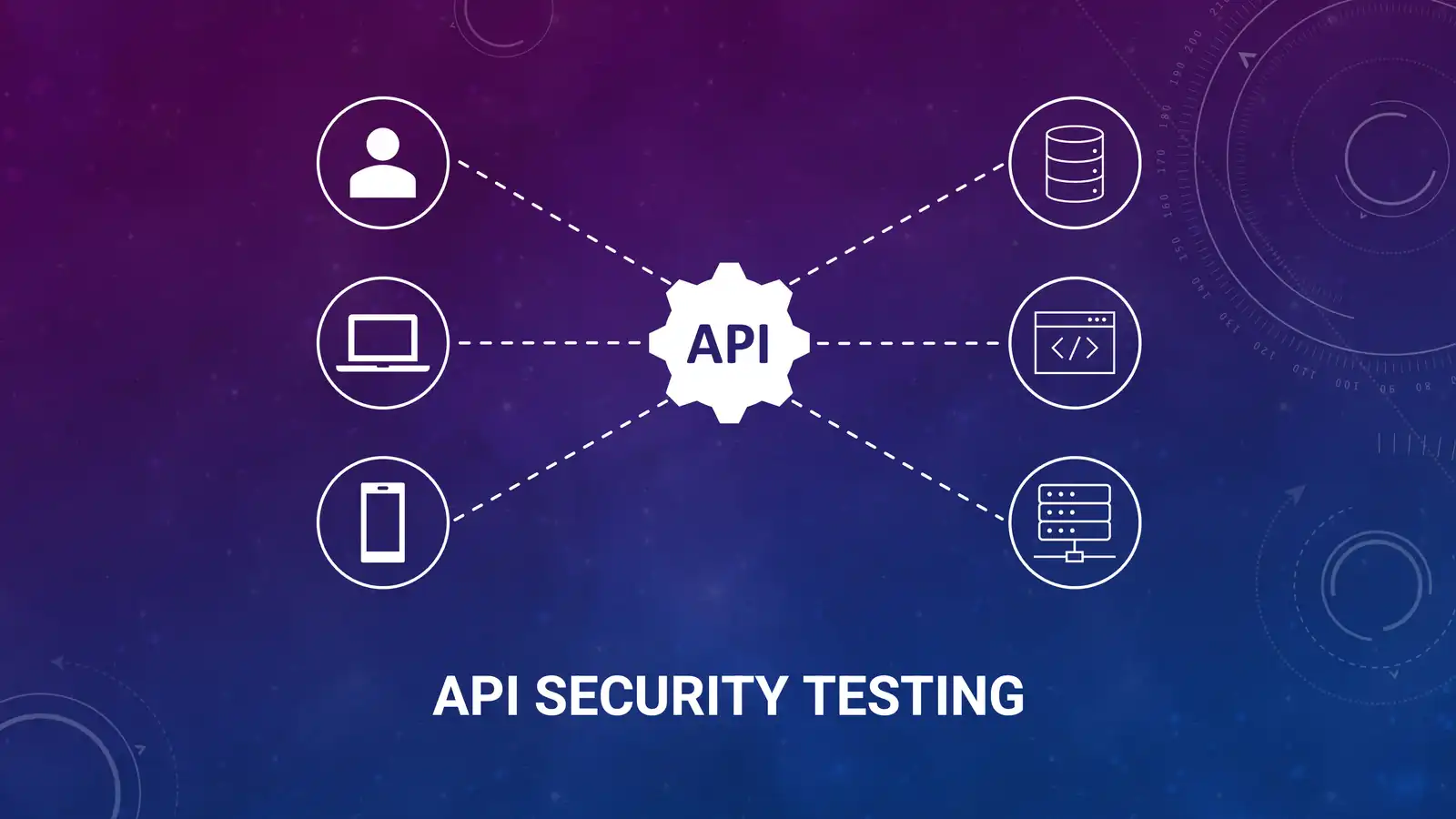
    IoT/OT Network Testing (Smart Devices, ICS/SCADA)

    Know more 
  • Deploys stealthy, multi-week attack simulations that mimic real-world adversary behaviors to test an organization's detection and response capabilities. Unlike standard penetration tests, these exercises evaluate how well people, processes, and technologies hold up against sophisticated, targeted threats
    Red Team Exercises (APT Simulation)

    Know more 
  • Validates network security controls against Payment Card Industry Data Security Standard requirements. This assessment ensures proper protection of cardholder data and regulatory compliance. It also validates segmentation of cardholder data environments and whether encryption, logging, and access controls meet audit requirements.

    PCI DSS Network Compliance Testing

    Know more 
  • Systematically verifies that all servers, endpoints, and network devices have the latest security patches installed to address known vulnerabilities. This audit identifies missing patches, unsupported software versions, and deviations from organizational patch policies that could expose systems to exploitation.
    Local Patch Audit

    Know more 
  • Analyzes system and network device configurations against industry best practices like CIS Benchmarks and ISO 27001 to identify security misconfigurations. This assessment uncovers overly permissive rules, insecure default settings, and compliance gaps across firewalls, servers, cloud platforms, and applications.

    Configuration Review Testing

    Know more 
  • Evaluates VPN solutions for misconfigurations, weak authentication, and encryption flaws impacting remote connectivity. This assessment secures distributed workforces against data exposure risks. It also tests split-tunneling configurations, client software vulnerabilities, and how remote access integrates with multi-factor authentication systems.

    VPN & Remote Work Security Testing

    Know more 

Evaluates Wi-Fi networks for weak encryption, rogue access points, and unauthorized connections. This assessment identifies vulnerabilities affecting wireless communication and authentication methods. It also tests the security of guest networks, captive portals, and how wireless access integrates with corporate directories.

Wireless Security Testing (Wi-Fi 6, Bluetooth, RFID)

Know more 

Identifies cloud misconfigurations, exposed storage, and insecure access controls across AWS, Azure, and GCP. This testing uncovers weaknesses in cloud platforms and deployed resources while validating IAM policies and encryption settings. It also ensures cloud assets align with shared responsibility models and compliance requirements.

Cloud Infrastructure Testing (AWS, Azure, GCP Misconfigs)

Know more 

Assesses smart devices and industrial control systems for communication protocol flaws and outdated firmware. This testing identifies risks across connected industrial and IoT environments. It also evaluates segmentation between IT and OT networks, physical security controls, and resilience against attacks targeting operational technology.

IoT/OT Network Testing (Smart Devices, ICS/SCADA)

Know more 

Deploys stealthy, multi-week attack simulations that mimic real-world adversary behaviors to test an organization's detection and response capabilities. Unlike standard penetration tests, these exercises evaluate how well people, processes, and technologies hold up against sophisticated, targeted threats

Red Team Exercises (APT Simulation)

Know more 

Validates network security controls against Payment Card Industry Data Security Standard requirements. This assessment ensures proper protection of cardholder data and regulatory compliance. It also validates segmentation of cardholder data environments and whether encryption, logging, and access controls meet audit requirements.

PCI DSS Network Compliance Testing

Know more 

Systematically verifies that all servers, endpoints, and network devices have the latest security patches installed to address known vulnerabilities. This audit identifies missing patches, unsupported software versions, and deviations from organizational patch policies that could expose systems to exploitation.

Local Patch Audit

Know more 

Analyzes system and network device configurations against industry best practices like CIS Benchmarks and ISO 27001 to identify security misconfigurations. This assessment uncovers overly permissive rules, insecure default settings, and compliance gaps across firewalls, servers, cloud platforms, and applications.

Configuration Review Testing

Know more 

Evaluates VPN solutions for misconfigurations, weak authentication, and encryption flaws impacting remote connectivity. This assessment secures distributed workforces against data exposure risks. It also tests split-tunneling configurations, client software vulnerabilities, and how remote access integrates with multi-factor authentication systems.

VPN & Remote Work Security Testing

Know more 

Close
Testimonial Image

Close
course-features Image

Close

Inquire Now

  • flag
    +91
Close
Back to Top Prev Page L3 Title
  • Corporate Training
  • Resources
  • Career
  • Blog
  • About Us
  • Contact Us
  • Trainings
  • Ec-Council Programs
  • PECB Programs
  • Data Science Analytics
  • Ec-Council Programs
  • Security Programs
  • SOC-SIEM
  • Ec- Council
  • Services
  • Grow Business
  • Connect Business
  • Protect Business
  • Industry Solutions
  • Solutions Gallery
  • More
  • About Company
  • Careers
  • Blogs
  • Testimonioals
  • Resources
  • Other
  • Registration Steps
  • FAQ’s
  • Refund Policy
  • Reschedule Policy

CONTACT US

New Delhi House, Barakhamba Road, New Delhi,110001

+91 99 | +91 88

011 43 | 011 430

Email:

© 2013 - 2024 Cybar Wind. All Rights Reserved

All the Ownership/Credits/Copyrights of Trademarks/Patents/Copyrights used in the content
posted as text/videos/images on this website belongs to the rightful owners.

  • Sitemap |
  • Terms And Conditions |
  • Privacy Policy