
☰
  • Our Services
  • Corporate Training
  • Resources
  • Blogs
  • Testimonial
  • Careers
  • Contact Us
logo
  •  Services
  •  Corporate Training
  • Services
  • Training
  • About Us
  • Resources
  • Blogs
  • Testimonial
  • Careers
  • Contact Us
Back
  • OVERVIEW
  • SERVICE FEATURES
  • SERVICE MODELS
  • CN VALUE PROPOSITION
  • TESTIONIALS
  • LANDSCAPE
  • BLOGS
  • FAQ'S
  • RELATED SERVICES
Back
  • Home Codec Networks Logo
  • Services
  • Managed SOC Service
  • Cloud Security Monitoring & Protection
  • OVERVIEW
  • SERVICE FEATURES
  • SERVICE MODELS
  • CN VALUE PROPOSITION
  • TESTIONIALS
  • LANDSCAPE
  • BLOGS
  • FAQ'S
  • RELATED SERVICES

Cloud Security Monitoring & Protection

Cloud Security Monitoring & Protection at Codec Networks refers to a comprehensive cybersecurity solution that provides continuous monitoring, detection, analysis, and response to security events across an organisation's cloud infrastructure. This service leverages advanced cloud-native security platforms, AI-driven analytics, and real-time threat intelligence to aggregate data from cloud workloads, identities, configurations, and APIs, applying intelligent correlation to identify threats, anomalies, and compliance gaps before they escalate into incidents.

The service is designed to deliver end-to-end visibility across public, private, and hybrid cloud environments by detecting misconfigurations, unauthorised access attempts, suspicious workload activity, and potential data breaches. It combines automated alerting with expert-driven analysis, enabling faster incident response while reducing mean time to detect and contain cloud-specific threats. Additionally, it supports cloud compliance requirements by continuously monitoring configurations and generating audit-ready reports aligned with global frameworks such as ISO 27001, SOC 2, and CSA CCM.

By integrating proactive cloud threat intelligence, continuous configuration monitoring, identity security, and cloud incident management capabilities, Codec Networks' Cloud Security Monitoring & Protection services help organisations strengthen their cloud security posture, ensure business continuity across cloud environments, and safeguard critical digital workloads in an increasingly complex and cloud-dependent operational landscape.

Industry Significance
Cloud Security Monitoring & Protection has become a critical component of modern cybersecurity strategies, enabling organisations to continuously monitor cloud environments, detect misconfigurations, protect workloads, and respond to threats in real time across dynamic cloud ecosystems.
Read More

Service Relevance
Cloud Security Monitoring & Protection enables organizations to secure modern cloud infrastructures through continuous visibility, real-time threat detection, centralized governance, and proactive protection mechanisms across multi-cloud, hybrid, and distributed digital environments
Read More

Benefits to Customers 
Cloud Security Monitoring & Protection services offered by Codec Networks deliver significant value by strengthening cloud security posture, enabling real-time threat detection, improving operational efficiency, and ensuring continuous compliance with evolving regulatory requirements across complex multi-cloud and hybrid environments
Read More

Cloud Security Monitoring & Protection

Cloud Security Monitoring & Protection at Codec Networks refers to a comprehensive cybersecurity solution that provides continuous monitoring, detection, analysis, and response to security events across an organisation's cloud infrastructure. This service leverages advanced cloud-native security platforms, AI-driven analytics, and real-time threat intelligence to aggregate data from cloud workloads, identities, configurations, and APIs, applying intelligent correlation to identify threats, anomalies, and compliance gaps before they escalate into incidents.

The service is designed to deliver end-to-end visibility across public, private, and hybrid cloud environments by detecting misconfigurations, unauthorised access attempts, suspicious workload activity, and potential data breaches. It combines automated alerting with expert-driven analysis, enabling faster incident response while reducing mean time to detect and contain cloud-specific threats. Additionally, it supports cloud compliance requirements by continuously monitoring configurations and generating audit-ready reports aligned with global frameworks such as ISO 27001, SOC 2, and CSA CCM.

By integrating proactive cloud threat intelligence, continuous configuration monitoring, identity security, and cloud incident management capabilities, Codec Networks' Cloud Security Monitoring & Protection services help organisations strengthen their cloud security posture, ensure business continuity across cloud environments, and safeguard critical digital workloads in an increasingly complex and cloud-dependent operational landscape.

Industry Significance
Cloud Security Monitoring & Protection has become a critical component of modern cybersecurity strategies, enabling organisations to continuously monitor cloud environments, detect misconfigurations, protect workloads, and respond to threats in real time across dynamic cloud ecosystems.

Read More
1

Service Relevance
Cloud Security Monitoring & Protection enables organizations to secure modern cloud infrastructures through continuous visibility, real-time threat detection, centralized governance, and proactive protection mechanisms across multi-cloud, hybrid, and distributed digital environments

Read More
2

Benefits to Customers 
Cloud Security Monitoring & Protection services offered by Codec Networks deliver significant value by strengthening cloud security posture, enabling real-time threat detection, improving operational efficiency, and ensuring continuous compliance with evolving regulatory requirements across complex multi-cloud and hybrid environments

Read More
3

SERVICE FEATURES AND DELIVERY FRAMEWORK

Codec Networks’ delivers real-time cloud security monitoring with structured methodologies, standardised
controls, measurable KPIs, and globally aligned cloud security service excellence.

  • SERVICE FEATURES
  • SERVICE DELIVERY METHODOLOGY
  • SERVICE STANDARDS

Cloud Security Monitoring & Protection enables organizations to secure modern cloud infrastructures through continuous visibility, real-time threat detection, centralized governance, and proactive protection mechanisms across multi-cloud, hybrid, and distributed digital environments.
Cloud Security Monitoring & Protection services are essential in modern cloud ecosystems, enabling real-time threat detection, centralised cloud visibility, and rapid incident response. They help organisations secure dynamic cloud workloads, ensure compliance, and protect critical cloud assets against evolving threats.

Sub-Services offered, along with their detailed features and capabilities:

1. 24/7 Cloud Security Monitoring & Alert Management

  • Continuous round-the-clock monitoring of cloud workloads, identities, configurations, storage, and APIs.
  • Real-time alert generation based on cloud-specific correlation rules, behavioural baselines, and anomaly detection.
  • Prioritisation of cloud alerts using severity levels to focus on critical cloud threats and misconfigurations.
  • Integration with cloud-native security dashboards for centralised visibility across cloud platforms.
  • Automated notification workflows enabling rapid escalation and response to cloud security incidents.

2. Cloud Security Posture Management (CSPM)

  • Continuous assessment of cloud configurations across AWS, Azure, GCP, and hybrid environments for security gaps.
  • Automated detection of misconfigurations including exposed storage, weak access controls, and open APIs.
  • Risk scoring and prioritisation of misconfigurations based on severity and exploitability.
  • Policy-based compliance monitoring aligned with CIS Benchmarks, ISO 27001, and CSA CCM frameworks.
  • Remediation guidance and tracking to support continuous cloud security posture improvement.

3. Cloud Workload Protection & Threat Detection

  • Real-time protection and monitoring of cloud workloads including virtual machines, containers, and serverless functions.
  • Behavioural threat detection to identify anomalous workload activity, lateral movement, and exploitation attempts.
  • Integration with cloud-native EDR and XDR platforms for endpoint-level cloud workload protection.
  • Automated incident classification, triaging, and prioritisation based on workload criticality and business impact.
  • Defined incident response playbooks for structured handling of cloud workload threats.

4. Cloud Identity & Access Security Monitoring

  • Continuous monitoring of cloud identity and access management (IAM) policies, roles, and permissions.
  • Detection of excessive permissions, privilege escalation, compromised credentials, and unauthorised access.
  • Integration with cloud identity providers for real-time access anomaly detection and alerting.
  • Contextual enrichment of identity-based alerts to support accurate decision-making and rapid response.
  • Support for zero trust identity verification across multi-cloud environments.

5. Cloud Compliance Monitoring & Reporting

  • Continuous compliance monitoring aligned with ISO 27001, SOC 2, PCI-DSS, HIPAA, GDPR, and CSA CCM.
  • Automated generation of cloud compliance reports, posture dashboards, and regulatory evidence packages.
  • Maintenance of cloud configuration audit trails and evidence for regulatory and governance inspections.
  • Policy-based cloud monitoring ensuring adherence to internal security and regulatory requirements.
  • Cloud compliance gap analysis and remediation recommendations for continuous improvement.

6. Cloud Threat Intelligence Integration

  • Integration with global cloud threat intelligence feeds to detect emerging cloud-targeted threats.
  • Continuous updates on cloud-specific Indicators of Compromise (IOCs) including malicious IPs and domains.
  • Contextual enrichment of cloud security alerts to improve threat prioritisation and decision-making.
  • Proactive identification of cloud attack vectors targeting workloads, identities, and configurations.
  • Support for custom threat feeds tailored to specific cloud platforms and industry sectors.

7. Cloud Security Analytics & Posture Dashboarding

  • Interactive cloud security dashboards providing real-time insights into cloud risk, threats, and compliance posture.
  • Use of machine learning and behavioural analytics for cloud anomaly detection and threat identification.
  • Customisable cloud security reporting based on business requirements, regulatory frameworks, and KPIs.
  • Visualisation of cloud threat patterns, misconfiguration trends, and cloud workload health status.
  • Executive-level cloud security summaries for strategic business decision-making and governance.

8. Managed Cloud Security Platform Administration

  • Deployment, configuration, and tuning of cloud security monitoring tools and CSPM platforms.
  • Continuous optimisation of cloud detection rules and policies to reduce false positives.
  • Cloud security platform health monitoring, upgrades, and integration management.
  • Integration with existing cloud-native security ecosystems including AWS Security Hub and Microsoft Defender.
  • Scalability management to support expanding cloud workloads, accounts, and evolving cloud threats.

Service Delivery Methodology for Cloud Security Monitoring Services delivered by Codec Networks is a structured, lifecycle-driven approach aligned with global best practices such as ITIL, ISO 27001, and NIST Cybersecurity Framework. The methodology ensures consistent, scalable, and measurable service delivery across all sub-services.

Codec Network’s overall Service Delivery methodology comprises of:

1. Engagement Initiation & Cloud Scoping

  • Conduct stakeholder discussions to understand cloud environments, operational requirements, security objectives, and governance expectations.
  • Define engagement scope including cloud platforms, workloads, APIs, SaaS environments, and distributed infrastructures.
  • Identify operational stakeholders, cloud administrators, governance owners, and security teams.
  • Establish implementation timelines, monitoring objectives, escalation workflows, and communication channels.
  • Document engagement scope, operational dependencies, assumptions, and cloud security monitoring requirements.

2. Environment Assessment & Security Review

  • Review existing cloud architectures, IAM controls, APIs, workloads, and operational workflows.
  • Assess current monitoring capabilities, cloud visibility gaps, and operational security challenges.
  • Evaluate cloud security maturity, governance posture, and compliance readiness.
  • Analyze operational event volumes, alert management processes, and incident coordination mechanisms.
  • Document baseline cloud infrastructure visibility and operational monitoring maturity.

3. Monitoring Strategy & Visibility Planning

  • Identify monitoring requirements across cloud workloads, APIs, identities, and distributed services.
  • Define operational use cases for centralized cloud visibility and threat detection.
  • Prioritize monitoring scenarios based on operational risk and business requirements.
  • Establish centralized alerting, logging, and incident visibility mechanisms.
  • Develop cloud monitoring and operational visibility implementation roadmap.

4. Cloud Security Architecture & Integration Design

  • Design centralized cloud security monitoring architecture aligned with enterprise requirements.
  • Define integration models for SIEM, IAM, endpoint security, cloud-native tools, and monitoring platforms.
  • Establish API connectivity, operational dashboards, and centralized visibility workflows.
  • Design escalation procedures, reporting mechanisms, and threat coordination workflows.
  • Align cloud monitoring architecture with governance, compliance, and resilience objectives.

5. Threat Detection & Operational Workflow Development

  • Develop monitoring workflows for suspicious access, cloud anomalies, API abuse, and operational threats.
  • Configure centralized alerting and threat correlation mechanisms.
  • Define escalation paths, operational dependencies, and incident coordination procedures.
  • Establish automated notification and investigation workflows.
  • Validate detection logic and operational monitoring accuracy across integrated environments.

6. Platform Deployment & Operational Integration

  • Deploy and configure monitoring integrations across scoped cloud environments.
  • Integrate cloud monitoring platforms, SIEM systems, IAM controls, and operational tools.
  • Configure centralized dashboards, visibility workflows, and monitoring alerts.
  • Implement incident visibility, operational reporting, and escalation mechanisms.
  • Validate end-to-end operational connectivity and monitoring coverage.

7. Testing, Validation & Monitoring Optimization

  • Perform testing of cloud monitoring workflows, visibility mechanisms, and operational integrations.
  • Validate threat detection capabilities across integrated cloud environments.
  • Identify operational gaps, monitoring inefficiencies, and visibility challenges.
  • Fine-tune alerting rules, escalation processes, and monitoring configurations.
  • Conduct simulated security scenarios for operational readiness validation.

8. Training & Operational Enablement

  • Conduct operational training sessions for cloud administrators, SOC teams, and security personnel.
  • Provide centralized monitoring and dashboard management training.
  • Educate teams on cloud governance, operational visibility, and incident coordination procedures.
  • Deliver reporting, analytics, and alert management training.
  • Promote adoption of proactive cloud monitoring practices across the organization.

9. Continuous Monitoring & Operational Support

  • Continuously monitor cloud environments, operational workflows, and security events.
  • Review incident handling metrics, operational KPIs, and visibility effectiveness.
  • Support ongoing monitoring optimization and integration enhancement activities.
  • Provide operational reporting, governance visibility, and stakeholder updates.
  • Ensure alignment with evolving cloud operational and compliance requirements.

10. Continuous Improvement & Cloud Security Maturity Enhancement

  • Continuously improve monitoring workflows and operational visibility capabilities.
  • Integrate updated threat intelligence and emerging cloud security use cases.
  • Expand monitoring coverage across evolving cloud ecosystems and distributed infrastructures.
  • Conduct periodic cloud security maturity assessments and operational reviews.
  • Provide long-term advisory support for cloud security resilience and governance optimization.

International Standard

Description

Application in Service Delivery

Client Benefit / Outcome

ISO/IEC 27001

Global standard for Information Security Management Systems (ISMS).

Risk assessment, access control, incident management, cloud asset protection.

Ensures structured cloud security governance, data protection, and risk-based monitoring practices.

ISO/IEC 27017

Cloud-specific security controls extending ISO 27001 for cloud service environments.

Cloud service customer controls, virtual machine security, cloud data deletion.

Provides dedicated cloud security control guidance for cloud monitoring and protection services.

ISO/IEC 27018

Standard for protection of personally identifiable information (PII) in public cloud environments.

PII protection, cloud data handling, consent management, transparency.

Strengthens cloud data protection and privacy monitoring in regulated environments.

NIST Cybersecurity Framework

Framework for managing and reducing cybersecurity risks across all environments.

Identify, Protect, Detect, Respond, Recover cloud security functions.

Aligns cloud security monitoring operations with proactive threat detection and response lifecycle.

CSA Cloud Controls Matrix (CCM)

Cloud security framework providing controls for cloud security governance.

Cloud identity, infrastructure, data security, threat management controls.

Provides cloud-specific compliance structure for cloud security monitoring and protection services.

PCI DSS

Security standard for organisations handling cardholder data in cloud environments.

Cloud log monitoring, access control, vulnerability management, audit trails.

Enables compliant cloud monitoring, logging, and reporting for financial transaction environments.

SOC 2

Framework for managing customer cloud data based on trust service principles.

Security, availability, processing integrity, confidentiality, cloud privacy controls.

Validates reliability and integrity of cloud security monitoring and reporting services.

CIS Cloud Security Benchmarks

Set of prioritised cloud security best practices for major cloud platforms.

Cloud configuration hardening, identity controls, cloud monitoring best practices.

Enhances cloud misconfiguration detection and strengthens cloud security monitoring operations.

GDPR

Regulation for protection of personal data processed in cloud environments.

Data protection, breach notification, data minimisation, cloud auditability.

Ensures cloud security monitoring supports privacy compliance and cloud breach detection reporting.


Please Note –

  • Services are delivered in alignment with recognized international security standards to ensure consistent methodology and technical rigor.
  • Standard alignment guides assessment depth and structure but does not imply certification, accreditation, or regulatory approval.
  • Coverage is limited to controls, practices, and systems mapped to the agreed service scope and selected standards.
  • The service evaluates security posture at the time of assessment and does not guarantee future risk elimination.
  • Liability is limited to the professional services performed under the agreed engagement terms.
  • Responsibility for remediation, operational decisions, and ongoing compliance remains with the client organization.
  • Total liability for all services is strictly limited to the international standards as far as possible as agreed in contracted engagement value. Codec Networks expressly excludes any indirect, financial, operational, incidental, punitive, or consequential damages, which may arise due to any coincidental events, or changes in international standards guidelines time to time
SERVICE FEATURES

Cloud Security Monitoring & Protection enables organizations to secure modern cloud infrastructures through continuous visibility, real-time threat detection, centralized governance, and proactive protection mechanisms across multi-cloud, hybrid, and distributed digital environments.
Cloud Security Monitoring & Protection services are essential in modern cloud ecosystems, enabling real-time threat detection, centralised cloud visibility, and rapid incident response. They help organisations secure dynamic cloud workloads, ensure compliance, and protect critical cloud assets against evolving threats.

Sub-Services offered, along with their detailed features and capabilities:

1. 24/7 Cloud Security Monitoring & Alert Management

  • Continuous round-the-clock monitoring of cloud workloads, identities, configurations, storage, and APIs.
  • Real-time alert generation based on cloud-specific correlation rules, behavioural baselines, and anomaly detection.
  • Prioritisation of cloud alerts using severity levels to focus on critical cloud threats and misconfigurations.
  • Integration with cloud-native security dashboards for centralised visibility across cloud platforms.
  • Automated notification workflows enabling rapid escalation and response to cloud security incidents.

2. Cloud Security Posture Management (CSPM)

  • Continuous assessment of cloud configurations across AWS, Azure, GCP, and hybrid environments for security gaps.
  • Automated detection of misconfigurations including exposed storage, weak access controls, and open APIs.
  • Risk scoring and prioritisation of misconfigurations based on severity and exploitability.
  • Policy-based compliance monitoring aligned with CIS Benchmarks, ISO 27001, and CSA CCM frameworks.
  • Remediation guidance and tracking to support continuous cloud security posture improvement.

3. Cloud Workload Protection & Threat Detection

  • Real-time protection and monitoring of cloud workloads including virtual machines, containers, and serverless functions.
  • Behavioural threat detection to identify anomalous workload activity, lateral movement, and exploitation attempts.
  • Integration with cloud-native EDR and XDR platforms for endpoint-level cloud workload protection.
  • Automated incident classification, triaging, and prioritisation based on workload criticality and business impact.
  • Defined incident response playbooks for structured handling of cloud workload threats.

4. Cloud Identity & Access Security Monitoring

  • Continuous monitoring of cloud identity and access management (IAM) policies, roles, and permissions.
  • Detection of excessive permissions, privilege escalation, compromised credentials, and unauthorised access.
  • Integration with cloud identity providers for real-time access anomaly detection and alerting.
  • Contextual enrichment of identity-based alerts to support accurate decision-making and rapid response.
  • Support for zero trust identity verification across multi-cloud environments.

5. Cloud Compliance Monitoring & Reporting

  • Continuous compliance monitoring aligned with ISO 27001, SOC 2, PCI-DSS, HIPAA, GDPR, and CSA CCM.
  • Automated generation of cloud compliance reports, posture dashboards, and regulatory evidence packages.
  • Maintenance of cloud configuration audit trails and evidence for regulatory and governance inspections.
  • Policy-based cloud monitoring ensuring adherence to internal security and regulatory requirements.
  • Cloud compliance gap analysis and remediation recommendations for continuous improvement.

6. Cloud Threat Intelligence Integration

  • Integration with global cloud threat intelligence feeds to detect emerging cloud-targeted threats.
  • Continuous updates on cloud-specific Indicators of Compromise (IOCs) including malicious IPs and domains.
  • Contextual enrichment of cloud security alerts to improve threat prioritisation and decision-making.
  • Proactive identification of cloud attack vectors targeting workloads, identities, and configurations.
  • Support for custom threat feeds tailored to specific cloud platforms and industry sectors.

7. Cloud Security Analytics & Posture Dashboarding

  • Interactive cloud security dashboards providing real-time insights into cloud risk, threats, and compliance posture.
  • Use of machine learning and behavioural analytics for cloud anomaly detection and threat identification.
  • Customisable cloud security reporting based on business requirements, regulatory frameworks, and KPIs.
  • Visualisation of cloud threat patterns, misconfiguration trends, and cloud workload health status.
  • Executive-level cloud security summaries for strategic business decision-making and governance.

8. Managed Cloud Security Platform Administration

  • Deployment, configuration, and tuning of cloud security monitoring tools and CSPM platforms.
  • Continuous optimisation of cloud detection rules and policies to reduce false positives.
  • Cloud security platform health monitoring, upgrades, and integration management.
  • Integration with existing cloud-native security ecosystems including AWS Security Hub and Microsoft Defender.
  • Scalability management to support expanding cloud workloads, accounts, and evolving cloud threats.
SERVICE DELIVERY METHODOLOGY

Service Delivery Methodology for Cloud Security Monitoring Services delivered by Codec Networks is a structured, lifecycle-driven approach aligned with global best practices such as ITIL, ISO 27001, and NIST Cybersecurity Framework. The methodology ensures consistent, scalable, and measurable service delivery across all sub-services.

Codec Network’s overall Service Delivery methodology comprises of:

1. Engagement Initiation & Cloud Scoping

  • Conduct stakeholder discussions to understand cloud environments, operational requirements, security objectives, and governance expectations.
  • Define engagement scope including cloud platforms, workloads, APIs, SaaS environments, and distributed infrastructures.
  • Identify operational stakeholders, cloud administrators, governance owners, and security teams.
  • Establish implementation timelines, monitoring objectives, escalation workflows, and communication channels.
  • Document engagement scope, operational dependencies, assumptions, and cloud security monitoring requirements.

2. Environment Assessment & Security Review

  • Review existing cloud architectures, IAM controls, APIs, workloads, and operational workflows.
  • Assess current monitoring capabilities, cloud visibility gaps, and operational security challenges.
  • Evaluate cloud security maturity, governance posture, and compliance readiness.
  • Analyze operational event volumes, alert management processes, and incident coordination mechanisms.
  • Document baseline cloud infrastructure visibility and operational monitoring maturity.

3. Monitoring Strategy & Visibility Planning

  • Identify monitoring requirements across cloud workloads, APIs, identities, and distributed services.
  • Define operational use cases for centralized cloud visibility and threat detection.
  • Prioritize monitoring scenarios based on operational risk and business requirements.
  • Establish centralized alerting, logging, and incident visibility mechanisms.
  • Develop cloud monitoring and operational visibility implementation roadmap.

4. Cloud Security Architecture & Integration Design

  • Design centralized cloud security monitoring architecture aligned with enterprise requirements.
  • Define integration models for SIEM, IAM, endpoint security, cloud-native tools, and monitoring platforms.
  • Establish API connectivity, operational dashboards, and centralized visibility workflows.
  • Design escalation procedures, reporting mechanisms, and threat coordination workflows.
  • Align cloud monitoring architecture with governance, compliance, and resilience objectives.

5. Threat Detection & Operational Workflow Development

  • Develop monitoring workflows for suspicious access, cloud anomalies, API abuse, and operational threats.
  • Configure centralized alerting and threat correlation mechanisms.
  • Define escalation paths, operational dependencies, and incident coordination procedures.
  • Establish automated notification and investigation workflows.
  • Validate detection logic and operational monitoring accuracy across integrated environments.

6. Platform Deployment & Operational Integration

  • Deploy and configure monitoring integrations across scoped cloud environments.
  • Integrate cloud monitoring platforms, SIEM systems, IAM controls, and operational tools.
  • Configure centralized dashboards, visibility workflows, and monitoring alerts.
  • Implement incident visibility, operational reporting, and escalation mechanisms.
  • Validate end-to-end operational connectivity and monitoring coverage.

7. Testing, Validation & Monitoring Optimization

  • Perform testing of cloud monitoring workflows, visibility mechanisms, and operational integrations.
  • Validate threat detection capabilities across integrated cloud environments.
  • Identify operational gaps, monitoring inefficiencies, and visibility challenges.
  • Fine-tune alerting rules, escalation processes, and monitoring configurations.
  • Conduct simulated security scenarios for operational readiness validation.

8. Training & Operational Enablement

  • Conduct operational training sessions for cloud administrators, SOC teams, and security personnel.
  • Provide centralized monitoring and dashboard management training.
  • Educate teams on cloud governance, operational visibility, and incident coordination procedures.
  • Deliver reporting, analytics, and alert management training.
  • Promote adoption of proactive cloud monitoring practices across the organization.

9. Continuous Monitoring & Operational Support

  • Continuously monitor cloud environments, operational workflows, and security events.
  • Review incident handling metrics, operational KPIs, and visibility effectiveness.
  • Support ongoing monitoring optimization and integration enhancement activities.
  • Provide operational reporting, governance visibility, and stakeholder updates.
  • Ensure alignment with evolving cloud operational and compliance requirements.

10. Continuous Improvement & Cloud Security Maturity Enhancement

  • Continuously improve monitoring workflows and operational visibility capabilities.
  • Integrate updated threat intelligence and emerging cloud security use cases.
  • Expand monitoring coverage across evolving cloud ecosystems and distributed infrastructures.
  • Conduct periodic cloud security maturity assessments and operational reviews.
  • Provide long-term advisory support for cloud security resilience and governance optimization.
SERVICE STANDARDS

International Standard

Description

Application in Service Delivery

Client Benefit / Outcome

ISO/IEC 27001

Global standard for Information Security Management Systems (ISMS).

Risk assessment, access control, incident management, cloud asset protection.

Ensures structured cloud security governance, data protection, and risk-based monitoring practices.

ISO/IEC 27017

Cloud-specific security controls extending ISO 27001 for cloud service environments.

Cloud service customer controls, virtual machine security, cloud data deletion.

Provides dedicated cloud security control guidance for cloud monitoring and protection services.

ISO/IEC 27018

Standard for protection of personally identifiable information (PII) in public cloud environments.

PII protection, cloud data handling, consent management, transparency.

Strengthens cloud data protection and privacy monitoring in regulated environments.

NIST Cybersecurity Framework

Framework for managing and reducing cybersecurity risks across all environments.

Identify, Protect, Detect, Respond, Recover cloud security functions.

Aligns cloud security monitoring operations with proactive threat detection and response lifecycle.

CSA Cloud Controls Matrix (CCM)

Cloud security framework providing controls for cloud security governance.

Cloud identity, infrastructure, data security, threat management controls.

Provides cloud-specific compliance structure for cloud security monitoring and protection services.

PCI DSS

Security standard for organisations handling cardholder data in cloud environments.

Cloud log monitoring, access control, vulnerability management, audit trails.

Enables compliant cloud monitoring, logging, and reporting for financial transaction environments.

SOC 2

Framework for managing customer cloud data based on trust service principles.

Security, availability, processing integrity, confidentiality, cloud privacy controls.

Validates reliability and integrity of cloud security monitoring and reporting services.

CIS Cloud Security Benchmarks

Set of prioritised cloud security best practices for major cloud platforms.

Cloud configuration hardening, identity controls, cloud monitoring best practices.

Enhances cloud misconfiguration detection and strengthens cloud security monitoring operations.

GDPR

Regulation for protection of personal data processed in cloud environments.

Data protection, breach notification, data minimisation, cloud auditability.

Ensures cloud security monitoring supports privacy compliance and cloud breach detection reporting.


Please Note –

  • Services are delivered in alignment with recognized international security standards to ensure consistent methodology and technical rigor.
  • Standard alignment guides assessment depth and structure but does not imply certification, accreditation, or regulatory approval.
  • Coverage is limited to controls, practices, and systems mapped to the agreed service scope and selected standards.
  • The service evaluates security posture at the time of assessment and does not guarantee future risk elimination.
  • Liability is limited to the professional services performed under the agreed engagement terms.
  • Responsibility for remediation, operational decisions, and ongoing compliance remains with the client organization.
  • Total liability for all services is strictly limited to the international standards as far as possible as agreed in contracted engagement value. Codec Networks expressly excludes any indirect, financial, operational, incidental, punitive, or consequential damages, which may arise due to any coincidental events, or changes in international standards guidelines time to time

CLOUD SECURITY MONITORING & PROTECTION - CODEC NETWORK'S INDUSTRY OFFERINGS

Codec Networks’ delivers industry-aligned bundled cloud security packages combining monitoring,
CSPM, compliance, and analytics for scalable, cost-effective cloud protection

1
Image

Foundational Cloud Security Monitoring

Target Clients
Ideal for startups, SMEs, and organizations seeking foundational cloud visibility, centralized monitoring, and basic cloud security governance across evolving digital environments.

Sub Services In Scope

  • Basic Cloud Security Assessment & Visibility Review.
  • Centralized Monitoring & Alert Management Setup
  • Cloud Log Collection & Dashboard Enablement
  • Basic Threat Detection & Monitoring Workflows
  • Operational Guidance & Initial Monitoring Support

Purpose
To establish baseline cloud monitoring capabilities, improve operational visibility, and strengthen detection of suspicious cloud activities through centralized monitoring workflows.

Value Delivered
Provides affordable cloud security visibility, improved monitoring efficiency, reduced operational blind spots, and structured cloud threat detection capabilities.

Inquire Now
2
Image

Advanced Cloud Visibility & Threat Monitoring

Target Clients
Designed for mid-sized enterprises requiring enhanced cloud threat detection, operational monitoring, governance visibility, and stronger cloud security coordination.

Sub Services In Scope

  • Comprehensive Cloud Security Assessment & Monitoring Review
  • Multi-Platform Monitoring & SIEM Integration
  • Advanced Threat Detection & Alert Correlation
  • Compliance Monitoring & Governance Reporting
  • Operational Support & Monitoring Optimization

Purpose
To improve enterprise cloud security operations through centralized monitoring, advanced visibility, and integrated threat detection workflows.

Value Delivered
Enables stronger operational awareness, faster cloud incident response, improved governance visibility, and scalable monitoring across hybrid cloud environments.

Inquire Now
3
Image

Enterprise Cloud Security Operations & Resilience

Target Clients
Best suited for large enterprises, cloud-native organizations, regulated sectors, and complex multi-cloud operational environments.

Sub Services In Scope

  • Enterprise-Wide Cloud Monitoring Architecture & Deployment:
  • Advanced Threat Intelligence & Behavioral Analytics Integration
  • Multi-Cloud, API & Identity Security Monitoring
  • Advanced Governance Dashboards & Executive Reporting
  • Continuous Monitoring Optimization & Strategic Advisory

Purpose
To establish enterprise-grade cloud security monitoring, operational resilience, centralized governance visibility, and advanced threat protection capabilities.

Value Delivered
Delivers advanced cloud resilience, intelligent threat visibility, operational scalability, and long-term cloud governance maturity across distributed ecosystems.

Inquire Now
1
Image

Foundational Cloud Security Monitoring

Target Clients
Ideal for startups, SMEs, and organizations seeking foundational cloud visibility, centralized monitoring, and basic cloud security governance across evolving digital environments.

Sub Services In Scope

  • Basic Cloud Security Assessment & Visibility Review.
  • Centralized Monitoring & Alert Management Setup
  • Cloud Log Collection & Dashboard Enablement
  • Basic Threat Detection & Monitoring Workflows
  • Operational Guidance & Initial Monitoring Support

Purpose
To establish baseline cloud monitoring capabilities, improve operational visibility, and strengthen detection of suspicious cloud activities through centralized monitoring workflows.

Value Delivered
Provides affordable cloud security visibility, improved monitoring efficiency, reduced operational blind spots, and structured cloud threat detection capabilities.

Inquire Now
2
Image

Advanced Cloud Visibility & Threat Monitoring

Target Clients
Designed for mid-sized enterprises requiring enhanced cloud threat detection, operational monitoring, governance visibility, and stronger cloud security coordination.

Sub Services In Scope

  • Comprehensive Cloud Security Assessment & Monitoring Review
  • Multi-Platform Monitoring & SIEM Integration
  • Advanced Threat Detection & Alert Correlation
  • Compliance Monitoring & Governance Reporting
  • Operational Support & Monitoring Optimization

Purpose
To improve enterprise cloud security operations through centralized monitoring, advanced visibility, and integrated threat detection workflows.

Value Delivered
Enables stronger operational awareness, faster cloud incident response, improved governance visibility, and scalable monitoring across hybrid cloud environments.

Inquire Now
3
Image

Enterprise Cloud Security Operations & Resilience

Target Clients
Best suited for large enterprises, cloud-native organizations, regulated sectors, and complex multi-cloud operational environments.

Sub Services In Scope

  • Enterprise-Wide Cloud Monitoring Architecture & Deployment:
  • Advanced Threat Intelligence & Behavioral Analytics Integration
  • Multi-Cloud, API & Identity Security Monitoring
  • Advanced Governance Dashboards & Executive Reporting
  • Continuous Monitoring Optimization & Strategic Advisory

Purpose
To establish enterprise-grade cloud security monitoring, operational resilience, centralized governance visibility, and advanced threat protection capabilities.

Value Delivered
Delivers advanced cloud resilience, intelligent threat visibility, operational scalability, and long-term cloud governance maturity across distributed ecosystems.

Inquire Now

CODEC NETWORKS VALUE PROPOSITION

Codec Networks’ delivers proactive cloud security monitoring, enabling real-time cloud threat detection,
rapid cloud incident response, and resilient protection for evolving cloud environments

Codec Networks is a trusted cybersecurity monitoring and cloud protection partner delivering advanced Cloud Security Monitoring & Protection services designed to help organizations strengthen cloud visibility, improve threat detection capabilities, and enhance operational resilience across modern digital ecosystems.
With strong expertise in cloud security operations, centralized monitoring, threat intelligence integration, operational governance, and real-time incident visibility, Codec Networks enables businesses to manage evolving cloud threats with improved speed, operational awareness, and security control. Our approach combines intelligent monitoring, proactive threat detection, and centralized operational coordination to deliver measurable risk reduction and long-term cloud security resilience.

1. Strategic Cloud Security Delivery Approach & Operational Excellence

  • Adopts a structured, lifecycle-driven cloud security delivery model aligned with global frameworks such as NIST CSF and CSA CCM.
  • Ensures standardised cloud security onboarding, implementation, monitoring, and continuous improvement across all client cloud environments.
  • Enables 24/7 Cloud Security Operations Centre (SOC) delivery with defined SLAs, escalation matrices, and cloud governance mechanisms.
  • Incorporates cloud security automation, orchestration, and playbooks to streamline cloud incident detection and response.
  • Focuses on measurable cloud security outcomes through KPIs such as MTTD, MTTR, and cloud SLA adherence.

2. Advanced Cloud Security Technical Competency & Platform Expertise

  • Deep expertise in cloud security platforms, CSPM tools, cloud workload protection, and cloud security analytics for real-time detection.
  • Strong capabilities in integrating diverse cloud ecosystems including AWS, Azure, GCP, hybrid, and multi-cloud environments.
  • Proficiency in implementing advanced cloud security use cases, behavioural analytics, and cloud anomaly detection models.
  • Experience in handling complex cloud security architectures including cloud IAM, Kubernetes, serverless, and containerised workloads.
  • Continuous tuning and optimisation of cloud detection rules to reduce false positives and improve cloud alert accuracy.

3. Skilled Cloud Security Professionals & Domain Expertise

  • Team of cloud security certified professionals with expertise aligned to AWS, Azure, GCP, and global cloud security standards.
  • Strong knowledge of cloud threat landscapes, cloud attack vectors, and adversary tactics targeting cloud environments.
  • Capability to perform cloud incident triaging, cloud forensic analysis, and root cause investigations effectively.
  • Continuous cloud security training and upskilling programs to stay updated with emerging cloud threats and technologies.
  • Ability to provide strategic cloud security advisory along with operational cloud security support and guidance.

4. Proactive Cloud Threat Intelligence & Cloud Risk Management

  • Integration of global cloud threat intelligence feeds for identifying emerging cloud threats and cloud-specific Indicators of Compromise.
  • Proactive cloud monitoring to detect anomalies, identity misuse, and advanced persistent threats targeting cloud environments.
  • Risk-based prioritisation of cloud incidents to focus on high-impact cloud threats affecting business operations.
  • Continuous cloud vulnerability and risk assessment aligned with evolving cloud threat landscapes.
  • Enhanced cloud situational awareness through contextual enrichment of cloud security alerts and indicators.

5. Cloud Compliance Alignment & Cloud Security Governance

  • Strong alignment with international cloud security standards including ISO 27017, SOC 2, CSA CCM, and GDPR.
  • Automated cloud compliance monitoring, audit trails, and reporting to support cloud regulatory requirements.
  • Policy-driven cloud monitoring ensuring adherence to internal cloud governance and compliance frameworks.
  • Facilitates cloud audit readiness with structured cloud security documentation and evidence management.
  • Supports industry-specific cloud compliance needs across BFSI, healthcare, retail, and technology sectors.

6. Scalability, Flexibility & Global Cloud Security Delivery

  • Scalable cloud security service models supporting small, mid-sized, and large enterprises across geographies.
  • Flexible cloud security deployment options including cloud-native, agentless, and hybrid monitoring approaches.
  • Ability to onboard new cloud services, workloads, and detection use cases as business cloud environments evolve.
  • Global cloud security delivery capability ensuring consistent service quality across multiple cloud regions.
  • Modular cloud security service offerings enabling customised cloud protection solutions aligned with client needs.

7. Business Value & Outcome-Driven Cloud Security

  • Reduces financial and reputational risks associated with cloud incidents through early detection and rapid response.
  • Enhances cloud operational resilience and ensures business continuity through uninterrupted cloud monitoring.
  • Improves cloud security decision-making with actionable insights, posture dashboards, and executive reporting.
  • Optimises cloud security investments by delivering measurable ROI and reducing dependency on large in-house teams.
  • Builds customer trust and brand credibility through strong cloud security posture and compliance assurance.

Founded in 2008 with 17+ Years of Industry Experience in Information and Cyber Security domain

Codec Networks Full-Spectrum Cybersecurity Expertise across all Industry Domains:

  • Security Vulnerability Assessment & Penetration Testing (VAPT): Covering Web, Mobile, API, IoT, Blockchain, Cloud-Native, and smart infrastructure environments, with a focus on OWASP, MITRE ATT&CK, and real-world exploit simulation.
  • Offensive Security & Deep Level Security Assessments: Advanced Red Team, Blue Team and Purple Team Exercises, Threat Simulations, Social Engineering Campaigns, and Secure Code Review.
  • IT Security Audit & Compliance Services: Implementation and audit support for ISO/IEC 27001, ISO 27701, NIST CSF, RBI-CSF, SEBI, IRDAI, PCI DSS, HIPAA, SOC 2, GDPR, and India’s DPDPA 2023.
  • Data Privacy & Strategic Risk Advisory: ISO 27701, GDPR, DPDPA, Cross-border compliance, DPIA, DPO-as-a-service, supply chain risk management, and digital transformation risk consulting.
  • Emerging Technology Security (Web3.0 | AI | Blockchain): Specialized testing for smart contracts, DeFi platforms, Metaverse applications, AI/ML models, quantum readiness, and blockchain nodes.
  • Managed SOC & Threat Monitoring Services: End-to-end SOC operations, SIEM/EDR/XDR/SOAR integration, threat intelligence, cloud security monitoring, and 24/7 incident response.
  • Cyber Forensics & Threat Analysis: Investigation services including Device forensics, Malware Analysis, Cloud and Mobile forensics, insider threat detection, and Forensic support.
  • Board-Level Cybersecurity Advisory Services to build governance, quantify risks, and align with enterprise-wide digital priorities : Codec Networks enables this transformation by offering Integrated Cyber Risk Management, GRC Program Advisory, Reputation Management, Crisis Communication Readiness, and CISO Support, tailored for CXOs and board members seeking to integrate cybersecurity into strategic decision-making.
  • Cyber Security Education & Global Certifications - Through the Codec Centre for Professional Excellence, we deliver Post Graduate Certification in Advanced Cybersecurity (PGCAC), Graduate Certification in Advanced Cybersecurity (GCAC), Accredited Trainings & Certifications  from EC Council, PECB, TUV, Quality Austria, ISACA and ISC2 - building the next generation of cybersecurity leaders.
  • CERT-IN empaneled Information Security Auditing Organization
  • NICSI empaneled for providing Application Audit and Compliance Services under Start-Up Category

     Octavo Systems is now ISO9001 Certified - Octavo Systems

10 Steps for ISO 27001 Certification – Cyber Security News           Logo, company name

Description automatically generated


  • An ISO/IEC 27001:2022 certified company, has established Information Security Management System (ISMS), demonstrating a structured approach to manage and protect sensitive information from cyber threats.
  • An ISO 9001 certified company, has established and maintains a certified Quality Management System (QMS) that meets international standards for quality and consistency

At Codec Networks, our foundation is built on deep technical mastery, certified expertise, and an unrelenting pursuit of cyber excellence. With a team of globally accredited professionals, advanced methodologies, and next-generation tools, we deliver measurable security outcomes across assessment, compliance, monitoring, and forensic domains.
Our competency-driven approach ensures every engagement is governed by precision, accountability, and alignment with international standards — empowering enterprises to stay secure, compliant, and resilient.

Governance, Risk & Compliance (GRC) Competency

Codec Networks’ dedicated Governance, Risk & Compliance (GRC) group specializes in security assessments, risk management, regulatory compliance, and audit readiness. The team partners with organizations to strengthen governance frameworks and ensure end-to-end compliance in a complex regulatory landscape.

Key Attributes:

  • Team of certified auditors and consultants with credentials including ISO 27001 LA/LI, ISO 31000 Risk Specialist, ISO 27701 PIMS, GDPR, SOC 2, HIPAA, CCPA, DPO, CISA, CISM, CRISC, CISSP and other advanced industry certifications.
  • Expertise in enterprise risk quantification, privacy impact assessment (PIA/DPIA), audit automation, and supply chain risk mapping.
  • Proven track record in implementing ISO-based ISMS/PIMS frameworks, RBI/SEBI/IRDAI audits, and cross-border data compliance projects.

Vulnerability Assessment & Penetration Testing (VAPT) Expertise

Our VAPT teams bring extensive technical depth across Web, Mobile, API, Cloud, Network, Database, Infrastructure, IoT, and People & Process domains.
Every engagement is mapped to OWASP, NIST, MITRE ATT&CK, ISO 27001, PCI DSS, HIPAA, RBI, and GDPR frameworks — ensuring real-world relevance and compliance alignment.

Core Strengths:

  • Certified professionals with CEH, C-PENT, LPT, OSCP, OSWE, OSEE, and CREST credentials, averaging 7–10 years of offensive security experience.
  • Proven expertise in Red/Blue/Purple Teaming, DevSecOps, secure SDLC, and threat emulation.
  • Continuous skill enhancement through CTFs, hackathons, and product certifications (on case to case basis) such as CCNA, CCNP etc

Managed SOC & Threat Intelligence Operations

Codec Networks operates a 24/7 Managed Security Operations Center (SOC) delivering continuous visibility, detection, and response across hybrid environments.
Our SOC integrates SIEM, SOAR, EDR/XDR, and Cloud-Native Analytics to ensure rapid threat detection, incident containment, and business continuity.

Key Capabilities:

  • Certified SOC analysts with credentials such as CHFI, CEH, CompTIA CySA+, GCIA, GCFA, and Splunk Certified Architect.
  • Integration with platforms like Splunk, QRadar, SentinelOne, CrowdStrike, Elastic, Microsoft Sentinel, and Cortex XSOAR.
  • Advanced use cases include cloud posture management, insider threat analytics, MITRE ATT&CK–aligned detections, and threat hunting automation.
  • Comprehensive SOC Maturity Assessments and Threat Intelligence Fusion through integration with global feeds and dark web monitoring.

Cyber Forensics & Threat Analysis Expertise

Our Cyber Forensic Division delivers end-to-end investigation, evidence preservation, and digital analysis services — designed to support law enforcement, corporate forensics, and internal response teams.
We combine forensic science with cyber intelligence to identify root causes, trace adversaries, and restore operational integrity.

Core Expertise Areas:

  • Device, Network, Cloud, and Mobile Forensics – leveraging latest forensic tools (wherever applicable) such as Autopsy, Cyber Triage, Kape, EnCase, FTK, Magnet AXIOM, and Cellebrite.
  • Malware Reverse Engineering and Memory Forensics for incident containment and threat attribution.
  • Blockchain & Crypto Forensics – tracing DeFi fraud, NFT manipulation, and crypto laundering activities using Chainalysis, TRM Labs, and Elliptic (wherever applicable).
  • Incident Response Support – forensic readiness, eDiscovery, evidence preservation, aligned with ISO/IEC 27037 & 27043.
  • Certified experts including CHFI, eCIR, eCDFP, GCFE, GCFA, EnCE, CFCE and ECIH, ensuring investigations meet both technical and legal standards.

Advanced Tools, Frameworks & Continuous Innovation

Codec Networks leverages industry-leading tools and platforms such as Burp Suite Pro, Nessus, Prisma Cloud, Splunk, QRadar, CrowdStrike, SentinelOne, Autopsy, Chainalysis, MythX, and Prowler, (wherever applicable) ensuring accuracy, scalability, and efficiency.
Our methodologies align with globally recognized frameworks including:

  • MITRE ATT&CK & D3FEND
  • OWASP Top 10 / MASVS / ASVS
  • NIST Cybersecurity Framework & SP 800-115
  • ISO/IEC 27001, 27701, 31000, 22301

Through ongoing research, Codec Networks continually evolves to address modern threats — from Generative AI prompt attacks and smart contract exploits to IoT zero-days, metaverse impersonation, and quantum-era vulnerabilities.

Compliance-Driven Deliverables

All technical engagements and reports are mapped to major global and Indian compliance frameworks — including ISO 27001, PCI DSS, HIPAA, GDPR, RBI-CSF, SEBI, IRDAI, and DPDPA 2023.
Our structured technical and executive reports support board-level visibility, audit evidence, and certification readiness, ensuring that every engagement drives both technical assurance and regulatory confidence.

Codec Networks – Certified Competence. Proven Expertise. Real-World Cyber Resilience.
Empowering enterprises through advanced security engineering, continuous monitoring, and forensic intelligence.

At Codec Networks, we believe that cybersecurity excellence is not achieved through tools alone — it is built through methodical delivery, risk-based insight, and measurable outcomes.
Our Agile and Modular 8-Stage Delivery Methodology ensures that every engagement — from rapid risk assessments to full-scale ISMS implementations - is structured, standards-aligned, and business-focused.

Agile & Modular Methodology

Our delivery framework integrates global best practices with localized regulatory insight, ensuring each engagement is executed with clarity, accountability, and precision. Clients benefit from seamless onboarding, milestone-driven execution, and transparent reporting throughout the lifecycle.

  1. Discovery & Scoping: Collaborative workshops to understand business context, IT landscape, compliance obligations, and risk appetite, forming the foundation of a well-defined project scope.
  2. Risk Profiling & Gap Assessment: Comprehensive evaluation of people, process, and technology controls aligned with ISO 27001, NIST CSF, GDPR, HIPAA, DPDPA 2023, RBI, and PCI DSS.
  3. Regulatory Mapping & Framework Alignment: Mapping organizational obligations against applicable standards and laws — from ISO & NIST to RBI, SEBI, IRDAI, UIDAI, and DPDPA — including new-age frameworks like ISO 42001 (AI) and FATF for emerging technologies.
  4. Security Architecture & Control Design: Designing or refining network, cloud, and data security architectures with controls tailored for cloud, AI, OT/ICS, and Web3.0 environments.
  5. Documentation & Policy Development: Creation and refinement of Policies, SOPs, Risk Registers, DPIAs, Incident Response Plans, and Governance Documents, ensuring audit readiness and legal compliance.
  6. Implementation & Risk Treatment: Execution of remediation roadmaps, vendor risk management, privacy engineering, and workforce training to mitigate gaps and operationalize security controls.
  7. Validation, Testing & Audit Readiness: Conducting mock audits, VAPT, forensic readiness, and compliance testing to validate effectiveness and prepare for certifications.
  8. Governance Reporting & Continual Improvement: Delivering executive dashboards, compliance scorecards, and board-level insights with ongoing advisory through vCISO and DPO-as-a-Service models.

Risk-Based & Business-Oriented Audit Approach

Our methodology goes beyond testing systems — it focuses on how vulnerabilities translate into business, reputational, and compliance risks.

  • Deliver Deep Insight: Actionable intelligence into vulnerabilities, attack paths, business impact, and remediation priorities.
  • Extend Beyond Tools: Manual and contextual assessments combining automation with human expertise across government, financial, and commercial sectors.
  • Actionable Reporting: Executive-friendly reports that translate complex findings into strategic, risk-aware recommendations.
  • Efficient Execution: Critical assets prioritized for testing to deliver maximum value within tight engagement windows.

Outcome-Driven Engagements for Security Maturity

Each stage is modular yet interconnected, adaptable to enterprises of any scale or industry. Whether it’s a cloud-native fintech pursuing SOC 2, a healthcare provider ensuring HIPAA alignment, or a bank meeting RBI-CSF requirements, Codec Networks ensures consistency, compliance, and measurable improvement.

Beyond certification checklists, our Post-Audit Support and Continuous Risk Monitoring provide remediation guidance, breach response playbooks, staff training, and ongoing compliance tracking — building sustainable security posture and resilient business continuity.

Codec Networks – Turning Compliance into a Competitive Advantage.
Structured. Measurable. Secure. Always Aligned with Your Business Goals.

At Codec Networks, our clients are not just audit subjects—they are long-term partners in a shared cybersecurity journey. Every engagement is designed around the client’s business priorities, security maturity, and risk appetite, ensuring solutions that are relevant, practical, and results-driven.

With a legacy of 650+ successful engagements across industries such as Banking, Fintech, Healthcare, Telecom, Energy, Aviation, Manufacturing, E-commerce, and Government, Codec Networks has attempted to become a trusted advisor for organizations seeking to transform compliance into resilience.

Our engagement philosophy extends beyond conventional audits. We integrate strategic advisory, technical assurance, remediation support, and continuous compliance monitoring, creating a full lifecycle relationship rather than a one-time service. Clients benefit from:

  • Personalized advisory frameworks tailored to their business model and operational scale.
  • Collaborative engagement models featuring joint workshops, stakeholder training, and compliance awareness sessions.
  • Board-level guidance and reporting that translates complex technical findings into actionable business intelligence.
  • Transparent communication channels with dedicated project managers, secure digital workspaces, and real-time status dashboards.

By combining the objectivity of an auditor with the empathy of an advisor, Codec Networks builds trust, accountability, and measurable security growth. Our commitment is simple — to deliver cybersecurity as a continuous partnership, not a periodic project.

Codec Networks – Where Advisory Meets Assurance.
Empowering Clients Through Partnership, Transparency, and Trust.

At Codec Networks, integrity, professionalism, and ethical responsibility form the cornerstone of every engagement. As a trusted strategic partner in cybersecurity, we operate within the highest standards of ethical conduct, legal compliance, and regulatory governance, ensuring our services strengthen both our clients’ defenses and their reputations.

We adhere to a strict ethical code of conduct, driven by transparency, independence, and accountability. Every consultant, auditor, and engineer within Codec Networks upholds the core security triad of Confidentiality, Integrity, and Availability (CIA) — ensuring data protection, operational reliability, and business continuity at all times.

Our professional ethos blends technical excellence with moral responsibility, following structured processes, defined service standards, and adherence to international and national regulatory frameworks.

Our Ethical & Professional Commitments

  • Zero-Compromise Consulting: We maintain independence, neutrality, and confidentiality across all audits and advisory engagements.
  • Legal & Regulatory Conformance: We assist clients to conform strictly within the boundaries of applicable cyber laws, privacy regulations, and data protection statutes.
  • Client-First Philosophy: Every recommendation is designed to safeguard stakeholder interests, minimize legal exposure, and build sustainable resilience.
  • Outcome-Driven Security Maturity: Our modular yet integrated delivery approach supports organizations of all sizes in achieving measurable improvements in security posture.
  • Global Delivery, Local Integrity: Our Global Network Delivery Model integrates international best practices with local regulatory expertise — ensuring value-driven, compliant outcomes.

Industry-Specific Security Advisory

Recognizing that every sector faces distinct threats and compliance challenges, Codec Networks provides customized, industry-aligned security advisory across BFSI, Fintech, Telecom, Healthcare, Energy, Aviation, E-commerce, Government, and Critical Infrastructure domains.

Our sector-specific consulting translates regulatory complexity into practical, business-aware strategies, ensuring risk mitigation plans are compliant, auditable, and operationally feasible.

Our Commitment

With a zero-tolerance approach to ethical compromise, Codec Networks stands for trust, transparency, and truth in cybersecurity. We are more than consultants — we are custodians of digital integrity, committed to helping organizations navigate risk, maintain compliance, and enable secure business growth.

Codec Networks – Where Integrity Meets Innovation. Trusted. Ethical. Future-Ready.

At Codec Networks, we combine the strength of a global delivery ecosystem with the precision of local regulatory insight to deliver cybersecurity solutions that are both internationally benchmarked and regionally compliant.

Our Global Delivery Capability enables clients across continents to access specialized cybersecurity expertise, advanced technologies, and globally aligned methodologies. Through a distributed network of certified professionals, partner alliances, and intelligence centers, Codec Networks ensures consistent service quality and rapid response across time zones and geographies.

What truly differentiates us is our Local Expertise—a deep understanding of national regulations, industry frameworks, and operational nuances that shape cybersecurity implementation in each region.    

Our hybrid delivery model blends remote and on-site collaboration, combining the agility of digital operations with the contextual understanding of local consultants. This ensures culturally aligned communication, faster problem resolution, and seamless coordination with client teams.

With a presence across India, Codec Networks empowers global enterprises to manage cybersecurity uniformly while adapting to local risks, regulations, and realities.

Codec Networks – Global Vision. Local Precision. Consistent Cyber Resilience.

“With Codec Networks, you’re not just buying a service — you’re investing in a cybersecurity ally who understands your business, defends your reputation, and strengthens your future.”

At Codec Networks, we believe cybersecurity is not a project — it’s a partnership.
Our approach is built on trust, transparency, and transformation, helping clients evolve from compliance readiness to cyber resilience.

Your Strategic Security Partner

Codec Networks acts as a strategic security partner, providing continuous roadmap development, architecture reviews, and improvement programs that evolve with your business and the threat landscape.

“We don’t just secure businesses — we empower them to lead with confidence in a digital-first world.”

Our strength lies in the fusion of technical depth, regulatory insight, industry specialization, and future readiness — providing unmatched cybersecurity value to enterprises across India and beyond.

Codec Networks – Certified Competence. Proven Expertise. Real-World Cyber Resilience.
Empowering enterprises through advanced security engineering, continuous monitoring, and forensic intelligence.

Every engagement reflects our belief that advisory must meet assurance — a promise we deliver through partnership, integrity, and measurable impact.

Codec Networks – Where Advisory Meets Assurance.
Empowering Clients Through Partnership, Transparency, and Trust.

And above all —

“Decoding Threats. Coding Solutions.”
That’s the Codec Networks Advantage.

Industry Value Propositions / Benefits of Codec Networks Delivering. - Cloud Security Monitoring & Protection

Codec Networks is a trusted cybersecurity monitoring and cloud protection partner delivering advanced Cloud Security Monitoring & Protection services designed to help organizations strengthen cloud visibility, improve threat detection capabilities, and enhance operational resilience across modern digital ecosystems.
With strong expertise in cloud security operations, centralized monitoring, threat intelligence integration, operational governance, and real-time incident visibility, Codec Networks enables businesses to manage evolving cloud threats with improved speed, operational awareness, and security control. Our approach combines intelligent monitoring, proactive threat detection, and centralized operational coordination to deliver measurable risk reduction and long-term cloud security resilience.

1. Strategic Cloud Security Delivery Approach & Operational Excellence

  • Adopts a structured, lifecycle-driven cloud security delivery model aligned with global frameworks such as NIST CSF and CSA CCM.
  • Ensures standardised cloud security onboarding, implementation, monitoring, and continuous improvement across all client cloud environments.
  • Enables 24/7 Cloud Security Operations Centre (SOC) delivery with defined SLAs, escalation matrices, and cloud governance mechanisms.
  • Incorporates cloud security automation, orchestration, and playbooks to streamline cloud incident detection and response.
  • Focuses on measurable cloud security outcomes through KPIs such as MTTD, MTTR, and cloud SLA adherence.

2. Advanced Cloud Security Technical Competency & Platform Expertise

  • Deep expertise in cloud security platforms, CSPM tools, cloud workload protection, and cloud security analytics for real-time detection.
  • Strong capabilities in integrating diverse cloud ecosystems including AWS, Azure, GCP, hybrid, and multi-cloud environments.
  • Proficiency in implementing advanced cloud security use cases, behavioural analytics, and cloud anomaly detection models.
  • Experience in handling complex cloud security architectures including cloud IAM, Kubernetes, serverless, and containerised workloads.
  • Continuous tuning and optimisation of cloud detection rules to reduce false positives and improve cloud alert accuracy.

3. Skilled Cloud Security Professionals & Domain Expertise

  • Team of cloud security certified professionals with expertise aligned to AWS, Azure, GCP, and global cloud security standards.
  • Strong knowledge of cloud threat landscapes, cloud attack vectors, and adversary tactics targeting cloud environments.
  • Capability to perform cloud incident triaging, cloud forensic analysis, and root cause investigations effectively.
  • Continuous cloud security training and upskilling programs to stay updated with emerging cloud threats and technologies.
  • Ability to provide strategic cloud security advisory along with operational cloud security support and guidance.

4. Proactive Cloud Threat Intelligence & Cloud Risk Management

  • Integration of global cloud threat intelligence feeds for identifying emerging cloud threats and cloud-specific Indicators of Compromise.
  • Proactive cloud monitoring to detect anomalies, identity misuse, and advanced persistent threats targeting cloud environments.
  • Risk-based prioritisation of cloud incidents to focus on high-impact cloud threats affecting business operations.
  • Continuous cloud vulnerability and risk assessment aligned with evolving cloud threat landscapes.
  • Enhanced cloud situational awareness through contextual enrichment of cloud security alerts and indicators.

5. Cloud Compliance Alignment & Cloud Security Governance

  • Strong alignment with international cloud security standards including ISO 27017, SOC 2, CSA CCM, and GDPR.
  • Automated cloud compliance monitoring, audit trails, and reporting to support cloud regulatory requirements.
  • Policy-driven cloud monitoring ensuring adherence to internal cloud governance and compliance frameworks.
  • Facilitates cloud audit readiness with structured cloud security documentation and evidence management.
  • Supports industry-specific cloud compliance needs across BFSI, healthcare, retail, and technology sectors.

6. Scalability, Flexibility & Global Cloud Security Delivery

  • Scalable cloud security service models supporting small, mid-sized, and large enterprises across geographies.
  • Flexible cloud security deployment options including cloud-native, agentless, and hybrid monitoring approaches.
  • Ability to onboard new cloud services, workloads, and detection use cases as business cloud environments evolve.
  • Global cloud security delivery capability ensuring consistent service quality across multiple cloud regions.
  • Modular cloud security service offerings enabling customised cloud protection solutions aligned with client needs.

7. Business Value & Outcome-Driven Cloud Security

  • Reduces financial and reputational risks associated with cloud incidents through early detection and rapid response.
  • Enhances cloud operational resilience and ensures business continuity through uninterrupted cloud monitoring.
  • Improves cloud security decision-making with actionable insights, posture dashboards, and executive reporting.
  • Optimises cloud security investments by delivering measurable ROI and reducing dependency on large in-house teams.
  • Builds customer trust and brand credibility through strong cloud security posture and compliance assurance.
Close
Codec Networks’ – Empowering enterprises to build trust, resilience, and secure digital transformation

Founded in 2008 with 17+ Years of Industry Experience in Information and Cyber Security domain

Codec Networks Full-Spectrum Cybersecurity Expertise across all Industry Domains:

  • Security Vulnerability Assessment & Penetration Testing (VAPT): Covering Web, Mobile, API, IoT, Blockchain, Cloud-Native, and smart infrastructure environments, with a focus on OWASP, MITRE ATT&CK, and real-world exploit simulation.
  • Offensive Security & Deep Level Security Assessments: Advanced Red Team, Blue Team and Purple Team Exercises, Threat Simulations, Social Engineering Campaigns, and Secure Code Review.
  • IT Security Audit & Compliance Services: Implementation and audit support for ISO/IEC 27001, ISO 27701, NIST CSF, RBI-CSF, SEBI, IRDAI, PCI DSS, HIPAA, SOC 2, GDPR, and India’s DPDPA 2023.
  • Data Privacy & Strategic Risk Advisory: ISO 27701, GDPR, DPDPA, Cross-border compliance, DPIA, DPO-as-a-service, supply chain risk management, and digital transformation risk consulting.
  • Emerging Technology Security (Web3.0 | AI | Blockchain): Specialized testing for smart contracts, DeFi platforms, Metaverse applications, AI/ML models, quantum readiness, and blockchain nodes.
  • Managed SOC & Threat Monitoring Services: End-to-end SOC operations, SIEM/EDR/XDR/SOAR integration, threat intelligence, cloud security monitoring, and 24/7 incident response.
  • Cyber Forensics & Threat Analysis: Investigation services including Device forensics, Malware Analysis, Cloud and Mobile forensics, insider threat detection, and Forensic support.
  • Board-Level Cybersecurity Advisory Services to build governance, quantify risks, and align with enterprise-wide digital priorities : Codec Networks enables this transformation by offering Integrated Cyber Risk Management, GRC Program Advisory, Reputation Management, Crisis Communication Readiness, and CISO Support, tailored for CXOs and board members seeking to integrate cybersecurity into strategic decision-making.
  • Cyber Security Education & Global Certifications - Through the Codec Centre for Professional Excellence, we deliver Post Graduate Certification in Advanced Cybersecurity (PGCAC), Graduate Certification in Advanced Cybersecurity (GCAC), Accredited Trainings & Certifications  from EC Council, PECB, TUV, Quality Austria, ISACA and ISC2 - building the next generation of cybersecurity leaders.
Close
Codec Networks’ with Global Certification, Empanelment & Licenses
  • CERT-IN empaneled Information Security Auditing Organization
  • NICSI empaneled for providing Application Audit and Compliance Services under Start-Up Category

     Octavo Systems is now ISO9001 Certified - Octavo Systems

10 Steps for ISO 27001 Certification – Cyber Security News           Logo, company name

Description automatically generated


  • An ISO/IEC 27001:2022 certified company, has established Information Security Management System (ISMS), demonstrating a structured approach to manage and protect sensitive information from cyber threats.
  • An ISO 9001 certified company, has established and maintains a certified Quality Management System (QMS) that meets international standards for quality and consistency
Close
Technical Competency and Certified Expertise

At Codec Networks, our foundation is built on deep technical mastery, certified expertise, and an unrelenting pursuit of cyber excellence. With a team of globally accredited professionals, advanced methodologies, and next-generation tools, we deliver measurable security outcomes across assessment, compliance, monitoring, and forensic domains.
Our competency-driven approach ensures every engagement is governed by precision, accountability, and alignment with international standards — empowering enterprises to stay secure, compliant, and resilient.

Governance, Risk & Compliance (GRC) Competency

Codec Networks’ dedicated Governance, Risk & Compliance (GRC) group specializes in security assessments, risk management, regulatory compliance, and audit readiness. The team partners with organizations to strengthen governance frameworks and ensure end-to-end compliance in a complex regulatory landscape.

Key Attributes:

  • Team of certified auditors and consultants with credentials including ISO 27001 LA/LI, ISO 31000 Risk Specialist, ISO 27701 PIMS, GDPR, SOC 2, HIPAA, CCPA, DPO, CISA, CISM, CRISC, CISSP and other advanced industry certifications.
  • Expertise in enterprise risk quantification, privacy impact assessment (PIA/DPIA), audit automation, and supply chain risk mapping.
  • Proven track record in implementing ISO-based ISMS/PIMS frameworks, RBI/SEBI/IRDAI audits, and cross-border data compliance projects.

Vulnerability Assessment & Penetration Testing (VAPT) Expertise

Our VAPT teams bring extensive technical depth across Web, Mobile, API, Cloud, Network, Database, Infrastructure, IoT, and People & Process domains.
Every engagement is mapped to OWASP, NIST, MITRE ATT&CK, ISO 27001, PCI DSS, HIPAA, RBI, and GDPR frameworks — ensuring real-world relevance and compliance alignment.

Core Strengths:

  • Certified professionals with CEH, C-PENT, LPT, OSCP, OSWE, OSEE, and CREST credentials, averaging 7–10 years of offensive security experience.
  • Proven expertise in Red/Blue/Purple Teaming, DevSecOps, secure SDLC, and threat emulation.
  • Continuous skill enhancement through CTFs, hackathons, and product certifications (on case to case basis) such as CCNA, CCNP etc

Managed SOC & Threat Intelligence Operations

Codec Networks operates a 24/7 Managed Security Operations Center (SOC) delivering continuous visibility, detection, and response across hybrid environments.
Our SOC integrates SIEM, SOAR, EDR/XDR, and Cloud-Native Analytics to ensure rapid threat detection, incident containment, and business continuity.

Key Capabilities:

  • Certified SOC analysts with credentials such as CHFI, CEH, CompTIA CySA+, GCIA, GCFA, and Splunk Certified Architect.
  • Integration with platforms like Splunk, QRadar, SentinelOne, CrowdStrike, Elastic, Microsoft Sentinel, and Cortex XSOAR.
  • Advanced use cases include cloud posture management, insider threat analytics, MITRE ATT&CK–aligned detections, and threat hunting automation.
  • Comprehensive SOC Maturity Assessments and Threat Intelligence Fusion through integration with global feeds and dark web monitoring.

Cyber Forensics & Threat Analysis Expertise

Our Cyber Forensic Division delivers end-to-end investigation, evidence preservation, and digital analysis services — designed to support law enforcement, corporate forensics, and internal response teams.
We combine forensic science with cyber intelligence to identify root causes, trace adversaries, and restore operational integrity.

Core Expertise Areas:

  • Device, Network, Cloud, and Mobile Forensics – leveraging latest forensic tools (wherever applicable) such as Autopsy, Cyber Triage, Kape, EnCase, FTK, Magnet AXIOM, and Cellebrite.
  • Malware Reverse Engineering and Memory Forensics for incident containment and threat attribution.
  • Blockchain & Crypto Forensics – tracing DeFi fraud, NFT manipulation, and crypto laundering activities using Chainalysis, TRM Labs, and Elliptic (wherever applicable).
  • Incident Response Support – forensic readiness, eDiscovery, evidence preservation, aligned with ISO/IEC 27037 & 27043.
  • Certified experts including CHFI, eCIR, eCDFP, GCFE, GCFA, EnCE, CFCE and ECIH, ensuring investigations meet both technical and legal standards.

Advanced Tools, Frameworks & Continuous Innovation

Codec Networks leverages industry-leading tools and platforms such as Burp Suite Pro, Nessus, Prisma Cloud, Splunk, QRadar, CrowdStrike, SentinelOne, Autopsy, Chainalysis, MythX, and Prowler, (wherever applicable) ensuring accuracy, scalability, and efficiency.
Our methodologies align with globally recognized frameworks including:

  • MITRE ATT&CK & D3FEND
  • OWASP Top 10 / MASVS / ASVS
  • NIST Cybersecurity Framework & SP 800-115
  • ISO/IEC 27001, 27701, 31000, 22301

Through ongoing research, Codec Networks continually evolves to address modern threats — from Generative AI prompt attacks and smart contract exploits to IoT zero-days, metaverse impersonation, and quantum-era vulnerabilities.

Compliance-Driven Deliverables

All technical engagements and reports are mapped to major global and Indian compliance frameworks — including ISO 27001, PCI DSS, HIPAA, GDPR, RBI-CSF, SEBI, IRDAI, and DPDPA 2023.
Our structured technical and executive reports support board-level visibility, audit evidence, and certification readiness, ensuring that every engagement drives both technical assurance and regulatory confidence.

Codec Networks – Certified Competence. Proven Expertise. Real-World Cyber Resilience.
Empowering enterprises through advanced security engineering, continuous monitoring, and forensic intelligence.

Close
Structured Delivery Approach

At Codec Networks, we believe that cybersecurity excellence is not achieved through tools alone — it is built through methodical delivery, risk-based insight, and measurable outcomes.
Our Agile and Modular 8-Stage Delivery Methodology ensures that every engagement — from rapid risk assessments to full-scale ISMS implementations - is structured, standards-aligned, and business-focused.

Agile & Modular Methodology

Our delivery framework integrates global best practices with localized regulatory insight, ensuring each engagement is executed with clarity, accountability, and precision. Clients benefit from seamless onboarding, milestone-driven execution, and transparent reporting throughout the lifecycle.

  1. Discovery & Scoping: Collaborative workshops to understand business context, IT landscape, compliance obligations, and risk appetite, forming the foundation of a well-defined project scope.
  2. Risk Profiling & Gap Assessment: Comprehensive evaluation of people, process, and technology controls aligned with ISO 27001, NIST CSF, GDPR, HIPAA, DPDPA 2023, RBI, and PCI DSS.
  3. Regulatory Mapping & Framework Alignment: Mapping organizational obligations against applicable standards and laws — from ISO & NIST to RBI, SEBI, IRDAI, UIDAI, and DPDPA — including new-age frameworks like ISO 42001 (AI) and FATF for emerging technologies.
  4. Security Architecture & Control Design: Designing or refining network, cloud, and data security architectures with controls tailored for cloud, AI, OT/ICS, and Web3.0 environments.
  5. Documentation & Policy Development: Creation and refinement of Policies, SOPs, Risk Registers, DPIAs, Incident Response Plans, and Governance Documents, ensuring audit readiness and legal compliance.
  6. Implementation & Risk Treatment: Execution of remediation roadmaps, vendor risk management, privacy engineering, and workforce training to mitigate gaps and operationalize security controls.
  7. Validation, Testing & Audit Readiness: Conducting mock audits, VAPT, forensic readiness, and compliance testing to validate effectiveness and prepare for certifications.
  8. Governance Reporting & Continual Improvement: Delivering executive dashboards, compliance scorecards, and board-level insights with ongoing advisory through vCISO and DPO-as-a-Service models.

Risk-Based & Business-Oriented Audit Approach

Our methodology goes beyond testing systems — it focuses on how vulnerabilities translate into business, reputational, and compliance risks.

  • Deliver Deep Insight: Actionable intelligence into vulnerabilities, attack paths, business impact, and remediation priorities.
  • Extend Beyond Tools: Manual and contextual assessments combining automation with human expertise across government, financial, and commercial sectors.
  • Actionable Reporting: Executive-friendly reports that translate complex findings into strategic, risk-aware recommendations.
  • Efficient Execution: Critical assets prioritized for testing to deliver maximum value within tight engagement windows.

Outcome-Driven Engagements for Security Maturity

Each stage is modular yet interconnected, adaptable to enterprises of any scale or industry. Whether it’s a cloud-native fintech pursuing SOC 2, a healthcare provider ensuring HIPAA alignment, or a bank meeting RBI-CSF requirements, Codec Networks ensures consistency, compliance, and measurable improvement.

Beyond certification checklists, our Post-Audit Support and Continuous Risk Monitoring provide remediation guidance, breach response playbooks, staff training, and ongoing compliance tracking — building sustainable security posture and resilient business continuity.

Codec Networks – Turning Compliance into a Competitive Advantage.
Structured. Measurable. Secure. Always Aligned with Your Business Goals.

Close
Client-Centric Engagement & Advisory

At Codec Networks, our clients are not just audit subjects—they are long-term partners in a shared cybersecurity journey. Every engagement is designed around the client’s business priorities, security maturity, and risk appetite, ensuring solutions that are relevant, practical, and results-driven.

With a legacy of 650+ successful engagements across industries such as Banking, Fintech, Healthcare, Telecom, Energy, Aviation, Manufacturing, E-commerce, and Government, Codec Networks has attempted to become a trusted advisor for organizations seeking to transform compliance into resilience.

Our engagement philosophy extends beyond conventional audits. We integrate strategic advisory, technical assurance, remediation support, and continuous compliance monitoring, creating a full lifecycle relationship rather than a one-time service. Clients benefit from:

  • Personalized advisory frameworks tailored to their business model and operational scale.
  • Collaborative engagement models featuring joint workshops, stakeholder training, and compliance awareness sessions.
  • Board-level guidance and reporting that translates complex technical findings into actionable business intelligence.
  • Transparent communication channels with dedicated project managers, secure digital workspaces, and real-time status dashboards.

By combining the objectivity of an auditor with the empathy of an advisor, Codec Networks builds trust, accountability, and measurable security growth. Our commitment is simple — to deliver cybersecurity as a continuous partnership, not a periodic project.

Codec Networks – Where Advisory Meets Assurance.
Empowering Clients Through Partnership, Transparency, and Trust.

Close
Best Industry Practices & Ethical Code of Conduct

At Codec Networks, integrity, professionalism, and ethical responsibility form the cornerstone of every engagement. As a trusted strategic partner in cybersecurity, we operate within the highest standards of ethical conduct, legal compliance, and regulatory governance, ensuring our services strengthen both our clients’ defenses and their reputations.

We adhere to a strict ethical code of conduct, driven by transparency, independence, and accountability. Every consultant, auditor, and engineer within Codec Networks upholds the core security triad of Confidentiality, Integrity, and Availability (CIA) — ensuring data protection, operational reliability, and business continuity at all times.

Our professional ethos blends technical excellence with moral responsibility, following structured processes, defined service standards, and adherence to international and national regulatory frameworks.

Our Ethical & Professional Commitments

  • Zero-Compromise Consulting: We maintain independence, neutrality, and confidentiality across all audits and advisory engagements.
  • Legal & Regulatory Conformance: We assist clients to conform strictly within the boundaries of applicable cyber laws, privacy regulations, and data protection statutes.
  • Client-First Philosophy: Every recommendation is designed to safeguard stakeholder interests, minimize legal exposure, and build sustainable resilience.
  • Outcome-Driven Security Maturity: Our modular yet integrated delivery approach supports organizations of all sizes in achieving measurable improvements in security posture.
  • Global Delivery, Local Integrity: Our Global Network Delivery Model integrates international best practices with local regulatory expertise — ensuring value-driven, compliant outcomes.

Industry-Specific Security Advisory

Recognizing that every sector faces distinct threats and compliance challenges, Codec Networks provides customized, industry-aligned security advisory across BFSI, Fintech, Telecom, Healthcare, Energy, Aviation, E-commerce, Government, and Critical Infrastructure domains.

Our sector-specific consulting translates regulatory complexity into practical, business-aware strategies, ensuring risk mitigation plans are compliant, auditable, and operationally feasible.

Our Commitment

With a zero-tolerance approach to ethical compromise, Codec Networks stands for trust, transparency, and truth in cybersecurity. We are more than consultants — we are custodians of digital integrity, committed to helping organizations navigate risk, maintain compliance, and enable secure business growth.

Codec Networks – Where Integrity Meets Innovation. Trusted. Ethical. Future-Ready.

Close
Global Delivery Capability with Local Expertise

At Codec Networks, we combine the strength of a global delivery ecosystem with the precision of local regulatory insight to deliver cybersecurity solutions that are both internationally benchmarked and regionally compliant.

Our Global Delivery Capability enables clients across continents to access specialized cybersecurity expertise, advanced technologies, and globally aligned methodologies. Through a distributed network of certified professionals, partner alliances, and intelligence centers, Codec Networks ensures consistent service quality and rapid response across time zones and geographies.

What truly differentiates us is our Local Expertise—a deep understanding of national regulations, industry frameworks, and operational nuances that shape cybersecurity implementation in each region.    

Our hybrid delivery model blends remote and on-site collaboration, combining the agility of digital operations with the contextual understanding of local consultants. This ensures culturally aligned communication, faster problem resolution, and seamless coordination with client teams.

With a presence across India, Codec Networks empowers global enterprises to manage cybersecurity uniformly while adapting to local risks, regulations, and realities.

Codec Networks – Global Vision. Local Precision. Consistent Cyber Resilience.

Close
Quotes & Un-quotes

“With Codec Networks, you’re not just buying a service — you’re investing in a cybersecurity ally who understands your business, defends your reputation, and strengthens your future.”

At Codec Networks, we believe cybersecurity is not a project — it’s a partnership.
Our approach is built on trust, transparency, and transformation, helping clients evolve from compliance readiness to cyber resilience.

Your Strategic Security Partner

Codec Networks acts as a strategic security partner, providing continuous roadmap development, architecture reviews, and improvement programs that evolve with your business and the threat landscape.

“We don’t just secure businesses — we empower them to lead with confidence in a digital-first world.”

Our strength lies in the fusion of technical depth, regulatory insight, industry specialization, and future readiness — providing unmatched cybersecurity value to enterprises across India and beyond.

Codec Networks – Certified Competence. Proven Expertise. Real-World Cyber Resilience.
Empowering enterprises through advanced security engineering, continuous monitoring, and forensic intelligence.

Every engagement reflects our belief that advisory must meet assurance — a promise we deliver through partnership, integrity, and measurable impact.

Codec Networks – Where Advisory Meets Assurance.
Empowering Clients Through Partnership, Transparency, and Trust.

And above all —

“Decoding Threats. Coding Solutions.”
That’s the Codec Networks Advantage.

Close

WHAT OUR CUSTOMERS SAY

Codec Networks’ significantly improves cloud threat detection capabilities with proactive cloud
monitoring, delivering faster response times and stronger overall cloud security posture

  • Vijay Pratap

    Software Developer

    Vijay Pratap Is A Passionate Software Developer Specializing In Building Scalable Web Applications And Apis. He Enjoys Solving Complex Problems With Clean,

    Read More

Vijay Pratap

Software Developer

Vijay Pratap Is A Passionate Software Developer Specializing In Building Scalable Web Applications And Apis. He Enjoys Solving Complex Problems With Clean,

Read More

INDUSTRY & SECURITY THREAT LANDSCAPE

Codec Networks' evolving cloud threats demand continuous monitoring, advanced cloud analytics, and
proactive cloud intelligence to safeguard cloud ecosystems and ensure operational resilience

  • Industry Landscape
  • Threat Landscape

Key Industry Dynamics & Challenges:

  • High-value cloud-hosted financial transactions & fraud risk Rapid migration of banking platforms to cloud increases exposure to real-time fraud and cloud-specific financial cybercrime.
  • Strict regulatory compliance (PCI-DSS, SOX, RBI Cloud Guidelines) Financial institutions must maintain cloud audit trails, continuous monitoring, and cloud incident reporting obligations.
  • Open banking & cloud API ecosystems Integration of cloud-hosted APIs with third parties increases cloud attack surface and data exposure.
  • Customer trust & reputational risk Even minor cloud security lapses can lead to large financial losses and lasting reputational damage.
  • Legacy systems + cloud transformation challenge Migrating legacy banking systems to cloud creates security gaps and misconfiguration risks.

Cyber Threats:

  • Cloud misconfigurations exposing financial data
  • Cloud identity theft and credential abuse
  • Ransomware targeting cloud-hosted banking systems
  • API and cloud mobile banking vulnerabilities

How Cloud Security & Protection Services Help:

  • Provides real-time cloud transaction monitoring and anomaly detection across cloud-hosted banking channels
  • Enables cloud misconfiguration detection and automated remediation for financial cloud environments
  • Ensures cloud compliance reporting and audit readiness through centralised cloud security logs
  • Detects cloud identity threats using cloud behavioural analytics and CIEM capabilities
  • Reduces cloud response time via automated cloud alerts and cloud incident workflows

Key Industry Dynamics & Challenges:

  • Sensitive patient data in cloud (EHR/PHI) Healthcare cloud platforms store highly regulated patient records requiring strong cloud protection.
  • Rapid cloud digitisation & telemedicine growth Expanding cloud-hosted health services increase cloud endpoints and exposure to cyber risks.
  • Legacy medical systems migrating to cloud Often outdated and vulnerable to cloud misconfigurations and cyber attacks.
  • Life-critical cloud operations Cloud system downtime directly impacts patient safety and healthcare service delivery.
  • Regulatory cloud compliance pressure Mandatory cloud breach reporting and data protection obligations under HIPAA and GDPR.

Cyber Threats:

  • Ransomware attacks on cloud-hosted hospital systems
  • Cloud misconfiguration exposing patient records
  • Data breaches of cloud-stored patient data
  • Phishing targeting cloud healthcare staff credentials

How Cloud Security Monitoring & Protection Services Help:

  • Enables continuous monitoring of cloud-hosted medical systems and patient data environments
  • Detects ransomware early through cloud behavioural analytics and workload threat detection
  • Maintains cloud compliance logs and audit trails for HIPAA and GDPR regulatory requirements
  • Supports cloud incident response to minimise downtime in life-critical cloud systems
  • Provides central cloud visibility across clinical and healthcare IT environments

Key Industry Dynamics & Challenges:

  • Highly distributed cloud networks and multi-cloud infrastructure IT and telecom organisations manage massive cloud environments requiring continuous security monitoring.
  • Massive cloud data traffic and real-time services High volumes of cloud data traffic require intelligent cloud monitoring and anomaly detection.
  • 5G and cloud IoT expansion increasing cloud endpoints Expanding cloud-connected device ecosystems require continuous cloud security monitoring.
  • Cloud service uptime and SLA commitments Cloud security incidents can disrupt services and violate customer SLA obligations.
  • Complex cloud multi-tenant environments Shared cloud infrastructure increases risk of cross-tenant exposure and cloud misconfiguration.

Cyber Threats:

  • Cloud network intrusions and cloud DDoS attacks
  • Cloud data interception and cloud espionage
  • Malware targeting cloud telecom infrastructure
  • Cloud insider and cloud network misuse

How Cloud Security Monitoring & Protection Services Help:

  • Provides real-time cloud network monitoring and cloud anomaly detection across distributed environments
  • Correlates cloud security events across large-scale multi-cloud and hybrid deployments
  • Reduces cloud alert overload via intelligent cloud filtering and cloud threat prioritisation
  • Enables faster cloud incident detection and service restoration for telecom cloud environments
  • Supports scalability for high-volume cloud data environments and cloud IoT monitoring

Key Industry Dynamics & Challenges:

  • High volume of cloud-hosted online transactions E-commerce platforms process millions of cloud transactions requiring continuous cloud security monitoring.
  • Customer cloud data privacy expectations Consumers expect strong protection of personal and payment data stored in cloud environments.
  • Seasonal cloud traffic spikes (sales/events) Peak demand creates cloud security monitoring challenges and increased cloud threat exposure.
  • Cloud payment compliance (PCI-DSS) E-commerce organisations must maintain continuous cloud monitoring for payment data compliance.
  • Omnichannel cloud retail ecosystems Multiple cloud-connected sales channels increase the cloud attack surface significantly.

Cyber Threats:

  • Cloud payment card fraud
  • Cloud credential stuffing and account takeovers
  • Cloud web application attacks
  • Cloud data breaches of customer databases

How Cloud Security Monitoring & Protection Services Help:

  • Monitors cloud payment systems and detects fraudulent cloud patterns in real time
  • Protects cloud-hosted customer data via real-time cloud alerting and continuous monitoring
  • Supports PCI-DSS cloud compliance through centralised cloud log management and reporting
  • Detects cloud web and application attacks using cloud correlation rules and behavioural analytics
  • Enables rapid cloud security response during peak e-commerce traffic periods

Key Industry Dynamics & Challenges:

  • Cloud-connected critical infrastructure (power grids, oil & gas) Energy sector increasingly relies on cloud platforms for operational management and monitoring.
  • Cloud OT + IT convergence Integration of operational technology with cloud IT environments creates new cloud security challenges.
  • High cloud availability requirements Energy sector cloud downtime has severe national and economic consequences.
  • Regulatory cloud mandates for infrastructure protection Energy regulators mandate continuous cloud monitoring and security for critical infrastructure.
  • Remote cloud operations and SCADA systems Cloud-managed SCADA systems introduce new vulnerabilities requiring continuous cloud protection.

Cyber Threats:

  • Cyber-physical cloud attacks on energy infrastructure
  • Cloud SCADA/ICS exploitation
  • Nation-state cloud attacks on energy systems
  • Cloud supply chain vulnerabilities

How Cloud Security Monitoring & Protection Services Help:

  • Monitors cloud OT and IT environments in a unified cloud security monitoring view
  • Detects cloud anomalies in industrial control systems connected to cloud platforms
  • Supports cloud incident response for critical energy infrastructure protection
  • Ensures cloud compliance with energy-specific cloud security regulations
  • Enhances cloud visibility into cyber-physical threats targeting energy cloud environments

Key Industry Dynamics & Challenges:

  • Industry 4.0 and smart factory cloud adoption Manufacturers are migrating production systems to cloud platforms creating new cloud security risks.
  • Cloud integration of IT and operational systems Convergence of cloud IT and OT systems introduces complex cloud security monitoring requirements.
  • Cloud supply chain interdependencies Cloud-connected supply chains create expanded attack surfaces and third-party cloud risks.
  • Production downtime directly impacts revenue Cloud security incidents halting production systems have immediate financial consequences.
  • Legacy industrial systems connecting to cloud Outdated industrial systems connecting to cloud platforms introduce misconfiguration and vulnerability risks.

Cyber Threats:

  • Ransomware halting cloud-connected production systems
  • Industrial cloud espionage
  • Cloud ICS/OT exploitation
  • Cloud insider sabotage of production systems

How Cloud Security Monitoring & Protection Services Help:

  • Provides real-time cloud monitoring of cloud-connected production environments
  • Detects anomalies in cloud-connected machine behaviour and industrial process activity
  • Reduces manufacturing downtime via early cloud incident detection and response
  • Secures cloud supply chain integrations and cloud-connected partner environments
  • Enables forensic analysis of cloud industrial security incidents and misconfigurations

Key Industry Dynamics & Challenges:

  • Multi-tenant cloud environments Cloud service providers manage shared cloud infrastructure for multiple clients requiring strict cloud isolation.
  • Massive cloud data storage and processing Cloud platforms store and process enormous volumes of sensitive client data requiring strong cloud protection.
  • Shared cloud responsibility security model Cloud providers and customers share cloud security responsibilities creating potential cloud security gaps.
  • Rapid cloud deployment cycles (DevOps) Fast cloud release cycles create cloud security monitoring challenges and misconfiguration risks.
  • Global cloud user base and distributed systems International cloud deployments require consistent cloud security monitoring across all cloud regions.

Cyber Threats:

  • Cloud misconfigurations
  • Data breaches in shared cloud environments
  • Cloud API exploitation
  • Cloud insider and cloud privilege abuse

How Cloud Security Monitoring & Protection Services Help:

  • Provides centralised cloud visibility across all cloud workloads and cloud service deployments
  • Detects cloud misconfigurations and abnormal cloud access patterns in real time
  • Enables multi-tenant cloud security monitoring with customer isolation and reporting
  • Integrates with cloud-native security tools and cloud APIs for seamless monitoring
  • Supports automated cloud threat detection and cloud incident response capabilities

Key Industry Dynamics & Challenges:

  • Cloud-first financial innovation ecosystems FinTech companies build cloud-native platforms requiring continuous cloud security monitoring from inception.
  • Cloud API-driven financial services Heavy cloud API usage introduces vulnerability exposure requiring continuous cloud API monitoring.
  • Rapid cloud scaling and deployment cycles Fast-growing FinTech cloud platforms create misconfiguration risks and cloud security coverage gaps.
  • Customer financial data in cloud environments Sensitive financial and payment data stored in cloud platforms requires strong cloud data protection.
  • Cloud regulatory compliance for financial services FinTech organisations must demonstrate cloud security compliance to regulators and payment networks.

Cyber Threats:

  • Cloud API fraud and exploitation
  • Cloud identity theft and account takeover
  • Cloud data breaches of financial records
  • Cloud misconfiguration exposing payment data

How Cloud Security Monitoring & Protection Services Help:

  • Monitors cloud-hosted FinTech platforms and APIs for anomalies and cloud fraud patterns
  • Detects cloud identity misuse and unauthorised cloud access to financial systems
  • Ensures continuous cloud compliance monitoring aligned with payment and financial regulations
  • Provides cloud workload threat detection for cloud-native FinTech microservices and APIs
  • Enables rapid cloud incident response to minimise financial data exposure and regulatory risk

Key Industry Dynamics & Challenges:

  • Digitised cloud supply chains and logistics platforms Logistics organisations rely on cloud platforms for real-time supply chain tracking and management.
  • Real-time cloud tracking and cloud IoT integration Cloud-connected IoT devices in transport and logistics require continuous cloud security monitoring.
  • Global cloud-interconnected systems International logistics cloud platforms require consistent cloud security monitoring across all regions.
  • Cloud dependency on uptime and coordination Cloud security incidents can disrupt global logistics operations and supply chain continuity.
  • Cloud data exchange across logistics partners Sensitive logistics and cargo data shared across cloud platforms requires strong cloud data protection.

Cyber Threats:

  • GPS spoofing and cloud IoT attacks
  • Cloud supply chain cyberattacks
  • Ransomware disrupting cloud logistics platforms
  • Cloud data theft and operational disruption

How Cloud Security Monitoring & Protection Services Help:

  • Monitors cloud-connected logistics devices and cloud transportation platforms
  • Detects anomalies in cloud supply chain data flows and cloud partner exchanges
  • Enables rapid cloud incident response to avoid logistics disruptions and supply chain downtime
  • Provides cloud visibility across cloud partner ecosystems and third-party cloud integrations
  • Strengthens end-to-end cloud supply chain security across global logistics environments

Key Industry Dynamics & Challenges:

  • Open cloud network environments Educational institutions operate open cloud environments with high user volumes and variable cloud security.
  • Large cloud user base (students, staff, researchers) Diverse cloud user communities create complex cloud identity and access management challenges.
  • Valuable cloud-hosted research data and IP Research institutions store highly valuable intellectual property in cloud environments.
  • Limited cloud cybersecurity budgets Budget-constrained education institutions require cost-effective cloud security monitoring solutions.
  • Decentralised cloud IT infrastructure Distributed cloud-hosted academic systems create comprehensive cloud monitoring challenges.

Cyber Threats:

  • Cloud phishing and cloud credential theft
  • Cloud data breaches of research data and IP
  • Cloud malware and ransomware targeting academic systems
  • Unauthorised cloud access to sensitive research

How Cloud Security Monitoring & Protection Services Help:

  • Provides centralised cloud monitoring across decentralised academic cloud systems
  • Detects unauthorised cloud access and anomalous cloud behaviour in educational environments
  • Supports cloud incident investigation and cloud response for academic cloud environments
  • Enhances cloud visibility in open cloud network environments with limited security resources
  • Improves cloud security posture with cost-effective managed cloud security monitoring services

Threat / Challenge

Cloud misconfigurations remain the leading cause of cloud security breaches, often exposing sensitive data through insecure storage buckets, weak cloud access controls, or open cloud APIs. Attackers continuously scan cloud environments for misconfigured resources that can be exploited without sophisticated techniques. The speed of cloud deployment and the complexity of managing multiple cloud services significantly increases the risk of inadvertent misconfigurations. Organisations face data breaches, compliance violations, and operational disruptions as a direct result of cloud configuration weaknesses.

How Cloud Security Monitoring & Protection Services Help:

  • Continuous CSPM monitoring automatically detects misconfigurations across cloud platforms in real time.
  • Cloud correlation rules identify chains of misconfigurations that together represent critical cloud security risks.
  • Real-time cloud alerts enable rapid remediation of exposed cloud resources before exploitation occurs.
  • Historical cloud configuration analysis supports forensic investigation and cloud breach prevention

Threat / Challenge

Cloud identity attacks, including credential theft, privilege escalation, and IAM policy misuse, have become the primary attack vector in cloud environments. Attackers target cloud credentials through phishing, credential stuffing, or exploiting overly permissive IAM roles to gain unauthorised access to cloud resources and sensitive data. Compromised cloud identities allow attackers to move laterally across cloud accounts and escalate privileges silently. The dynamic nature of cloud identity management makes detecting and responding to cloud identity threats particularly challenging without dedicated monitoring.

How Cloud Security Monitoring & Protection Services Help:

  • Detects unusual cloud login patterns, anomalous API usage, and suspicious cloud IAM role assumptions.
  • Correlates cloud identity events and access logs to identify compromised cloud credentials.
  • Generates alerts for cloud privilege escalation attempts and unauthorised cloud IAM policy modifications.
  • Enables rapid cloud incident response to isolate compromised cloud identities and prevent escalation.

Threat / Challenge

Ransomware attacks have evolved to specifically target cloud-hosted workloads, encrypting cloud storage, databases, and virtual machines to demand payment. Attackers leverage compromised cloud credentials, cloud misconfiguration exploitation, or cloud-native attack techniques to deploy ransomware across cloud environments. Modern cloud ransomware campaigns can spread rapidly across interconnected cloud accounts causing extensive operational disruption. Organisations face operational downtime, data loss, financial damage, and regulatory consequences from cloud ransomware attacks.

How Cloud Security Monitoring & Protection Services Help:

  • Continuous cloud monitoring detects early ransomware indicators such as unusual cloud file encryption activity.
  • Correlation of cloud events across workloads identifies lateral movement before full-scale cloud impact.
  • Real-time cloud alerts enable rapid cloud containment actions, minimising spread and business disruption.
  • Historical cloud workload analysis supports forensic investigation and cloud recovery planning.

Threat / Challenge

APTs are sophisticated, long-duration attacks where adversaries establish persistent access within cloud environments to conduct espionage or steal sensitive cloud-hosted data. These attacks leverage compromised cloud credentials, supply chain vulnerabilities, or cloud-specific exploitation techniques to establish persistence. APTs in cloud environments are particularly challenging to detect due to their use of legitimate cloud services and low-profile activity patterns. Detection requires advanced cloud behavioural analytics and continuous monitoring of cloud activity patterns over extended periods.

How Cloud Security Monitoring & Protection Services Help:

  • Cloud behavioural analytics identifies anomalies deviating from normal cloud user or workload activity.
  • Correlation of cloud events uncovers hidden cloud attack patterns and persistent cloud threat activity.
  • Integration with cloud threat intelligence helps detect known cloud attacker tactics and indicators.
  • Continuous cloud monitoring ensures early detection and disruption of persistent cloud threats.

Threat / Challenge

Cloud data breaches involve unauthorised access and extraction of sensitive data stored in cloud platforms including customer records, financial data, and intellectual property. Attackers exploit cloud misconfigurations, compromised cloud credentials, or vulnerable cloud APIs to access and exfiltrate large volumes of cloud-hosted data. Regulatory penalties, reputational damage, and customer trust erosion are major consequences of cloud data breaches. Early detection of anomalous cloud data access and transfer patterns is critical to minimising breach impact.

How Cloud Security Monitoring & Protection Services Help:

  • Tracks cloud data access, movement, and transfer activities across cloud storage and databases.
  • Detects unusual cloud data transfer patterns indicating potential cloud data exfiltration.
  • Provides centralised cloud logging and audit trails for cloud compliance and cloud incident investigation.
  • Enables rapid cloud containment to prevent further cloud data loss and exposure.

Threat / Challenge

Cloud APIs are critical to modern cloud operations but represent significant attack surfaces when improperly secured or monitored. Attackers exploit vulnerable or unauthenticated cloud APIs to access cloud data, manipulate cloud resources, or launch further attacks within cloud environments. Cloud API attacks can result in data exposure, service disruption, and unauthorised cloud resource consumption. The prevalence of undocumented shadow APIs in cloud environments makes comprehensive cloud API monitoring particularly important.

How Cloud Security Monitoring & Protection Services Help:

  • Provides continuous monitoring of cloud API activity, detecting anomalous usage patterns and abuse.
  • Detects unauthorised cloud API access, injection attempts, and cloud API exploitation in real time.
  • Monitors cloud API rate limits and access patterns to identify cloud API abuse campaigns.
  • Enables continuous cloud compliance monitoring for cloud API security and access governance.

Threat / Challenge

Cloud insider threats arise from employees, contractors, or cloud administrators who misuse privileged cloud access to exfiltrate data, sabotage cloud resources, or facilitate external attacks. Cloud environments amplify insider threat risks due to the broad access that cloud administrators often possess and the difficulty of monitoring internal cloud activity. Insider cloud threats may be intentional (data theft, cloud sabotage) or accidental (cloud misconfigurations, data leakage). Detecting cloud insider threats requires behavioural analytics that establish baselines and identify deviations from normal cloud activity patterns.

How Cloud Security Monitoring & Protection Services Help:

  • Monitors cloud user behaviour and cloud access patterns to detect cloud anomalies and privilege abuse.
  • Tracks cloud data access and movement across cloud environments to identify unauthorised cloud activities.
  • Generates cloud alerts for cloud policy violations or unusual cloud data transfers and access requests.
  • Enables cloud audit trails for cloud incident investigation and insider threat accountability.

Threat / Challenge
Cloud supply chain attacks target cloud software dependencies, third-party cloud integrations, and cloud service providers to gain access to cloud environments through trusted channels. Attackers compromise cloud-connected third-party tools, cloud APIs, or cloud software libraries to inject malicious code or gain unauthorised cloud access. These attacks are particularly dangerous because they exploit trusted cloud relationships and bypass traditional perimeter-based cloud security controls. Supply chain cloud breaches can simultaneously affect multiple cloud customers and cloud environments.

How Cloud Security Monitoring & Protection Services Help:

  • Monitors cloud API integrations and third-party cloud connections for anomalous cloud activity.
  • Detects unusual cloud software behaviour patterns that may indicate cloud supply chain compromise.
  • Provides cloud visibility across cloud partner integrations and third-party cloud service interactions.
  • Enables rapid cloud incident response to contain cloud supply chain breaches before propagation.

Threat / Challenge
Organisations operating cloud environments must comply with regulations requiring continuous monitoring, logging, and reporting of cloud security events. Non-compliance with cloud security regulations can result in significant financial penalties, legal consequences, and reputational damage. Maintaining cloud audit readiness while managing complex, dynamic cloud environments is a continuous operational challenge. The evolving landscape of cloud security regulations requires continuous adaptation of cloud monitoring and compliance capabilities.

How Cloud Security Monitoring & Protection Services Help:

  • Automates cloud compliance monitoring and generates audit-ready cloud security reports.
  • Maintains detailed cloud logs and cloud configuration evidence required for regulatory audits.
  • Ensures adherence to cloud security policies and cloud compliance standards through continuous monitoring.
  • Simplifies cloud compliance management through centralised cloud security dashboards and reporting.

Threat / Challenge

Distributed Denial-of-Service (DDoS) attacks targeting cloud-hosted services can overwhelm cloud resources, causing service outages and impacting customer experience. Attackers use botnets and cloud-amplification techniques to generate massive traffic volumes targeting cloud-hosted applications and APIs. Cloud DDoS attacks can impact cloud availability, violate SLAs, and cause significant financial and reputational damage. Real-time cloud traffic monitoring and rapid cloud incident response are essential for minimising cloud DDoS attack impact.

How Cloud Security Monitoring & Protection Services Help:

  • Monitors cloud network traffic patterns to detect abnormal cloud traffic spikes and anomalies.
  • Correlates cloud security events across cloud infrastructure to identify coordinated cloud DDoS sources.
  • Enables early cloud warning alerts to initiate cloud DDoS mitigation and containment strategies.
  • Provides cloud security insights for strengthening cloud network resilience and cloud DDoS response.

INDUSTRY & SECURITY THREAT LANDSCAPE

Codec Networks' evolving cloud threats demand continuous monitoring, advanced cloud analytics, and
proactive cloud intelligence to safeguard cloud ecosystems and ensure operational resilience

Industry Landscape

BFSI (Banking, Financial Services & Insurance)

Key Industry Dynamics & Challenges:

  • High-value cloud-hosted financial transactions & fraud risk Rapid migration of banking platforms to cloud increases exposure to real-time fraud and cloud-specific financial cybercrime.
  • Strict regulatory compliance (PCI-DSS, SOX, RBI Cloud Guidelines) Financial institutions must maintain cloud audit trails, continuous monitoring, and cloud incident reporting obligations.
  • Open banking & cloud API ecosystems Integration of cloud-hosted APIs with third parties increases cloud attack surface and data exposure.
  • Customer trust & reputational risk Even minor cloud security lapses can lead to large financial losses and lasting reputational damage.
  • Legacy systems + cloud transformation challenge Migrating legacy banking systems to cloud creates security gaps and misconfiguration risks.

Cyber Threats:

  • Cloud misconfigurations exposing financial data
  • Cloud identity theft and credential abuse
  • Ransomware targeting cloud-hosted banking systems
  • API and cloud mobile banking vulnerabilities

How Cloud Security & Protection Services Help:

  • Provides real-time cloud transaction monitoring and anomaly detection across cloud-hosted banking channels
  • Enables cloud misconfiguration detection and automated remediation for financial cloud environments
  • Ensures cloud compliance reporting and audit readiness through centralised cloud security logs
  • Detects cloud identity threats using cloud behavioural analytics and CIEM capabilities
  • Reduces cloud response time via automated cloud alerts and cloud incident workflows
Close
Healthcare & Life Sciences

Key Industry Dynamics & Challenges:

  • Sensitive patient data in cloud (EHR/PHI) Healthcare cloud platforms store highly regulated patient records requiring strong cloud protection.
  • Rapid cloud digitisation & telemedicine growth Expanding cloud-hosted health services increase cloud endpoints and exposure to cyber risks.
  • Legacy medical systems migrating to cloud Often outdated and vulnerable to cloud misconfigurations and cyber attacks.
  • Life-critical cloud operations Cloud system downtime directly impacts patient safety and healthcare service delivery.
  • Regulatory cloud compliance pressure Mandatory cloud breach reporting and data protection obligations under HIPAA and GDPR.

Cyber Threats:

  • Ransomware attacks on cloud-hosted hospital systems
  • Cloud misconfiguration exposing patient records
  • Data breaches of cloud-stored patient data
  • Phishing targeting cloud healthcare staff credentials

How Cloud Security Monitoring & Protection Services Help:

  • Enables continuous monitoring of cloud-hosted medical systems and patient data environments
  • Detects ransomware early through cloud behavioural analytics and workload threat detection
  • Maintains cloud compliance logs and audit trails for HIPAA and GDPR regulatory requirements
  • Supports cloud incident response to minimise downtime in life-critical cloud systems
  • Provides central cloud visibility across clinical and healthcare IT environments
Close
IT & Telecommunications

Key Industry Dynamics & Challenges:

  • Highly distributed cloud networks and multi-cloud infrastructure IT and telecom organisations manage massive cloud environments requiring continuous security monitoring.
  • Massive cloud data traffic and real-time services High volumes of cloud data traffic require intelligent cloud monitoring and anomaly detection.
  • 5G and cloud IoT expansion increasing cloud endpoints Expanding cloud-connected device ecosystems require continuous cloud security monitoring.
  • Cloud service uptime and SLA commitments Cloud security incidents can disrupt services and violate customer SLA obligations.
  • Complex cloud multi-tenant environments Shared cloud infrastructure increases risk of cross-tenant exposure and cloud misconfiguration.

Cyber Threats:

  • Cloud network intrusions and cloud DDoS attacks
  • Cloud data interception and cloud espionage
  • Malware targeting cloud telecom infrastructure
  • Cloud insider and cloud network misuse

How Cloud Security Monitoring & Protection Services Help:

  • Provides real-time cloud network monitoring and cloud anomaly detection across distributed environments
  • Correlates cloud security events across large-scale multi-cloud and hybrid deployments
  • Reduces cloud alert overload via intelligent cloud filtering and cloud threat prioritisation
  • Enables faster cloud incident detection and service restoration for telecom cloud environments
  • Supports scalability for high-volume cloud data environments and cloud IoT monitoring
Close
Retail & E-commerce

Key Industry Dynamics & Challenges:

  • High volume of cloud-hosted online transactions E-commerce platforms process millions of cloud transactions requiring continuous cloud security monitoring.
  • Customer cloud data privacy expectations Consumers expect strong protection of personal and payment data stored in cloud environments.
  • Seasonal cloud traffic spikes (sales/events) Peak demand creates cloud security monitoring challenges and increased cloud threat exposure.
  • Cloud payment compliance (PCI-DSS) E-commerce organisations must maintain continuous cloud monitoring for payment data compliance.
  • Omnichannel cloud retail ecosystems Multiple cloud-connected sales channels increase the cloud attack surface significantly.

Cyber Threats:

  • Cloud payment card fraud
  • Cloud credential stuffing and account takeovers
  • Cloud web application attacks
  • Cloud data breaches of customer databases

How Cloud Security Monitoring & Protection Services Help:

  • Monitors cloud payment systems and detects fraudulent cloud patterns in real time
  • Protects cloud-hosted customer data via real-time cloud alerting and continuous monitoring
  • Supports PCI-DSS cloud compliance through centralised cloud log management and reporting
  • Detects cloud web and application attacks using cloud correlation rules and behavioural analytics
  • Enables rapid cloud security response during peak e-commerce traffic periods
Close
Energy & Utilities

Key Industry Dynamics & Challenges:

  • Cloud-connected critical infrastructure (power grids, oil & gas) Energy sector increasingly relies on cloud platforms for operational management and monitoring.
  • Cloud OT + IT convergence Integration of operational technology with cloud IT environments creates new cloud security challenges.
  • High cloud availability requirements Energy sector cloud downtime has severe national and economic consequences.
  • Regulatory cloud mandates for infrastructure protection Energy regulators mandate continuous cloud monitoring and security for critical infrastructure.
  • Remote cloud operations and SCADA systems Cloud-managed SCADA systems introduce new vulnerabilities requiring continuous cloud protection.

Cyber Threats:

  • Cyber-physical cloud attacks on energy infrastructure
  • Cloud SCADA/ICS exploitation
  • Nation-state cloud attacks on energy systems
  • Cloud supply chain vulnerabilities

How Cloud Security Monitoring & Protection Services Help:

  • Monitors cloud OT and IT environments in a unified cloud security monitoring view
  • Detects cloud anomalies in industrial control systems connected to cloud platforms
  • Supports cloud incident response for critical energy infrastructure protection
  • Ensures cloud compliance with energy-specific cloud security regulations
  • Enhances cloud visibility into cyber-physical threats targeting energy cloud environments
Close
Manufacturing & Industrial (OT/ICS)

Key Industry Dynamics & Challenges:

  • Industry 4.0 and smart factory cloud adoption Manufacturers are migrating production systems to cloud platforms creating new cloud security risks.
  • Cloud integration of IT and operational systems Convergence of cloud IT and OT systems introduces complex cloud security monitoring requirements.
  • Cloud supply chain interdependencies Cloud-connected supply chains create expanded attack surfaces and third-party cloud risks.
  • Production downtime directly impacts revenue Cloud security incidents halting production systems have immediate financial consequences.
  • Legacy industrial systems connecting to cloud Outdated industrial systems connecting to cloud platforms introduce misconfiguration and vulnerability risks.

Cyber Threats:

  • Ransomware halting cloud-connected production systems
  • Industrial cloud espionage
  • Cloud ICS/OT exploitation
  • Cloud insider sabotage of production systems

How Cloud Security Monitoring & Protection Services Help:

  • Provides real-time cloud monitoring of cloud-connected production environments
  • Detects anomalies in cloud-connected machine behaviour and industrial process activity
  • Reduces manufacturing downtime via early cloud incident detection and response
  • Secures cloud supply chain integrations and cloud-connected partner environments
  • Enables forensic analysis of cloud industrial security incidents and misconfigurations
Close
Technology & Cloud Service Providers

Key Industry Dynamics & Challenges:

  • Multi-tenant cloud environments Cloud service providers manage shared cloud infrastructure for multiple clients requiring strict cloud isolation.
  • Massive cloud data storage and processing Cloud platforms store and process enormous volumes of sensitive client data requiring strong cloud protection.
  • Shared cloud responsibility security model Cloud providers and customers share cloud security responsibilities creating potential cloud security gaps.
  • Rapid cloud deployment cycles (DevOps) Fast cloud release cycles create cloud security monitoring challenges and misconfiguration risks.
  • Global cloud user base and distributed systems International cloud deployments require consistent cloud security monitoring across all cloud regions.

Cyber Threats:

  • Cloud misconfigurations
  • Data breaches in shared cloud environments
  • Cloud API exploitation
  • Cloud insider and cloud privilege abuse

How Cloud Security Monitoring & Protection Services Help:

  • Provides centralised cloud visibility across all cloud workloads and cloud service deployments
  • Detects cloud misconfigurations and abnormal cloud access patterns in real time
  • Enables multi-tenant cloud security monitoring with customer isolation and reporting
  • Integrates with cloud-native security tools and cloud APIs for seamless monitoring
  • Supports automated cloud threat detection and cloud incident response capabilities
Close
FinTech

Key Industry Dynamics & Challenges:

  • Cloud-first financial innovation ecosystems FinTech companies build cloud-native platforms requiring continuous cloud security monitoring from inception.
  • Cloud API-driven financial services Heavy cloud API usage introduces vulnerability exposure requiring continuous cloud API monitoring.
  • Rapid cloud scaling and deployment cycles Fast-growing FinTech cloud platforms create misconfiguration risks and cloud security coverage gaps.
  • Customer financial data in cloud environments Sensitive financial and payment data stored in cloud platforms requires strong cloud data protection.
  • Cloud regulatory compliance for financial services FinTech organisations must demonstrate cloud security compliance to regulators and payment networks.

Cyber Threats:

  • Cloud API fraud and exploitation
  • Cloud identity theft and account takeover
  • Cloud data breaches of financial records
  • Cloud misconfiguration exposing payment data

How Cloud Security Monitoring & Protection Services Help:

  • Monitors cloud-hosted FinTech platforms and APIs for anomalies and cloud fraud patterns
  • Detects cloud identity misuse and unauthorised cloud access to financial systems
  • Ensures continuous cloud compliance monitoring aligned with payment and financial regulations
  • Provides cloud workload threat detection for cloud-native FinTech microservices and APIs
  • Enables rapid cloud incident response to minimise financial data exposure and regulatory risk
Close
Transportation & Logistics

Key Industry Dynamics & Challenges:

  • Digitised cloud supply chains and logistics platforms Logistics organisations rely on cloud platforms for real-time supply chain tracking and management.
  • Real-time cloud tracking and cloud IoT integration Cloud-connected IoT devices in transport and logistics require continuous cloud security monitoring.
  • Global cloud-interconnected systems International logistics cloud platforms require consistent cloud security monitoring across all regions.
  • Cloud dependency on uptime and coordination Cloud security incidents can disrupt global logistics operations and supply chain continuity.
  • Cloud data exchange across logistics partners Sensitive logistics and cargo data shared across cloud platforms requires strong cloud data protection.

Cyber Threats:

  • GPS spoofing and cloud IoT attacks
  • Cloud supply chain cyberattacks
  • Ransomware disrupting cloud logistics platforms
  • Cloud data theft and operational disruption

How Cloud Security Monitoring & Protection Services Help:

  • Monitors cloud-connected logistics devices and cloud transportation platforms
  • Detects anomalies in cloud supply chain data flows and cloud partner exchanges
  • Enables rapid cloud incident response to avoid logistics disruptions and supply chain downtime
  • Provides cloud visibility across cloud partner ecosystems and third-party cloud integrations
  • Strengthens end-to-end cloud supply chain security across global logistics environments
Close
Education & Research Institutions

Key Industry Dynamics & Challenges:

  • Open cloud network environments Educational institutions operate open cloud environments with high user volumes and variable cloud security.
  • Large cloud user base (students, staff, researchers) Diverse cloud user communities create complex cloud identity and access management challenges.
  • Valuable cloud-hosted research data and IP Research institutions store highly valuable intellectual property in cloud environments.
  • Limited cloud cybersecurity budgets Budget-constrained education institutions require cost-effective cloud security monitoring solutions.
  • Decentralised cloud IT infrastructure Distributed cloud-hosted academic systems create comprehensive cloud monitoring challenges.

Cyber Threats:

  • Cloud phishing and cloud credential theft
  • Cloud data breaches of research data and IP
  • Cloud malware and ransomware targeting academic systems
  • Unauthorised cloud access to sensitive research

How Cloud Security Monitoring & Protection Services Help:

  • Provides centralised cloud monitoring across decentralised academic cloud systems
  • Detects unauthorised cloud access and anomalous cloud behaviour in educational environments
  • Supports cloud incident investigation and cloud response for academic cloud environments
  • Enhances cloud visibility in open cloud network environments with limited security resources
  • Improves cloud security posture with cost-effective managed cloud security monitoring services
Close

Threat Landscape

Cloud Misconfigurations & Exposed Cloud Assets

Threat / Challenge

Cloud misconfigurations remain the leading cause of cloud security breaches, often exposing sensitive data through insecure storage buckets, weak cloud access controls, or open cloud APIs. Attackers continuously scan cloud environments for misconfigured resources that can be exploited without sophisticated techniques. The speed of cloud deployment and the complexity of managing multiple cloud services significantly increases the risk of inadvertent misconfigurations. Organisations face data breaches, compliance violations, and operational disruptions as a direct result of cloud configuration weaknesses.

How Cloud Security Monitoring & Protection Services Help:

  • Continuous CSPM monitoring automatically detects misconfigurations across cloud platforms in real time.
  • Cloud correlation rules identify chains of misconfigurations that together represent critical cloud security risks.
  • Real-time cloud alerts enable rapid remediation of exposed cloud resources before exploitation occurs.
  • Historical cloud configuration analysis supports forensic investigation and cloud breach prevention
Close
Cloud Identity & Credential Compromise

Threat / Challenge

Cloud identity attacks, including credential theft, privilege escalation, and IAM policy misuse, have become the primary attack vector in cloud environments. Attackers target cloud credentials through phishing, credential stuffing, or exploiting overly permissive IAM roles to gain unauthorised access to cloud resources and sensitive data. Compromised cloud identities allow attackers to move laterally across cloud accounts and escalate privileges silently. The dynamic nature of cloud identity management makes detecting and responding to cloud identity threats particularly challenging without dedicated monitoring.

How Cloud Security Monitoring & Protection Services Help:

  • Detects unusual cloud login patterns, anomalous API usage, and suspicious cloud IAM role assumptions.
  • Correlates cloud identity events and access logs to identify compromised cloud credentials.
  • Generates alerts for cloud privilege escalation attempts and unauthorised cloud IAM policy modifications.
  • Enables rapid cloud incident response to isolate compromised cloud identities and prevent escalation.
Close
Ransomware Targeting Cloud Workloads

Threat / Challenge

Ransomware attacks have evolved to specifically target cloud-hosted workloads, encrypting cloud storage, databases, and virtual machines to demand payment. Attackers leverage compromised cloud credentials, cloud misconfiguration exploitation, or cloud-native attack techniques to deploy ransomware across cloud environments. Modern cloud ransomware campaigns can spread rapidly across interconnected cloud accounts causing extensive operational disruption. Organisations face operational downtime, data loss, financial damage, and regulatory consequences from cloud ransomware attacks.

How Cloud Security Monitoring & Protection Services Help:

  • Continuous cloud monitoring detects early ransomware indicators such as unusual cloud file encryption activity.
  • Correlation of cloud events across workloads identifies lateral movement before full-scale cloud impact.
  • Real-time cloud alerts enable rapid cloud containment actions, minimising spread and business disruption.
  • Historical cloud workload analysis supports forensic investigation and cloud recovery planning.
Close
Advanced Persistent Threats (APTs) in Cloud Environments

Threat / Challenge

APTs are sophisticated, long-duration attacks where adversaries establish persistent access within cloud environments to conduct espionage or steal sensitive cloud-hosted data. These attacks leverage compromised cloud credentials, supply chain vulnerabilities, or cloud-specific exploitation techniques to establish persistence. APTs in cloud environments are particularly challenging to detect due to their use of legitimate cloud services and low-profile activity patterns. Detection requires advanced cloud behavioural analytics and continuous monitoring of cloud activity patterns over extended periods.

How Cloud Security Monitoring & Protection Services Help:

  • Cloud behavioural analytics identifies anomalies deviating from normal cloud user or workload activity.
  • Correlation of cloud events uncovers hidden cloud attack patterns and persistent cloud threat activity.
  • Integration with cloud threat intelligence helps detect known cloud attacker tactics and indicators.
  • Continuous cloud monitoring ensures early detection and disruption of persistent cloud threats.
Close
Cloud Data Breaches & Data Exfiltration

Threat / Challenge

Cloud data breaches involve unauthorised access and extraction of sensitive data stored in cloud platforms including customer records, financial data, and intellectual property. Attackers exploit cloud misconfigurations, compromised cloud credentials, or vulnerable cloud APIs to access and exfiltrate large volumes of cloud-hosted data. Regulatory penalties, reputational damage, and customer trust erosion are major consequences of cloud data breaches. Early detection of anomalous cloud data access and transfer patterns is critical to minimising breach impact.

How Cloud Security Monitoring & Protection Services Help:

  • Tracks cloud data access, movement, and transfer activities across cloud storage and databases.
  • Detects unusual cloud data transfer patterns indicating potential cloud data exfiltration.
  • Provides centralised cloud logging and audit trails for cloud compliance and cloud incident investigation.
  • Enables rapid cloud containment to prevent further cloud data loss and exposure.
Close
Cloud API Attacks & Exploitation

Threat / Challenge

Cloud APIs are critical to modern cloud operations but represent significant attack surfaces when improperly secured or monitored. Attackers exploit vulnerable or unauthenticated cloud APIs to access cloud data, manipulate cloud resources, or launch further attacks within cloud environments. Cloud API attacks can result in data exposure, service disruption, and unauthorised cloud resource consumption. The prevalence of undocumented shadow APIs in cloud environments makes comprehensive cloud API monitoring particularly important.

How Cloud Security Monitoring & Protection Services Help:

  • Provides continuous monitoring of cloud API activity, detecting anomalous usage patterns and abuse.
  • Detects unauthorised cloud API access, injection attempts, and cloud API exploitation in real time.
  • Monitors cloud API rate limits and access patterns to identify cloud API abuse campaigns.
  • Enables continuous cloud compliance monitoring for cloud API security and access governance.
Close
Insider Threats in Cloud Environments

Threat / Challenge

Cloud insider threats arise from employees, contractors, or cloud administrators who misuse privileged cloud access to exfiltrate data, sabotage cloud resources, or facilitate external attacks. Cloud environments amplify insider threat risks due to the broad access that cloud administrators often possess and the difficulty of monitoring internal cloud activity. Insider cloud threats may be intentional (data theft, cloud sabotage) or accidental (cloud misconfigurations, data leakage). Detecting cloud insider threats requires behavioural analytics that establish baselines and identify deviations from normal cloud activity patterns.

How Cloud Security Monitoring & Protection Services Help:

  • Monitors cloud user behaviour and cloud access patterns to detect cloud anomalies and privilege abuse.
  • Tracks cloud data access and movement across cloud environments to identify unauthorised cloud activities.
  • Generates cloud alerts for cloud policy violations or unusual cloud data transfers and access requests.
  • Enables cloud audit trails for cloud incident investigation and insider threat accountability.
Close
Cloud Supply Chain Attacks

Threat / Challenge
Cloud supply chain attacks target cloud software dependencies, third-party cloud integrations, and cloud service providers to gain access to cloud environments through trusted channels. Attackers compromise cloud-connected third-party tools, cloud APIs, or cloud software libraries to inject malicious code or gain unauthorised cloud access. These attacks are particularly dangerous because they exploit trusted cloud relationships and bypass traditional perimeter-based cloud security controls. Supply chain cloud breaches can simultaneously affect multiple cloud customers and cloud environments.

How Cloud Security Monitoring & Protection Services Help:

  • Monitors cloud API integrations and third-party cloud connections for anomalous cloud activity.
  • Detects unusual cloud software behaviour patterns that may indicate cloud supply chain compromise.
  • Provides cloud visibility across cloud partner integrations and third-party cloud service interactions.
  • Enables rapid cloud incident response to contain cloud supply chain breaches before propagation.
Close
Cloud Compliance & Regulatory Cloud Security Challenges

Threat / Challenge
Organisations operating cloud environments must comply with regulations requiring continuous monitoring, logging, and reporting of cloud security events. Non-compliance with cloud security regulations can result in significant financial penalties, legal consequences, and reputational damage. Maintaining cloud audit readiness while managing complex, dynamic cloud environments is a continuous operational challenge. The evolving landscape of cloud security regulations requires continuous adaptation of cloud monitoring and compliance capabilities.

How Cloud Security Monitoring & Protection Services Help:

  • Automates cloud compliance monitoring and generates audit-ready cloud security reports.
  • Maintains detailed cloud logs and cloud configuration evidence required for regulatory audits.
  • Ensures adherence to cloud security policies and cloud compliance standards through continuous monitoring.
  • Simplifies cloud compliance management through centralised cloud security dashboards and reporting.
Close
Cloud DDoS Attacks & Cloud Service Disruption

Threat / Challenge

Distributed Denial-of-Service (DDoS) attacks targeting cloud-hosted services can overwhelm cloud resources, causing service outages and impacting customer experience. Attackers use botnets and cloud-amplification techniques to generate massive traffic volumes targeting cloud-hosted applications and APIs. Cloud DDoS attacks can impact cloud availability, violate SLAs, and cause significant financial and reputational damage. Real-time cloud traffic monitoring and rapid cloud incident response are essential for minimising cloud DDoS attack impact.

How Cloud Security Monitoring & Protection Services Help:

  • Monitors cloud network traffic patterns to detect abnormal cloud traffic spikes and anomalies.
  • Correlates cloud security events across cloud infrastructure to identify coordinated cloud DDoS sources.
  • Enables early cloud warning alerts to initiate cloud DDoS mitigation and containment strategies.
  • Provides cloud security insights for strengthening cloud network resilience and cloud DDoS response.
Close

BLOGS & ARTICLES

Codec Networks’ shares expert blogs delivering insights on evolving cloud threats, cloud
security monitoring strategies, and proactive cloud protection best practices

BLOG : BFSI, FinTech, E-Commerce, IT/ITES

AI-Powered Cloud Threat Detection: Moving from Reactive Monitoring to Autonomous Cloud Defence

Read Further

BLOG : BFSI, Insurance, Healthcare, FinTech, E-Commerce

Cloud Misconfiguration: The Silent Threat Costing Enterprises Millions Every Year

Read Further

BLOG : IT/ITES, SaaS, FinTech, E-Commerce

Cloud Identity is the New Perimeter: Why Monitoring IAM Risks Determines Cloud Security Outcomes

Read Further

BLOG : Healthcare, FinTech, E-Commerce, IT/ITES, Manufacturing

Cloud Ransomware 2.0: How Attackers Are Evolving to Target Cloud Workloads Directly

Read Further

FREQUENTLY ASKED QUESTION

Codec Networks’ answers key questions on cloud security monitoring, cloud compliance, and cloud
protection services to help organisations make informed cloud cybersecurity decisions

  • GENERAL CLOUD SECURITY SERVICE OVERVIEW
  • CLOUD SECURITY FEATURES & CAPABILITIES
  • CLOUD SECURITY SERVICE DELIVERY & OPERATIONS
  • CLOUD COMPLIANCE & CLOUD SECURITY GOVERNANCE
  • CLOUD SECURITY VALUE, BENEFITS & ROI
What are Cloud Security Monitoring & Protection Services?
These services provide continuous monitoring, threat detection, and protection of cloud workloads, identities, configurations, and data across public, private, and hybrid cloud environments.
Why are cloud security monitoring services important for organisations?
They enable proactive cloud threat detection, improve cloud visibility, ensure cloud compliance, and reduce response time to cloud security incidents.
How do cloud security services differ from traditional security monitoring tools?
Cloud security services monitor cloud-native environments including workloads, IAM, APIs, and configurations that traditional tools cannot adequately address.
What industries benefit most from cloud security monitoring services?
Industries such as BFSI, healthcare, IT services, FinTech, e-commerce, manufacturing, and energy benefit significantly from cloud security monitoring.
Are these services suitable for small and medium businesses?
Yes, scalable cloud security service models allow SMEs to adopt cost-effective cloud monitoring and improve their cloud security posture.
What key features are included in cloud security monitoring services?
Core features include cloud log collection, cloud CSPM, cloud workload monitoring, cloud identity monitoring, real-time alerting, and cloud compliance reporting.
How does real-time cloud security monitoring work?
Cloud security monitoring continuously analyses cloud telemetry and triggers alerts when predefined or anomalous cloud patterns are detected.
What is Cloud Security Posture Management (CSPM)?
CSPM continuously assesses cloud configurations for misconfigurations, policy violations, and compliance gaps across cloud platforms.
Can cloud security monitoring integrate with multi-cloud environments?
Yes, cloud security monitoring solutions support integration across AWS, Azure, GCP, and hybrid cloud environments simultaneously.
What role does automation play in cloud security monitoring?
Automation reduces manual cloud security effort by triggering predefined cloud responses and streamlining cloud incident management processes.
What is the role of the Cloud Security Operations Centre (SOC)?
The Cloud SOC monitors, analyses, and responds to cloud security incidents using cloud security platforms and expert cloud security analysts.
Are cloud security monitoring services available 24/7?
Yes, continuous cloud security monitoring ensures cloud threats are detected and addressed at any time across all cloud environments.
How are cloud security incidents handled?
Cloud security incidents are identified, prioritised, investigated, and resolved using predefined cloud incident response playbooks.
What is the cloud security onboarding process?
It includes cloud environment assessment, integration of cloud log sources, cloud security platform configuration, and testing before going live.
How are cloud security alerts prioritised?
Cloud security alerts are categorised based on cloud threat severity, misconfiguration risk level, and potential cloud business impact.
How does cloud security monitoring support regulatory compliance?
Cloud security monitoring provides continuous cloud configuration monitoring, audit logs, and reporting aligned with ISO 27001, SOC 2, and PCI-DSS.
Can cloud security monitoring help with cloud data privacy requirements?
Yes, it ensures monitoring of sensitive cloud data access and supports compliance with cloud privacy regulations including GDPR.
What cloud security audit capabilities are provided?
Cloud security monitoring maintains detailed cloud logs and evidence required for regulatory audits and cloud governance reviews.
How does cloud security monitoring ensure cloud policy enforcement?
It monitors cloud activities against defined cloud security policies and triggers cloud alerts for cloud policy violations.
Can cloud security monitoring support multiple cloud compliance frameworks?
Yes, it can be configured to align with various cloud security standards including ISO 27017, CSA CCM, and SOC 2.
What business value do cloud security monitoring services deliver?
They enhance cloud security, reduce cloud risk, ensure cloud compliance, and improve cloud security operational efficiency.
How do cloud security services reduce costs?
They minimise cloud breach-related losses and reduce the need for large in-house cloud security teams and infrastructure.
What ROI can organisations expect from cloud security monitoring?
ROI includes reduced cloud downtime, improved cloud detection rates, and enhanced cloud compliance efficiency and cost savings.
How do cloud security services improve security decision-making?
They provide actionable cloud security insights and cloud analytics for informed cloud security and business decisions.
Can cloud security monitoring services scale with business cloud growth?
Yes, cloud security services are designed to scale with evolving cloud infrastructure and expanding cloud security needs.
GENERAL CLOUD SECURITY SERVICE OVERVIEW
What are Cloud Security Monitoring & Protection Services?
These services provide continuous monitoring, threat detection, and protection of cloud workloads, identities, configurations, and data across public, private, and hybrid cloud environments.
Why are cloud security monitoring services important for organisations?
They enable proactive cloud threat detection, improve cloud visibility, ensure cloud compliance, and reduce response time to cloud security incidents.
How do cloud security services differ from traditional security monitoring tools?
Cloud security services monitor cloud-native environments including workloads, IAM, APIs, and configurations that traditional tools cannot adequately address.
What industries benefit most from cloud security monitoring services?
Industries such as BFSI, healthcare, IT services, FinTech, e-commerce, manufacturing, and energy benefit significantly from cloud security monitoring.
Are these services suitable for small and medium businesses?
Yes, scalable cloud security service models allow SMEs to adopt cost-effective cloud monitoring and improve their cloud security posture.
CLOUD SECURITY FEATURES & CAPABILITIES
What key features are included in cloud security monitoring services?
Core features include cloud log collection, cloud CSPM, cloud workload monitoring, cloud identity monitoring, real-time alerting, and cloud compliance reporting.
How does real-time cloud security monitoring work?
Cloud security monitoring continuously analyses cloud telemetry and triggers alerts when predefined or anomalous cloud patterns are detected.
What is Cloud Security Posture Management (CSPM)?
CSPM continuously assesses cloud configurations for misconfigurations, policy violations, and compliance gaps across cloud platforms.
Can cloud security monitoring integrate with multi-cloud environments?
Yes, cloud security monitoring solutions support integration across AWS, Azure, GCP, and hybrid cloud environments simultaneously.
What role does automation play in cloud security monitoring?
Automation reduces manual cloud security effort by triggering predefined cloud responses and streamlining cloud incident management processes.
CLOUD SECURITY SERVICE DELIVERY & OPERATIONS
What is the role of the Cloud Security Operations Centre (SOC)?
The Cloud SOC monitors, analyses, and responds to cloud security incidents using cloud security platforms and expert cloud security analysts.
Are cloud security monitoring services available 24/7?
Yes, continuous cloud security monitoring ensures cloud threats are detected and addressed at any time across all cloud environments.
How are cloud security incidents handled?
Cloud security incidents are identified, prioritised, investigated, and resolved using predefined cloud incident response playbooks.
What is the cloud security onboarding process?
It includes cloud environment assessment, integration of cloud log sources, cloud security platform configuration, and testing before going live.
How are cloud security alerts prioritised?
Cloud security alerts are categorised based on cloud threat severity, misconfiguration risk level, and potential cloud business impact.
CLOUD COMPLIANCE & CLOUD SECURITY GOVERNANCE
How does cloud security monitoring support regulatory compliance?
Cloud security monitoring provides continuous cloud configuration monitoring, audit logs, and reporting aligned with ISO 27001, SOC 2, and PCI-DSS.
Can cloud security monitoring help with cloud data privacy requirements?
Yes, it ensures monitoring of sensitive cloud data access and supports compliance with cloud privacy regulations including GDPR.
What cloud security audit capabilities are provided?
Cloud security monitoring maintains detailed cloud logs and evidence required for regulatory audits and cloud governance reviews.
How does cloud security monitoring ensure cloud policy enforcement?
It monitors cloud activities against defined cloud security policies and triggers cloud alerts for cloud policy violations.
Can cloud security monitoring support multiple cloud compliance frameworks?
Yes, it can be configured to align with various cloud security standards including ISO 27017, CSA CCM, and SOC 2.
CLOUD SECURITY VALUE, BENEFITS & ROI
What business value do cloud security monitoring services deliver?
They enhance cloud security, reduce cloud risk, ensure cloud compliance, and improve cloud security operational efficiency.
How do cloud security services reduce costs?
They minimise cloud breach-related losses and reduce the need for large in-house cloud security teams and infrastructure.
What ROI can organisations expect from cloud security monitoring?
ROI includes reduced cloud downtime, improved cloud detection rates, and enhanced cloud compliance efficiency and cost savings.
How do cloud security services improve security decision-making?
They provide actionable cloud security insights and cloud analytics for informed cloud security and business decisions.
Can cloud security monitoring services scale with business cloud growth?
Yes, cloud security services are designed to scale with evolving cloud infrastructure and expanding cloud security needs.

CODEC NETWORKS OTHER RELATED SERVICES

Codec Networks delivers advanced cloud security monitoring and protection services that strengthen visibility, governance,
threat detection, and cyber resilience across modern cloud and hybrid enterprise environments
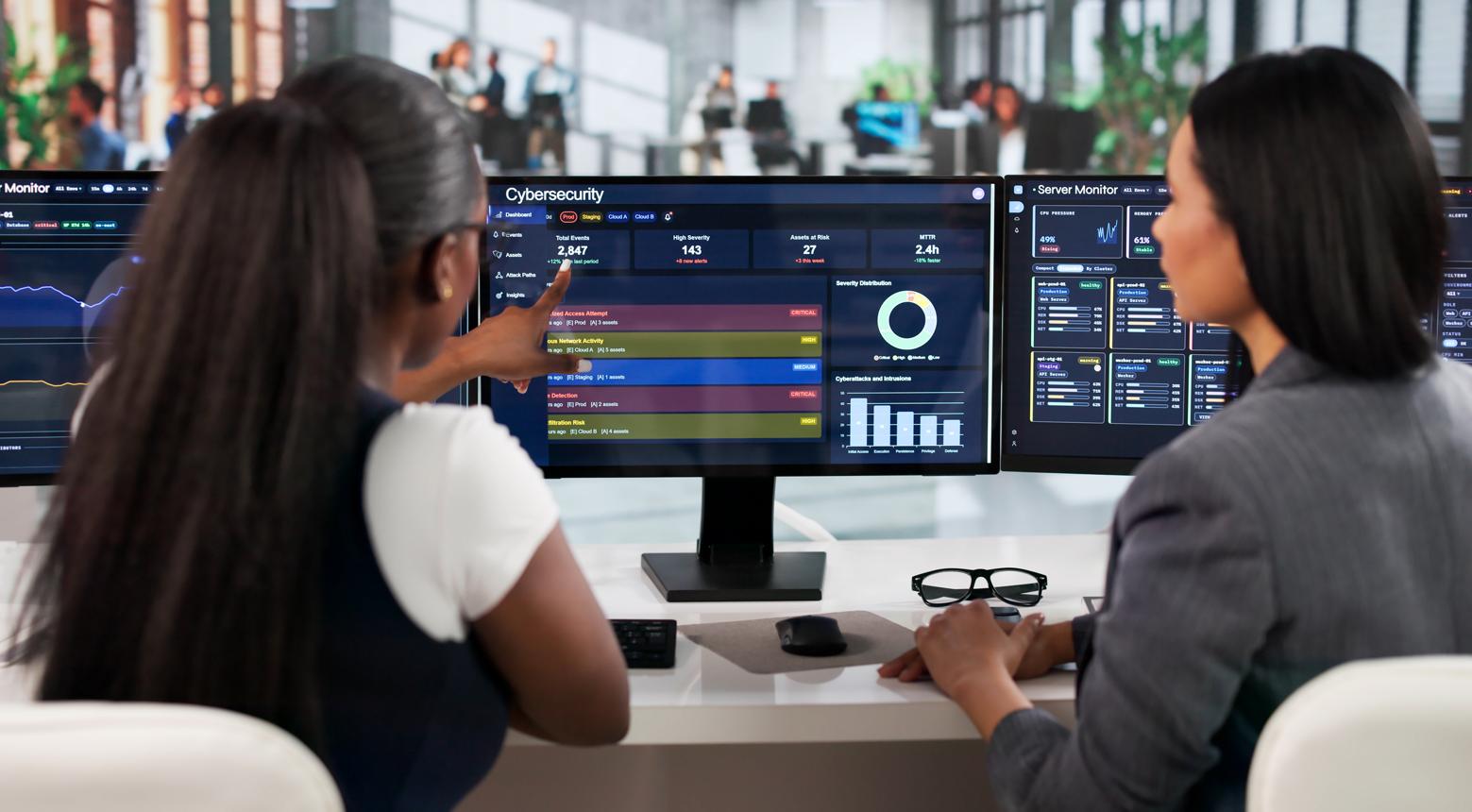
  • Managed Endpoint Detection and Response (EDR) continuously monitors endpoints to detect, investigate, and remediate threats.
    Managed Endpoint Detection & Response (EDR)

    Know more 
  • Extended Detection and Response (XDR) integrates multiple security tools for comprehensive threat detection and coordinated response.

    Extended Detection & Response (XDR) Services

    Know more 
  • Security monitoring and SIEM services detect, analyze, and respond to cyber threats through centralized log management.

    Security Information and Event Management (SIEM)

    Know more 
  • Dark web intelligence and threat hunting uncover hidden threats, leaked data, and malicious activity targeting organizations.

    Dark Web Intelligence and Threat Hunting

    Know more 
  • SOAR automates and orchestrates security processes to improve incident response speed and operational efficiency.

    Security Orchestration, Automation, and Response (SOAR)

    Know more 

Managed Endpoint Detection and Response (EDR) continuously monitors endpoints to detect, investigate, and remediate threats.

Managed Endpoint Detection & Response (EDR)

Know more 

Extended Detection and Response (XDR) integrates multiple security tools for comprehensive threat detection and coordinated response.

Extended Detection & Response (XDR) Services

Know more 

Security monitoring and SIEM services detect, analyze, and respond to cyber threats through centralized log management.

Security Information and Event Management (SIEM)

Know more 

Dark web intelligence and threat hunting uncover hidden threats, leaked data, and malicious activity targeting organizations.

Dark Web Intelligence and Threat Hunting

Know more 

SOAR automates and orchestrates security processes to improve incident response speed and operational efficiency.

Security Orchestration, Automation, and Response (SOAR)

Know more 

Close
Testimonial Image

Close
course-features Image

Close

Inquire Now

  • flag
    +91
Close
Back to Top Prev Page L3 Title
  • Corporate Training
  • Resources
  • Career
  • Blog
  • About Us
  • Contact Us
  • Trainings
  • Ec-Council Programs
  • PECB Programs
  • Data Science Analytics
  • Ec-Council Programs
  • Security Programs
  • SOC-SIEM
  • Ec- Council
  • Services
  • Grow Business
  • Connect Business
  • Protect Business
  • Industry Solutions
  • Solutions Gallery
  • More
  • About Company
  • Careers
  • Blogs
  • Testimonioals
  • Resources
  • Other
  • Registration Steps
  • FAQ’s
  • Refund Policy
  • Reschedule Policy

CONTACT US

New Delhi House, Barakhamba Road, New Delhi,110001

+91 99 | +91 88

011 43 | 011 430

Email:

© 2013 - 2024 Cybar Wind. All Rights Reserved

All the Ownership/Credits/Copyrights of Trademarks/Patents/Copyrights used in the content
posted as text/videos/images on this website belongs to the rightful owners.

  • Sitemap |
  • Terms And Conditions |
  • Privacy Policy